What’s In (and Out) in Public Relations for 2024

Many of us appreciate starting the new calendar year with a clean slate and some helpful insights to make us more successful. Knowing what has changed and how to better navigate the world in our personal and professional lives certainly helps. And as is the trend at the start of each year in fashion, business and elsewhere, I wanted to share my perspective on what is in, and what is out, in terms of approaches to communication strategies in 2024:

Artificial Intelligence (AI)

IN: Greater scrutiny of artificial intelligence (AI) and Generative AI.

If 2022 showed us what was possible with the birth of ChatGPT, 2023 showed us what was practical as litigation surrounding AI flourished, as noted in a Dec. 14, 2023 blog post by the law firm of Perkins Coie. Going forward, AI in strategic communications will be a resource, not a revolution, leading those who fail to recognize this shift into a world of trouble.

OUT: The idea of replacing communications professionals with AI at least for now. Experimentation has shown us AI has yet to mature to the point where anything but mundane copy automation is possible. Even there, the risks of error, inaccuracy and legal jeopardy abound with AI in a lead content role.

Social Media

IN: LinkedIn as a force multiplier for your communications strategy.

For both for- and nonprofit organizations, LinkedIn has demonstrated that tailored, personal and insightful content is exactly what professionals are seeking. We are all looking to grow professionally, and LinkedIn has become the gold standard in social media for real-world advice, tips and lessons learned. The platform has also rolled out many tools with low entry barriers for organizations to use to support their communications goals.

OUT: X, formerly known as Twitter, for anything of practical use by businesses or nonprofits.

The platform has been on a downward slide in terms of relevance for years. With a fast-shrinking number of quality controls, advertisers and actual users, it will continue a steady slide into irrelevance barring a major turnaround which seems unlikely at the dawn of 2024.

Media Relations

IN: Continued consolidation and evolution in the media space.

The very definition of media outlet remains in flux as news publishers explore new platforms and models, while journalists themselves go entrepreneurial with newsletters, podcasts and streaming services.

OUT: Asking the question, “Who do you know at [media outlet name]?”

While media relations was once a field that relied on relationships to get a foot in the door, today’s journalists are driven by what stories grab eyeballs, regardless of who is pitching it. It is no longer (and, frankly, it has not been for a long while) who you know, but rather the quality of the story to be told and the PR professionals who best understand how to share that story with key journalists and/or outlets.

Messaging

IN: The continued march of pithy messaging to best engage and inform B2B and B2C consumers.

With millennials and Gen Z now in the majority of consumers and increasingly moving into management and entrepreneurial roles, organizations will need to appeal to these audiences by conveying brand personalities that showcase authenticity. Taking an infotainment approach — the combination of information and entertainment, even humor — has proved popular and impactful with these cohorts. However, great care must be taken to avoid unforced errors like the failed 2023 Snoop Dogg/Solo Stove marketing campaign.

OUT: Messaging that even hints at self-promotion.

From the journalists themselves to the feedback of their readers, the jury has come in and stakeholders are tired of being forced to endure a brand’s value proposition or product/service pitches disguised as news. Brands will need to find something relevant to say about the issues, trends and news impacting their audiences that does not center on what they can do or sell. This approach will be critical if they want to continue to maintain relevance with those audiences and the journalists who help them reach those audiences.

Content

IN: Succinct video messaging.

Consumers, as well as the media, are time starved. While video has helped drive increased engagement, the trend continues to move toward ever more brief videos whether it is explaining a concept, pitching a reporter or persuading audiences. Brands should be creating their own video library of short-form content on key topics and issues of greatest importance to their target audiences.

OUT: Long form owned content.

The 60-second video is dead; long live the 30-second video. Smart brands will continue to move away from long-form content on their owned channels (i.e., websites, social media, newsletters, etc.) and take advantage of low- and no-cost video and editing tools, as well as developing strategies to create and provide aggressively brief content that speaks to important trends and topics.

The pace of technology and information continues to gain speed. Smart brand and organizational leaders will recognize the importance of adapting to the preferences and needs of their target audiences while creating plans that leverage new ways of engaging audiences to ensure they maintain awareness and relevance among those who matter most to them.

Protect Your Investment: Know What to Ask When You are Hiring a Public Relations Agency

Throughout my 20 years in public relations, I – and my colleagues – have found ourselves frequently playing clean-up after another public relations agency has failed to deliver what was promised to a client.

When I talk with organizations that have worked with PR agencies in the past, typically six out of 10 tell me the relationship ended badly. The reasons tend to fall into a few familiar categories:

  • Poor communication between the agency and the client
  • Frequent agency staff turnover
  • Meeting senior agency leaders at the pitch meeting, but only interacting with less-experienced agency personnel after the contracts are signed
  • Lack of alignment either on strategy, content, writing quality, values and personalities

Like any professional or personal relationship, there is likely a bit of blame to be had on both sides when an investment by both parties in achieving a successful public relations partnership fails.

However, in my experience, often these agency hiring misfires could have been avoided if the right questions had been asked in the agency screening process. Understanding who you are hiring and establishing shared expectations from the start can help ensure the relationship starts off as strongly as possible. To do so, there are five key questions I recommend asking your potential public relations agency during the screening process, including:

  1. What distinguishes your agency from your competition?
  2. Will you include former clients in your list of references that we can contact?
  3. Who will serve as the account manager, and can we meet him or her before signing the agreement?
  4. If the plan you create for us isn’t working out, what is your pivot strategy to ensure success?
  5. Please describe your ideal working relationship with clients so we can level-set expectations both from our perspective and among the agency team.

Additional questions you should consider asking any public relations agency you might be looking to hire should include:

  • What kind of response time can I expect from your team to my emails, texts or phone calls?
  • If the account manager isn’t a member of senior leadership, what role will leadership play in the development and execution of our public relations plan?
  • What is your process for learning about our organization, and how long should we expect that process to take?
  • How will you help us prepare for any media interviews you might secure on our behalf?
  • Can we see samples of your writing relevant to our industry or organization type?
  • What kind of time commitment should we expect to make to ensure our work with the agency is a success?
  • Please describe the frequency and type of ongoing communication you expect to have with our organization throughout the engagement.

Asking the right questions will help you get a better sense of the agency you are potentially hiring as well as how they intend to engage with you.

Too many business and nonprofit leaders ask questions of public relations agencies that either cannot be answered in the initial pitch meeting or demonstrate a lack of understanding of how public relations works. In our next blog, we’ll cover questions you shouldn’t ask in these initial meetings if you want to be taken seriously while also making the most of the time you do have to evaluate if the agency at the table or on a video call is a good fit.

Remember, public relations is more than an investment of money. It’s one of time, effort and trust. Knowing what to ask will help ensure those you ultimately hire are worthy of that investment.

Breaking Through the Noise: SEO for Public Relations

Have you ever wondered what really gets a brand on the front page of Google? For brands today, search engines are paramount to any successful marketing or public relations effort. Search Engine Optimization (SEO) employs a series of tactics to increase a brand’s visibility and ranking on search engines such as Google, Microsoft Bing, Facebook and Amazon, and it is one of the fundamental considerations of any marketing or public relations strategy.

SEO, however, doesn’t need to be a heavy lift. While there are a myriad of algorithmic factors that impact a brand’s search engine ranking, a few essential ranking factors allow brands to optimize their public relations efforts. Let’s look at how brands can leverage simple shifts in their content development process to improve their rankings and climb the search engine ladder.  

  • Links: Links are critical in SEO because they tell the computer when people are visiting content. When creating content, consider linking back to relevant owned content such as blog posts on a similar topic, resource pages or other pages on your website that relate to the topic. Additionally, ensure there is a link to the website homepage placed in the post as a link (https://www.kimballpr.com/) rather than rich anchor text. It may be tempting to load up content with links, but this can be counterproductive. Brands should try to stick to three or four links at most. Doing otherwise may run the risk of triggering a spam or bot flag, which will ultimately hurt the brand’s SEO value.
  • Keywords: Brands can leverage the search engine habits of their audiences to help better target their content. Generally speaking, every audience has specific search engine habits, or keywords they look for, that can help brands identify what language to use in their content. Once a brand has identified what those keywords are they should strategically use those words throughout their article/blog/website, etc. These keywords will help the search engines identify what the content is about and send it toward the right audience. Brands should research what keywords will help them reach their audience, what they care about and what they are turning to search engines for, and use those keywords in the body, headline, URL and wherever else they naturally fit within the content. Similar to the note above about links, brands should avoid using too many keywords or “keyword stuffing” to avoid being flagged as spam.
  • Headlines: Keywords are not the only way brands can leverage the language of their content to raise their SEO rank and better target their audiences. When creating a headline for a piece of content, whether it be a blog, article or otherwise, brands should consider using strategic language. The headline is the first part of a piece of content a potential audience member sees and is vital in grabbing the attention of readers. With that in mind, brands should consider using pithy language, paired with targeted keywords to catch the eyes of readers. For example, using listed titles such as “top 3 reasons to use social media,” or pointing out an issue the content can help solve such as, “inflation is high: social media marketing can help,” will help catch the eye of the reader and entice them to engage with content.
  • Break Up Content: The format of the body of the content can be used to climb the SEO ladder as well. Once the headline captures the attention of the reader, the content of the article needs to keep their attention. There are strategic ways that brands can format their content to best engage readers. As mentioned above, placing keywords throughout the piece will help. It is also important to make the content attainable. Using straightforward, easy to read and plain language will help consumers understand what they are reading. The average individual in the U.S. reads at a 7th grade level, so keeping content at that level will help keep the reader engaged. In an increasingly digital age where attention spans are shorter, breaking up the content is key. Numbered or bulleted lists are the easiest way to format content in an attainable way. If content is not listable, shorter paragraphs will help readers feel as though they can consume and understand the content, whereas longer, meandering paragraphs will feel more daunting.

Leveraging Original Content

Of course, in order to incorporate the tactics listed above and climb the SEO ladder, an organization needs somewhere to place links, keywords and important information. This is where original content comes in. Original content can be anything from a blog or infographic on an organization’s website to an interview or thought leadership article printed under the byline of an organization’s subject matter expert (SME) in a reputable publication.

These types of original content can be broken into two categories: owned and earned. Owned content is content that an organization owns. They come up with the concept, have complete control of what goes into the content and put it on their website. Blog posts, infographics and more fall under the purview of owned content and allow organizations more control over what goes into the content regarding links and keywords. Earned content or earned media is content that an organization, or public relations agency partner, secures in a reputable publication, whether it be an industry trade publication or national business publication. Interviews and thought leadership articles fall under this definition. A good public relations partner will have established relationships with many of the editors of industry trade and national business publications and can help secure opportunities for interviews or articles in these publications. While owned content gives an organization more control over the content, earned content often gets more visibility, is often perceived as less biased and can help build or expand an organization’s reputation.

Regardless of whether the organization builds its content library in-house or through an agency partner, leveraging original content is the best way to incorporate SEO tactics into a brand’s content to boost their reputation on search engines.

SEO is a necessity for modern brands to exist in the age of the internet. When approaching the wide world of search engines, it is important to remember to play the long game as success is not achieved overnight. With a plan in place, brands can build up an online presence alongside a few strategic SEO practices that can help bring them to the forefront of search engine results over time.

Resolve to Rebuild in 2022

If 2020 was the year of the pivot, 2022 will be the year we rebuild. One of the primary ways businesses and nonprofits will do so is, in part, through raising the profiles and awareness of their brands, services and products.

Kimball Hughes Public Relations reached out to hundreds of for- and non-profit entities across the U.S. to get their take on 2022. We asked about opportunities and obstacles as well as about some of the fundamental tools and resources these entities use to connect with their audiences.

Opportunities & Challenges

One third of respondents reported that being seen as experts would be their top priority to achieving business or organizational goals in 2022. Maintaining or expanding awareness of their reputation among their key audiences came in second at 28.6 percent. Sales, product or service awareness and adding new products or services as tactics to improve performance in 2022 as paled in comparison.

The biggest challenge to growth in 2022 was seen as lack of brand or organizational awareness (72.7 percent). Limited marketing budgets ranked second as a challenge at 54.5 percent, while economic uncertainty and competition tied for third as other major obstacles in the new year.

The Road Ahead

To maximize the potential for raising brand awareness in the new year, securing media recognition and generating content will be essential.

Only 20 percent of the organizations we surveyed reported that being quoted or included in the media as a high priority. Fifty percent said it was one among many priorities, and 15 percent reported they were indifferent to seeing their brand represented in a reputable or industry-specific third-party content provider.

For those creating and publishing their own, non-social media content, nearly 23 percent say they do so daily.  Forty one percent produce their own website, blog or video content weekly, while another 23 percent do so monthly. Just over 13 percent report leaving content development, as a strategy to expand their reach and reputations, to “when time permits.”

Make a New Year’s Resolution

If you’re resolved to grow or expand your reputation or reach in 2022 — or you know of someone thinking about doing so — Kimball Hughes PR can help. Reach out to us today at info@kimballpr.com or call (610) 559-7585 and ask for a free consultation.

As days go by: blogging matters

urkel.png

Blogging can be fun; it can be tedious. It’s a task for an intern, or for everyone to share. No matter how you look at it, what you say online is crucial to growing your business while also demonstrating your expertise. Let me explain…

We’ll start by exploring a little thing called Search Engine Optimization (SEO). People who know and use your business can get to your website whenever they want by entering your URL into their web browser.

What about growth, though? When new customers or clients are searching for the product or service you offer, you want them to find your website first. That is what SEO does. You can make sure that your website is clear and informative, stating exactly what it is you do; relevant information helps your website appear higher on the list of results when certain terms are searched. You can even pay for advertising around the keywords that people are typing in to increase the position in which your website appears.

But all of that applies only to your relatively static website. Each time you create a blog post, you create a new web address with relevant content for the audience you want to reach. You’re gaining credibility by talking about what you know best, and you’re stretching your online presence by providing new information for clients and customers to find when they search for a service like yours online. So now, instead of appearing in search results only once, each blog post has the potential to appear as a separate site, increasing your online presence dramatically.

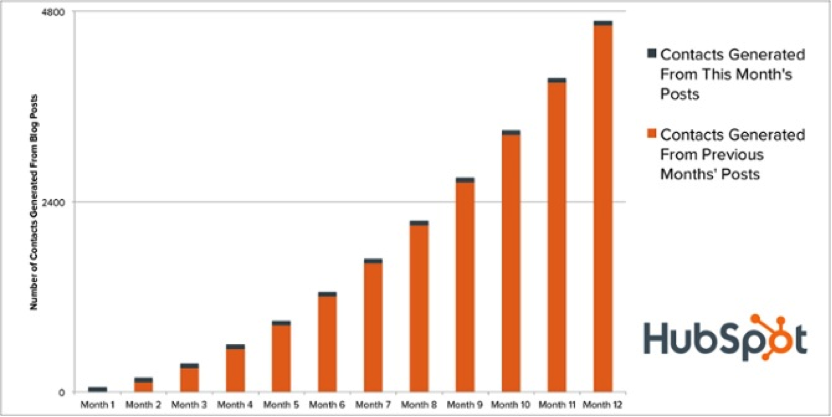
What happens after you blog? Does that post disappear deep into the archives of your website? Nope! Hubspot, an inbound marketing company, explains the idea of “compounding posts,” which basically means that you may get 100 views on the first day you publish your post, but over the next few months, a good post will continue to generate traffic to your website, sometimes exponentially.

hubspot graph

From a PR perspective, contacts generated and credibility gained are really going to make the difference. By blogging regularly, you gain a captive audience that will now see your press releases as soon as they’re posted, while we’re still in close contact with other news sources that will reach the rest of the population you’re hoping to target. You put yourself a step ahead of the game, so as days go by, it’s bigger growth for your company.

Getting started, or ramping it up (if you’re already blogging)

As far as content for blog posts, write about what you know best—piece of cake! Images make a post more attractive, so don’t forget to include one or two. Social Marketing Writing has some stats that will improve your blogging performance. My top three favorites include:

  • Once you accumulate 51 posts, blog traffic increases by 53%, goes up by 3 times when you hit 100 posts, and by 4.5 times after 200 posts. Posting more often will help you get there!
  • Blogs get the highest traffic on Monday mornings, so at the least, plan to have a post published every Monday morning.
  • Posts published on Thursdays get the most social shares.

Blogging is a low-cost way to keep in touch with your clients and grow your business. We think it’s an essential part of any company’s marketing and PR strategy.

To find out more about how we can help you achieve results through blogging, contact us today!

Ignorance Is Not a Brand Attribute

Media outlets everywhere have covered Groupon's Presidents' Day marketing stunt. The question is if this hurts or helps the brand in the long term.

Many media outlets, like the Chicago Tribune, have covered Groupon’s President’s Day marketing stunt. The question is if this stunt hurts or helps the brand in the long term.

As marketing tools, sometimes stunts work. They get the media’s attention. They take your brand “viral.” They get people talking about you. They create “buzz.”

When activists delivered a 13-foot tall gluten-free cake to Capital Hill in May 2011 to advocate that the Food and Drug Administration enforce gluten-free labeling standards, the stunt worked. There was plenty of media coverage. It supported the mission to which the activists were committed. It alerted consumers to issues surrounding the food they eat.

However, Groupon’s latest stunt – calling Alexander Hamilton “undeniably one of our greatest presidents” to promote a Presidents’ Day special – will not serve the brand well.

Sure, Groupon is quirky. Some might say it’s quirky to the point of being ridiculous. I’ll also grant you the Groupon stunt is getting buzz. There’s plenty of media coverage (heck, it prompted me to write this spiffy blog post).

But this stunt also gives the impression Groupon doesn’t know the facts (e.g., Hamilton was U.S. Secretary of the Treasury, not President). In trying to look too cool for school, Groupon instead comes across as out of touch with details – something that might make consumers wary. Thoughtful consumers might at first be amused. But on reflection, will they trust leaving their credit card information with a company that portrays ignorance as an attribute?

Hamilton’s briefly mistaken moment in U.S. presidential history won’t sink Groupon – assuming people are still using it. In fact, in the short run, it will have everyone talking about Groupon. That is what stunts do; they create buzz.

It’s the long run that is a problem. How does Hamilton fit the brand? More importantly, how does portraying a fundamental misunderstanding of history convince consumers to spend their Hamiltons, and Washingtons and Lincolns with Groupon?

Any good public relations professional will tell you buzz doesn’t always last and stunts like this don’t help the long term reputation of Groupon with consumers.

Mr. Hamilton would not be amused or impressed by Groupon’s stunt. Those using his likeness shouldn’t be either.


9 Tips To Make Social Media Work For You At Conventions

There is nothing wrong with an awkward selfie when used to promote a brand or to let the world know you just discovered amazing pepper jelly.

There is nothing wrong with an awkward selfie when used to promote a brand or to let the world know you just discovered amazing pepper jelly.

Last week (Sept. 25-28) more than 1,200 vendors attended Natural Products Expo East to attract the attention of retailers and bloggers while also winning some valued name recognition for their brands.

Surprisingly, only a handful of vendors used social media to truly maximize their advantage.

I’ve attended many conferences and conventions and I follow some simple social media steps for events.  I urge many of the brands I met with at Expo East to review the following tips and plan to incorporate them next September in Baltimore or in March 2014 in Anaheim for Expo West. Because of its profound reach, extensive use in business and dexterity of messaging, these tips focus on using Twitter, but could be adapted for Facebook, Instagram, Flickr, Pinterest and others.

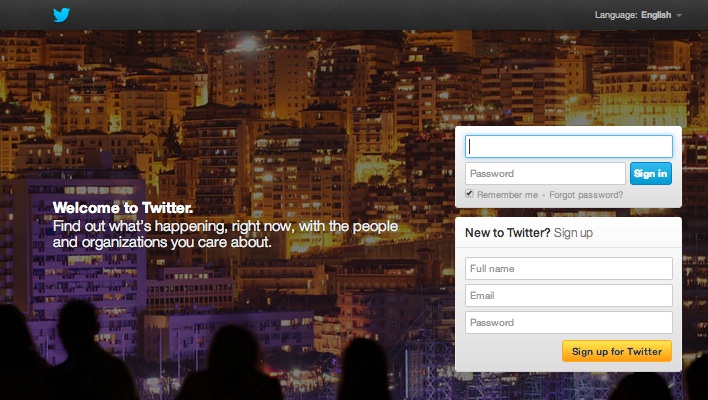
Twitter Screen Shot

1. Tell the World Where You’ll Be

About 45 days before the show, tweet from your company Twitter handle that you will be in attendance. Use the show’s hashtag (usually #ExpoEast or #ExpoWest; other shows will include this info. in registration materials), your booth number and invite people to visit your booth at the show. For example: We’re thrilled to be attending #ExpoWest in Anaheim in March. You can find us at Booth #3100.

2. Make a Social Media Plan for the Show

Conference attendees cling to their smartphones. Task someone to monitor, post and respond to social media during the show in real-time. Either on the floor or back at the home office, participating on social media will help garner attention for you long after the tradeshow floor closes.

3. Give Followers a Behind the Scenes Look

Tweet behind-the-scenes pictures and video of your team preparing for the show, traveling to the show and setting up your booth. People like to get to know the brands they love, and feel included. Be sure to include show hashtags and your booth number.

4. Give Attendees a Reason To Seek You Out

Entice attendees to visit you by offering samples, raffles or exclusive news on upcoming brand news. Make it worth attendees’ time to find your booth in the crowd. And, of course, use the show hashtag and your booth number. For example: If you’re attending #ExpoWest, stop by Booth #3100 for free samples of our new mango and coffee-flavored smoothies.

5. Recruit Attendees to Be Your Ambassadors

People share content in which they are featured. Invite interested attendees to take a photo with you and your booth. Then you can tweet the picture, with the attendee’s Twitter handle and the show’s hashtag with a “Thanks for stopping by” or other conversation-relevant comment. Retailers might not partake, but bloggers and brand enthusiasts will – and they share!

6. Comment on Show Happenings

You’re at the convention. Make sure you are aware of educational and training sessions taking place, who the guest speakers are, and what events attendees are talking about most. Tweet content related to each – with images where possible. For example: Willy Wonka’s talk on the health benefits of sugar at #ExpoWest has fired attendees up. What’s the most interesting seminar you’ve attended today?

7. Respond To Those Who Tweet About/To You

It’s just like a conversation. You wouldn’t ignore someone who said hello to your or complimented you, so don’t do it on social media. If someone tweets at or about you, tweet them back with a tailored thank you (i.e., don’t just say ‘Thanks’).

8. Spelling Counts

Proper spelling is key, especially for people’s names and Twitter handles. It demonstrates professionalism as well as being able to react correctly to real-time events with aplomb.

9. If It Goes Badly, Get It Offline

If someone tweets a complaint or comments negatively about your product, let them know you are sorry they are unhappy, and that you would like to speak with them (by email, cell phone or in person) right away to try to help. Do not engage in a back-and-forth dialogue via social media. Get the conversation off of social media as quickly as possible. For example: We’re sorry you had a bad experience. Email willy@willywonka.com and let us help or stop by booth #3100 & give us a chance to make it right.

There is a lot of good that can come from live social media posts at a conference or convention. Retailers search the related hashtags to see what brands are trending, and what attendees liked and didn’t like. And whether you use social media or not, if you are a vendor at a show like Natural Products Expo, you are being talked about on social media. So make sure you are taking an active role to help shape that conversation.

If you have questions or would like to create a social media plan for Anaheim or Baltimore in 2014, email me at rhughes@kimballpr.com to learn how the team at Kimball Communications can help. Or tweet us at @KimballPR.

Marketing on the 9/11 Anniversary? Don’t

“When in doubt, leave it out.”

This was the sage advice of one of my first journalism professors in college. It served me well in everything from sussing out facts for news stories to drawing up guest lists for family parties. It’s also good advice for brands and organizations to consider as part of their social media policies, and their approach to anniversaries of remembrance like Sept. 11.

This week – 12 years from the attacks of Sept. 11 – we saw far too many businesses using social media to remember the fallen while also making sure you remember their products.

On The Crisis Show, which aired on the anniversary of 9/11, I joined Shel Holtz and host Rich Klein to discuss these efforts. We highlighted some of the more thoughtless attempts to newsjack the 9/11 anniversary, as well as the reactions those efforts engendered. It’s a cautionary tale of how even the best intentions on social media can fail without sound strategy, planning and a crisis response plan.

What we saw on social media on this anniversary was how tone deaf some brands can be, and how few plan for all potential outcomes. The list of offending brands – both exploitative in their efforts and those just trying to mark the day as best they could while failing in the attempt – is too long to include here.

The best advice I can share is beautifully summarized in a short online article in The Atlantic. The writer, Derek Thompson, took a page from my journalism professor’s book and offered one simple rule for advertising on 9/11: Don’t. This rule applies equally well to marketers, social media practitioners and PR pros.

The events of that day still haunt us as a nation. So brands should consider honoring the day with a moment of silence, time off for employees to participate in the National Day of Service Congress called for in 2009 or by making a charitable donation. But don’t market such efforts or your products and services. Those who mourn don’t need to hear from brands on this day.

Next year, when we mark the 13th anniversary of our national loss, I encourage brand managers everywhere to follow the prescient advice of my old professor: When in doubt, leave it out.

When to Hop Off the Facebook Bandwagon

Jump Off

via Flickr user psmithy

In my internal life as a secret pundit, I hold strong, unpopular opinions on a wide range of topics. I’ll spare you my monologue on the proper storage of tomatoes, but let’s discuss my wildly unfashionable opinions on Facebook, which are probably more relevant to your interests.

Here’s a radical thought: Facebook doesn’t work that well for some brands, particularly small B2B service providers. Yes, that Facebook—the stuff of marketing mavens’ dreams. For many, it turns into a marketing nightmare; after devoting time and energy to creating and curating a brand page, a chorus of crickets greets you instead of legions of grateful fans.

Many self-proclaimed social media experts will suggest that you are doing it wrong. That is true in some cases, but not all. If Facebook isn’t working for you, I think there are a few reasons it is more than okay to stop using your brand page.

It’s cost prohibitive

Contrary to popular belief, using Facebook as a PR and marketing tool is far from free. It is time-intensive, no matter what strategies and tools you use. It’s cliche but true: at work, time is money.

To get the most out of a Facebook brand page, you should spend time and money not only perusing and posting, but also creating videos and custom visual content like infographics, memes and quality photos. Last time I checked, graphic designers don’t work for free. Plus, paid ads, contests and promoted posts are often the only way to get any semblance of a noticeable boost in fans and engagement. This could be time and money well-spent, but not if you don’t see results.

Your content never meets its mark    

When I say engagement, I’m not speaking in abstract jargon. What I mean is people seeing, liking, commenting beneath and clicking thru to your content. On Twitter, engagement defined this way is possible any time someone logs on and scrolls through their feed. On Facebook, what someone sees on their News Feed depends on a number of factors analyzed by the company’s EdgeRank algorithm, which you can read more about here.

From a personal user’s perspective, there are advantages to EdgeRank and otherwise being in control of your News Feed. For example, with a few clicks, you can hide future posts from your Facebook-addicted auntie and never again be subjected to her semi-literate rants on the tyranny of everyday objects.

However, the same tool may prevent a user from being exposed to your brand’s content, even if s/he would like to see it—which s/he presumably does, since s/he “likes” you. Users rarely return to a brand’s Facebook page after they have liked it, so they won’t see your pithy posts there. And if you don’t share a photo, it is unlikely that they will see a post in their News Feed. As many have lamented, EdgeRank prefers gimics over content that is relevant to your audience. If you provide B2B services, or something that is equally ill-matched to meme-ing or Harlem Shaking, you just may never stand out.

There are other options    

Should you want to stand out on Facebook? This question nags me. For companies that provide consumer products or entertainment, the Facebook News Feed is a natural fit. You want to be (and often are) an integral part of your customers’ personal lives, so you fit in snugly between a cousin’s baby pictures and political rants from college friends.

For most other kind of brand, the Facebook News Feed is an awkward fit, like trying to wear the clothes you thought were cool at age 15. No one thinks you look cool in those JNCOs, and no one wants to hear about some esoteric corporate service while they are perusing their iPad on the couch.

In the wide world of digital marketing and PR, there exist many more agreeable options. If you are struggling with Facebook and don’t even enjoy the medium, maybe it’s time to redirect your efforts elsewhere. Perhaps your time and energy could be better spent on Twitter, LinkedIn or a blog. Read case studies, ask around and give a new network a try.

I’m far from the first person to suggest Facebook isn’t the social media marketing magic bullet, but I don’t think many take action in response. Has anyone out there abandoned their Facebook strategy? Tell us about it in the comments.