How I Got Here: Kate Glaviano’s Journey to PR

Many career paths are unplanned. As specialists in insurance communications, we hear from insurance professionals all the time who found their way to their professions through unplanned or unexpected means. The same can be true of public relations. Whether it’s journalism, marketing or human resources—the PR field is uniquely suited to diverse backgrounds. That is why we are sharing this blog series breaking down how our team members came to find their current PR roles. For any new grads trying to figure out what they want to do, or even established professionals looking to make a change, we hope this series can shed some light on the PR field. 

What did you go to school for?

I earned my degree in public relations and advertising from DePaul University. 

What did you envision your job would be? 

I always thought I would take the advertising route, but I reconsidered my track after listening to a few speaker presentations in college. By the time I graduated, I had a strong grasp on what working in an agency might look like and I was really interested in gaining experience in that environment. 

What was your first job out of college? 

I worked in a restaurant kitchen immediately after college for a while, but right before the pandemic hit (in a completely unplanned stroke of luck) I landed an internship at a Chicago-based boutique public relations agency. I was originally hired because of my kitchen experience as the agency was pursuing an account in hospitality. When the pandemic later became a reality, my role shifted and I had the opportunity to become more involved with other, non-hospitality accounts at the agency. 

How did you end up in your current role?

Pandemic-related challenges left me on the hunt for a more B2B focused opportunity in a similarly sized agency. I had a few options, but none felt like a fit for me. When I found the job listing with Kimball Hughes PR, I felt like everything was falling into place. I enjoyed my interviews with the team and I felt like I could fit into the culture. I was intrigued by working in an industry, like insurance, where I had plenty of room to learn. As the agency evolves, those factors that drew me here in the first place remain. 

What has surprised you most about your career or yourself given your current role?

What has surprised me the most about my career is how much of an asset curiosity would be. I have always liked to learn new things, but I did not realize how much that would help me to better serve my clients. 

What have you learned from your career journey?

I have learned a lot in my career so far and I really look forward to what the future holds. Public relations is a people business that depends on genuine connection to thrive. When you specialize in an industry like insurance, you learn it is a very small world. Making an impression on someone in even a fleeting conversation can open doors down the line. I always thought this meant putting forth a “professional version of myself,” but after a while I saw that the best conversations came from simply being myself. I did not need to try to check boxes I thought would better present me to others as a professional. That version of myself felt stuffy and robotic. The minute I let a little more of my personality show, I found my conversations were more substantive and I started getting better feedback. It is an extremely freeing realization when you are early in your career. 

What lesson or myth-busting idea would you want to share with someone thinking about a career in public relations?

When I was in college, everyone talked about wanting to join an in-house team at a large corporate brand or wanting to land a job with a large public relations agency. Surprisingly, no one said “I want to work at a small agency that specializes in insurance.” But I highly recommend emerging professionals and recent grads consider all options. At a smaller agency like Kimball Hughes PR, you have the chance to touch so many different aspects of public relations and make your mark on the agency itself. An agency our size depends on team members to share ideas and discuss options to improve processes. Often, you even get the freedom to test some of those ideas out. It is an incredible opportunity to grow quickly as a young professional and you really become connected to the work you are doing if you immerse yourself in it.
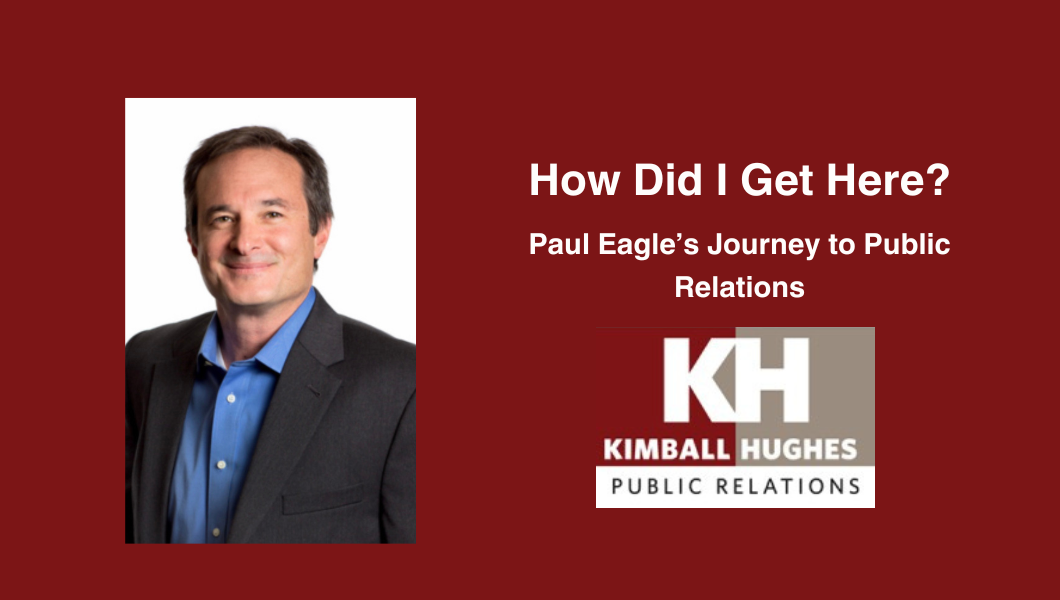
How I Got Here: Paul Eagle’s Journey to PR

Many career paths are unplanned. As specialists in insurance communications, we hear from insurance professionals all the time who found their way to their professions through unplanned or unexpected means. The same can be true of public relations. Whether it’s journalism, marketing or human resources—the PR field is uniquely suited to diverse backgrounds. That is why we are sharing this blog series breaking down how our team members came to find their current PR roles. For any new grads trying to figure out what they want to do, or even established professionals looking to make a change, we hope this series can shed some light on the PR field. 

What did you go to school for?

I started out as a psychology major. During my studies I discovered college radio, where I became a broadcaster and got totally hooked on communications. I later did an internship at a newspaper and changed my major to communications with an emphasis on public relations.  

What did you envision your job would be? 

There’s a great meme on social media about what my mom thinks I do versus what I actually do. It shows Mom thinks I’m behind a bank off microphones and cameras all day, but what I really do is sit behind a computer typing all day. It took me a while to realize that to be successful it takes long hours behind a computer doing research, cultivating relationships and writing really well to make one a good public relations practitioner.

What was your first job out of college? 

The Peace Corps. I served in Liberia West Africa, where I lived in a village with no power or water and ate lots of rice and jumping meat. One of my jobs was working at ELRV-Radio where I produced a weekly show about building fishponds in swamp rice farms for protein sources in rural villages.

How did you end up in your current role?

I spent 15 years in agency life, which I loved. It’s nimble and interesting and there is so much action. Then I spent 12 years as a vice president of one of the largest humanitarian organizations in the world. That was a very moving and intense role—especially with all the traveling. Today, I combine the two worlds in my role as a consultant and it’s my favorite job of all. 

What has surprised you most about your career or yourself given your current role?

Even though I feel prepared and knowledgeable for this role, I still learn every day. Public relations is never boring and there is always something new to pick up.

What have you learned from your career journey?

Empathy. Listening. Flexibility. These are all keys to success in public relations. And, of course, the improv theory of yes, and… . Spend your time adding value and making your colleagues’ ideas, products and services better, rather than tearing them down. 

What lesson or myth-busting idea would you want to share with someone thinking about a career in public relations?

In the early years we fought for credibility among leadership. Now we are side-by-side with leadership working through problems and solutions. The C-Suite understands the value of strong communications and often relies on their public relations team in good times and bad.

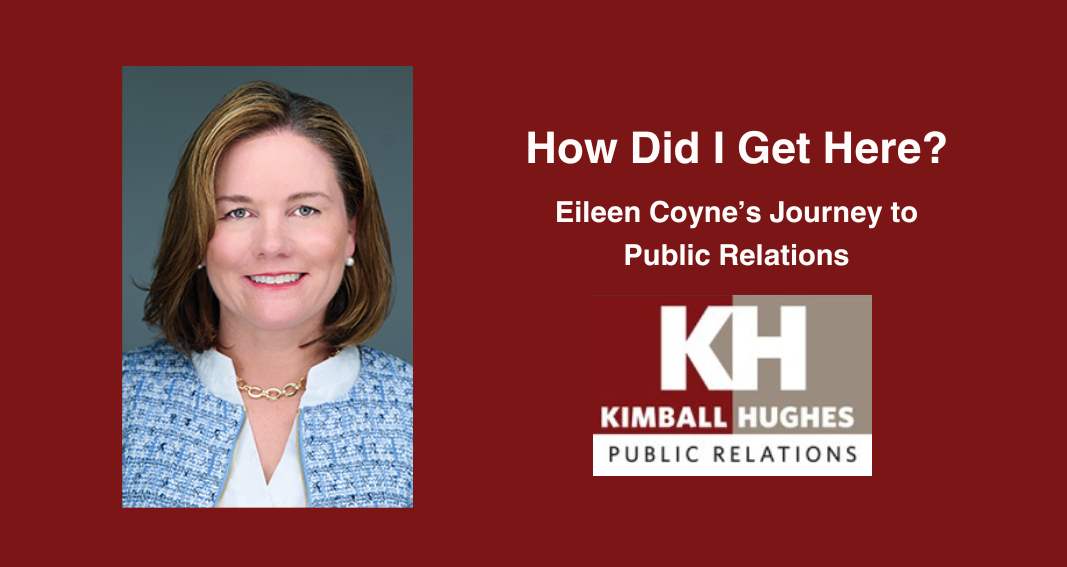
How I Got Here: Eileen Coyne’s Journey to PR

Many career paths are unplanned. As specialists in insurance communications, we hear from insurance professionals all the time who found their way to their professions through unplanned or unexpected means. The same can be true of public relations. Whether it’s journalism, marketing or human resources—the PR field is uniquely suited to diverse backgrounds. That is why we are sharing this blog series breaking down how our team members came to find their current PR roles. For any new grads trying to figure out what they want to do, or even established professionals looking to make a change, we hope this series can shed some light on the PR field. 

What did you go to school for?

I studied communications in college and pursued a journalism concentration. It was my senior year of high school when I decided I wanted to become a journalist. I had the opportunity to take part in a senior work week at a Philadelphia television news station and was immediately sold on the fast pace and excitement of television news. 

What did you envision your job would be?

Envisioning a future as a television news field reporter at first, I took a summer internship at a Baltimore television news station. It was a memorable experience where I had the opportunity to accompany reporters to the scenes of breaking news, record my own tapes and write up brief segments for the producers. Realizing I enjoyed the writing more than the behind-the-camera work, I took a second internship at a major metro paper. After first seeing my byline in print, I focused my aspirations there. 

What was your first job out of college?

After college, I landed a job as a reporter in Washington, DC for the Bureau of National Affairs. I covered the banking beat and had the opportunity to report on regulatory issues and federal hearings on Capitol Hill where I was able to learn more about the policy process firsthand. It was an amazing experience that allowed me to immerse myself in our nation’s capital and continue to improve my reporting and writing skills as a young journalist. 

How did you end up in your current role?

After working as a business reporter for different publications, I shifted into public relations. As a reporter, you can develop a love-hate relationship with PR folks. Not a fan of the pushy, salesy PR pros, I came to appreciate the good PR pros—those who shared thoughtful ideas to help me shape a future story, who connected me with valuable sources, who anticipated my needs and who respected my time and my deadlines. After covering banking and insurance for years as a reporter, I worked as a PR pro at a national carrier and then moved to serving the insurance industry from the agency side. After taking some time to raise my kids, I came across a position at Kimball Hughes PR specializing in insurance. It was a perfect fit. It’s been 10 years and I haven’t looked back.

What has surprised you most about your career or yourself given your current role?

Becoming a solid reporter, editor and writer was always something I aspired to, but I never saw myself in PR or as a specialist in insurance and risk management. That insurance focus has been a fun surprise and one of the most rewarding parts of my career. 

What have you learned from your career journey?

Careers take twists and turns. The best laid plans will shift with good bosses, bad bosses, promotions and layoffs—as well as with kids, family moves and other life and work events. Be ready to roll with it. The younger me never would have guessed I’d be a PR pro let alone one who specializes in insurance, but I wouldn’t have it any other way. 

What lesson or myth-busting idea would you want to share with someone thinking about a career in public relations?

Journalists often joke that former reporters who switch to PR have crossed to the “dark side.” I’m not on the dark side. I continue to do what I first sought out to do—storytelling. The format is just different. I help my clients tell their stories, connecting their expertise to timely trends and issues that matter to journalists and their readers. I continue to love the business of the news and I thrive here, but from a different perspective—finding ways to showcase my clients’ expertise, boosting their visibility and credibility among their target audiences.

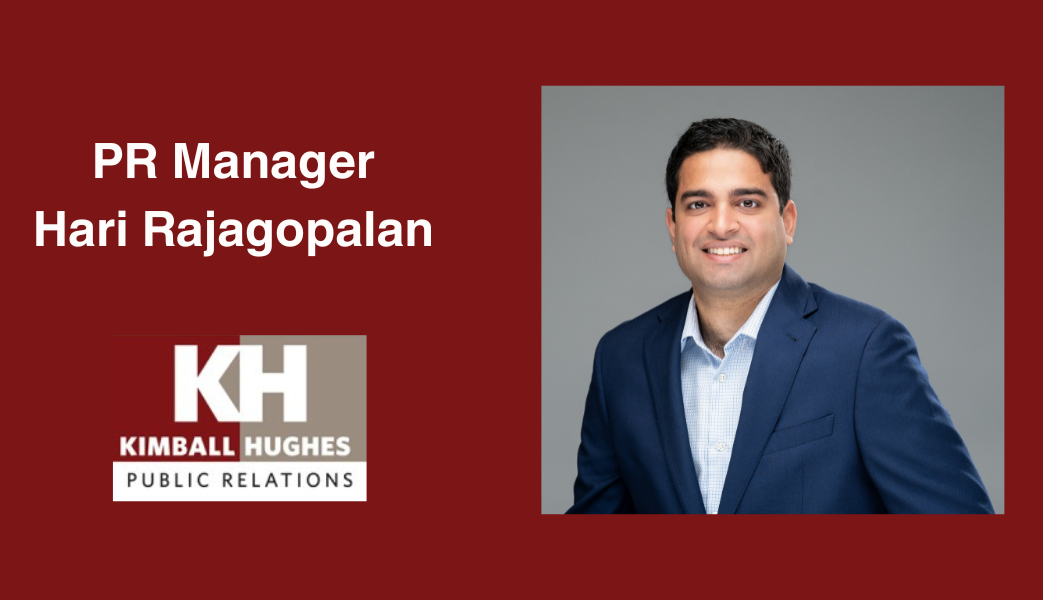
Send-off for Public Relations Manager Hari Rajagopalan

Public relations is all about relationships–the people behind the stories. That’s why we’d like to highlight Account Manager Hari Rajagopalan as he prepares to start a master’s program in the fall. We hope you enjoy learning more about one of our team members as we wish him well in his next chapter.  

  1. Where are you going to school?  

In August, I’ll be starting school at the University of Michigan’s Ross School of Business to earn an MBA.  

  1. What are you most looking forward to for your move? How will you adjust to the colder weather?  

I’m looking forward to exploring a new town. I’ve never lived in the Midwest and have only visited Ann Arbor once. I can’t wait to meet new people from a wide variety of backgrounds through my MBA program, try new restaurants and see new sights. 

The colder weather and snow will be an adjustment, and I’ll start that adjustment by buying a real winter coat and some hand warmers. I think it’ll be fun getting used to a new climate and working around the snow and other weather challenges I’ll experience while there. 

  1. What prompted your decision to pursue an MBA?  

I felt ready to try something new. I’m incredibly grateful for the time I’ve spent working in PR, but I believe that skill development and continuing education are vital to becoming a more well-rounded person. I think an MBA will help develop my analytical skillset, whether that ends up being back in the PR space or in another field entirely. 

  1. How do you plan to marry your MBA with your PR experience?  

My PR experience is a great starting point for business school. Navigating fast moving media opportunities, balancing client needs and media expectations, and learning how to advise clients to best support their reputation and brand have taught me the importance of effective, concise communications, empathy and adaptability. These skills will prove critical as I’m asked to evaluate other businesses and develop tactics and strategies for growth. 

  1. What was your favorite PR career memory? 

My favorite memory in PR was working with one of our clients on a campaign for the St. Baldrick’s Foundation. Seeing our work directly impact and support a nonprofit making a real difference in our community and beyond was extremely rewarding and exciting. And getting to see the Mummers at their head-shaving fundraiser was an added benefit to supporting the campaign. 

  1. As you make the transition from full-time work to full-time student, what changes do you think will have the biggest impact on your day-to-day and how do you plan to adjust to the change? 

The transition will be difficult. Attending classes will require an entirely different mindset and it has been years since I last was in a formal class setting. To adjust, I’ll be taking some online courses in my spare time this summer and trying to get ahead of some of the work I have lined up for the fall. I think starting classes early, even in an online setting, will help adjust my brain to be ready for these new challenges. 

  1. Any other big life updates you would like to share? 

Next year will be a busy year! In the winter, I’ll be traveling to India to marry my fiancée in a traditional Indian ceremony. Then, in the Spring, we’ll be married again in New Jersey. I’m looking forward to it all, even if it will be chaotic to navigate.