Shouting Your Next Big Media Win from The Rooftops

Imagine: Your company name is in the headline of an article on a reputable, national news outlet’s home page. Your colleagues and industry peers send a few emails in congratulations and maybe you even receive some inbound requests inquiring about your business, but the value seemingly ends there. How can you keep the momentum going?

Company leadership who are not taking full advantage of their media hits, or simply do not know how to amplify them are missing out on the exposure a reputable news outlet could offer.

Can I have your attention?

Whether the result of proactive media relations or an unexpected story, a media placement can help bring your business to the forefront of prospective customers’ and partners’ minds. If managed wisely and consistently over time, business leaders can enjoy a continuous flow of media hits that can lead to new business, help with recruitment and pique the interest of investors or other business partners. Consider the following tips to expand on your company’s next media win:

  • Share the good news internally: Your greatest cheerleaders should be your team members. Leadership should share media placements with team members and suggest convenient ways they can use it if they choose. Your communications team can be a great resource in crafting language to share with employees, including guidance on adding links to their email signatures.
  • Get social: As soon as a media hit goes live, business leaders should have a plan to share it broadly, tagging the outlet and – in some cases – the author as well. At minimum, social media posts should be scheduled for the same day the article is posted and a company’s website news page should be updated to include the article. Priority should be placed on interacting with comments on the posts and employees should be made aware of and encouraged to interact with them, if they are comfortable doing so.
  • Market it: Connect with your marketing team to see where else it may make sense to share the article, including newsletters or external email communications. Keep in mind the content is likely owned by the publication, not your company, so be careful not to cut and paste directly from the article or post without attribution. It could be seen as a violation of copyright laws.
  • Be strategic: As you spread the word through social media and marketing materials, be cautious not to spam your audiences with the same content. Find fresh angles where you can change up references to the articles in posts and marketing materials.
  • Don’t rest on your laurels: While a one-off media hit can lead to a nice boost for business and search engine optimization (SEO), without continued effort, it will likely be just that – a one-time thing. Engage your communications team to build a comprehensive plan for continuous, thoughtful proactive media outreach. Additionally, your communications team should be building and maintaining relationships with reporters who cover your business, leaving opportunities for you to contribute to stories in the future. Consider partnering with a public relations agency for an extra set of hands when it comes to media strategy and outreach.

Whether a feature article or a few quotes in a reputable news outlet, make your media win more than a nice-to-have article to frame on a wall. Media wins give a company credibility and a tangible way to demonstrate your leadership’s expertise. Essentially, unlike advertising, a media placement can offer third-party validation that consumers seek before placing their trust in a company. To make sure your company is more than a one-hit-wonder with the media, consider amplifying your coverage and building a long-term plan for consistent proactive outreach.

Fallen Arches: McDonald’s AI Failure Is a Caution for Business Leaders

Not lovin’ it. That’s the takeaway from McDonald’s recent abandonment of AI for its drive-thru ordering. The fast-food chain’s decision to end its AI experiment speaks to the larger trend of AI not yet being quite ready to solve a host of problems for business.

Artificial intelligence offers the promise of a new and more efficient business environment … just not quite yet.

McDonald’s hoped its AI-driven drive-thru ordering would create more accurate and efficient ordering. However, the tech proved no match for humans in the wild. Background noise, the nuances of human communication and, I imagine, some of the hallucinations AI technology is famous for combined to generate customer-frustrating errors, including one infamous order for more than $250 worth of Chicken McNuggets. While the fast-food chain says it learned from and has plans for future AI implementations, the reality is the Golden Arches sees AI as a future state tool rather than a current operational solution.

Other industries are finding the same.

In an interview with Insurance Journal last November, Insurtech CEO Tim Hardcastle of INSTANDA discussed the challenges of AI transparency, saying the full transformational impact of AI in insurance remained a few years away.

What frustrates consumers — and many business leaders — about AI is really a perception problem. While companies boast about the promise of AI, the truth is we are in a state of ongoing beta testing. Even Google, the defacto leader in online search, is feeling its way through as end-users find significant inaccuracies and false answers to certain queries of its AI search tool.

Where does this leave businesses and the race to AI implementation?

We have been here before. In the late 2000s, businesses raced to adopt social media. “We have to be there” was the mantra, while the reasons for being on these platforms were somewhat opaque. We saw a similar approach during the rise of voice search and voice recognition. And I believe we are in a similar place today with AI.

Absent a new AI tool to promote, some business leaders perceive they are running behind. However, aside from some common and long-standing applications, AI is currently a solution in search of problems.

Don’t misunderstand me. I think AI will eventually change how business is done, radically in fact. Just not yet. We haven’t worked out the bugs. The guardrails aren’t in place. And we haven’t fully mapped the real, day-to-day challenges AI might address, although that has begun.

The perception problem extends to consumers. AI is seen as our flying car, and by God, it’s here and we want it to work.

Neither the technology industry nor others with have messaged appropriately on AI. They haven’t told us this is one big beta test. They haven’t cautioned us to expect errors. Sure, the media calls out egregious examples, but the businesses incorporating AI could also be more transparent. We haven’t set expectations appropriately; we talk about the transformative power of AI and consumers assume we mean now, not in the future.

When the problem is perception, you have to change people’s perceptions.

Business leaders — from fast-food chains and insurance providers to the financial services sector and big box retailers — would benefit tremendously from better AI messaging. Consider talking about what AI can mean for their companies as well as customers, but caution that this is a learning process. Survey your consumers. Offer research. Invite consumers to help you test your new AI tools.

I’m confident a majority of consumers would get it and many would be willing to be part of this great, new digital industrial revolution experiment. But we must call it what it is: an experiment. We must move consumer perceptions of AI as a current silver bullet to a potential, future game-changer.

There’s precedent for this: The Human Genome Project. The public conversation around this 10+ year effort was about possibility, potential and promise. Not a current-state solution to contemporary problems. The messaging, from the researchers, the media and governments, was clear, which set the expectations — and the perceptions — of the public.

We don’t have an AI problem. We have a perception problem, and we have the tools to address it. What we need is for better messaging to meet the moment.

Incoming Social Media Mandates: Bracing Your Brand’s Strategy and Uncovering Opportunity

Last week in a New York Times op-ed U.S. Surgeon General Vivek Murthy suggested adding warning labels to social media platforms that would serve as a reminder to parents and teen users to monitor social media use. The Surgeon General’s suggestion is rooted in concerns about the mental health and perceived excessive use of social media by young people. Murthy’s suggestion took the nation by storm because, currently, the only two products in the U.S. with such warnings are alcohol and tobacco products. The immediate result leaves brand leaders to wonder what this could mean for their marketing and communications strategies.

“The mental health crisis among young people is an emergency — and social media has emerged as an important contributor,” Murthy wrote in the op-ed. “Adolescents who spend more than three hours a day on social media face double the risk of anxiety and depression symptoms, and the average daily use in this age group, as of the summer of 2023, was 4.8 hours.”

A year or so ago, Murthy issued an advisory on the topic that included specific recommendations for “policymakers, platforms and the public to make social media safer for kids.” Today, there is pending proposed legislation in 30 states and Puerto Rico with many of them already passed. While it’s difficult to tell just what impact such legislation or regulatory changes could have on social media behavior, brand leaders might want to reevaluate the stake young people hold in their social media strategies and how they target them.

Social media marketing & young people

In recent years, social media has taken over as a marketing powerhouse for brands, particularly for those looking to reach younger audiences.

The Harvard T.H. Chan School of Public Health conducted a 2022 study of Facebook, Instagram, Snapchat, TikTok, X and YouTube found that almost $11 billion in advertising revenue was generated by users under 18. The study goes on to note that “Approximately 30–40% of the advertising revenue generated from three social media platforms (Snapchat, TikTok, YouTube) is attributable to young people.”

Concerns around the mental health impact of social media are becoming increasingly top of mind for parents of children and adolescents as well as lawmakers. Murthy notes in his 2023 advisory there is still much to be studied about the broad and nuanced impacts of social media on children and adolescents. For example, “studies point to a higher relative concern of harm in adolescent girls and those already experiencing poor mental health, as well as for particular health outcomes like cyberbullying-related depression, body image and disordered eating behaviors, and poor sleep quality linked to social media use.”

And while the issue continues to be studied, limiting social media use is reported to help with negative mental health symptoms. “Limits on the use of social media have resulted in mental health benefits for young adults and adults … limiting social media use to 30 minutes daily over three weeks led to significant improvements in depression severity.”

Lawmakers are working to make parents more aware of the impact of social media while urging them to restrict their children’s exposure to social media by introducing bills that would create task forces around the issue, set-up kid-friendly design codes, require age verification to log into social media accounts, establish digital literacy courses in schools and more. New York, for example, signed two bills into law last week to limit data collection on minors and to stop addictive feeds, or those designed to recommend content meant to keep a user scrolling.

Making adjustments

With all this discussion, possible change is afoot. Social media already requires brands to pivot constantly to platform updates, changes in behavior and internet trends. Potential legislative or regulatory changes could require even more adjustments.

In this evolving environment, brands might consider the following tips to stay ahead:

  • Stay updated: With so many looming laws around social media, brand leaders should take time to understand the pending legislation and the potential changes coming their way. Understanding how to stay in compliance and target social media content to younger demographics safely and responsibly will help teams develop a strong strategy that takes into account the principles behind new regulation or legislation.
  • Be creative: Social media offers brands a quick, direct line of communication with young people. As their behaviors on social media shift, communication may no longer be as streamlined, and some young people may opt out of social media altogether. Brand leaders may have to get creative to fill the gap.
  • Broaden your strategy: Consider the breakdown of your marcomm budget. In this new regulatory environment, could it make sense to shift dollars from social media marketing to public relations or digital advertising?
  • Take testing seriously: What works today on social media might not work tomorrow and this is especially true as efforts are made to restrict young people’s access to it. Brand leaders should be constantly testing elements of their social strategies to ensure they are effective in reaching the correct demographics and sparking engagement while remaining compliant with legislation.
  • Choose the right partners: Consider working with a PR agency that understands the landscape and how best to reach your target audience. An integrated PR campaign could supplement dialed-back social media efforts. Not to mention, a good PR agency will have a reliable crisis communications team ready to protect your brand should your company run afoul of any new social media requirements.

New limitations on social media marketing appear to be a growing reality. Brand leaders do not have to look at related legislative measures as a loss in their social media strategies, but an opportunity to find new, meaningful ways to reach young people. Consider taking a moment to research what social media legislative measures are being taken in the state(s) where your business operates and where your social media strategy or overarching public relations strategy might need adjusting.

Press Release Wire Services: What are They and Why Should You Care?

Press release wire services are frequently seen as an essential tool for organizations looking to disseminate their news quickly and broadly to the media. To the uninitiated, they can seem like a home run. Perform a search for the company name after posting to a wire service and you may find two or three postings of the release on the first page of your search. But is that really news? Do actual humans see your release? Is it worth the expense? The answers are mixed.

How Press Release Wire Services Work

There are numerous press release wire services like PR Newswire, Business Wire, and GlobeNewswire, and others.

To start, a company must draft its press release and upload it to a wire service. Be sure you understand the guidelines of the wire service you are using. Some have character limits for headlines or require brief, word-count-specific summaries of the content of the release that must be distinct from the text of the press release itself.

Once uploaded, the wire service editorial team will review the content to ensure it meets the wire service guidelines. Editors might suggest edits for clarity, conciseness, or to enhance the overall impact. Additionally, some wire services now reserve the right to reject press releases if they are deemed overly promotional and lacking in genuine news value.

Once approved, the press release is scheduled for distribution to a network of media outlets, journalists, news websites, and other stakeholders. This network often includes both traditional and digital platforms. Please note, there can be a delay of several hours – depending on the service – between approval and actual distribution. If your company requires the press release to be distributed on a specific date or time, please check with the wire service well in advance to understand their specific process and timing.

These wire services will provide a report with analytics on the press release’s reach and engagement, offering insights into its performance and audience interaction. In my experience, few if any of these data points are demonstrably valuable. Look specifically for data that reflect direct interactions with your press release. If you have more than 10 direct interactions via a wire service, I call that a win. Other provided metrics are fuzzier and, often, less valuable.

Why Companies Use Press Release Wire Services

Company leadership will often point to press release wire services as benefiting them in the following ways:

  • Broad media coverage
  • Increased SEO for the company or brand
  • Efficient use of resources

Actual media coverage resulting from a press release wire service is increasingly rare. Journalists are deluged with press releases and pitches daily. Further, because wire services supply the same content to hundreds or thousands of news websites, the uniformity of that content tends to make coverage of the information in those press releases less valuable to journalists seeking their own original story.

The reality is most press releases distributed through a wire service become aggregated content gathered by website algorithms and posted to pages on those sites you would be severely challenged to find natively on those websites. In essence, those releases tend to go into a black hole and are rarely seen by actual humans.

While press release wire services can still provide a slight bump to your company’s search engine optimization, that reality diminishes every year. You see, Google and other search engines tend to downgrade or even exclude repetitive content online, which negates the desired effect of using a press release wire service.

Additionally, while a press release wire service can appear less expensive than an ongoing engagement with a public relations agency or paying for a full-time, in-house comms professional, the reality is wire services are often wire services are not targeted communications tools. While you might pay a PR professional more over time than a one-time wire service fee, the fact is your media coverage will be more targeted and, ideally, more beneficial than simply blasting it out to the universe and hoping someone who may be interested in your services sees it.

However, if your goal is greater visibility in front of the widest possible audience, then you can justify a wire service press release distribution.

Finally, sometimes your leadership team, board of directors or investors simply need to see that your messaging has “gotten out there.” Often, this is the number one reason I have seen organizations employ wire service releases.

Setting Leadership Expectations

Whether using a wire service or not, it is crucial for organizations to set realistic expectations about the impact of their press releases. Not every press release will make headlines or go viral. To maximize press release effectiveness:

  • Focus on Newsworthiness: Ensure the content is genuinely newsworthy and well-written.
  • Tailor the Message: Customize the press release to appeal to the target audience.
  • Follow Up: Supplement the press release with personalized outreach to key journalists and media outlets.

Press release wire services remain a useful tool for companies and nonprofits to distribute news. While they offer benefits, it’s essential to use them strategically and maintain realistic expectations. By balancing the use of wire services with direct media engagement, organizations can enhance their visibility. As a former journalist, I appreciate the convenience and speed these services appear to offer, but my peers in the Fourth Estate also value originality and quality in the content they receive.

Tampa: Hustle Capital of the Insurance Industry

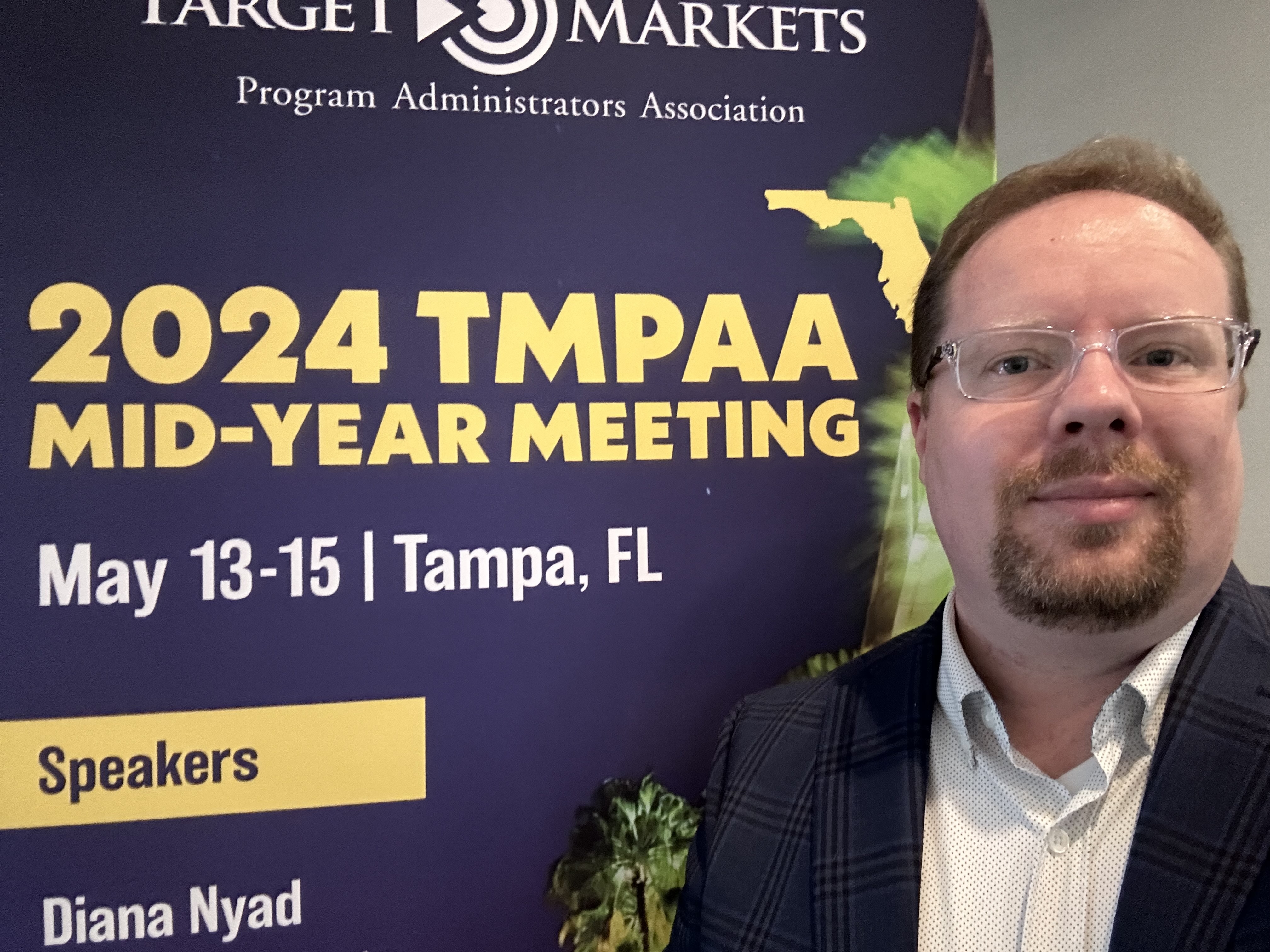
Target Markets 2024 Mid-Year Meeting in Tampa, Florida, made clear insurance is, and continues to be, a relationship business. This year’s mid-year meeting set a record with more than 1,300 attendees – more than double that of prior mid-year meetings for Target Markets. It was also my first time attending a Target Markets mid-year meeting.

I understand the attraction.

The first full day of Target Markets, Monday, May 13, was straight to business. Old friends reconnected while new acquaintances were made. Meetings were held over coffee, at breakfast, in break-out rooms and hallways, in the lobby, at the hotel Starbucks, over lunch, at the bar, across countless restaurant dinner tables and over drinks and at numerous private parties afterward. All this went beyond socializing as companies pitched, partners explored and new business partnerships were formed. The pace was hectic and heady, and it will be interesting to see if Target Markets offers an estimate for the business transacted in Tampa. The number of people who faced daunting schedules with back-to-back meetings, hoping to sign or write business, was impressive as they ran the gauntlet of two large Marriott hotels connected by a single third-floor sky bridge. The spirit of the 2024 meeting could be best summarized in a single word: Hustle.

Day two was a mix of the day before along with a series of programs and events that covered topics including a Lloyd’s Market update, a keynote speaker of remarkable tenacity embodied by Diana Nyad, a women’s leadership lunch, discussions on talent, the Target Markets’ new Program Business Professional designation and, of course, ample opportunities for networking.

The Target Markets’ hustle – on display from start to finish – also demonstrated the power and innovation of an insurance industry in growth mode. Seizing opportunities. Strengthening relationships. Getting business done.

Through all of this, I found myself among old friends I haven’t seen in years while sharing coffee and meals with new friends, potential business partners and – in my world – the all-important insurance industry trade media who were there to get the inside scoop on the issues, trends and insights of those who drive the business of insurance.

I applaud the team at Target Markets for putting together a productive event, and for those who grabbed the opportunity to move their business, and the industry, further into the future.

Understanding the Medium: Tips for Navigating the Changes to Social Media

No matter where you turn, social media issues are in the headlines.

Just recently, former President Trump’s Truth Social platform had its IPO, legislation to ban TikTok in the United States has stalled in the Senate, and the Supreme Court has expressed concerns related to free speech and state-level social media legislation. On the consumer side, according to TechCrunch, in 2022, TikTok’s monthly active users grew an average of 12% year-over-year per quarter, but this figure fell to 3% year-over-year per quarter in 2023.” Setting aside the politics and social concerns related to these headlines, the social media landscape is actively changing, and businesses will need to reassess how they utilize social media.

Understanding how the social media landscape is changing will require individual users and businesses alike to acknowledge the changes already been made. We are well past the days of Facebook’s monopoly on the social media market, and even traditional influencer relationships have changed with the growth of platforms like TikTok and YouTube Shorts. Now, businesses and users are seeing signs that these platforms are under attack, and some are asking if they will go the same route as Vine in 2017, when it was bought by Twitter (now X), and essentially shut down. Looking to the future, there are a few things that social media users of all levels should keep in mind.

Short-form content will remain dominant

While platforms are changing, the content has followed a similar trend — users want short, easy-to-digest content they can share and react to in a streamlined way. This means that even if TikTok is banned in the U.S., or bought by a different owner, other contenders will jump into the vacuum left in TikTok’s wake. Channels like Instagram and X continue to invest in video content, and that content will continue to be short as each brand’s content feeds continue to compete for attention.

Strategy is a must have

When choosing what platform to use, it’s important to consider how consumers interact with it, and how those audiences will then share and consume future content. Is a user looking to reach local business owners or C-level executives? For the former, community platforms like Facebook may still have a place in strategy, while the latter is more likely to capture engagement on LinkedIn. Understanding audiences and their media consumption habits will help users create a sustainable, long-term plan for engagement that makes a difference, despite ongoing changes or regulatory considerations. Reference the Twitter/X evolution as an example of how not thinking through these strategies can impact your long-term social media plans.

Names fade, but content remains king

Like many businesses, the names and identities of those at the top of the industry can change quickly. Facebook knocked Myspace off its throne at the onset of modern social media, and X has taken leaps away from the identity and goals it had as Twitter. While the names on the door may change, the user’s need to engage with relevant content remains constant. Now, as new platforms rise and identities change again, users are looking for the next big thing. While we don’t know what social media’s next big players might be, we can be sure there will be an emphasis on content that can be easily consumed, shared and analyzed.

As the role of social media in shaping politics and opinions has rapidly grown, businesses and individual users should pay attention to how the platforms are changing and being regulated. While it is impossible to predict every change that may come to a platform, social media users can be prepared by having a strategy and recognizing the kinds of quality content that remain popular on a given platform. By developing and sharing good content, users will remain at the top of social media home pages, regardless any changes to the platforms.

Have Work, Will Travel: Images of Work from Away

Earlier this month, we shared a blog about remote work and travel. Here, PR Manager Hari Rajagopalan shares some photos of some of the interesting food and sights he saw while working in India this year.

A stuffed, pesto marinated paneer steak with onions and spices on a bed of roasted potatoes and arrabbiata sauce.

A view of a restaurant center in Bengaluru, India.

An Indian take on a deep-dish pizza with veggies and a burrata bomb on top.

A view of nearby buildings and nature in Bengaluru, India.

A quattro formaggi pizza with an Indian twist, with a range of spices included.

In a World of Viral Videos, Employers Need a Plan for Hiring and Firing

We live in a TikTok world with countless Americans (me included) drawn to dramatic online videos of real-life joy and sorrow. How many of us have turned to our phones to watch one brief-but-compelling video, only to find 10 minutes or more have passed as we watch video after video? And those videos filled with relatable, emotional moments, are often the most compelling.

In 2018, Melanie Sanchez was recorded at her college graduation taking a cell phone call from an employer offering her a job. The video went viral, and we all shared in Melanie’s joy. One of my favorites was from about 10 years ago. Marina Shifrin posted an interpretive dance resignation video for her employer. It was fun, with a bit of dark humor, and showcased her creativity in the process. The video went viral. Marina hit the talk-show circuit and even landed a book deal.

Of course, there are also heartbreaking videos. Brittany Pietsch made headlines a few months ago when she recorded her Cloudflare layoff-via-video, showing us the dark underbelly of not only remote work but also how poorly some employers plan these challenging discussions. There are too many examples like Brittany’s, and not enough of those like Melanie.

For employers, however, there are lessons to be learned as we continue to break new ground in a world of hybrid and remote workers. The biggest lesson from a communications perspective is to be human and humane in these discussions of hiring and firing.

When Hiring

  1. Check the Tech: Before you dive into the conversation, make sure the technology platform you’re using works for all parties. Shaky or delayed connections create misunderstandings and frustration. Don’t proceed if the tech fails or is of such poor quality that the messaging you wish to convey is at risk. This step applies to both the hiring and the firing process.
  2. Be in the Moment: Video meetings are part of the new normal of workplace cultures. Treat them like in-person meetings. Greet the candidate and be warm and conversational. Work to maintain a high level of eye-contact by looking at the camera when speaking and listening.
  3. Set Expectations and Don’t Let Suspense Linger: Be transparent about your process upfront. Outline the steps in that process and your approximate timeline clearly. And if you are calling to offer the position to the candidate, be upfront rather than leaving them waiting to know if they have been selected. No one needs to be on pins and needles across an entire conversation waiting for the big reveal at the end.
  4. Record with Consent: If you plan to record the interview to share with colleagues or even for your own internal review, ask for the candidate’s consent first. Show respect for their privacy. And remember, in some states and jurisdictions, it is illegal to record someone without their consent. Parties who break these laws can face serious legal consequences.

When Firing

  1. Privacy First: In addition to checking the tech as noted above, privacy is critical. This is a devastating moment for the employee being released from your employ. Both you and the employee should be in a private setting.
  2. Be Empathetic: Job loss ranks alongside death and divorce as a major life stressor. Demonstrate kindness and empathy as best possible. Acknowledge the hurt and distress of the moment.
  3. Be Direct: Clearly communicate the decision to end the person’s employment without mincing words. However, be kind in the process. Avoid jargon or corporate speak; simply act like a human and treat the person with respect.
  4. Provide Resources: Your human resource representative should join the employee’s manager or supervisor on the call. The manager or supervisor – someone who knows the employee and his or her work product – is there to discuss the decision and provide feedback, while the HR rep should explain any severance package, unemployment benefits, health insurance options (if applicable) and any other services the organization plans to offer following separation. At all times, the employer should be respectful and be sure to truly hear the employee while still keeping the call focused and brief.

As employers continue to hire digital natives, the likelihood of a business matter like hiring or firing becoming click-bait for the rest of us rises exponentially. Millennials and GenZ are the first truly digital generations whose lives online are rarely separate from their offline experiences. So, employers would serve themselves well to consider those hiring phone or Zoom calls or the difficult layoff discussions via Teams or speakerphone might take on lives of their own online. These discussions could put your organization’s reputation on the line and even threaten your bottom line.

Remember, these discussions have the potential to become tomorrow’s headlines. Plan accordingly.

Luck or Skill? The Art of Landing a Quality Media Placement

As we revel in the “Luck of the Irish” this St. Patrick’s Day, we thought we would look at how to get lucky with public relations.

Contrary to some thinking, luck has little to do with landing a good media placement. In fact, a reporter’s connections with journalists is barely a factor. While relationships can be part of getting the right journalist connected with that pot-of-gold placement, its only one of the many components that go into a successful PR campaign. 

Unlike that pesky little leprechaun of General Mill’s fame, we’re willing to share the lucky charms we employ to land a good PR placement.

A Recipe for Success

The first step toward a public relations win is twofold: Identifying your key messages and understanding your target audience.

If your key messages double as marketing or sales copy, your luck has run out right from the start. In this world of smaller newsrooms and overworked journalists, language that even hints at self-promoting messaging will be ignored almost immediately. Today’s media climate requires brands to build authentic messaging that informs, educates or solves a significant problem of the outlet’s audiences.

Every company has a product or service to sell. Every nonprofit or charitable organization has a mission to promote. The question is, what does the target audience need? In most cases, it isn’t a sales pitch or information about a product or service that will save them time, money or convenience. Rather, messaging needs to work backward from the audience’s need, educating them on the situation and options, and positioning the brand or nonprofit as a reliable resource. Once you understand your target audiences, you can refine your message to attract the interests of journalists courting those audiences.

Another important component where most brands and organizations come up short is credibility. Public relations is not marketing if only because it is not — and should not be — about sales of products or services. Confusing the two is about as unlucky a step as one can take in business.

We hear from companies all the time that want to issue press releases about a fundraiser or new product or service. If these companies have done the work of building credibility, there are opportunities to be had. That hard work includes making executives available for commentary on industry trends and issues. It includes demonstrating industry knowledge and insight on matters that have nothing to do with the brand or organization’s products or services.

Credibility is built on being responsive and helpful to journalists who reach out seeking quotes, background and general information. This means fostering and maintaining a relationship with the outlets that matter most. Absent these things, a press release from an organization that is not engaged with the outlets and journalists covering that sector of the economy are of little interest to those media professionals. This is the number one reason why one-offs or project work often proves to be difficult.

You can’t buy your way into the Wall Street Journal’s news coverage. However, you can pay for a comprehensive public relations campaign that positions you as a thought leader in your space by showcasing your insights, commentary on industry trends, sharing of best practices and reacting to news of the day. This requires a steady stream of diverse content — owned and earned — across multiple channels to establish credibility and raise your profile as a go-to source for media covering your space. Consistent messaging and a consistent industry presence demonstrate credibility and brand commitment.

Additional Tactics for Good Luck

  • Thought leadership, the sharing of innovative ideas, insights and opinions — in the form of contributed content, owned content or in-depth media interviews — not only build relationships with media, but they demonstrate that vital credibility media needs to validate you as a source. Contributing to the discourse of your industry or field in this way often results in third-party endorsement by media (because they publish you as a reliable source) that provides reputational fuel, and a bit of luck, for your brand.
  • Newsjacking provides time-sensitive opportunities to help journalists understand or contextualize breaking news or emerging trends, often in the wake of actions taken by others. This type of media engagement helps determine the next phase of the story and, when done correctly, positions your organization as a trusted source.
  • Social Media has ebbed and flowed in terms of influence, and some channels are better suited than others to reach certain audiences or carry certain types of messaging. For business professionals and B2B industries, we continue to find value in LinkedIn. Between LinkedIn’s newsletters, live events, self-published articles and regular engagement by and with executives, LinkedIn consistently proves to be a powerful tool to reach key target audiences as well as media professionals searching for and vetting industry sources. Social media continues to be the investment some organizations are reluctant to make but would be lucky to have supporting their mission.

A Lucky Match

Finally, finding the right public relations agency for your business is less about luck than it is judgement. In fact, here’s a little secret: most PR agencies do most of the same things, with the same tools and connect with the same journalists. While many will point to a raft of key differentiators, from our perspective it comes down to one big one: matching personalities.

Public relations is, after all, a relationship-building business. While many of us trained the same way, have similar experiences and employ a range of not-too-dissimilar tactics to achieve our own lucky placements, it comes down to asking with whom you would prefer to work. Do personalities align or clash? Do you truly achieve a meeting of minds in that first meeting or is the pitch for the work simply pandering to your ego? Do you want to be surrounded by those who simply agree with you to please you, or do you want the expertise and insight you will pay for to be offered constructively, candidly and all to serve your best reputational interests? If things go wrong, is the PR pro or team you are considering the same individual or team you want standing by your side to fix it? Has the PR team pitching you on their abilities earned your respect and proven their value?

We advise prospective clients to understand all PR agencies offer similar approaches and resources. Some have deep industry specialties while others are generalists. What should matter in a lucky public relations partnership is the professionals doing the work, their knowledge and understanding of your industry, their track record, their ability to write well, their creativity, trustworthiness and their respect for your organization and its reputation.

Maybe there is a little luck in finding the right PR partnership, but the work itself has nothing to do with luck. It’s about tenacity, credibility, creativity and knowledge. If you find that in your public relations strategy as well as your PR partner, well, that truly is a lucky combination.

Read the Room: Preparing for your next speaking engagement

Sweaty palms and a microphone in hand, you are called to the stage for your presentation in front of hundreds of your colleagues. You wrote your speech word for word and studied it diligently but as your nervousness grows, those words you meticulously studied begin to vanish. Panic. Anxiety. Is there more you could have done? As in all things, preparation is key.

Power in preparation

A successful speaking engagement is rooted in the right kind of preparation. While writing a speech is an important part of the process, simply putting words on paper could leave a public speaker high and dry on stage. The reality is a memorized speech is full of recollection and verbal landmines, stumbling and missed content. When preparing for your next speaking engagement, consider the following:

  • Focus on key messages: Rather than memorizing a speech, consider the key messages or the main points the speech conveys. Talking points serve as a speaker’s safety net and help pull them back to their main points when stumbling occurs or they veer off on a tangent. Key messages should include the main idea of the speech, how it relates to the speaker and their organization, as well as the audience and high-level content points.
  • Follow a formula: Be sure to make your point, provide reasoning or statistics that support your point and consider offering an example to help the audience visualize what you are saying. Telling a story is often easier for a speaker to recall compared to memorizing theories, data or intellectual arguments. Finally, be sure to drive the point home again at the conclusion of your remarks.
  • Practice makes perfect: Reading your speech ahead of time can be helpful, but nothing compares to giving the speech on camera or in front of colleagues, friends or family. Avoid speaking in front of the mirror as it only serves to distract. Speaking before a friendly audience helps with both familiarity with the topic as well as speed of delivery, your body language, your intonation, articulation and more. Play the recording back afterward to self-evaluate and ask for honest feedback and direction from those who are invested in you making a great impression up on the big stage.
  • Engage with your audience: Audience engagementis crucial to a speaker’s success, but it rarely ever just happens. Speakers must prepare for what some call crowd work; engaging the audience as part of their presentation and considering potential outcomes. In addition to the fact that audiences do not want to sit through a lecture, engaging with the audience can help them remember your key points. Storytelling, adding a little humor, polling the audience or low-pressure activities can be great ways to garner audience attention and prime them to listen attentively.
  • Have a backup plan: When all else fails, speakers should be prepared with a backup plan. Comedian Jo Koy saw firsthand what happens when you do not have a plan at the 2024 Golden Globes when his monologue fell flat. His jokes about Barbie and Taylor Swift left him in hot water and his only fallback was to blame the writers. While the Golden Globes is a much larger stage than your average business conference, all speakers should be prepared to pivot. Consider how an audience could respond to all aspects of your speech and have a plan to pivot to a safer topic should you lose the audience.

Public speaking is among the most common societal phobias, but it can be overcome in many cases, with effective practice and preparation. Comprehensive preparation can instill the confidence a speaker needs to be successful on stage. Speakers are selected for the insights they offer. Come prepared for the stage with key messages and a solid plan of action to make sure your messages are conveyed in way that engages the audience and leaves them wanting to learn more.