AI: How to Avoid Becoming a Cautionary Tale

AI will cure what ails you.

That seems to be the mantra of the 2020s. If you have a problem, it appears the solution is to implement artificial intelligence. However, AI is not a cure-all. While AI can be an incredibly powerful tool, it isn’t perfect and there are cautionary tales to consider as countless organizations incorporate AI.

Glitch in the System

Any adult functioning in the digital world knows technology sometimes fails to live up to its promise. AI is not immune to being glitchy, especially when humans fall short in their quality control roles, many of which are still evolving along with the tech. There are countless AI snafu examples that include:

  • Less than two years ago, Reuters reported on a U.S. District Judge who sanctioned two New York attorneys when their ChatGPT-built brief included six fake case citations.
  • Last spring Google was pilloried by users and media alike when its then-new AI capabilities roll-out resulted in a cascade of false information—including telling users to eat glue and rocks.
  • And Fast Company produced a cringe-worthy list of brands last summer whose AI-driven marketing efforts ranged from total failure to deeply offensive, including household names like Toy “R” Us, McDonald’s and Sports Illustrated.

Reliance Risk

The risk of AI is becoming overly reliant on AI. Reliant on its promise. Reliant on its ease of application. Reliant on its accuracy.

Large language models or LLMs—the engines that drive most generative AI tools—train on massive content libraries. As a result, AI is prone to repeating, in whole or part, both the words and style of some of the content on which its LLM trains. These AI tools aren’t designed to violate copyright laws. Rather, they are working with what they know, and what they know is existing, written—and often copyrighted—content. The intent is to mimic human creativity with enhanced, faster output. The risk, of course, is not only plagiarism, but also inaccuracies due to AI hallucinations as well as content that, frankly, often falls short of being truly creative or distinguishing.

Both the quality and legality of AI generated content will be adjudicated in the court of public opinion, as well as courts of laws, for the foreseeable future. Meanwhile, humans are working to catch up. Plagiarism software is continually being stood-up and refined to catch the errant bot-writer. Publishers and others are setting policies for how they will handle contributed AI-generated content. And the legal industry is, most likely, viewing AI as the next asbestos as everyone considers its implications.  

Practical Realities

Learning to live with, and employ, AI is an evolving state. What business and nonprofit leaders must consider now regarding their use or incorporation of AI is this:

  • Brands and business leaders trying to position themselves as thought leaders will fail—possibly in very public ways—if they cede their expertise to the expedience and perceived accuracy of AI where content is concerned.
  • Leveraging AI as a starting point in the creative process can create efficiencies. Relying on AI to drive that process is simply lazy.
  • From courts to publishers as well as clients and consumers, much of the early AI-driven content we are seeing runs the gamut from being declared unacceptable to the merely unpalatable with limited exceptions.
  • Developing policies around how and where to apply AI in your organization is essential to avoid being left behind.
  • Closed AI—essentially a non-publicly accessible AI model—is the only practical approach to AI implementation for many businesses to protect sensitive company and/or client data.
  • A detailed dive into how and if your organization’s errors and omissions liability insurance addresses claims arising from your use of AI is most definitely warranted.
  • AI can be a remarkable improvement to one’s operational efficiency and even client engagement, but only if thoughtful guardrails are in place with humans overseeing the work and conducting frequent quality and accuracy checks.

Without question, AI is and will continue to shape the future of business. Guiding that process with high ethical standards, transparency and rigorous human oversight is required if non- and for-profit organizations are to maintain the trust and confidence of those they serve.
Navigating Conference Season: Take-aways from a Philly Cyber Risk Summit

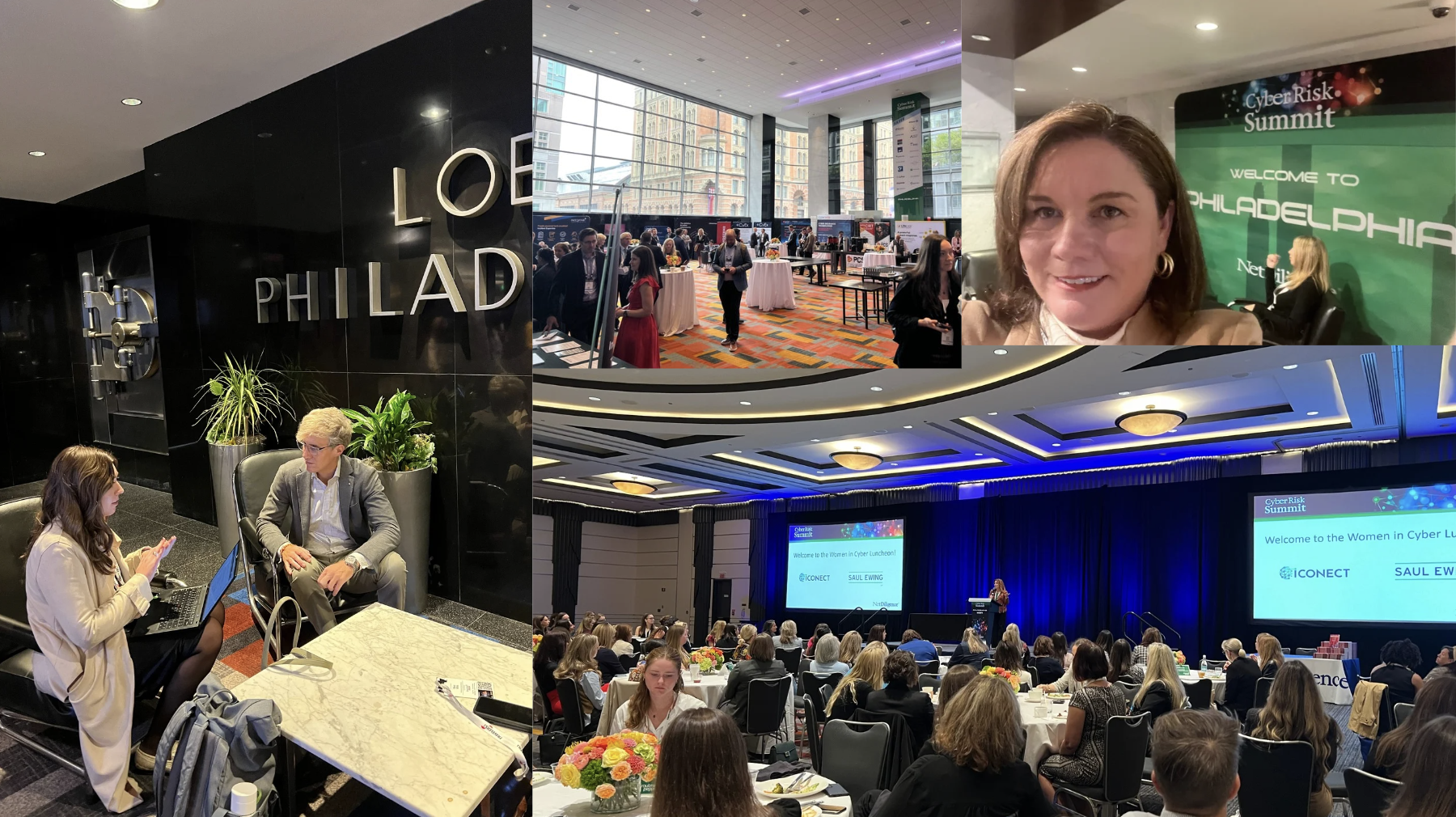
It’s conference season and this week I was fortunate to attend an industry event with a global draw – without hopping on a plane or train – in my hometown of Philadelphia. Insurance carriers, brokers, cyber risk assessment, breach recovery experts, legal, security, privacy professionals and more traveled to the City of Brotherly Love for three days of discussions on cyber risk hosted by NetDiligence®. For me, the event provided a valuable opportunity to learn about trends and challenges in the ever-evolving cyber space, to connect with clients, make new connections and of course check in with and coordinate meetings with trade reporters and editors on site.

As a public relations professional who has spent years working closely with the insurance industry, I know enough about cyber risk and cyber insurance to be dangerous. However, the speakers at the conference offered eye-opening insights on challenges in the cyber risk space, emerging risks including artificial intelligence, new technology and best practices for risk mitigation. Now, I know enough to keep me up at night.

For example, top cyber scams noted by Experian Head of Global Data Breach Resolution Michael Bruemmer included those related to fake news (particularly bad during election season), natural disasters, charities, sextortion (which can even include a photo of the recipient or their house) and QR codes. What I learned about QR codes maybe should have been obvious – it’s nearly impossible to tell the difference between a legitimate and illegitimate QR code with the naked eye.

For businesses, the top risk, according to NetDiligence, remains business email compromise. As to why the risk remains so high despite corporate teams working diligently to implement safety measures and train teams to spot these emails, Bruemmer said it’s the smart pitches from the criminals that appeal to human weakness. They just keep getting more creative.

Outside the sessions, I spent time roaming the exhibit hall and making new connections. Representatives were on site to talk about their cyber risk technology, mitigation services, cyber data mining services, e-discovery and more. While the usual water bottles, pens, mints and cozies adorned the tables, a robot, like a modern version of Rosey from the old Jetsons’ cartoon, roamed the floor proffering champagne from exhibitor KYND for attendees.

Additionally, I had the opportunity to connect a few clients with attending media for background conversations. At Kimball Hughes PR, we encourage our clients to leverage their attendance at conferences like this for potential media introductions or onsite interviews. Not only can conferences bring value in terms of continuing education credit, new business meetings and client relationship building, meeting with media members, who are often on-site at these events, can pay dividends in establishing you as a trusted source for future articles or even in a conference wrap-up piece.

We often suggest our clients bring us along to conferences where media is attending for boots-on-the-ground support. This way, we can coordinate additional on-site meetings, assist in fielding questions, assist in bringing trending conference topics to the conversation and seek out opportunities to comment on articles currently in the works.

While I’ll be happy to trade my dress shoes for sneakers in the days ahead, this industry conference, like so many others, was a fantastic opportunity to learn, further relationships and build new connections.

Stay tuned for more conference round-ups as members of the Kimball Hughes PR team continue to round the conference circuit throughout the month.

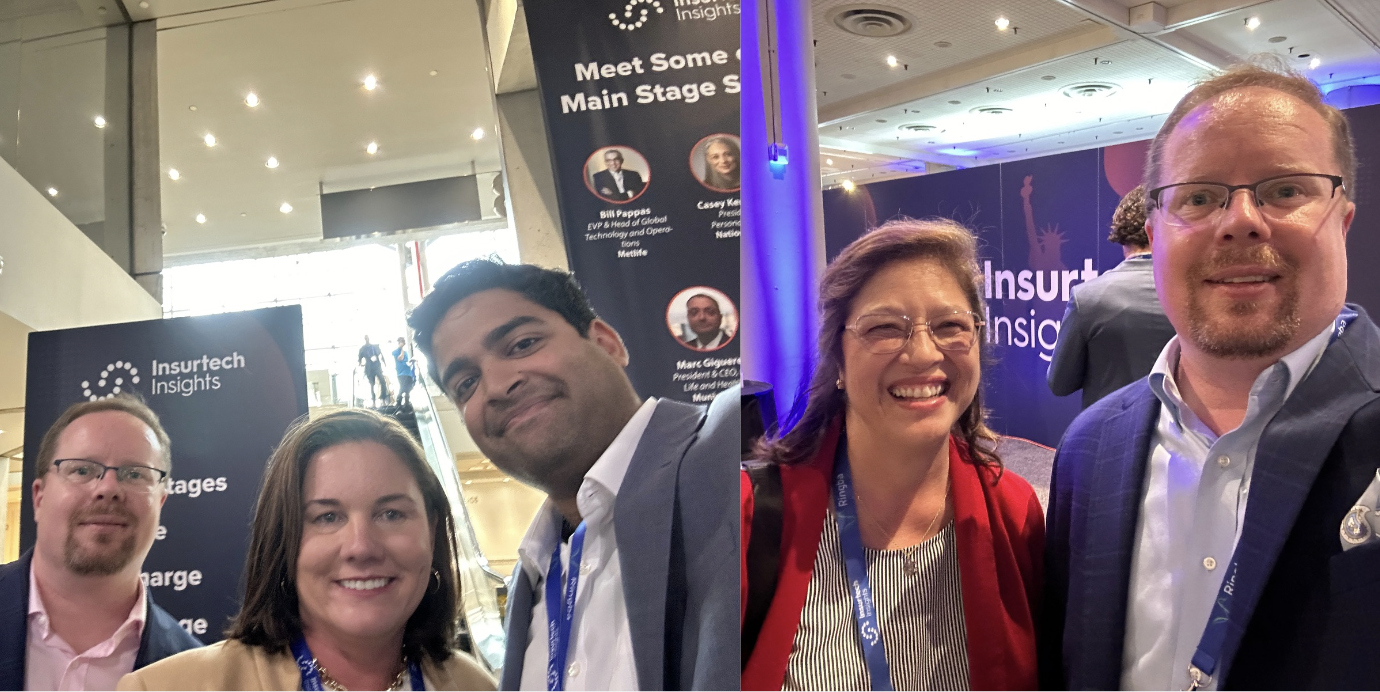
InsurTech Insights USA 2024: Lessons Learned, Advice Offered

Last week, two of my colleagues and I attended InsurTech Insights USA in New York to do a little networking. Having attended for the first time in 2023, what I’ve come to appreciate about ITI is the speed networking.

Like two unassembled IKEA furniture pieces, both parties to ITI’s speed networking meet-up have a purpose. But how do you make the meeting feel natural and unforced? This can be tricky without planning. It can feel a bit like trying to assemble said IKEA furniture while following a vague and sometimes interpretive set of directions.

At ITI, you can use the event app to make connections with other attendees and schedule a series of 15-minute speed networking meetings. The app does all the hard work in terms of schedules and logistics. It’s the human element that is both fascinating and frustrating.

Who speaks first? How do you start? Should a slide deck be involved? What about business cards (so many opt not to carry them anymore or lose them along with their checked luggage)? What are the takeaways or next steps? Should there be takeaways or next steps? What if you’re late for the next meet-up that starts the moment your current meet-up ends?

What I’ve Learned

For those who participate in these meetups, and some do not, the intentions of both parties are clear. Someone is selling. Someone might be buying. Sometimes both parties are selling. And, sometimes, someone took the meeting simply to be polite.

The good news is it’s a level playing field for insurtechs, insurers, vendors and others who choose to participate.

What I have found to work best is to keep it simple and be direct: Asking the other party to tell you what they do, who is important to them to grow their business and what problems they are trying to solve or what opportunities they are seeking. Always give the other party, when possible, most of the time. And – importantly – listen to what they say. Don’t simply wait to speak. If what you do, provide or sell matches up with their needs, then connect the dots for them. Otherwise, ask them what they would like to know about your business and allow them to guide the conversation. And leave the PowerPoint at home. When you’ve got about a minute left, ask if it makes sense to keep the conversation going. If agreed, exchange contact information.

The number of people I met in 2023 and again this year who said, “I’m not sure how this meeting is supposed to work” was surprising, but also honest and refreshing. They saw the value of the speed-networking meet-up. They simply didn’t have a plan. Maybe the above approach will help in 2025?

What I Suggest

Frankly, I’d like to see a bit more of this type of speed-networking at other insurance industry conferences. Just maybe not at the same volume or pace as ITI (you really do need comfortable shoes and the occasional bathroom break).

Insurance is a business built on relationships. With daily new entrants to the industry and younger generations working to build and nurture their own networks, maximizing in-person opportunities and building relationships are more important than ever. Additionally, as experienced executives begin to retire, some of their industry relationships run the risk of being retired with them. Insurers simply cannot afford for this to happen.

ITI’s speed-networking format can be adapted to serve nearly any organization. For carriers, re-insurers and others, this would be a potentially great addition to all-company staff meetings. For the industry’s many professional associations, speed networking could be a great icebreaker for new as well as existing members. It could also serve the organization to better understand their members and their needs in a direct way. The same is true for recruitment events, fundraisers and alike.

For insurance to innovate and grow into the future, relationships must be brought along as part of the compact. While ITI certainly did not create the speed-networking concept, its application of the concept – in my view – offers a road map to creating and carrying all-important industry relationships into a bright, energetic and exciting future.

Press Release Wire Services: What are They and Why Should You Care?

Press release wire services are frequently seen as an essential tool for organizations looking to disseminate their news quickly and broadly to the media. To the uninitiated, they can seem like a home run. Perform a search for the company name after posting to a wire service and you may find two or three postings of the release on the first page of your search. But is that really news? Do actual humans see your release? Is it worth the expense? The answers are mixed.

How Press Release Wire Services Work

There are numerous press release wire services like PR Newswire, Business Wire, and GlobeNewswire, and others.

To start, a company must draft its press release and upload it to a wire service. Be sure you understand the guidelines of the wire service you are using. Some have character limits for headlines or require brief, word-count-specific summaries of the content of the release that must be distinct from the text of the press release itself.

Once uploaded, the wire service editorial team will review the content to ensure it meets the wire service guidelines. Editors might suggest edits for clarity, conciseness, or to enhance the overall impact. Additionally, some wire services now reserve the right to reject press releases if they are deemed overly promotional and lacking in genuine news value.

Once approved, the press release is scheduled for distribution to a network of media outlets, journalists, news websites, and other stakeholders. This network often includes both traditional and digital platforms. Please note, there can be a delay of several hours – depending on the service – between approval and actual distribution. If your company requires the press release to be distributed on a specific date or time, please check with the wire service well in advance to understand their specific process and timing.

These wire services will provide a report with analytics on the press release’s reach and engagement, offering insights into its performance and audience interaction. In my experience, few if any of these data points are demonstrably valuable. Look specifically for data that reflect direct interactions with your press release. If you have more than 10 direct interactions via a wire service, I call that a win. Other provided metrics are fuzzier and, often, less valuable.

Why Companies Use Press Release Wire Services

Company leadership will often point to press release wire services as benefiting them in the following ways:

  • Broad media coverage
  • Increased SEO for the company or brand
  • Efficient use of resources

Actual media coverage resulting from a press release wire service is increasingly rare. Journalists are deluged with press releases and pitches daily. Further, because wire services supply the same content to hundreds or thousands of news websites, the uniformity of that content tends to make coverage of the information in those press releases less valuable to journalists seeking their own original story.

The reality is most press releases distributed through a wire service become aggregated content gathered by website algorithms and posted to pages on those sites you would be severely challenged to find natively on those websites. In essence, those releases tend to go into a black hole and are rarely seen by actual humans.

While press release wire services can still provide a slight bump to your company’s search engine optimization, that reality diminishes every year. You see, Google and other search engines tend to downgrade or even exclude repetitive content online, which negates the desired effect of using a press release wire service.

Additionally, while a press release wire service can appear less expensive than an ongoing engagement with a public relations agency or paying for a full-time, in-house comms professional, the reality is wire services are often wire services are not targeted communications tools. While you might pay a PR professional more over time than a one-time wire service fee, the fact is your media coverage will be more targeted and, ideally, more beneficial than simply blasting it out to the universe and hoping someone who may be interested in your services sees it.

However, if your goal is greater visibility in front of the widest possible audience, then you can justify a wire service press release distribution.

Finally, sometimes your leadership team, board of directors or investors simply need to see that your messaging has “gotten out there.” Often, this is the number one reason I have seen organizations employ wire service releases.

Setting Leadership Expectations

Whether using a wire service or not, it is crucial for organizations to set realistic expectations about the impact of their press releases. Not every press release will make headlines or go viral. To maximize press release effectiveness:

  • Focus on Newsworthiness: Ensure the content is genuinely newsworthy and well-written.
  • Tailor the Message: Customize the press release to appeal to the target audience.
  • Follow Up: Supplement the press release with personalized outreach to key journalists and media outlets.

Press release wire services remain a useful tool for companies and nonprofits to distribute news. While they offer benefits, it’s essential to use them strategically and maintain realistic expectations. By balancing the use of wire services with direct media engagement, organizations can enhance their visibility. As a former journalist, I appreciate the convenience and speed these services appear to offer, but my peers in the Fourth Estate also value originality and quality in the content they receive.

Tampa: Hustle Capital of the Insurance Industry

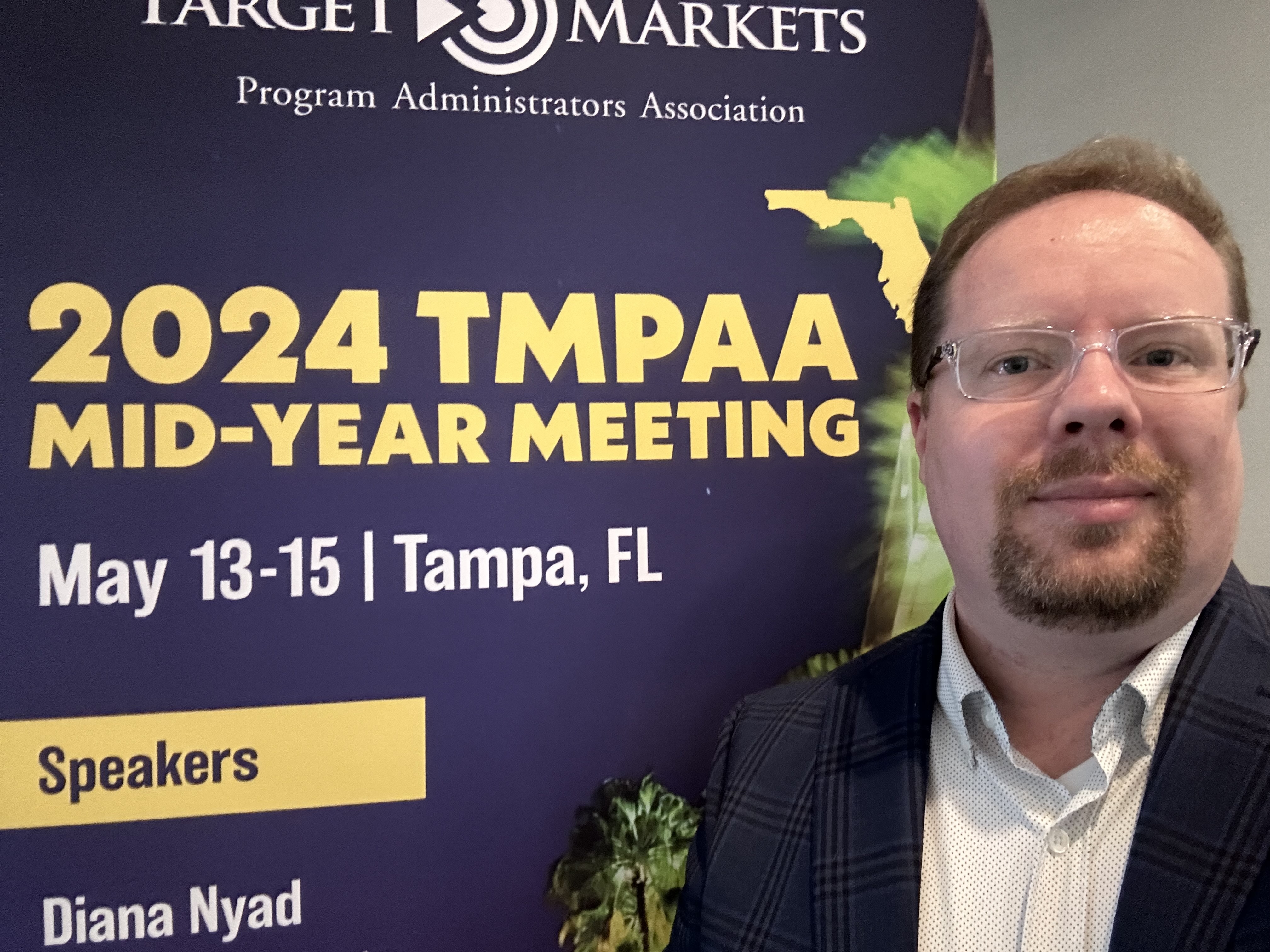
Target Markets 2024 Mid-Year Meeting in Tampa, Florida, made clear insurance is, and continues to be, a relationship business. This year’s mid-year meeting set a record with more than 1,300 attendees – more than double that of prior mid-year meetings for Target Markets. It was also my first time attending a Target Markets mid-year meeting.

I understand the attraction.

The first full day of Target Markets, Monday, May 13, was straight to business. Old friends reconnected while new acquaintances were made. Meetings were held over coffee, at breakfast, in break-out rooms and hallways, in the lobby, at the hotel Starbucks, over lunch, at the bar, across countless restaurant dinner tables and over drinks and at numerous private parties afterward. All this went beyond socializing as companies pitched, partners explored and new business partnerships were formed. The pace was hectic and heady, and it will be interesting to see if Target Markets offers an estimate for the business transacted in Tampa. The number of people who faced daunting schedules with back-to-back meetings, hoping to sign or write business, was impressive as they ran the gauntlet of two large Marriott hotels connected by a single third-floor sky bridge. The spirit of the 2024 meeting could be best summarized in a single word: Hustle.

Day two was a mix of the day before along with a series of programs and events that covered topics including a Lloyd’s Market update, a keynote speaker of remarkable tenacity embodied by Diana Nyad, a women’s leadership lunch, discussions on talent, the Target Markets’ new Program Business Professional designation and, of course, ample opportunities for networking.

The Target Markets’ hustle – on display from start to finish – also demonstrated the power and innovation of an insurance industry in growth mode. Seizing opportunities. Strengthening relationships. Getting business done.

Through all of this, I found myself among old friends I haven’t seen in years while sharing coffee and meals with new friends, potential business partners and – in my world – the all-important insurance industry trade media who were there to get the inside scoop on the issues, trends and insights of those who drive the business of insurance.

I applaud the team at Target Markets for putting together a productive event, and for those who grabbed the opportunity to move their business, and the industry, further into the future.

Lacing Up for Good: Enhancing Team Communication, Collaboration by Giving Back

This Spring, the team at Kimball Hughes Public Relations is lacing up our sneakers and tracking our steps to raise funds for those in need through the Insurance Industry Charitable Foundation’s annual Step Up challenge.

We have found philanthropic activities like this not only support charitable causes, but they also enhance our employee culture, team morale, and bring us closer together. As professional communicators, we’re always striving to find the best channels for our clients to use to reach their target audiences. In a new age of remote work, channels of internal communications are changing and we’ve found one of the best ways to communicate and deepen relationships with colleagues is to work together for social good.

As we’ve all heard, giving back and volunteerism have become core tenets of businesses across industries in recent years. There is a clear business case for philanthropy, as the next generation of workers have a clear interest in working at businesses that back up their values with action. Further, recent studies have shown that customer loyalty may improve at socially responsible businesses.

We believe giving back and volunteering events that emphasize collaboration and bringing communities together find more engagement.

Our client Pennsylvania Lumbermens Mutual Insurance Company (PLM) is also getting fit and having fun while building comradery among team members and raising funds for vulnerable children and communities. Each spring, employees form a team for the Insurance Softball League of Philadelphia, which raises money for local nonprofits while gathering regional insurers for friendly softball competition. Employees have the opportunity to get to know each other outside the office, get a little exercise and breath in fresh air while helping those in need.

With the IICF Step Up challenge, employees, friends and families in and around the insurance industry can form a team and compete with one another in a fitness challenge, measuring their steps, pedal strokes, sit-ups and virtually any other activity against the teams of other companies. Kimball Hughes PR is proud to have been a part of Step Up for the past five years and we have enjoyed learning more about each team member along the way – whether it’s a penchant for morning dog walks, an after-work jog, a Peloton ride or hike through the woods.

Consider reigniting company culture with a collaborative philanthropic initiative this Spring. We’re having a blast. Check out our progress so far here:

Read the Room: Preparing for your next speaking engagement

Sweaty palms and a microphone in hand, you are called to the stage for your presentation in front of hundreds of your colleagues. You wrote your speech word for word and studied it diligently but as your nervousness grows, those words you meticulously studied begin to vanish. Panic. Anxiety. Is there more you could have done? As in all things, preparation is key.

Power in preparation

A successful speaking engagement is rooted in the right kind of preparation. While writing a speech is an important part of the process, simply putting words on paper could leave a public speaker high and dry on stage. The reality is a memorized speech is full of recollection and verbal landmines, stumbling and missed content. When preparing for your next speaking engagement, consider the following:

  • Focus on key messages: Rather than memorizing a speech, consider the key messages or the main points the speech conveys. Talking points serve as a speaker’s safety net and help pull them back to their main points when stumbling occurs or they veer off on a tangent. Key messages should include the main idea of the speech, how it relates to the speaker and their organization, as well as the audience and high-level content points.
  • Follow a formula: Be sure to make your point, provide reasoning or statistics that support your point and consider offering an example to help the audience visualize what you are saying. Telling a story is often easier for a speaker to recall compared to memorizing theories, data or intellectual arguments. Finally, be sure to drive the point home again at the conclusion of your remarks.
  • Practice makes perfect: Reading your speech ahead of time can be helpful, but nothing compares to giving the speech on camera or in front of colleagues, friends or family. Avoid speaking in front of the mirror as it only serves to distract. Speaking before a friendly audience helps with both familiarity with the topic as well as speed of delivery, your body language, your intonation, articulation and more. Play the recording back afterward to self-evaluate and ask for honest feedback and direction from those who are invested in you making a great impression up on the big stage.
  • Engage with your audience: Audience engagementis crucial to a speaker’s success, but it rarely ever just happens. Speakers must prepare for what some call crowd work; engaging the audience as part of their presentation and considering potential outcomes. In addition to the fact that audiences do not want to sit through a lecture, engaging with the audience can help them remember your key points. Storytelling, adding a little humor, polling the audience or low-pressure activities can be great ways to garner audience attention and prime them to listen attentively.
  • Have a backup plan: When all else fails, speakers should be prepared with a backup plan. Comedian Jo Koy saw firsthand what happens when you do not have a plan at the 2024 Golden Globes when his monologue fell flat. His jokes about Barbie and Taylor Swift left him in hot water and his only fallback was to blame the writers. While the Golden Globes is a much larger stage than your average business conference, all speakers should be prepared to pivot. Consider how an audience could respond to all aspects of your speech and have a plan to pivot to a safer topic should you lose the audience.

Public speaking is among the most common societal phobias, but it can be overcome in many cases, with effective practice and preparation. Comprehensive preparation can instill the confidence a speaker needs to be successful on stage. Speakers are selected for the insights they offer. Come prepared for the stage with key messages and a solid plan of action to make sure your messages are conveyed in way that engages the audience and leaves them wanting to learn more.

The Right Fit: The Benefits of Partnering with a Boutique PR Agency

Road Runner always outran Wile E. Coyote. The massive, formidable Death Star was no match for Luke Skywalker’s tiny x-wing fighter. And of course, we all know how David fared against Goliath. In each instance, the little guy triumphed, reminding us that bigger is not always better.

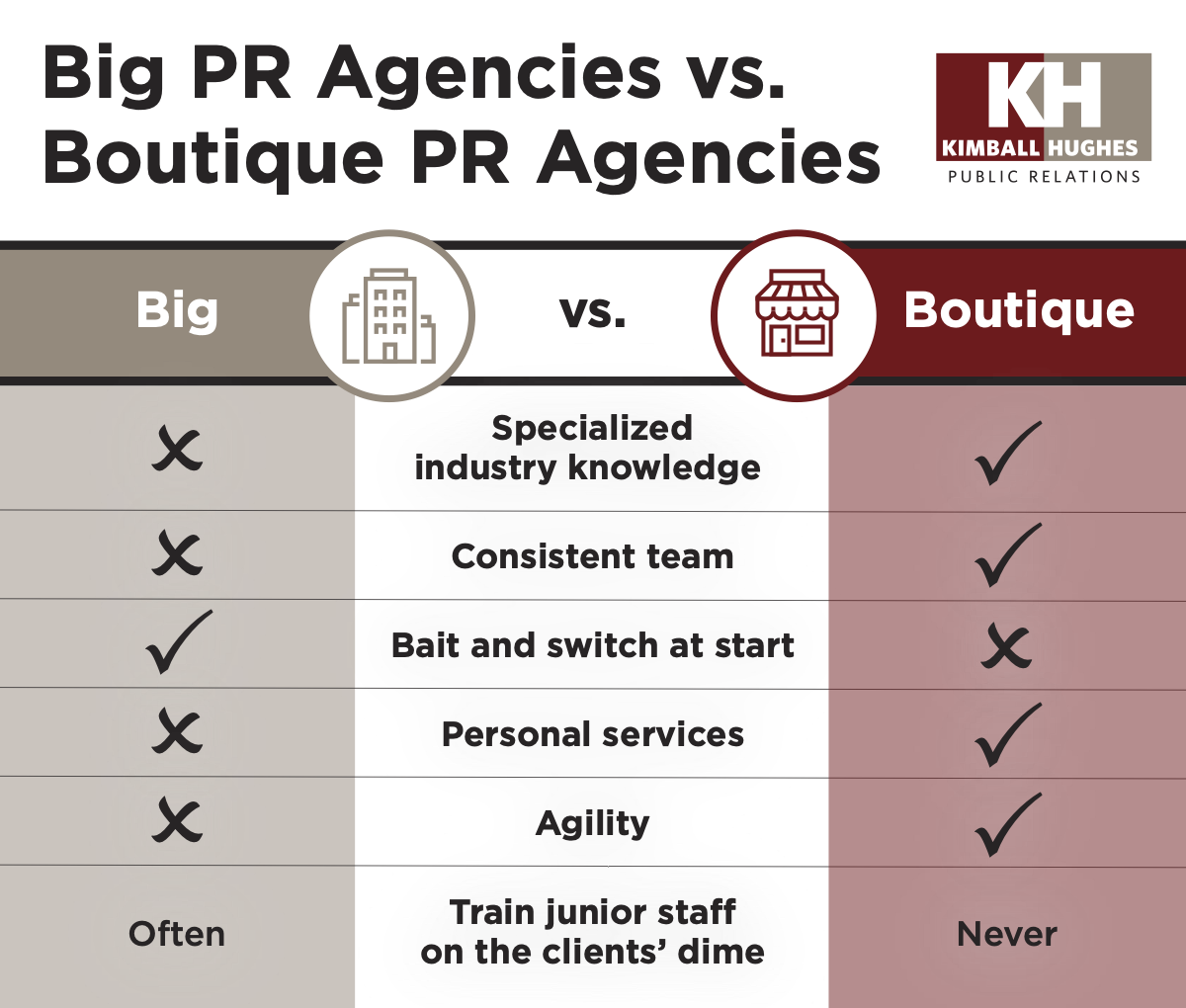
The same holds true when it comes to public relations agencies. Boutique-sized public relations agencies may not boast the large teams and vast service offerings that their larger counterparts do, but when it comes to specialized knowledge, nimbleness, and personal service, selecting the right boutique agency can provide unmatched success.

A Specialized Focus

Often a boutique agency will specialize in select industries where they have expertise. Their team will consist of seasoned employees who have worked within the industry itself or worked for years on accounts for companies in that industry. For example, at Kimball Hughes Public Relations, one of our specialties is insurance. Our team members have worked for numerous insurance clients from a PR agency perspective, have worked in-house for communications teams at insurance companies and even worked as reporters on the insurance beat. Moreover, boutique PR agencies pride themselves on employing experienced professionals to lead accounts; they simply cannot afford to risk their reputations by staffing client work with new or less experienced staff.

A boutique PR agency with a specialty will have knowledge of hot button issues and emerging trends. They will be able to do more than simply promote your brand or your executives, they will have the inside knowledge to be able to position your subject matter experts as thought leaders within the industry. They will know the conferences at which to be seen and secure media interviews that matter to your stakeholders. A specialized PR agency will have strong media contacts within the niche and help to position your leaders as go-to sources for future stories.

A Nimble Approach

Like Jerry the mouse, smaller agencies can be nimble – speedy too, like Road Runner. Without the red tape of a larger agency, a smaller agency can react to news more quickly and prepare a thoughtful response for your team to review and distribute in a timely manner.

A small PR firm will also be a nimble ally in a crisis. In those circumstances and others, you will have direct and prompt access to your agency account manager, someone you know and trust, who understands your organization and your industry who is also ready to help protect your company’s reputation anytime day or night.

That agility also comes in handy when a media strategy is not working. Valuing each and every client relationship as if it were the firm’s only relationship, a smaller agency will constantly be monitoring for results. When those results don’t manifest, they’ll recognize it immediately and pivot to a new strategy.

Personal Service

Finally, when you work with a boutique agency, your daily contact and team are likely to be people you met at the start of your relationship with the agency. The bait and switch is rare with boutique PR agencies. In fact, in many cases, you may know a number of people within the agency and they will know you and be familiar with your company’s needs. Small PR firms work closely with clients and staff to ensure  all team members are in the know so they can quickly spot-fill or act as an extra set of hands when necessary. Further, these folks will make an effort to get to know you and to understand your team’s marketing and communications goals to ensure your team is getting the results your c-suite wants to see.

For smaller PR agencies, clients are truly partners. We value relationships and want to deliver for our clients.  

So, smaller agencies may not wield a multi-story downtown headquarters the size of the Death Star. But they can be a powerful force. Give Kimball Hughes PR a call to talk to us about our specialized expertise, knowledgeable team and proven results.

Q&A with Will Jones, Editor-in-Chief of Independent Agent Magazine

About Will Jones: Will graduated from Coventry University with a bachelor’s degree in english and journalism in 2010. Before joining the Independent Agent Magazine team in 2017, he gained exposure to the insurance industry while working for an insurance brokerage based in Portland, Oregon, where he currently lives with his wife, two children and border collie.

What motivated you to enter trade media, specifically covering the insurance industry?

Ever since I had my first byline published when I was 15 years old in a soccer fanzine called The Gooner, I wanted to be a writer. Writing about soccer was my first choice of subject matter with everything else second. Ultimately, having a niche, no matter what it is, motivated me to enter insurance and remain here.

What do you enjoy most about covering the insurance space?

There is a lot to love about covering insurance. First of all, everybody needs it, so everyone can relate in some way. Second, it’s considered an unattractive industry to be a part of, but I love owning that and trying to change people’s minds. And now, the longer I’ve been covering the insurance industry, the more I understand and the more I enjoy it.

What are you most proud from your career as a journalist?

In all honesty, being paid to write is an accomplishment in itself. I went to university and got a bachelor’s in “English and Journalistic Studies.” However, graduating in 2010 meant that employment, nevertheless paid writing work, was hard to find. I did a lot of online internships, set up blogs, traveled and was paid pennies per word for freelance work before finding my way here. I don’t think I got paid to write until I was 24 and didn’t get full-time writing work until I was 28. I nearly gave up on multiple occasions. There was a lot of rejection.

What would you say was your biggest challenge in covering the insurance space?

From an industry perspective, there is a lot of technical information to interpret. I am not an expert, but my work is read by experts. That is always a challenge. Also, we face many of the same challenges other publications face, such as finding the balance between print and digital publishing, walking the line between advertorial and editorial content and maintaining relationships with sources. Also, given some of the bad news announced by many major companies recently, making sure our coverage is fair, objective and equal is another challenge.

What would you say is the best story you’ve broken over your years in the industry?

As a magazine, we don’t typically “break stories.” However, instead, our success relies on getting ahead of trends and making predictions so when we’re writing a story six weeks before publication, the information is still relevant at the time of publication.

What advice would you give to a reporter just starting out in covering the insurance industry?

The insurance industry is full of very welcoming people, so I have been very fortunate to meet and work with people that are open to spending time with me to help me learn. If you can approach the industry humbly and start building relationships that expand your contact list, you’ll be able to move forward much quicker. The more people you know, the easier it gets. That won’t happen immediately but by reaching out to people, setting up introductory calls and subscribing to the trade e-newsletters, you’ll start to figure it out.

Can you share some of the top industry trends you’re looking out for over the next five to 10 years?

Currently, the hard market is set to dominate the industry for the foreseeable future. However, what the market looks like when we get to the end of it is a different matter. A lot of people are assuming  this hard market is going to be like other hard markets where it returns to normal once the cycle is over. I find that hard to believe. Technology adoption, CAT events, inflation, post-pandemic impacts, political instability, the list goes on. I don’t think this is just going to come out in the wash.

Can you tell us about a hobby/passion you have outside of work that helps you unwind and recharge?

As a father of a 2-year-old and 5-year-old, “unwind” and “recharge” don’t really come into my vocabulary. But when I do get a day to myself, watching soccer is what I’d do first. I am also a runner and have recently moved from road running to trail running. Living in Oregon provides lots of great opportunities for that.

About the magazine: Independent Agent magazine is the authoritative source of information for professionals who sell insurance for independent agencies. Independent Agent primarily serves property-casualty independent insurance agents and brokers and is a benefit of membership of the Independent Insurance Agents & Brokers of America.

When Conferences Go Wrong: Have a Plan

Some conferences go smoothly. Others end in the wake of an active shooter event. There is a lot of grey between those two extremes, and organizations sending personnel to conferences ought to have a communications plan in place for the unexpected.

Last month, my colleague Eileen Coyne and I were attending RISKWorld in Atlanta (April 30 to May 3). On the final day of the conference, ahead of the closing keynote, an active shooter event took place a few miles from the conference location.

Our first notification of trouble came in the form of an ABC News alert. Text alerts from our hotel and the convention followed. Digital signage at the conference turned green with white text, alerting everyone to shelter in place and that the conference center was not part of the active shooter scene.

We immediately reached out to our families as well as colleagues to advise them that we were fine, that the conference was shutting down and the event in question was not nearby. As it turned out, the shooting took place two blocks from our hotel. It would be hours before the hotel would come out of lockdown and allow guests to come and go.

In speaking with other attendees, it became clear that if their companies had formal crisis communications plans at all (and about half of most US organizations do not), they did not have protocols for staff attending off-site events during an emergency.

Given the current social climate, all organizations need to develop crisis protocols for off-site events. Contacting the staff attending the event, confirming they are safe and cascading that message across the organization – and potentially to the family of those staffers involved — should be part of any crisis communications strategy. This applies whether it’s your CEO speaking at the conference as well as employee attendees or sales team members staffing the company’s vendor booth.

Whether the crisis originates from the actions of a person or persons, Mother Nature or something else, having a plan for out-of-town staffers in case of emergency is key. And, importantly, those traveling should be trained in the details of the plan — including phone contacts and protocols if cell or other communication services are disrupted.

According to the FBI, active shooter deaths and injuries are at a 5-year high this year. Companies with traveling personnel who spend any significant time on the road should receive active shooter training. This includes the basic principles of run, hide and fight, as well as what to do when and if authorities arrive on scene if you are present during an active shooter event.

This may all appear extreme. And it may be, until your organization is receiving urgent calls from worried families, coworkers or clients in the middle of a crisis event. Being able to respond quickly, with a protocol to follow and facts in hand can help keep your team safe during a chaotic and worrying situation and allow you to communicate factually with all parties concerned.