2025: Do You Have a Communication Strategy? You Should

As many businesses and non-profits begin to turn their attention to 2025 planning, one component that should not be overlooked as part of a success strategy for the new year is communication or comms planning. An effective public relations campaign can prove to be both an affordable investment in growing your organization as well as in deepening important reputational relationships that can help sustain for- and non-profit organizations in troubled times.

Here are five critical tactics for B2B organizations to consider when developing 2025 comms strategies.

  1. Highlight Industry Expertise. In the world of B2B marketing and communications, clients and partners look for actionable, tested expertise. By positioning your subject matter experts as thought leaders through authoritative content, you position your brand as a potential resource for your target audiences while demonstrating your deep understanding of, and vision for, the industry you’re in. That content can include contributed articles to respected trade outlets, white papers, industry reports, owned video content and feature-length broadcast interviews on hot topics or industry trends.
  2. Develop Authentic Messaging. Whether your audience is business or consumer, the public at large is tired of being sold to or fed boilerplate marketing messaging. Don’t sell. Instead, tell stories to highlight the purpose and values of your brand that address the concerns of your audience. No one looks for a sales pitch; they look for anecdotes, reviews and stories in which they recognize themselves or their priorities. Your audiences are more likely to turn to the sources of those stories or analogies when seeking solutions and opportunities.
  3. Focus on Data-driven Solutions. B2B audiences look for track records of success supported by hard data. Highlighting successful partnerships or projects supported by numbers and real-world outcomes creates a point of distinction and gives trade journalists something to work with when telling stories that can shine a light on your brand. This can also include information on lessons-learned and client testimonials.
  4. Be Prepared for Crisis Scenarios. From online review sites to social media platforms, the public-at-large can rapidly shape public perception of your brand in minutes or hours. By preparing for likely crisis scenarios and developing actionable protocols to deploy your response messaging, your organization stands a better chance in weathering whatever storms may come. Paramount to protecting your brand in a crisis scenario is developing messaging that is honest, authentic, empathetic and deployed with thoughtful speed.
  5. Pursue a Broadening Media Landscape. While rumors regarding the demise of journalism have been abundant in the past decade or more, the reality is the media landscape has broadened considerably. Where there once existed only print, broadcast and online, there are now podcasts, streaming platforms, vlogs, subscription-based email newsletters, audio-based social channels and even industry-specific Slack communities. The options are seemingly endless. Start by understanding the audiences you hope to reach and how they consume media. Then, plan accordingly.

If your 2025 marketing or business development plan lacks a clearly defined comms strategy, you are missing countless opportunities to convert the work you’re already doing into compelling storytelling that can move the needle for your brand. What’s worse, you may also be completely unprepared to defend your reputation if you find yourself facing a communications crisis. Make sure you have a 2025 comms strategy ready to go before January 1, 2025. And if you need help, Kimball Hughes Public Relations has nearly 30 years of expertise to help you make the most of the year ahead.
Navigating Conference Season: Take-aways from a Philly Cyber Risk Summit

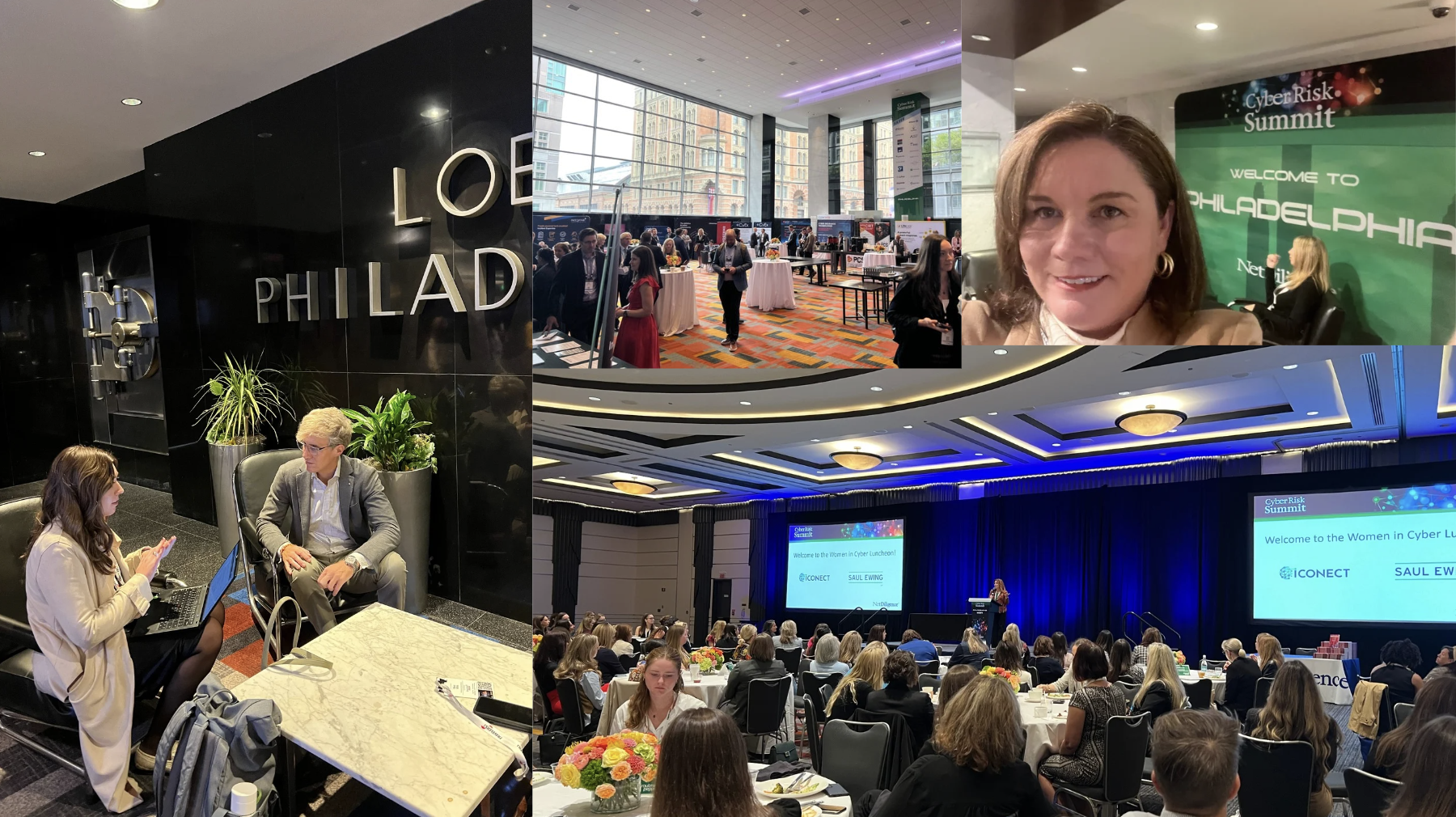
It’s conference season and this week I was fortunate to attend an industry event with a global draw – without hopping on a plane or train – in my hometown of Philadelphia. Insurance carriers, brokers, cyber risk assessment, breach recovery experts, legal, security, privacy professionals and more traveled to the City of Brotherly Love for three days of discussions on cyber risk hosted by NetDiligence®. For me, the event provided a valuable opportunity to learn about trends and challenges in the ever-evolving cyber space, to connect with clients, make new connections and of course check in with and coordinate meetings with trade reporters and editors on site.

As a public relations professional who has spent years working closely with the insurance industry, I know enough about cyber risk and cyber insurance to be dangerous. However, the speakers at the conference offered eye-opening insights on challenges in the cyber risk space, emerging risks including artificial intelligence, new technology and best practices for risk mitigation. Now, I know enough to keep me up at night.

For example, top cyber scams noted by Experian Head of Global Data Breach Resolution Michael Bruemmer included those related to fake news (particularly bad during election season), natural disasters, charities, sextortion (which can even include a photo of the recipient or their house) and QR codes. What I learned about QR codes maybe should have been obvious – it’s nearly impossible to tell the difference between a legitimate and illegitimate QR code with the naked eye.

For businesses, the top risk, according to NetDiligence, remains business email compromise. As to why the risk remains so high despite corporate teams working diligently to implement safety measures and train teams to spot these emails, Bruemmer said it’s the smart pitches from the criminals that appeal to human weakness. They just keep getting more creative.

Outside the sessions, I spent time roaming the exhibit hall and making new connections. Representatives were on site to talk about their cyber risk technology, mitigation services, cyber data mining services, e-discovery and more. While the usual water bottles, pens, mints and cozies adorned the tables, a robot, like a modern version of Rosey from the old Jetsons’ cartoon, roamed the floor proffering champagne from exhibitor KYND for attendees.

Additionally, I had the opportunity to connect a few clients with attending media for background conversations. At Kimball Hughes PR, we encourage our clients to leverage their attendance at conferences like this for potential media introductions or onsite interviews. Not only can conferences bring value in terms of continuing education credit, new business meetings and client relationship building, meeting with media members, who are often on-site at these events, can pay dividends in establishing you as a trusted source for future articles or even in a conference wrap-up piece.

We often suggest our clients bring us along to conferences where media is attending for boots-on-the-ground support. This way, we can coordinate additional on-site meetings, assist in fielding questions, assist in bringing trending conference topics to the conversation and seek out opportunities to comment on articles currently in the works.

While I’ll be happy to trade my dress shoes for sneakers in the days ahead, this industry conference, like so many others, was a fantastic opportunity to learn, further relationships and build new connections.

Stay tuned for more conference round-ups as members of the Kimball Hughes PR team continue to round the conference circuit throughout the month.

Lacing Up for Good: Enhancing Team Communication, Collaboration by Giving Back

This Spring, the team at Kimball Hughes Public Relations is lacing up our sneakers and tracking our steps to raise funds for those in need through the Insurance Industry Charitable Foundation’s annual Step Up challenge.

We have found philanthropic activities like this not only support charitable causes, but they also enhance our employee culture, team morale, and bring us closer together. As professional communicators, we’re always striving to find the best channels for our clients to use to reach their target audiences. In a new age of remote work, channels of internal communications are changing and we’ve found one of the best ways to communicate and deepen relationships with colleagues is to work together for social good.

As we’ve all heard, giving back and volunteerism have become core tenets of businesses across industries in recent years. There is a clear business case for philanthropy, as the next generation of workers have a clear interest in working at businesses that back up their values with action. Further, recent studies have shown that customer loyalty may improve at socially responsible businesses.

We believe giving back and volunteering events that emphasize collaboration and bringing communities together find more engagement.

Our client Pennsylvania Lumbermens Mutual Insurance Company (PLM) is also getting fit and having fun while building comradery among team members and raising funds for vulnerable children and communities. Each spring, employees form a team for the Insurance Softball League of Philadelphia, which raises money for local nonprofits while gathering regional insurers for friendly softball competition. Employees have the opportunity to get to know each other outside the office, get a little exercise and breath in fresh air while helping those in need.

With the IICF Step Up challenge, employees, friends and families in and around the insurance industry can form a team and compete with one another in a fitness challenge, measuring their steps, pedal strokes, sit-ups and virtually any other activity against the teams of other companies. Kimball Hughes PR is proud to have been a part of Step Up for the past five years and we have enjoyed learning more about each team member along the way – whether it’s a penchant for morning dog walks, an after-work jog, a Peloton ride or hike through the woods.

Consider reigniting company culture with a collaborative philanthropic initiative this Spring. We’re having a blast. Check out our progress so far here:

Insurance Society of Philadelphia announces new leadership

Dianne Salter, Beth Graber Selected to Lead 114-Year-Old Non-Profit

The Insurance Society of Philadelphia (ISOP) today welcomes two new leaders: Dianne Salter who will assume the role of chair of ISOP’s Board of Directors on July 1, and Beth Graber who assumes the role of ISOP executive director effective immediately.

Salter takes the helm of ISOP as chair with more than 25 years of insurance industry experience, including her current role as executive vice president of Corporate Insurance Services for Thomas Jefferson University, Main Line Health and Magee Rehabilitation Hospital.  She also serves as President of Mountain Laurel Risk Retention Group and Five Pointe Professional Liability Insurance Company. Previously she was executive vice president, Insurance Operations for Jefferson Health System from 2002 through 2014 and also spent 17 years providing brokerage, risk management consulting and account management services to large healthcare clients in her role as managing director of Marsh USA Inc. She is a former board chair for the Vermont Captive Insurance Association and a current board member of both the St. Joseph University Academy of Risk and Insurance and ISOP.  Salter earned her bachelor’s degree from the University of Delaware and an MBA in finance from La Salle University.

Graber joins ISOP after three years of progressively senior-level risk management roles at Keystone Foods, most recently as the $2.5 billion global food supplier’s director of Corporate Insurance and Risk Management. Previously, Graber spent 20 years in claim management for a handful of organizations, most notably Chubb. She earned her bachelor’s degree from the University of Delaware and her MBA in business and marketing from Villanova University.

The outgoing ISOP board chair and current managing partner of Willis North America in Philadelphia, John Sherlock, said the new ISOP leadership duo will bring fresh energy and new opportunities to the 114-year-old association.

“I’ve had the great pleasure of serving on the ISOP board with Dianne [Salter] and I have the utmost confidence in her leadership and vision,” said Sherlock.  He added that ISOP’s executive committee engaged in an extensive examination of ISOP’s strategic objectives to ensure the continuity and relevancy of the organization before tasking Salter and Graber with leadership roles.

“We’ve had extensive meetings, productive discussions and selected Beth [Graber] who brings both the organizational aptitude and appropriate industry insight needed to take ISOP into the future” said Sherlock. “Putting two well-qualified, energetic and ambitious leaders like Dianne and Beth at the helm of ISOP is good for our members and bodes well for the continued leadership, strength and growth of our organization.”

Both Salter and Graber have already begun developing a number of programs and initiatives they will introduce to the ISOP board immediately following Salter’s official installation as board chair. Meanwhile, the new executive director is organizing her staff at ISOP’s new headquarters in King of Prussia and preparing new series of highly focused workshops and forums on a range of topical issues such as climate change, emerging risks and workers’ compensation.

Salter, Graber and their team will also focus on prioritizing expansion of membership and programs for the NextGen group within ISOP for young professionals. And while the leadership team is new, ISOP’s continuing commitment to professional development and education of all insurance professionals within southeastern Pa., southern N.J. and DE remains central to its mission.   

Marketing on the 9/11 Anniversary? Don’t

“When in doubt, leave it out.”

This was the sage advice of one of my first journalism professors in college. It served me well in everything from sussing out facts for news stories to drawing up guest lists for family parties. It’s also good advice for brands and organizations to consider as part of their social media policies, and their approach to anniversaries of remembrance like Sept. 11.

This week – 12 years from the attacks of Sept. 11 – we saw far too many businesses using social media to remember the fallen while also making sure you remember their products.

On The Crisis Show, which aired on the anniversary of 9/11, I joined Shel Holtz and host Rich Klein to discuss these efforts. We highlighted some of the more thoughtless attempts to newsjack the 9/11 anniversary, as well as the reactions those efforts engendered. It’s a cautionary tale of how even the best intentions on social media can fail without sound strategy, planning and a crisis response plan.

What we saw on social media on this anniversary was how tone deaf some brands can be, and how few plan for all potential outcomes. The list of offending brands – both exploitative in their efforts and those just trying to mark the day as best they could while failing in the attempt – is too long to include here.

The best advice I can share is beautifully summarized in a short online article in The Atlantic. The writer, Derek Thompson, took a page from my journalism professor’s book and offered one simple rule for advertising on 9/11: Don’t. This rule applies equally well to marketers, social media practitioners and PR pros.

The events of that day still haunt us as a nation. So brands should consider honoring the day with a moment of silence, time off for employees to participate in the National Day of Service Congress called for in 2009 or by making a charitable donation. But don’t market such efforts or your products and services. Those who mourn don’t need to hear from brands on this day.

Next year, when we mark the 13th anniversary of our national loss, I encourage brand managers everywhere to follow the prescient advice of my old professor: When in doubt, leave it out.