Brand Authenticity Requires Communicators to Play Lead Roles

While brands have a voice in shaping their narratives, it is their publics who play an outsized role in holding organizations to their brand promise and reputation.

One of the best time-tested methods of ensuring adherence to brand authenticity is having a public relations or communications professional at the decision-making table from the start. Failing to do so runs the risk of self-inflicted reputational harm that is extremely difficult, and often expensive to dial back later.

In brands we trust

B2C as well as B2B consumers have vast resources to evaluate brands and a wealth of options from which to choose. Brands that consistently speak to the values and priorities of their consumers engender trust and an emotional connection. According to April 2024 data released from Shopify, 86% of American consumers say authenticity is a key reason they buy or engage with a brand.

Whether it is Red Bull, GE or Salesforce, these companies and others are great examples of organizations that use engaging storytelling, emotionally targeted messaging and brand authenticity to reach and connect with their audiences. We know Red Bull gives you wings. We know GE is focused on imagination at work, and that Salesforce positions you to manage success, not software. Their messaging goes beyond taglines, and their stories resonate with their publics because they meet a need.

What Ben Franklin said

Ben Franklin famously quipped, “It takes many good deeds to build a good reputation, and only one bad one to lose it.” There are countless brands that illustrate Franklin’s point.

The example set by Target regarding its shifting DEI policies has put … well, a target on the Target brand with calls for boycotts and declining sales. Such inconsistent messaging causes brand audiences to reconsider the authenticity and trustworthiness of the organizations at issue. Consumers aren’t sure what, if anything, the brand stands for and repairing that damage will be a long and expensive undertaking.

On the B2B side, there is no more powerful example of reputational damage due to a lack of authenticity—as well as transparency—as WeWork. The company promoted a utopia-style revolution in how workspaces would evolve while leveling the playing field for entrepreneurs to work collaboratively. In reality, the company infamously misled everyone regarding its spending, profitability and stability, leading to a loss of trust among investors and business clients that ultimately led to the founder being ousted and a Chapter 11 filing in 2023.

The power of communications strategy

A chief communications officer with a seat at the leadership table can help organizations adhere to brand authenticity. These professionals are trained to assess the communications risks of any given action by an organization that plays out in front of its publics—internal or external. They help brands avoid unforced errors and plan for a range of responses from their target audiences.

Having that comms professional in the room from the start of major brand decisions can lead to important conversations and questions filtered through a public perception lens, such as:

  • How does this align with the public’s understanding of who we are and what we do?
  • What risks are we taking with this change, and what can we do to mitigate them?
  • Does this change align with our core values?
  • How should we communicate this change clearly to our audiences, and what are the best channels to do so?
  • What is the plan to measure the impact of this change on our brand reputation and perception?
  • What is the backup plan if this change is not well received, and what is the trigger to institute that plan?

Brand leaders are best served when their PR teams challenge group think and work to consider the reaction to organizational change among various audiences. This approach can strengthen and even improve the proposed changes, better aligning them with the brand’s reputation and perception and lead to a smoother introduction to its publics. However, making change better and more sustainable only happens if the communicators are in the room where decisions are made from the beginning. That is how you maintain brand authenticity, and it matters.
Keys to Boosting Brand Awareness in 2025: Embrace New Media

While you contemplate adding extra protein and strength training to your weight loss plans for 2025, why not consider adding new media and video to your company’s communications strategies?

A turn of the calendar to a new year presents an ideal opportunity to not only consider weight loss and exercise, but to evaluate business strategies as well – both successful and failed strategies. In public relations, as with many other industries, this new year refresh or reinvention beckons us to consider the latest trends and undertake new initiatives to continually boost brand awareness in the year ahead.

This time of year is replete with industry experts offering outlooks on what we can expect in the year ahead. And while traditional PR tactics, like contributed articles to well-respected outlets continue to carry weight, we are increasingly seeing good PR pros encouraging industry pundits to take on new platforms or new features of existing platforms to share their views, including – LinkedIn Live, LinkedIn Newsletters, TikTok, and new X competitor Blue Sky, among others.

Depending on the audience targeted, each platform can yield considerable results for company leaders who offer original, valuable and educational content. Leaders who want to boost their brand’s visibility in 2025 should consider the following new media:

  • LinkedIn Lives – In 2025, we will continue to see savvy thought leaders connect with their audiences through LinkedIn’s event-hosting platform LinkedIn Live. LinkedIn Lives are becoming increasingly popular for the platform’s ability to host live events with a casual feel – with one or multiple speakers, while engaging and interacting with the audience through a live chat function.

The tool markets itself in many ways as the event can easily be promoted among LinkedIn followers of the company page or the individual hosting the event. Followers will receive notifications about the event, as well as when it goes live. Moreover, any form of video in social media tends to generate higher levels of engagement than written content alone.

In the insurance space, digital marketing and transformation guru Ema Roloff has seen tremendous success with this resource, gathering roughly 1,600 registrations for an insurance predictions and trends event in late 2024. She hopes to do the same and more this year ahead of her Insurance Trends to Watch for 2025 event Dec. 17.

  • LinkedIn Newsletters – As LinkedIn continues to flex its authority as the social platform for business professionals, its newsletter function has also become increasingly popular for sharing thought leadership and other educational, nonpromotional content. LinkedIn claims it has seen a 59% increase in people publishing newsletter articles and a 47% rate increase in engagement. The platform claims more than 184,000 newsletters published. Once published, these newsletters invite your connections and followers automatically to subscribe so they are notified each time you publish with an in-app and email notification. Another perk – the success of your content is easily measurable through LinkedIn analytics.
  • Tik Tok – While Tik Tok has primarily been a successful B2C tool, we are now seeing the platform used more frequently for B2B engagement. In fact, Roloff has told us, her B2B Tik Tok videos on digital marketing in insurance have attracted more than one million views. We’ve been hearing for years that video content is essential for business communications, and Tik Tok proves the point and should not be overlooked in 2025.
  • BlueSky – As some look to move away from X, the app Bluesky, which bills itself as “an open foundation for the social internet” has been gaining popularity. In fact, BlueSky just reported crossing the 15 million user mark. As audiences flock to newer platforms like Bluesky and Meta’s Threads, business leaders will want to take note to ensure they are meeting their customers where they are.

To understand new media available to your business and what might be right for you, work with a communications specialist or agency that understands your business objectives, your audiences and the new media that can deliver on those objectives and audiences. Technology and AI are quickly changing how we do business, as well as how we communicate and interact with each other and prospects. Don’t get left behind.

Communicating with Sensitivity in the Holiday Season: A guide for home and office

We’re all worried about it. At this time of year everyone gathers. Linda brings up the election. Todd starts mansplaining. Rarely is there a workplace holiday gathering or end-of-year meeting where sensitive issues don’t come up. Oh, wait. You thought I was talking about holidays with the family?

Whether it’s bringing together far-flung (and far right and far left) relatives or just the company holiday party, some basic rules of the road apply to help you navigate both with grace, wit and diplomacy.

Know Your Audience

Spend enough time with anyone and you know what buttons to push and what reactions to expect. Keeping these in mind can avoid disaster.

  • Holiday Meals: Aunt Linda’s wine-soaked stories can venture into uncomfortable territory, while Cousin Todd is ready to challenge you on everything. Don’t engage. Instead, start light. “Please pass the rolls” is a safe opening that builds rapport and may only offend the gluten-free wing of the family.
  • Work Communications: When your boss is a bottom-line kind of executive or you have colleagues who need a little extra communication fluff to avoid shattered nerves, tailor your tone and content accordingly. When in doubt, lead with data and empathy. “Here’s the situation and my suggestions for how we can handle it.”

Address Conflict Strategically

Conflict is part of the human experience, but it doesn’t have to become a distraction from the mission of your gathering.

  • Holiday Meals: Avoid inflammatory topics like politics, religion, and Tofurkey. Instead, take the middle ground by spreading good cheer. Compliment the chef, celebrate Grandma’s bedazzled holiday sweater and admire your nephew’s alpaca-like hair style.
  • Work Communications: Take a beat before responding to a tense email or comment. Employ diplomacy by acknowledging a colleague’s concern, but stay solutions focused. “I understand your concerns. Let me clarify what I meant so we can find a solution together.”

Manage Expectations

Clarifying both your expectations and what you can offer helps to avoid misinterpretation. Clarifying your position without offending others can be achieved.

  • Holiday Meals: Stating you are stepping outside to “get some air” can be loosely interpreted to mean you’re taking a moment to avoid listening to Uncle Ernie (who no one invited) go on about how things were so much better in his day and how the world is going to hell in a handbasket now.
  • Work Communications: Be explicit about deadlines, deliverables and resources, especially during the holiday season. Doing so early helps avoid miscommunication. And push back when necessary, stating something along the lines of “I’d love to prioritize this, but I need more clarity/resources/time to do so.” Remember, no one appreciates it when someone over promises and under delivers.

Exit Gracefully

When things become untenable or you feel there is little benefit in continuing to be part of the situation, know how to leave without burning bridges.

  • Holiday Meals: Deploy a helpful excuse like promising to help in the kitchen or needing to get home to check on your pet that you’ve never mentioned and may not, in fact, actually have.
  • Work Communications: Politely steer the meeting toward a conclusion with positive words to the effect of “It seems we’ve aligned on the main points. We can regroup on the details in our next update.”

The secret to any family or work gathering at the end of the year is the same: navigate the situation with empathy, a little humor and as much tact as you can muster. To do so:

  • Listen more than you speak
  • Breath before you respond
  • Find humor where you can, but not at someone else’s expense

Applied successfully, you will navigate this season of full-contact family dynamics and stress-inducing end-of-year business, leaving everyone convinced of your manifest diplomatic skills while creating or contributing to as few moments of holiday drama as possible.

Navigating Conference Season: Take-aways from a Philly Cyber Risk Summit

It’s conference season and this week I was fortunate to attend an industry event with a global draw – without hopping on a plane or train – in my hometown of Philadelphia. Insurance carriers, brokers, cyber risk assessment, breach recovery experts, legal, security, privacy professionals and more traveled to the City of Brotherly Love for three days of discussions on cyber risk hosted by NetDiligence®. For me, the event provided a valuable opportunity to learn about trends and challenges in the ever-evolving cyber space, to connect with clients, make new connections and of course check in with and coordinate meetings with trade reporters and editors on site.

As a public relations professional who has spent years working closely with the insurance industry, I know enough about cyber risk and cyber insurance to be dangerous. However, the speakers at the conference offered eye-opening insights on challenges in the cyber risk space, emerging risks including artificial intelligence, new technology and best practices for risk mitigation. Now, I know enough to keep me up at night.

For example, top cyber scams noted by Experian Head of Global Data Breach Resolution Michael Bruemmer included those related to fake news (particularly bad during election season), natural disasters, charities, sextortion (which can even include a photo of the recipient or their house) and QR codes. What I learned about QR codes maybe should have been obvious – it’s nearly impossible to tell the difference between a legitimate and illegitimate QR code with the naked eye.

For businesses, the top risk, according to NetDiligence, remains business email compromise. As to why the risk remains so high despite corporate teams working diligently to implement safety measures and train teams to spot these emails, Bruemmer said it’s the smart pitches from the criminals that appeal to human weakness. They just keep getting more creative.

Outside the sessions, I spent time roaming the exhibit hall and making new connections. Representatives were on site to talk about their cyber risk technology, mitigation services, cyber data mining services, e-discovery and more. While the usual water bottles, pens, mints and cozies adorned the tables, a robot, like a modern version of Rosey from the old Jetsons’ cartoon, roamed the floor proffering champagne from exhibitor KYND for attendees.

Additionally, I had the opportunity to connect a few clients with attending media for background conversations. At Kimball Hughes PR, we encourage our clients to leverage their attendance at conferences like this for potential media introductions or onsite interviews. Not only can conferences bring value in terms of continuing education credit, new business meetings and client relationship building, meeting with media members, who are often on-site at these events, can pay dividends in establishing you as a trusted source for future articles or even in a conference wrap-up piece.

We often suggest our clients bring us along to conferences where media is attending for boots-on-the-ground support. This way, we can coordinate additional on-site meetings, assist in fielding questions, assist in bringing trending conference topics to the conversation and seek out opportunities to comment on articles currently in the works.

While I’ll be happy to trade my dress shoes for sneakers in the days ahead, this industry conference, like so many others, was a fantastic opportunity to learn, further relationships and build new connections.

Stay tuned for more conference round-ups as members of the Kimball Hughes PR team continue to round the conference circuit throughout the month.

Tampa: Hustle Capital of the Insurance Industry

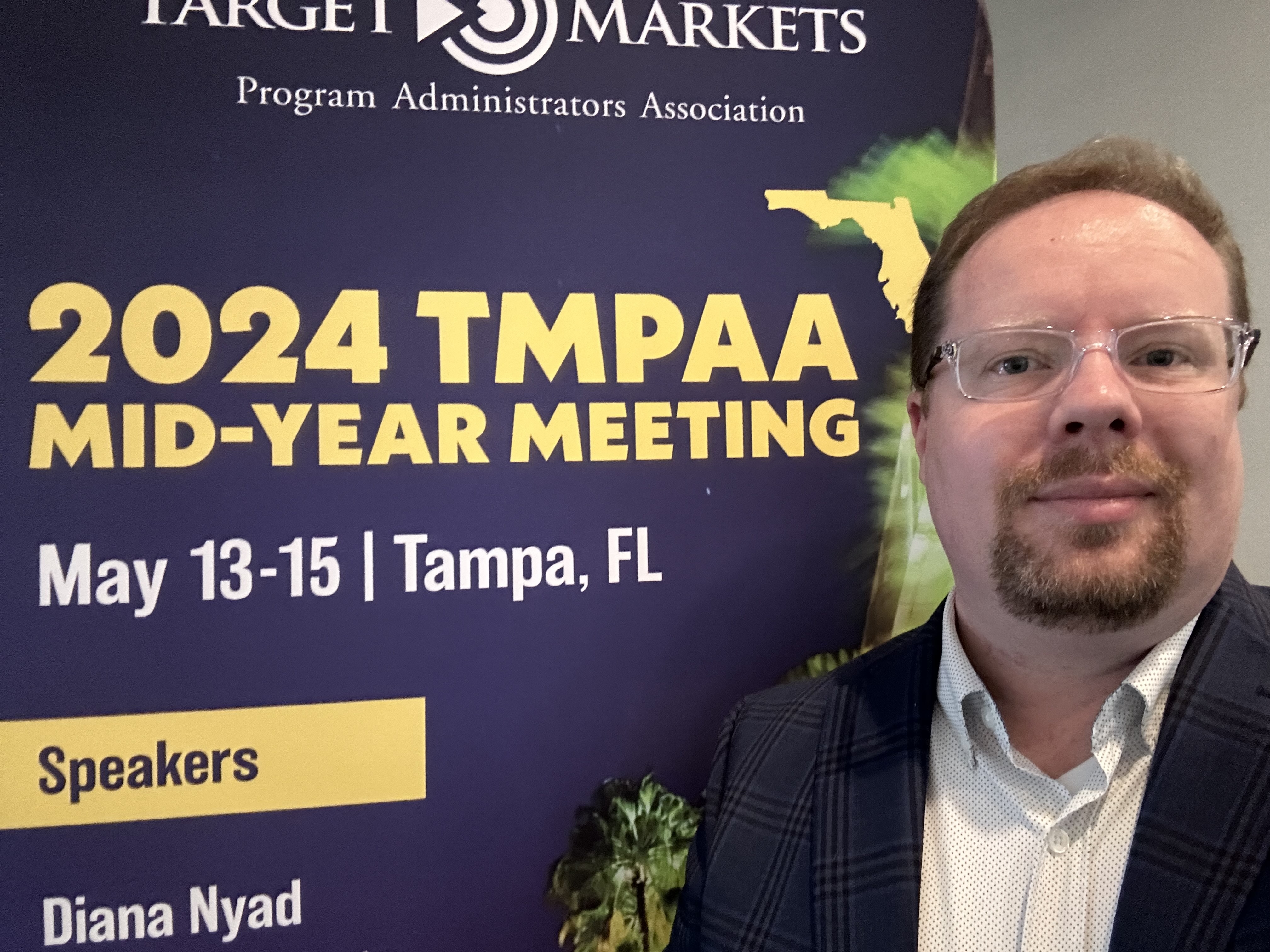
Target Markets 2024 Mid-Year Meeting in Tampa, Florida, made clear insurance is, and continues to be, a relationship business. This year’s mid-year meeting set a record with more than 1,300 attendees – more than double that of prior mid-year meetings for Target Markets. It was also my first time attending a Target Markets mid-year meeting.

I understand the attraction.

The first full day of Target Markets, Monday, May 13, was straight to business. Old friends reconnected while new acquaintances were made. Meetings were held over coffee, at breakfast, in break-out rooms and hallways, in the lobby, at the hotel Starbucks, over lunch, at the bar, across countless restaurant dinner tables and over drinks and at numerous private parties afterward. All this went beyond socializing as companies pitched, partners explored and new business partnerships were formed. The pace was hectic and heady, and it will be interesting to see if Target Markets offers an estimate for the business transacted in Tampa. The number of people who faced daunting schedules with back-to-back meetings, hoping to sign or write business, was impressive as they ran the gauntlet of two large Marriott hotels connected by a single third-floor sky bridge. The spirit of the 2024 meeting could be best summarized in a single word: Hustle.

Day two was a mix of the day before along with a series of programs and events that covered topics including a Lloyd’s Market update, a keynote speaker of remarkable tenacity embodied by Diana Nyad, a women’s leadership lunch, discussions on talent, the Target Markets’ new Program Business Professional designation and, of course, ample opportunities for networking.

The Target Markets’ hustle – on display from start to finish – also demonstrated the power and innovation of an insurance industry in growth mode. Seizing opportunities. Strengthening relationships. Getting business done.

Through all of this, I found myself among old friends I haven’t seen in years while sharing coffee and meals with new friends, potential business partners and – in my world – the all-important insurance industry trade media who were there to get the inside scoop on the issues, trends and insights of those who drive the business of insurance.

I applaud the team at Target Markets for putting together a productive event, and for those who grabbed the opportunity to move their business, and the industry, further into the future.

Read the Room: Preparing for your next speaking engagement

Sweaty palms and a microphone in hand, you are called to the stage for your presentation in front of hundreds of your colleagues. You wrote your speech word for word and studied it diligently but as your nervousness grows, those words you meticulously studied begin to vanish. Panic. Anxiety. Is there more you could have done? As in all things, preparation is key.

Power in preparation

A successful speaking engagement is rooted in the right kind of preparation. While writing a speech is an important part of the process, simply putting words on paper could leave a public speaker high and dry on stage. The reality is a memorized speech is full of recollection and verbal landmines, stumbling and missed content. When preparing for your next speaking engagement, consider the following:

  • Focus on key messages: Rather than memorizing a speech, consider the key messages or the main points the speech conveys. Talking points serve as a speaker’s safety net and help pull them back to their main points when stumbling occurs or they veer off on a tangent. Key messages should include the main idea of the speech, how it relates to the speaker and their organization, as well as the audience and high-level content points.
  • Follow a formula: Be sure to make your point, provide reasoning or statistics that support your point and consider offering an example to help the audience visualize what you are saying. Telling a story is often easier for a speaker to recall compared to memorizing theories, data or intellectual arguments. Finally, be sure to drive the point home again at the conclusion of your remarks.
  • Practice makes perfect: Reading your speech ahead of time can be helpful, but nothing compares to giving the speech on camera or in front of colleagues, friends or family. Avoid speaking in front of the mirror as it only serves to distract. Speaking before a friendly audience helps with both familiarity with the topic as well as speed of delivery, your body language, your intonation, articulation and more. Play the recording back afterward to self-evaluate and ask for honest feedback and direction from those who are invested in you making a great impression up on the big stage.
  • Engage with your audience: Audience engagementis crucial to a speaker’s success, but it rarely ever just happens. Speakers must prepare for what some call crowd work; engaging the audience as part of their presentation and considering potential outcomes. In addition to the fact that audiences do not want to sit through a lecture, engaging with the audience can help them remember your key points. Storytelling, adding a little humor, polling the audience or low-pressure activities can be great ways to garner audience attention and prime them to listen attentively.
  • Have a backup plan: When all else fails, speakers should be prepared with a backup plan. Comedian Jo Koy saw firsthand what happens when you do not have a plan at the 2024 Golden Globes when his monologue fell flat. His jokes about Barbie and Taylor Swift left him in hot water and his only fallback was to blame the writers. While the Golden Globes is a much larger stage than your average business conference, all speakers should be prepared to pivot. Consider how an audience could respond to all aspects of your speech and have a plan to pivot to a safer topic should you lose the audience.

Public speaking is among the most common societal phobias, but it can be overcome in many cases, with effective practice and preparation. Comprehensive preparation can instill the confidence a speaker needs to be successful on stage. Speakers are selected for the insights they offer. Come prepared for the stage with key messages and a solid plan of action to make sure your messages are conveyed in way that engages the audience and leaves them wanting to learn more.

Will it all come out in the wash?

I’m on my way back from The Clean Show, where there was tremendous interest in my TRSA-sponsored educational session, “Crisis Communications: A Practical Guide to Protecting Your Reputation.” Whether they were commercial laundry operators or others in the textile industry, attendees recognized the importance of communicating effectively in a crisis.

A massive, cylindrical washing machine

Space ship or tunnel washer? You decide.

Among the highlights of my presentation were:

  • Having a crisis response plan that includes communications protocols for media, customers and other key audiences.
  • Identifying a spokesperson who can represent the company well.
  • Dos and don’ts of media interviews, focusing on honest, open communications.
  • Preparing talking points that drive all answers in media interviews.
  • Incorporating social media in a crisis communications plan
  • The role of leadership in navigating a crisis effectively.

Following the presentation, TRSA hosted a press conference to unveil results of a new survey that reported business and consumer perspectives on service professionals wearing uniforms. The conference also unveiled the new TRSA animated video we developed with videographer Tom Donnelly.

Opening day on the trade show floor was eye opening with the size of the equipment and advanced technology used by the commercial laundry industry TRSA represents. For me, it was a valuable window into an important, far-reaching industry.

A large green banner depicting a women clutching plastic saying "sometimes I feel like I'm drowning in plastic."

The laundry industry has a bright green streak.

10 Steps to Being Presentable: Giving Great Presentations

I’m getting ready to train a client group on delivering effective presentations and thought I’d revisit this sometimes scary topic.

Gary and his trusty cheat sheet. Notice how big the font is? That makes it easier to read at a glance.

Gary and his trusty cheat sheet. Notice how big the font is? That makes it easier to read at a glance.

We’ve all been on the other end, in a room with someone standing rigidly at a podium next to a screen where a PowerPoint is about to bore us to tears. Slide after slide filled with data we can’t read and a monotone speaker who looks at the screen more than the audience. We gain nothing more than we could have gleaned from a report and just can’t wait for it to be over.

So when it’s your turn to give a presentation, how do you make it a good one? Here are a few tips based on more extensive advice (and video training) I’ll be sharing with my client:

  1. Know your audience. This helps in so many ways. Make sure your material is geared toward their needs, not yours. If necessary, find out what they want to know in advance.
  2. Get over your nerves. How? Practice so you know your material. The more you know your stuff, the more at ease you will be. But don’t practice in front of a mirror. That just makes you feel weird.  Videotaping yourself, on the other hand, works. Also, don’t worry about perfection. That’s putting a lot of pressure on yourself. Just try to be engaging and interesting. If so, you’ll be better than most.
  3. Nail the open. But how? Unless you are absolutely certain your joke will work, don’t do it. Instead, ask your audience a question. That engages them and is an easy way to get moving in the right direction. And please, don’t try to memorize your opening. Again, that’s too much pressure to be perfect.
  4. Make sure your technology is fool proof. If not, don’t use it. A funny video from a popular movie or television show can be a great icebreaker. But show it to others first to make sure it works. And if the video, PowerPoint or audio is not tested in the facility where you are speaking, just skip it.
  5. Speaking of PowerPoint, it’s not necessary, too often boring and takes away from what the focus should be – your words. If you have important data to share, send it in advance or use it as a hand out. Just hit the high points in your speech.
  6. Make it interesting. That means you don’t read from a script or use big words or jargon. Instead, use stories, case studies, examples your audience can connect with. And tell your audience why they should care about what you’re saying. That is why they’re there.
  7. Don’t get hung up on verbal tics, like uh and um. Many people do it and you should learn to avoid them. But that’s a daily self-training (I heard one trainer recommend putting “uh” in a circle with a line through it and leave it on your desk. That way, as you are talking all day, you are conscious of it). But when you’re presenting, just let it go and keep talking.
  8. Create a presence. We’re not all gifted speakers who can walk the crowd and feel comfortable. But you should use your hands, use your voice so it’s not monotone and at least move a few steps and shake that icy grip you have on the lectern. Try it, it feels good.
  9. Prepare for problems. You go blank? Keep a one-page cheat sheet in front of you so you can quickly glance and find out where you are. You have technical difficulties? Go in with a back up and just move on. If you don’t dwell on the technical problem, neither will your audience. You’re audience does not seem interested? Then ask them questions.
  10. Speaking of questions. Many people ask the audience to hold questions until the end. Why? Because they don’t want to get sidetracked and lose their place. But if you have a cheat sheet, you have no worries.