Public relations is all about relationships—the people behind the stories. That’s why we’re offering this blog series all about our team members. This isn’t about our professional accomplishments but who we are as people. We hope you have as much fun reading along as we do interviewing each other.
What got you interested in public relations?
My first exposure to the power of PR is connected to my family’s restaurant. After a local reporter reached out for a series he was doing on restaurants in the area, we filmed a segment showcasing menu items, upcoming holiday specials and, most importantly, our family’s story. The reruns of the segment as well as its popularity online produced incredible results. I saw the impact of a well-timed media placement firsthand while I worked the holiday weekend after it aired, with customers directly attributing their visit to seeing the segment. As a PR professional, I’m constantly seeking to replicate that excitement I felt that day. I learned that PR is where I could use my love for storytelling to amplify a client’s message and connect to their audience.
Tell us about your favorite movie and what appeals most to you about it?
The movie “Everything Everywhere All at Once” is one of my all-time favorites. I come from a big family myself, so I always enjoy stories that dive into complicated familial relationships. Like any good sci-fi story, this film is vibrant and unafraid to be weird. It strikes this great balance tonally, with the humorous moments only heightening the moments that made me cry.
What was the last, best book you read and what about it spoke to you?
The last book I read was “James” by Percival Everett, a reimagining of “Adventures of Huckleberry Finn” from the point of view of Jim, an escaped slave. I read Tom Sawyer and Huckleberry Finn in school growing up, so I loved getting to read Everett’s portrayal of the character. He reexamines and deepens the original themes through James’ expanded characterization.
Tell us about a meaningful hobby or “outside of work” commitment that is important to you?
Outside of work, knitting and crocheting are the hobbies I have recently come to love. Knitting and crocheting force me to slow down and focus on the moment. Both activities allow me to keep my hands busy and stave off the urge to reach for my phone while watching TV. As an avid reader, I often listen to audiobooks while I work on a project, bringing two of my favorite pastimes together. I also love that I’m making something tangible. Whether it’s a blanket or sweater, it is a physical piece I can be proud of.
Share a fun fact about you.
I grew up in the restaurant industry. My Grandpa opened a seafood restaurant in Virginia that is still owned and operated by my family to this day.
The wildfires raging just outside of Los Angeles have burned at least 63 square miles, done an estimated $135 billion in property damage and have claimed at least 25 lives. During crises of this magnitude, it is normal for many to express sympathy online and offer support. We have seen countless positive examples recently. Some take the opportunity to call attention to nonprofits and acknowledge first responders. Others keep their message focused on their industry, community or domain of expertise to help their audiences cope.
Kimball Hughes PR has heard from organizations that wanted to comment amid this recent crisis but were also concerned about appearing opportunistic or insensitive. For those who have similar concerns, we offer the following advice:
Keep your audience in mind
While commenting on breaking news is one way to ensure your comments are timely, it has the potential to backfire.
For instance, imagine you run a business that supports the education of children in distressed municipalities. You could share your support for first responders fighting the Los Angeles fires, but your audience likely cares more about children and education. They may express support for your comments, but unless your business is in the Los Angeles area, your post will just be a drop in an ocean of online support. You may fail to distinguish your message or make a meaningful contribution to your audience. Worse, it could look like you are taking advantage of a tragedy.
Instead, consider addressing how the fire will be impacting children in Los Angeles or how the crisis may negatively impact future efforts to support disadvantaged children in the area. Better yet, mobilize your community to do something that supports your cause while also supporting the children impacted by these fires.
Have a call to action
Audiences have moved beyond statements of thoughts and prayers in times of crisis. They want to see action. If you are compelled to comment on major events, ensure there is a call to action that is both socially sensitive and beneficial to those impacted. Post links to non-profits working to end the crisis and encourage your community to donate or offer support.
Beyond being a force for good, there is a communications angle to consider. There are countless examples of brands and influencers being put on blast for appearing to leverage tragedy for personal gain. Ensure your efforts in such instances contribute rather than distract or merely add to countless other voices. Be sure your comments support a cause or help mobilize support among your audiences.
It’s not about you, unless it is
When keeping your audience in mind, it’s possible to go too far. We saw this in 2024 after Hurricane Helene decimated Ashville, North Carolina. Political pundits on both sides of the aisle used the storm as a talking point during a hot election season. In some cases, this led to a cycle of cynicism— with each commentor calling out the prior’s biases and accusing them of using the crisis for their own gain. This month, we are seeing more of the same as pundits condemn California’s regulatory environment. Polarizing comments like these only serve to divide communities and distract from helping victims.
But what if you are directly harmed by a crisis? In this instance, it is of course acceptable to talk about yourself and how the crisis is impacting you — within reason. The line between sharing your perspective and getting on a soapbox is thin. It can be easy to forget others affected by a crisis when you are impacted as well.
Crises —especially natural disasters —raise the stakes for all involved or adjacent to the incident, but the fear of backlash should not stop someone from using their platform as a force for good. By keeping your audience in mind, using your voice as a force for good and staying focused on those impacted, you can both add value to the discussion of the crisis as well as be a force helping to end it.
As many businesses and non-profits begin to turn their attention to 2025 planning, one component that should not be overlooked as part of a success strategy for the new year is communication or comms planning. An effective public relations campaign can prove to be both an affordable investment in growing your organization as well as in deepening important reputational relationships that can help sustain for- and non-profit organizations in troubled times.
Here are five critical tactics for B2B organizations to consider when developing 2025 comms strategies.
Highlight Industry Expertise. In the world of B2B marketing and communications, clients and partners look for actionable, tested expertise. By positioning your subject matter experts as thought leaders through authoritative content, you position your brand as a potential resource for your target audiences while demonstrating your deep understanding of, and vision for, the industry you’re in. That content can include contributed articles to respected trade outlets, white papers, industry reports, owned video content and feature-length broadcast interviews on hot topics or industry trends.
Develop Authentic Messaging. Whether your audience is business or consumer, the public at large is tired of being sold to or fed boilerplate marketing messaging. Don’t sell. Instead, tell stories to highlight the purpose and values of your brand that address the concerns of your audience. No one looks for a sales pitch; they look for anecdotes, reviews and stories in which they recognize themselves or their priorities. Your audiences are more likely to turn to the sources of those stories or analogies when seeking solutions and opportunities.
Focus on Data-driven Solutions. B2B audiences look for track records of success supported by hard data. Highlighting successful partnerships or projects supported by numbers and real-world outcomes creates a point of distinction and gives trade journalists something to work with when telling stories that can shine a light on your brand. This can also include information on lessons-learned and client testimonials.
Be Prepared for Crisis Scenarios. From online review sites to social media platforms, the public-at-large can rapidly shape public perception of your brand in minutes or hours. By preparing for likely crisis scenarios and developing actionable protocols to deploy your response messaging, your organization stands a better chance in weathering whatever storms may come. Paramount to protecting your brand in a crisis scenario is developing messaging that is honest, authentic, empathetic and deployed with thoughtful speed.
Pursue a Broadening Media Landscape. While rumors regarding the demise of journalism have been abundant in the past decade or more, the reality is the media landscape has broadened considerably. Where there once existed only print, broadcast and online, there are now podcasts, streaming platforms, vlogs, subscription-based email newsletters, audio-based social channels and even industry-specific Slack communities. The options are seemingly endless. Start by understanding the audiences you hope to reach and how they consume media. Then, plan accordingly.
If your 2025 marketing or business development plan lacks a clearly defined comms strategy, you are missing countless opportunities to convert the work you’re already doing into compelling storytelling that can move the needle for your brand. What’s worse, you may also be completely unprepared to defend your reputation if you find yourself facing a communications crisis. Make sure you have a 2025 comms strategy ready to go before January 1, 2025. And if you need help, Kimball Hughes Public Relations has nearly 30 years of expertise to help you make the most of the year ahead.
It’s conference season and this week I was fortunate to attend an industry event with a global draw – without hopping on a plane or train – in my hometown of Philadelphia. Insurance carriers, brokers, cyber risk assessment, breach recovery experts, legal, security, privacy professionals and more traveled to the City of Brotherly Love for three days of discussions on cyber risk hosted by NetDiligence®. For me, the event provided a valuable opportunity to learn about trends and challenges in the ever-evolving cyber space, to connect with clients, make new connections and of course check in with and coordinate meetings with trade reporters and editors on site.
As a public relations professional who has spent years working closely with the insurance industry, I know enough about cyber risk and cyber insurance to be dangerous. However, the speakers at the conference offered eye-opening insights on challenges in the cyber risk space, emerging risks including artificial intelligence, new technology and best practices for risk mitigation. Now, I know enough to keep me up at night.
For example, top cyber scams noted by Experian Head of Global Data Breach Resolution Michael Bruemmer included those related to fake news (particularly bad during election season), natural disasters, charities, sextortion (which can even include a photo of the recipient or their house) and QR codes. What I learned about QR codes maybe should have been obvious – it’s nearly impossible to tell the difference between a legitimate and illegitimate QR code with the naked eye.
For businesses, the top risk, according to NetDiligence, remains business email compromise. As to why the risk remains so high despite corporate teams working diligently to implement safety measures and train teams to spot these emails, Bruemmer said it’s the smart pitches from the criminals that appeal to human weakness. They just keep getting more creative.
Outside the sessions, I spent time roaming the exhibit hall and making new connections. Representatives were on site to talk about their cyber risk technology, mitigation services, cyber data mining services, e-discovery and more. While the usual water bottles, pens, mints and cozies adorned the tables, a robot, like a modern version of Rosey from the old Jetsons’ cartoon, roamed the floor proffering champagne from exhibitor KYND for attendees.
Additionally, I had the opportunity to connect a few clients with attending media for background conversations. At Kimball Hughes PR, we encourage our clients to leverage their attendance at conferences like this for potential media introductions or onsite interviews. Not only can conferences bring value in terms of continuing education credit, new business meetings and client relationship building, meeting with media members, who are often on-site at these events, can pay dividends in establishing you as a trusted source for future articles or even in a conference wrap-up piece.
We often suggest our clients bring us along to conferences where media is attending for boots-on-the-ground support. This way, we can coordinate additional on-site meetings, assist in fielding questions, assist in bringing trending conference topics to the conversation and seek out opportunities to comment on articles currently in the works.
While I’ll be happy to trade my dress shoes for sneakers in the days ahead, this industry conference, like so many others, was a fantastic opportunity to learn, further relationships and build new connections.
Stay tuned for more conference round-ups as members of the Kimball Hughes PR team continue to round the conference circuit throughout the month.
Imagine: Your company name is in the headline of an article on a reputable, national news outlet’s home page. Your colleagues and industry peers send a few emails in congratulations and maybe you even receive some inbound requests inquiring about your business, but the value seemingly ends there. How can you keep the momentum going?
Company leadership who are not taking full advantage of their media hits, or simply do not know how to amplify them are missing out on the exposure a reputable news outlet could offer.
Can I have your attention?
Whether the result of proactive media relations or an unexpected story, a media placement can help bring your business to the forefront of prospective customers’ and partners’ minds. If managed wisely and consistently over time, business leaders can enjoy a continuous flow of media hits that can lead to new business, help with recruitment and pique the interest of investors or other business partners. Consider the following tips to expand on your company’s next media win:
Share the good news internally: Your greatest cheerleaders should be your team members. Leadership should share media placements with team members and suggest convenient ways they can use it if they choose. Your communications team can be a great resource in crafting language to share with employees, including guidance on adding links to their email signatures.
Get social: As soon as a media hit goes live, business leaders should have a plan to share it broadly, tagging the outlet and – in some cases – the author as well. At minimum, social media posts should be scheduled for the same day the article is posted and a company’s website news page should be updated to include the article. Priority should be placed on interacting with comments on the posts and employees should be made aware of and encouraged to interact with them, if they are comfortable doing so.
Market it: Connect with your marketing team to see where else it may make sense to share the article, including newsletters or external email communications. Keep in mind the content is likely owned by the publication, not your company, so be careful not to cut and paste directly from the article or post without attribution. It could be seen as a violation of copyright laws.
Be strategic: As you spread the word through social media and marketing materials, be cautious not to spam your audiences with the same content. Find fresh angles where you can change up references to the articles in posts and marketing materials.
Don’t rest on your laurels: While a one-off media hit can lead to a nice boost for business and search engine optimization (SEO), without continued effort, it will likely be just that – a one-time thing. Engage your communications team to build a comprehensive plan for continuous, thoughtful proactive media outreach. Additionally, your communications team should be building and maintaining relationships with reporters who cover your business, leaving opportunities for you to contribute to stories in the future. Consider partnering with a public relations agency for an extra set of hands when it comes to media strategy and outreach.
Whether a feature article or a few quotes in a reputable news outlet, make your media win more than a nice-to-have article to frame on a wall. Media wins give a company credibility and a tangible way to demonstrate your leadership’s expertise. Essentially, unlike advertising, a media placement can offer third-party validation that consumers seek before placing their trust in a company. To make sure your company is more than a one-hit-wonder with the media, consider amplifying your coverage and building a long-term plan for consistent proactive outreach.
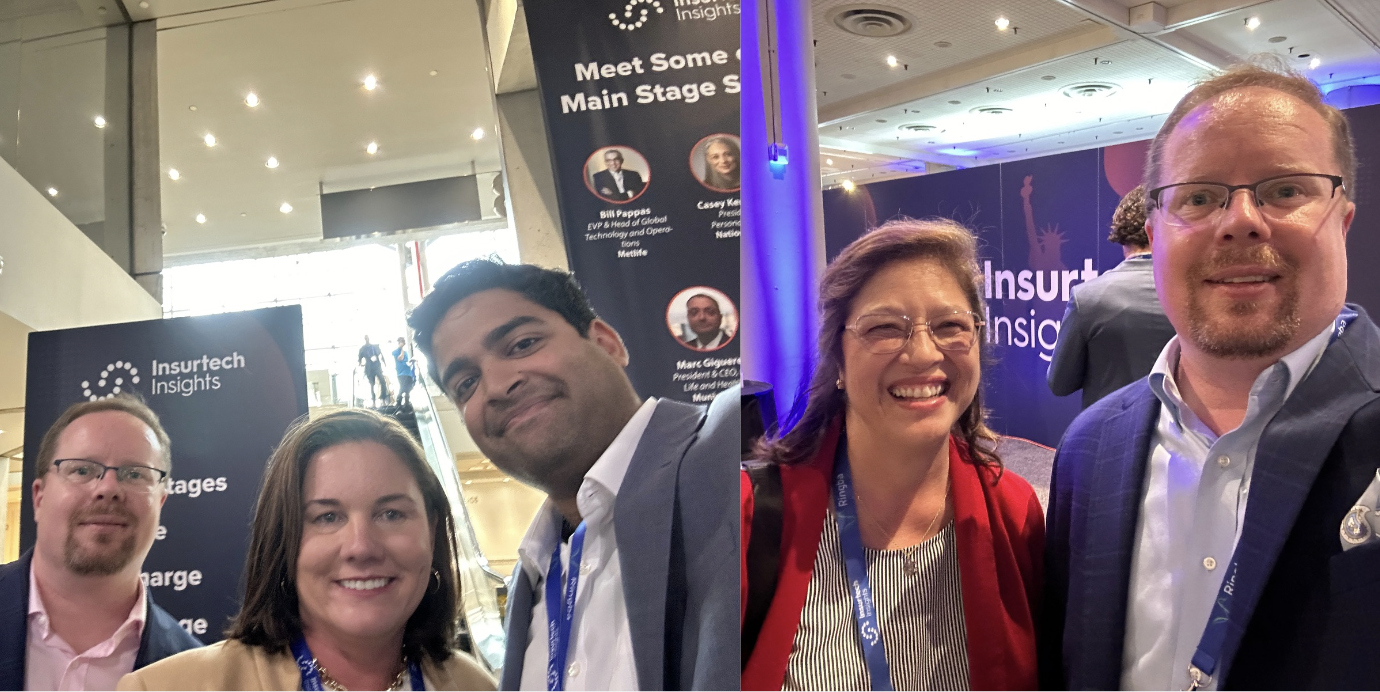
Last week, two of my colleagues and I attended InsurTech Insights USA in New York to do a little networking. Having attended for the first time in 2023, what I’ve come to appreciate about ITI is the speed networking.
Like two unassembled IKEA furniture pieces, both parties to ITI’s speed networking meet-up have a purpose. But how do you make the meeting feel natural and unforced? This can be tricky without planning. It can feel a bit like trying to assemble said IKEA furniture while following a vague and sometimes interpretive set of directions.
At ITI, you can use the event app to make connections with other attendees and schedule a series of 15-minute speed networking meetings. The app does all the hard work in terms of schedules and logistics. It’s the human element that is both fascinating and frustrating.
Who speaks first? How do you start? Should a slide deck be involved? What about business cards (so many opt not to carry them anymore or lose them along with their checked luggage)? What are the takeaways or next steps? Should there be takeaways or next steps? What if you’re late for the next meet-up that starts the moment your current meet-up ends?
What I’ve Learned
For those who participate in these meetups, and some do not, the intentions of both parties are clear. Someone is selling. Someone might be buying. Sometimes both parties are selling. And, sometimes, someone took the meeting simply to be polite.
The good news is it’s a level playing field for insurtechs, insurers, vendors and others who choose to participate.
What I have found to work best is to keep it simple and be direct: Asking the other party to tell you what they do, who is important to them to grow their business and what problems they are trying to solve or what opportunities they are seeking. Always give the other party, when possible, most of the time. And – importantly – listen to what they say. Don’t simply wait to speak. If what you do, provide or sell matches up with their needs, then connect the dots for them. Otherwise, ask them what they would like to know about your business and allow them to guide the conversation. And leave the PowerPoint at home. When you’ve got about a minute left, ask if it makes sense to keep the conversation going. If agreed, exchange contact information.
The number of people I met in 2023 and again this year who said, “I’m not sure how this meeting is supposed to work” was surprising, but also honest and refreshing. They saw the value of the speed-networking meet-up. They simply didn’t have a plan. Maybe the above approach will help in 2025?
What I Suggest
Frankly, I’d like to see a bit more of this type of speed-networking at other insurance industry conferences. Just maybe not at the same volume or pace as ITI (you really do need comfortable shoes and the occasional bathroom break).
Insurance is a business built on relationships. With daily new entrants to the industry and younger generations working to build and nurture their own networks, maximizing in-person opportunities and building relationships are more important than ever. Additionally, as experienced executives begin to retire, some of their industry relationships run the risk of being retired with them. Insurers simply cannot afford for this to happen.
ITI’s speed-networking format can be adapted to serve nearly any organization. For carriers, re-insurers and others, this would be a potentially great addition to all-company staff meetings. For the industry’s many professional associations, speed networking could be a great icebreaker for new as well as existing members. It could also serve the organization to better understand their members and their needs in a direct way. The same is true for recruitment events, fundraisers and alike.
For insurance to innovate and grow into the future, relationships must be brought along as part of the compact. While ITI certainly did not create the speed-networking concept, its application of the concept – in my view – offers a road map to creating and carrying all-important industry relationships into a bright, energetic and exciting future.
Press release wire services are frequently seen as an essential tool for organizations looking to disseminate their news quickly and broadly to the media. To the uninitiated, they can seem like a home run. Perform a search for the company name after posting to a wire service and you may find two or three postings of the release on the first page of your search. But is that really news? Do actual humans see your release? Is it worth the expense? The answers are mixed.
How Press Release Wire Services Work
There are numerous press release wire services like PR Newswire, Business Wire, and GlobeNewswire, and others.
To start, a company must draft its press release and upload it to a wire service. Be sure you understand the guidelines of the wire service you are using. Some have character limits for headlines or require brief, word-count-specific summaries of the content of the release that must be distinct from the text of the press release itself.
Once uploaded, the wire service editorial team will review the content to ensure it meets the wire service guidelines. Editors might suggest edits for clarity, conciseness, or to enhance the overall impact. Additionally, some wire services now reserve the right to reject press releases if they are deemed overly promotional and lacking in genuine news value.
Once approved, the press release is scheduled for distribution to a network of media outlets, journalists, news websites, and other stakeholders. This network often includes both traditional and digital platforms. Please note, there can be a delay of several hours – depending on the service – between approval and actual distribution. If your company requires the press release to be distributed on a specific date or time, please check with the wire service well in advance to understand their specific process and timing.
These wire services will provide a report with analytics on the press release’s reach and engagement, offering insights into its performance and audience interaction. In my experience, few if any of these data points are demonstrably valuable. Look specifically for data that reflect direct interactions with your press release. If you have more than 10 direct interactions via a wire service, I call that a win. Other provided metrics are fuzzier and, often, less valuable.
Why Companies Use Press Release Wire Services
Company leadership will often point to press release wire services as benefiting them in the following ways:
Broad media coverage
Increased SEO for the company or brand
Efficient use of resources
Actual media coverage resulting from a press release wire service is increasingly rare. Journalists are deluged with press releases and pitches daily. Further, because wire services supply the same content to hundreds or thousands of news websites, the uniformity of that content tends to make coverage of the information in those press releases less valuable to journalists seeking their own original story.
The reality is most press releases distributed through a wire service become aggregated content gathered by website algorithms and posted to pages on those sites you would be severely challenged to find natively on those websites. In essence, those releases tend to go into a black hole and are rarely seen by actual humans.
While press release wire services can still provide a slight bump to your company’s search engine optimization, that reality diminishes every year. You see, Google and other search engines tend to downgrade or even exclude repetitive content online, which negates the desired effect of using a press release wire service.
Additionally, while a press release wire service can appear less expensive than an ongoing engagement with a public relations agency or paying for a full-time, in-house comms professional, the reality is wire services are often wire services are not targeted communications tools. While you might pay a PR professional more over time than a one-time wire service fee, the fact is your media coverage will be more targeted and, ideally, more beneficial than simply blasting it out to the universe and hoping someone who may be interested in your services sees it.
However, if your goal is greater visibility in front of the widest possible audience, then you can justify a wire service press release distribution.
Finally, sometimes your leadership team, board of directors or investors simply need to see that your messaging has “gotten out there.” Often, this is the number one reason I have seen organizations employ wire service releases.
Setting Leadership Expectations
Whether using a wire service or not, it is crucial for organizations to set realistic expectations about the impact of their press releases. Not every press release will make headlines or go viral. To maximize press release effectiveness:
Focus on Newsworthiness: Ensure the content is genuinely newsworthy and well-written.
Tailor the Message: Customize the press release to appeal to the target audience.
Follow Up: Supplement the press release with personalized outreach to key journalists and media outlets.
Press release wire services remain a useful tool for companies and nonprofits to distribute news. While they offer benefits, it’s essential to use them strategically and maintain realistic expectations. By balancing the use of wire services with direct media engagement, organizations can enhance their visibility. As a former journalist, I appreciate the convenience and speed these services appear to offer, but my peers in the Fourth Estate also value originality and quality in the content they receive.
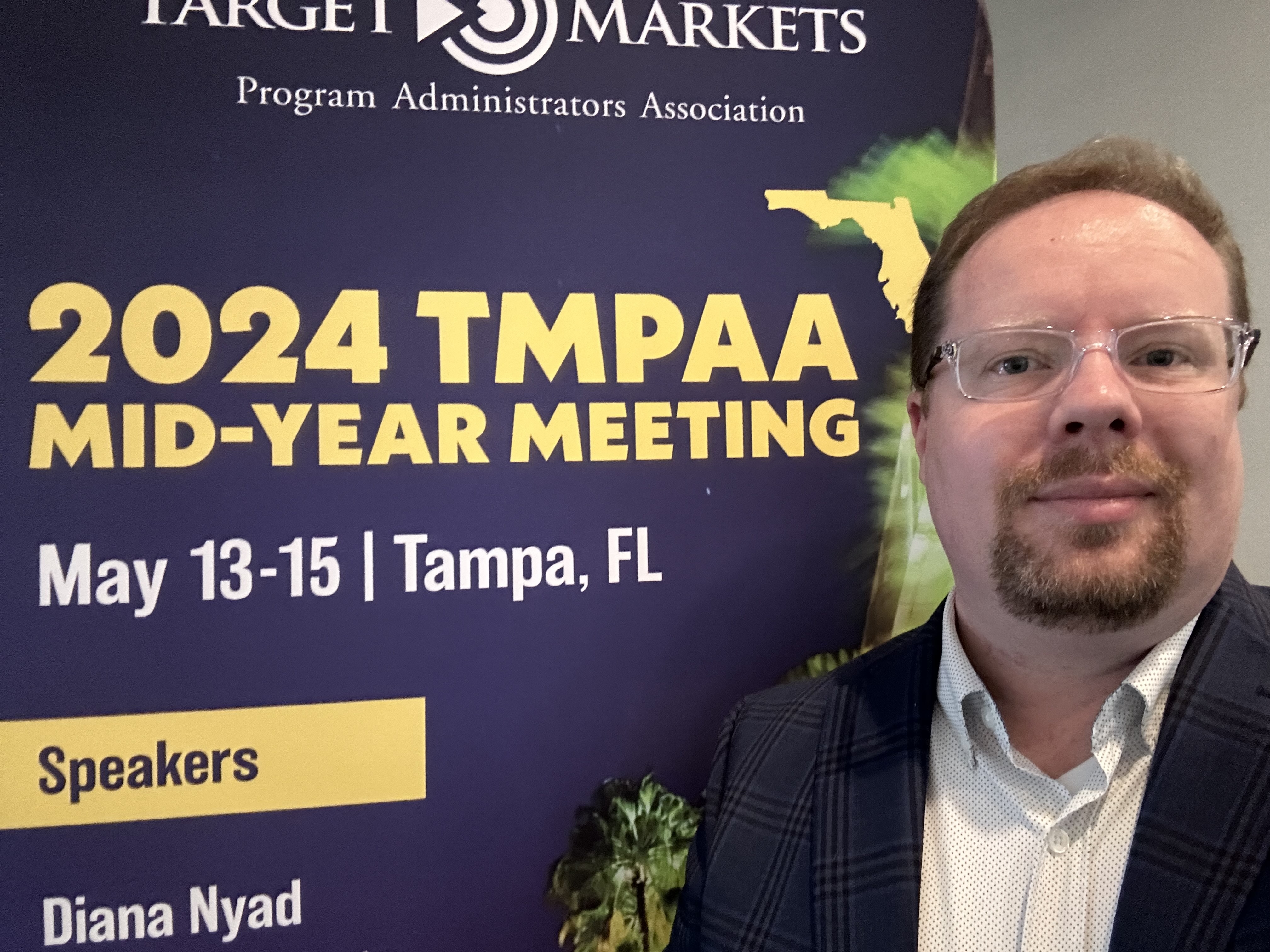
Target Markets 2024 Mid-Year Meeting in Tampa, Florida, made clear insurance is, and continues to be, a relationship business. This year’s mid-year meeting set a record with more than 1,300 attendees – more than double that of prior mid-year meetings for Target Markets. It was also my first time attending a Target Markets mid-year meeting.
I understand the attraction.
The first full day of Target Markets, Monday, May 13, was straight to business. Old friends reconnected while new acquaintances were made. Meetings were held over coffee, at breakfast, in break-out rooms and hallways, in the lobby, at the hotel Starbucks, over lunch, at the bar, across countless restaurant dinner tables and over drinks and at numerous private parties afterward. All this went beyond socializing as companies pitched, partners explored and new business partnerships were formed. The pace was hectic and heady, and it will be interesting to see if Target Markets offers an estimate for the business transacted in Tampa. The number of people who faced daunting schedules with back-to-back meetings, hoping to sign or write business, was impressive as they ran the gauntlet of two large Marriott hotels connected by a single third-floor sky bridge. The spirit of the 2024 meeting could be best summarized in a single word: Hustle.
Day two was a mix of the day before along with a series of programs and events that covered topics including a Lloyd’s Market update, a keynote speaker of remarkable tenacity embodied by Diana Nyad, a women’s leadership lunch, discussions on talent, the Target Markets’ new Program Business Professional designation and, of course, ample opportunities for networking.
The Target Markets’ hustle – on display from start to finish – also demonstrated the power and innovation of an insurance industry in growth mode. Seizing opportunities. Strengthening relationships. Getting business done.
Through all of this, I found myself among old friends I haven’t seen in years while sharing coffee and meals with new friends, potential business partners and – in my world – the all-important insurance industry trade media who were there to get the inside scoop on the issues, trends and insights of those who drive the business of insurance.
I applaud the team at Target Markets for putting together a productive event, and for those who grabbed the opportunity to move their business, and the industry, further into the future.
We have found philanthropic activities like this not only support charitable causes, but they also enhance our employee culture, team morale, and bring us closer together. As professional communicators, we’re always striving to find the best channels for our clients to use to reach their target audiences. In a new age of remote work, channels of internal communications are changing and we’ve found one of the best ways to communicate and deepen relationships with colleagues is to work together for social good.
As we’ve all heard, giving back and volunteerism have become core tenets of businesses across industries in recent years. There is a clear business case for philanthropy, as the next generation of workers have a clear interest in working at businesses that back up their values with action. Further, recent studies have shown that customer loyalty may improve at socially responsible businesses.
We believe giving back and volunteering events that emphasize collaboration and bringing communities together find more engagement.
Our client Pennsylvania Lumbermens Mutual Insurance Company (PLM) is also getting fit and having fun while building comradery among team members and raising funds for vulnerable children and communities. Each spring, employees form a team for the Insurance Softball League of Philadelphia, which raises money for local nonprofits while gathering regional insurers for friendly softball competition. Employees have the opportunity to get to know each other outside the office, get a little exercise and breath in fresh air while helping those in need.
With the IICF Step Up challenge, employees, friends and families in and around the insurance industry can form a team and compete with one another in a fitness challenge, measuring their steps, pedal strokes, sit-ups and virtually any other activity against the teams of other companies. Kimball Hughes PR is proud to have been a part of Step Up for the past five years and we have enjoyed learning more about each team member along the way – whether it’s a penchant for morning dog walks, an after-work jog, a Peloton ride or hike through the woods.
Consider reigniting company culture with a collaborative philanthropic initiative this Spring. We’re having a blast. Check out our progress so far here:
Well, once again to the dismay of my three teenage sons, I won the family March Madness NCAA basketball bracket. We’ll just say I do not follow college basketball like they do, but please know that I didn’t pick solely on uniform colors or schools I’ve visited.
One topic I do have a better handle on than my boys is business jargon. This year, Kimball Hughes Public Relations thought it might be fun to explore some of the more over-used business jargon and build a bracket of sorts in the spirit of March Madness. The former journalists and word wizards on our team sure had fun with it. Afterall, as professional communicators, these are words we’d like to see used minimally, if not completely boxed out from content.
Confusing the Point
According to the Harvard Business Review, jargon exists in workplaces because it can reinforce a shared identity, assist in fast and accurate communications among particular groups, as well as to quench an individual’s desire for professional status.
Prospects and clients want to understand what your company does. They do not want to be frustrated by jargon and buzz words strung together. Afterall, doesn’t your company do more than create integrated solutions that optimize efficiencies, drive alignment and build synergies with an omnichannel approach, all while connecting with ecosystems that align with core competencies?
Placing phrases on an About Us page, on a press release or in another piece of content peppered with heavy jargon could lead the client or prospect to leave the page out of frustration, misunderstand your products and services or decide to completely disengage with your company.
Geoff Keast, VP of Sales and INSTANDA, raised an interesting point in a recent interview on insurance jargon with PropertyCasualty360. He noted that when agents or insurers use jargon, the average insurance policyholder does not understand, they run the danger of leaving clients and prospects feeling as though they are being deliberately tricked. In other words, the overuse of jargon can lead to distrust.
Further, Keast noted that in the world of insurance, certain jargon could be doing the industry a disservice. For example, he pointed out that the often-used insurance term “premium” could leave one to interpret that they’ll be paying a higher-than-normal price for the product or services, when a premium in insurance is simply an insurance payment.
Writing Slam Dunk Messaging
At Kimball Hughes PR, our final four business jargon terms included core competency, integrated solutions, North Star and synergy, with my vote to position integrated solutions atop that list. The term integrated solutions can certainly sound impressive, but if the content doesn’t explain the type of solutions a company provides and how they can benefit me or my business, what value do those business buzz words really hold?
Other words that made our list are terms we all easily recognize including: alignment, bandwidth, ecosystem, efficiencies, engagement, KPI, leverage, omni channel, psychographics, optimize, scale and viral.
Don’t get me wrong, these terms are essential for business communications. We simply used this amusing exercise to have a little fun and point out this fact: allowing your messaging to get lost in jargon can lead to an airball for your team, missing your key target audience.
Business jargon can and should be used in business communications, but it should not be your only play. For a winning communications strategy, consider:
Reviewing your copy for jargon and ensuring that what you are trying to say can be clearly understood by any member of your target audience.
Rereading any jargon to ensure it will not mislead readers or be misinterpreted.
Sharing the copy with an outsider and asking them to explain what is written.
Flagging identified overuse of jargon and exploring alternative ways to convey the same thought. (Finding fresh ways to explain what you do or to share key messages can help set you apart from the competition.)
Defining jargon terms that could confuse readers upon first reference on the word.
Finally, to ensure your communication fits your audience and conveys your key messages clearly and accurately, consider talking to a communications specialist or engaging a PR agency – preferably one staffed by former journalists or a proven team of writers. Good communicators will find the right words to tell your story in a way that resonates with your audience and delivers results.
















 PR Matters