Historically, during the holiday season the Kimball Hughes Public Relations team gets together (virtually) for an agency gift exchange. This year, amid global unrest and an onslaught of increasingly stressful news events, we chose to do something a little different.
The team decided to give back by supporting the Salvation Army’s Angel Tree program, which helps provide gifts to families across the country each year.
Thanks to more than $500 in donations from among our team along with matching funds from Kimball Hughes PR, we cleared nearly 30 items from the Pawtucket Rhode Island Salvation Army’s Angel Tree Registry. The donations included toys for a wide range of ages, from alphabet books to fidget spinners and even a bike. Importantly, we were also able to provide essential items for families in need, including winter gloves and towels.
Agency leadership extends its sincere appreciation to our entire team for their generosity and holiday spirit in helping those in need experience a better, hopefully more joyous, holiday season.
As we close out 2025, we also want to remind everyone that our agency will be closed from Dec. 24, 2025 through Jan. 1, 2026. We’ll be back at our desks on Friday, Jan. 2 and PR Managers will be available and accessible for any urgent needs. Clients and journalists are encouraged to reach out to PR Managers by cell phone to ensure a timely response if needed. Meanwhile, we wish everyone a happy holiday season and look forward to connecting in the new year!
Public relations is all about relationships—the people behind the stories. That’s why periodically offer blog content about our team members who work with and represent our clients. This isn’t about our professional accomplishments but who we are as people. We hope you have as much fun reading along as we do interviewing each other.
What got you interested in public relations?
Growing up I dreamed of becoming an architect. As a young adult and in college, I spent my days sketching, drafting plans and studying the history of architectural design. I loved the strategy, creativity and storytelling architecture demanded. However, I struggled with one key requirement—math. Shortly after, I shifted my focus to communication studies with an emphasis on public relations and never looked back. Ultimately, public relations helped me come out of my shell after being a soft-spoken communicator. While pursuing my degree, I worked in customer service roles across retail and hospitality and quickly fell in love with the power of storytelling. Over the last decade, I have built a career transforming brands, using public relations to drive visibility while also inspiring engagement and long-term loyalty.
Tell us about your favorite movie and what appeals most to you about it?
I personally love both the thriller and horror genres. There is just something about these movies architypes that keep you on your toes and provide delightfully shocking plot twists. The blend of creative storylines, as well as anticipation, excitement and imagination, keeps me coming back for more. If I had to choose just one movie, I’d say that The Shining continues to be one of my all-time favorites. It offers haunting cinematography and an unforgettable performance, as well as a unique use of color and sound that continues to excite time and again.
What was the last, best book you read and what about it spoke to you?
Similar to my favorite types of movies, I love a good mystery. I also enjoy the occasional romance novel. However, the last and best book I read on a professional note that spoke to me was Big Magicby Elizabeth Gilbert. The book spotlighted creativity, curiosity and overcoming fear. It’s important to consider how these traits can contribute to everyday habits. With everything we do, whether personally or professionally, we must embrace creativity with courage. Ideas are where we live—especially as PR professionals—therefore, we must give ourselves permission to create and let go of perfectionism. Don’t wait for inspiration to strike, but rather, understand that it’s okay to live outside of your comfort zone.
Tell us about a meaningful hobby or “outside of work” commitment that is important to you?
Outside of work, I enjoy any opportunity to be outdoors. This includes spending time by the lake, hiking in and around Austin, Texas, and taking in all the beauty of the outdoors through photography. Both fitness and photography have been significant components of my life. These activities allow me to spend quality time with my husband and our Pug-French Bulldog while also reconnecting with nature and most importantly, relax a little.
Share a fun fact about you.
In addition to photography, I love cooking and baking. I rarely dine out and can be found cooking dinner most nights. Having worked at a fine dining restaurant and subsequently serving as the publicist to some of the world’s renowned celebrity chefs early on in my PR career, I’ve had the opportunity to go behind-the-scenes and learn how to make some of my most beloved dishes. While I am not a culinary professional, I enjoy recreating some of my favorite recipes at home, such as meatballs with marinara, wood-fired pizza with fig jam, prosciutto and a balsamic glaze and lemon ricotta cookies, to name a few.
Public relations is all about relationships–the people behind the stories. That’s why we’d like to highlight Account Manager Hari Rajagopalan as he prepares to start a master’s program in the fall. We hope you enjoy learning more about one of our team members as we wish him well in his next chapter.
Where are you going to school?
In August, I’ll be starting school at the University of Michigan’s Ross School of Business to earn an MBA.
What are you most looking forward to for your move? How will you adjust to the colder weather?
I’m looking forward to exploring a new town. I’ve never lived in the Midwest and have only visited Ann Arbor once. I can’t wait to meet new people from a wide variety of backgrounds through my MBA program, try new restaurants and see new sights.
The colder weather and snow will be an adjustment, and I’ll start that adjustment by buying a real winter coat and some hand warmers. I think it’ll be fun getting used to a new climate and working around the snow and other weather challenges I’ll experience while there.
What prompted your decision to pursue an MBA?
I felt ready to try something new. I’m incredibly grateful for the time I’ve spent working in PR, but I believe that skill development and continuing education are vital to becoming a more well-rounded person. I think an MBA will help develop my analytical skillset, whether that ends up being back in the PR space or in another field entirely.
How do you plan to marry your MBA with your PR experience?
My PR experience is a great starting point for business school. Navigating fast moving media opportunities, balancing client needs and media expectations, and learning how to advise clients to best support their reputation and brand have taught me the importance of effective, concise communications, empathy and adaptability. These skills will prove critical as I’m asked to evaluate other businesses and develop tactics and strategies for growth.
What was your favorite PR career memory?
My favorite memory in PR was working with one of our clients on a campaign for the St. Baldrick’s Foundation. Seeing our work directly impact and support a nonprofit making a real difference in our community and beyond was extremely rewarding and exciting. And getting to see the Mummers at their head-shaving fundraiser was an added benefit to supporting the campaign.
As you make the transition from full-time work to full-time student, what changes do you think will have the biggest impact on your day-to-day and how do you plan to adjust to the change?
The transition will be difficult. Attending classes will require an entirely different mindset and it has been years since I last was in a formal class setting. To adjust, I’ll be taking some online courses in my spare time this summer and trying to get ahead of some of the work I have lined up for the fall. I think starting classes early, even in an online setting, will help adjust my brain to be ready for these new challenges.
Any other big life updates you would like to share?
Next year will be a busy year! In the winter, I’ll be traveling to India to marry my fiancée in a traditional Indian ceremony. Then, in the Spring, we’ll be married again in New Jersey. I’m looking forward to it all, even if it will be chaotic to navigate.
Public relations is all about relationships—the people behind the stories. That’s why we’re offering this blog series all about our team members. This isn’t about our professional accomplishments but who we are as people. We hope you have as much fun reading along as we do interviewing each other.
What got you interested in public relations?
My first exposure to the power of PR is connected to my family’s restaurant. After a local reporter reached out for a series he was doing on restaurants in the area, we filmed a segment showcasing menu items, upcoming holiday specials and, most importantly, our family’s story. The reruns of the segment as well as its popularity online produced incredible results. I saw the impact of a well-timed media placement firsthand while I worked the holiday weekend after it aired, with customers directly attributing their visit to seeing the segment. As a PR professional, I’m constantly seeking to replicate that excitement I felt that day. I learned that PR is where I could use my love for storytelling to amplify a client’s message and connect to their audience.
Tell us about your favorite movie and what appeals most to you about it?
The movie “Everything Everywhere All at Once” is one of my all-time favorites. I come from a big family myself, so I always enjoy stories that dive into complicated familial relationships. Like any good sci-fi story, this film is vibrant and unafraid to be weird. It strikes this great balance tonally, with the humorous moments only heightening the moments that made me cry.
What was the last, best book you read and what about it spoke to you?
The last book I read was “James” by Percival Everett, a reimagining of “Adventures of Huckleberry Finn” from the point of view of Jim, an escaped slave. I read Tom Sawyer and Huckleberry Finn in school growing up, so I loved getting to read Everett’s portrayal of the character. He reexamines and deepens the original themes through James’ expanded characterization.
Tell us about a meaningful hobby or “outside of work” commitment that is important to you?
Outside of work, knitting and crocheting are the hobbies I have recently come to love. Knitting and crocheting force me to slow down and focus on the moment. Both activities allow me to keep my hands busy and stave off the urge to reach for my phone while watching TV. As an avid reader, I often listen to audiobooks while I work on a project, bringing two of my favorite pastimes together. I also love that I’m making something tangible. Whether it’s a blanket or sweater, it is a physical piece I can be proud of.
Share a fun fact about you.
I grew up in the restaurant industry. My Grandpa opened a seafood restaurant in Virginia that is still owned and operated by my family to this day.
As we continue to navigate a fluid economic reality, many business leaders are on an ongoing mission to cut costs and justify spending. Endeavors that are immeasurable are frequently the first to go.
Public relations can easily fall into this category. Marketing can too, but the reality is there is no direct, measurable, line from PR to sales. But before company leaders label PR efforts as unquantifiable, they should look to the following data point, which can confirm their message is getting in front of the right audience thanks to their PR and marketing efforts: Share of Voice (SOV).
SOV allows companies to measure their brand awareness, health and visibility against industry competitors. It can be viewed as a measure of potential awareness by your target audience of your business and its branding. SOV is a trackable metric that demonstrates where your business stands among competitors in a given period of time. It can also demonstrate the PR and marketing tactics or messages that were most successful in raising awareness for your brand.
At the same time, SOV can also provide insight into the most successful PR and marketing tactics of your competitors, giving you an even better idea of what might work for your audience. Further, SOV can point out any potential disconnect between what competitors are talking about and where your business chooses to focus its messaging.
Getting to Know Your Numbers
Calculating the metric is not rocket science. It requires aggregating your company’s media mentions and gathering data on industry competitors and their media mentions from the same points in time. Ideally, you’ll want to measure your SOV and that of your key competitors to get a benchmark before launching a PR campaign. Then, measure again during and after the campaign, to see how your company’s SOV has fared against your competitors.
The results can be eye-opening. We have found our clients see tremendous value in the metric – value they can bring before their board, investors and leadership team to pair with the organization’s overall efforts to achieve critical goals.
For example, at the end of 2022, a global insurtech company reached out to our agency looking to build SOV in the American insurance media market. At the time, they only had a 9.1% SOV and were struggling to breakthrough. Our team studied the approach of their competitors and developed a new, non-promotional PR approach focused on the dynamic personalities and interests of the co-founders and the state of the insurtech and insurance industries more broadly. This approach had a knock-on effect of demonstrating the company had its finger on the pulse of its core audience and their needs.
By avoiding outdated industry topics and blatant self-promotion, focusing on current trends and educating insurtech customers, we were able to secure dozens of media interviews and contributed articles for the company. By the third quarter of 2023 – just 9 months into our engagement – the company had established itself as the dominant voice among its competitors in the insurance media, with an SOV of 77.8%. This growth has corresponded with increased sales numbers and inbound product inquiries.
SOV is a powerful metric. It can demonstrate the value of a strong, consistent and coordinated public relations campaign in partnership with good marketing. While there still is no direct line from PR to sales, a considerable uptick in SOV demonstrates your message is being broadcast, and if done correctly, it is broadcast to the audience most in need of receiving that message. As year-end planning begins, consider incorporating this metric into your 2025 planning to help make your company the top voice among your competitors.
Last month, Tractor Supply Co. announced a plan to retire all diversity, equity and inclusion (DEI) goals and eliminate all DEI roles at the company. The swift turn away from DEI came in response to a public social media campaign organized to boycott Tractor Supply for their DEI and ESG initiatives and goals.
In today’s social climate, we frequently see businesses pivoting quickly to avoid negative reactions and feedback from customers – whether we’re talking about shifting DEI focus, distancing a brand from a “cancelled” athlete or celebrity or something else. While in some cases, it may make sense to rush to adjust your company’s initiatives based on negative comments or a sudden social movement, some abrupt moves can lead to even more backlash and reputational damage.
Thoughtful planning, strategic thinking and consulting with legal and communications experts can assist your leadership in navigating a situation like this. But one of the best places to start, is to examine your brand values.
What are your brand values?
Brand values are the principles and beliefs of a company that leadership want to project upon consumers. Essentially, these are the key beliefs that guide the operation of the company and consumer perception of a brand. For example, if your business does work in the diversity, equity and inclusion space, then your core values may focus on respect, belonging and creating a culture focused on openness, innovation and handing the ladder down to create a more equitable workplace.
Before coming up with any new programs, creating content, running any media outreach, or organizing a strategic pivot, management should have clearly defined brand values that represent both the company’s goals and growth plans. These values should also align with your target audience and their interests and how you want your company to be viewed by them.
Citing another unfortunate incident in the DEI space, consider the recent controversial decision by the Society for Human Resource Management (SHRM) to remove equity from their DEI strategy. On July 10, SHRM announced it would be moving forward with a focus solely on inclusion and diversity, which came as a surprise to many organization members.
SHRM’s decision was immediately met with intense backlash. Many human resource professionals canceled their SHRM memberships, a petition was started to oppose the decision, and many speakers pulled out of their upcoming conference. Generally, HR executives have found the decision to be disconnected from the core concepts of DEI and feel strongly that SHRM needs an equity-based approach to address workplace issues.
This was a misstep that could have been avoided. SHRM’s data had shown that people were not confident in the direction for progressing certain DEI initiatives. As a result, they ended up pulling back the equity portion. In this decision, they failed to recognize that a large portion of SHRM’s audience is very DEI focused and had been supportive as SHRM played a significant role in expanding DEI efforts across the human resources industry. SHRM’s brand values historically had been aligned with promoting DEI. An abrupt decision to seemingly rewrite their brand values and goals around uncertainty in the direction of the broader DEI movement has led to continued frustration.
Keeping Brand Values in Practice
The loudest voice in the room can be distracting, but leaders need to be careful not to let it be the guiding force behind any decision-making. A company’s brand values should be at the center of any decision. The loudest voice is not always representative of your target audience’s key interests and changing direction rashly without careful thought and professional consultation can lead to reputational damage or ruin.
While society continues to be largely divided on a number of issues, we can likely agree that a decision made in haste without considering your core audience or values, is likely not a smart move.
Before reacting, stop, think and consult with communications professionals. Think: What key messages are we relaying with this move and how will our audience respond?
Public opinion will always shift. That doesn’t mean your brand values should.
Imagine: Your company name is in the headline of an article on a reputable, national news outlet’s home page. Your colleagues and industry peers send a few emails in congratulations and maybe you even receive some inbound requests inquiring about your business, but the value seemingly ends there. How can you keep the momentum going?
Company leadership who are not taking full advantage of their media hits, or simply do not know how to amplify them are missing out on the exposure a reputable news outlet could offer.
Can I have your attention?
Whether the result of proactive media relations or an unexpected story, a media placement can help bring your business to the forefront of prospective customers’ and partners’ minds. If managed wisely and consistently over time, business leaders can enjoy a continuous flow of media hits that can lead to new business, help with recruitment and pique the interest of investors or other business partners. Consider the following tips to expand on your company’s next media win:
Share the good news internally: Your greatest cheerleaders should be your team members. Leadership should share media placements with team members and suggest convenient ways they can use it if they choose. Your communications team can be a great resource in crafting language to share with employees, including guidance on adding links to their email signatures.
Get social: As soon as a media hit goes live, business leaders should have a plan to share it broadly, tagging the outlet and – in some cases – the author as well. At minimum, social media posts should be scheduled for the same day the article is posted and a company’s website news page should be updated to include the article. Priority should be placed on interacting with comments on the posts and employees should be made aware of and encouraged to interact with them, if they are comfortable doing so.
Market it: Connect with your marketing team to see where else it may make sense to share the article, including newsletters or external email communications. Keep in mind the content is likely owned by the publication, not your company, so be careful not to cut and paste directly from the article or post without attribution. It could be seen as a violation of copyright laws.
Be strategic: As you spread the word through social media and marketing materials, be cautious not to spam your audiences with the same content. Find fresh angles where you can change up references to the articles in posts and marketing materials.
Don’t rest on your laurels: While a one-off media hit can lead to a nice boost for business and search engine optimization (SEO), without continued effort, it will likely be just that – a one-time thing. Engage your communications team to build a comprehensive plan for continuous, thoughtful proactive media outreach. Additionally, your communications team should be building and maintaining relationships with reporters who cover your business, leaving opportunities for you to contribute to stories in the future. Consider partnering with a public relations agency for an extra set of hands when it comes to media strategy and outreach.
Whether a feature article or a few quotes in a reputable news outlet, make your media win more than a nice-to-have article to frame on a wall. Media wins give a company credibility and a tangible way to demonstrate your leadership’s expertise. Essentially, unlike advertising, a media placement can offer third-party validation that consumers seek before placing their trust in a company. To make sure your company is more than a one-hit-wonder with the media, consider amplifying your coverage and building a long-term plan for consistent proactive outreach.
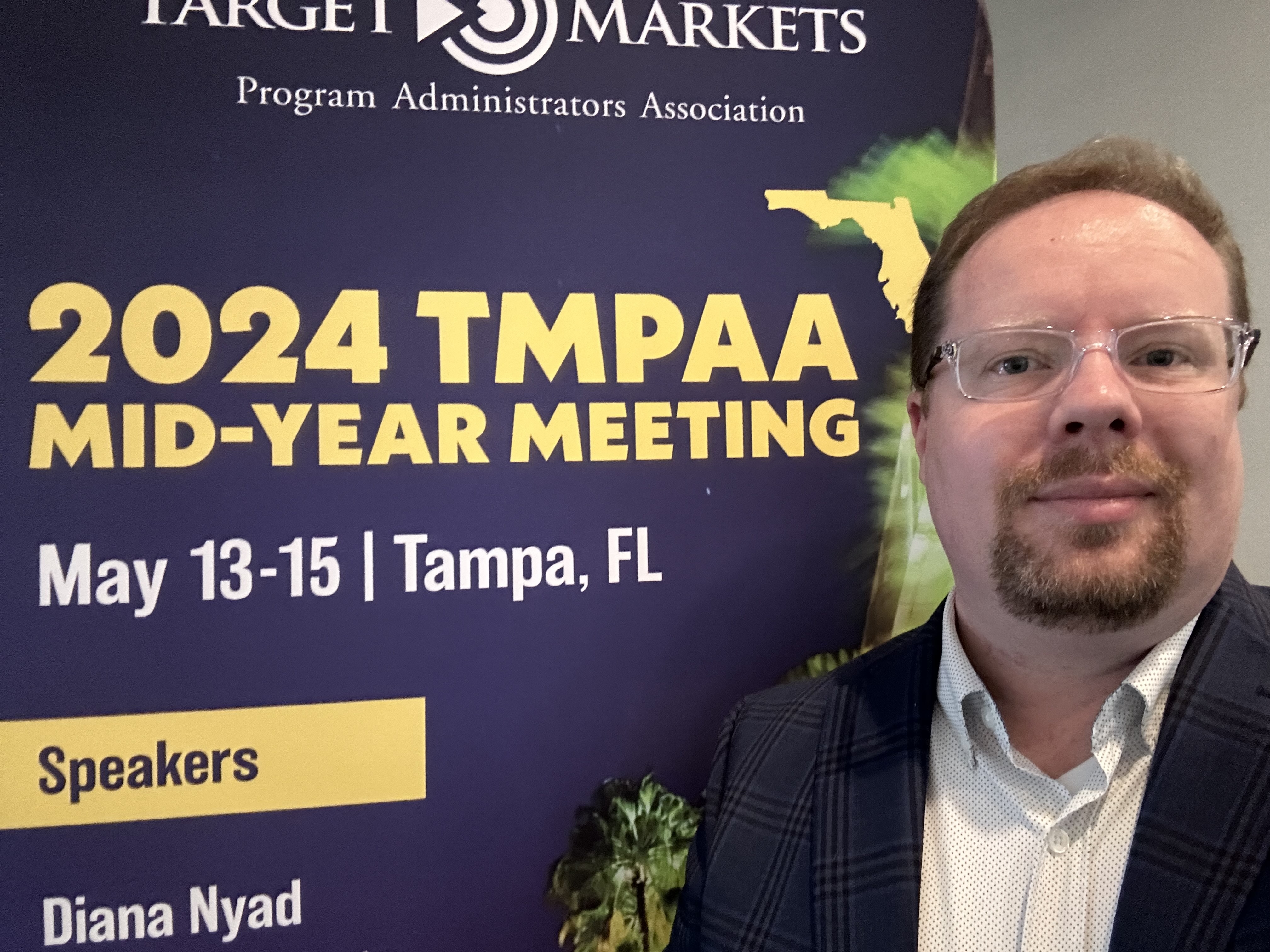
Target Markets 2024 Mid-Year Meeting in Tampa, Florida, made clear insurance is, and continues to be, a relationship business. This year’s mid-year meeting set a record with more than 1,300 attendees – more than double that of prior mid-year meetings for Target Markets. It was also my first time attending a Target Markets mid-year meeting.
I understand the attraction.
The first full day of Target Markets, Monday, May 13, was straight to business. Old friends reconnected while new acquaintances were made. Meetings were held over coffee, at breakfast, in break-out rooms and hallways, in the lobby, at the hotel Starbucks, over lunch, at the bar, across countless restaurant dinner tables and over drinks and at numerous private parties afterward. All this went beyond socializing as companies pitched, partners explored and new business partnerships were formed. The pace was hectic and heady, and it will be interesting to see if Target Markets offers an estimate for the business transacted in Tampa. The number of people who faced daunting schedules with back-to-back meetings, hoping to sign or write business, was impressive as they ran the gauntlet of two large Marriott hotels connected by a single third-floor sky bridge. The spirit of the 2024 meeting could be best summarized in a single word: Hustle.
Day two was a mix of the day before along with a series of programs and events that covered topics including a Lloyd’s Market update, a keynote speaker of remarkable tenacity embodied by Diana Nyad, a women’s leadership lunch, discussions on talent, the Target Markets’ new Program Business Professional designation and, of course, ample opportunities for networking.
The Target Markets’ hustle – on display from start to finish – also demonstrated the power and innovation of an insurance industry in growth mode. Seizing opportunities. Strengthening relationships. Getting business done.
Through all of this, I found myself among old friends I haven’t seen in years while sharing coffee and meals with new friends, potential business partners and – in my world – the all-important insurance industry trade media who were there to get the inside scoop on the issues, trends and insights of those who drive the business of insurance.
I applaud the team at Target Markets for putting together a productive event, and for those who grabbed the opportunity to move their business, and the industry, further into the future.
We have found philanthropic activities like this not only support charitable causes, but they also enhance our employee culture, team morale, and bring us closer together. As professional communicators, we’re always striving to find the best channels for our clients to use to reach their target audiences. In a new age of remote work, channels of internal communications are changing and we’ve found one of the best ways to communicate and deepen relationships with colleagues is to work together for social good.
As we’ve all heard, giving back and volunteerism have become core tenets of businesses across industries in recent years. There is a clear business case for philanthropy, as the next generation of workers have a clear interest in working at businesses that back up their values with action. Further, recent studies have shown that customer loyalty may improve at socially responsible businesses.
We believe giving back and volunteering events that emphasize collaboration and bringing communities together find more engagement.
Our client Pennsylvania Lumbermens Mutual Insurance Company (PLM) is also getting fit and having fun while building comradery among team members and raising funds for vulnerable children and communities. Each spring, employees form a team for the Insurance Softball League of Philadelphia, which raises money for local nonprofits while gathering regional insurers for friendly softball competition. Employees have the opportunity to get to know each other outside the office, get a little exercise and breath in fresh air while helping those in need.
With the IICF Step Up challenge, employees, friends and families in and around the insurance industry can form a team and compete with one another in a fitness challenge, measuring their steps, pedal strokes, sit-ups and virtually any other activity against the teams of other companies. Kimball Hughes PR is proud to have been a part of Step Up for the past five years and we have enjoyed learning more about each team member along the way – whether it’s a penchant for morning dog walks, an after-work jog, a Peloton ride or hike through the woods.
Consider reigniting company culture with a collaborative philanthropic initiative this Spring. We’re having a blast. Check out our progress so far here:
While the beginning of May marks the end of Earth Month, sustainability should be a year-round endeavor. Fortunately, there are plenty of opportunities throughout the year for businesses of all sizes to support their communities and maintain and build on the momentum highlighted each Earth Month. With the right communication strategies, sustainability-focused initiatives can benefit not only the planet and the greater good, but your business as well.
Practicing a thoughtful approach
A business that cares for and invests in the environment can offer employees, consumers, prospects and other stakeholders a positive perspective. However, leaders must tread carefully to avoid an adverse impact down the line. Consider posing the following questions when building a sustainability plan:
Are your goals clear? Your sustainability initiative plan should clearly outline what your organization is trying to achieve and/or contribute. For example, if your cause is to support forestry, a goal might be to plant 100 trees by the end of 2024. Having clear goals leaves little room for misinterpretation from the public or from team members.
Are your goals attainable? Business leaders who establish goals within a sustainability plan should consider whether they are attainable given employee bandwidth and company budgets. Overpromising and under-delivering in sustainability efforts could leave leaders in hot water and contribute to mistrust among customers, prospects, employees and other stakeholders.
As mentioned above, companies that fail to deliver on their sustainability promises can and have fallen victim to pushback and negative press. In fact, CNN Business reported on research in 2022 that some of the largest companies in the world missed the mark on sustainability targets. For example, just last year The Wall Street Journal reported on several companies, including United Airlines who made a 2021 pledge to reduce carbon emissions but ended up scrapping their short-term goals to maintain focus on longer-term gains.
While goals can be adjusted over time, business leaders should be intentional about their goals and how they are going to achieve them, and of course, in how they communicate them.
Maximizing your sustainability plan
Yes, failed sustainability plans can lead to bad press, but successful initiatives can be a win for the company when communicated thoughtfully and strategically. Keep in mind these best practices with considering communicating sustainability initiatives:
Consider newsworthiness. A sustainability initiative may not be newsworthy in and of itself. For example, using the tree planting initiative above, if a business plans to hold a fundraiser to purchase the trees, they might consider sharing the cause with local media to reach those interested in supporting local forestry. Businesses might benefit from inviting local dignitaries such as government officials or local organizations with similar goals to attract media attention.
Be transparent. As it is in business, transparency is critical regarding charitable efforts. Business leaders should be forthcoming about their support as well as with the progress they have made toward an initiative with reporters. Exaggerated numbers or claims could lead to suspicion and distrust from key stakeholders and the press.
Rally supporters Recruit team members and the community to help advance the business’s sustainability goals. Engaging and having buy in from local supporters and employees will help drum up buzz around an organization that could lead to your effort making a bigger impact and help to attract media attention.
Stay the course. Business leaders must be prepared to remain diligent with their sustainability goals. Relevant times to discuss sustainability like Earth Month will help create momentum around a business’s eco-efforts, but they should have plan to maintain it with supplemental activations. Continued activity could also help attract media attention to your initiative.
Track your progress. Have a plan to track your progress while executing a sustainability initiative. Make sure to track participating volunteers, dollars raised or testimonials, among other things. Statistics will supplement your business’s efforts and give media outlets a quick glance at your success.
Sustainability has become somewhat of a buzzword in today’s business world, but the sentiment of bettering the Earth is one every business leader should share. As business leaders wind down their Earth Month activations and carry on with business as usual, they should consider how executing on defined sustainability goals year-round, armed with a strong communications plan, can be as good for business as it is for the environment.














 PR Matters