Sorry Seems to Be the Hardest Word

Giving your public relations team a seat at the table early in a situation can mean the difference between successfully navigating a potential reputational crisis and falling victim to embarrassing, costly and ruinous public backlash against your brand via social media and the press. One just needs to look at the now nearly infamous Kyte Baby incident, where CEO Ying Liu delivered a cringe-worthy and awkward TikTok apology in January, to see how harmful it truly can be to fail to consider strategic counsel from a seasoned PR advisor. This was in response to the company’s termination of an employee’s request to work remotely while her adopted newborn was in a neonatal intensive care unit.

While the underlying issue at Kyte Baby seemed connected to parental leave policies, the decision was viewed by consumers as antithetical to the company’s mission and values. Under the title of Kyte Cares, the company’s website reads in part: “At Kyte Baby, we have dedicated our company to helping babies and families find comfort for more than a decade … we understand the importance of family and recognize parents’ vital role in nurturing and supporting their families.”

The controversary swirled as enthusiastic fans of Kyte Baby’s products learned of the employee’s termination and complained to the company and online. Ironically, it was Liu’s awkward and stilted apology that brought the company out of the shadows of social media and made headlines around the world.

A Failure of Consideration

It would be a mistake to discount Liu or her decision as ill-considered. She is a working mother and entrepreneur who also happens to hold a doctorate in economics. Also, the tone of her original video apology, where she asked the employee in question to forgive “how her parental leave policy was communicated and handled,” would imply she was advised on how to respond.

What happened was a failure of consideration. A failure to consider what the decision to terminate would say about the company, and a failure to consider how Liu’s response to public backlash would be presented and received by that public.

If there was a PR professional advising her to act as she did, that person should be fired. If there was no PR professional advising Liu alongside of the company’s attorneys, then the fault lies squarely with Liu and the company’s fundamental inability to live its mission in a way its loyal customers might expect.

My guess, and it is only a guess, is this matter was seen as a legal issue and addressed accordingly. What it lacked was someone in the room, steeped in the brand’s mission and reputation, who would have played devil’s advocate both on the decision to dismiss the employee as well as gaming out any potential blowback from the apology. Had a skilled PR professional been in the room from the start, Liu would have been advised on the optics of dismissing a new mom with a sick child from a company founded to help moms navigating health issues (skin conditions related to fabrics) among their young children. Further, had a skilled PR pro spoken to Liu when her original apology was scripted and planned for wide distribution on TikTok, Liu would have been strongly advised to take a different approach.

Instead, Liu made a decision that matched the company’s (then) policy on parental leave. Liu made a legally appropriate CEO decision to follow company policy but failed to be the empathetic mom who founded the company 10 years earlier to help other moms.

Why PR Needs a Seat at the Executive Table

Liu is only the latest example of organizational leaders – C-suite and others – who failed to look beyond policy or legalese. In the same month Kyte Baby made headlines, a former account executive for Cloudflare, an IT company, recorded and posted to social media a video of her termination over Zoom by two human resource professionals she had never met and who didn’t know her. That company’s CEO also went on a social media apology tour, calling the video “painful” to watch and noting the way the matter was handled was inappropriate.

Organizations large and small make mistakes. Having trusted counsel – both legal and others – consider and review decisions that can impact the brand is vital. Moreover, the rules governing the workplace have changed and continue to evolve. Not only are people making space for their work in their homes and having to integrate that work into their lives beyond 9-to-5, but we are also in an era where the aggrieved can turn to social media and expose former employers who act in bad faith – real or perceived – to a firestorm of negative publicity. And, frankly, a lot of organizational leaders are getting it wrong.

Having a communications professional as part of the decision matrix can help. Whether in-house or an outside consultant or agency, these are trained professionals whose jobs are to consider every decision, message, social media post and internal memo through the lens of the organization’s reputation. It’s an invaluable service when you consider the alternative: Kyte Baby is navigating an ongoing boycott while trying to share positive news about their new parental leave policies. Cloudflare blew up on social media for the wrong reasons and may struggle with recruitment of vital talent as a result.

Lawyers are excellent advisors. They protect their clients in the court of law. Public relations professionals focus on reputational threats and protect clients in the court of public opinion, which is where consumers tend to decide where and how to spend their money. Both must be in the room where decisions are made.

X For Businesses: The Unanswered Question

Elon Musk dominated headlines throughout 2023 after purchasing Twitter in the year prior. Musk purchased the social media platform with bold promises to advocate for free speech, to prevent bots and misinformation and to create the “everything app.”

Since taking over, Musk has made good on his promises to make changes, but those changes did not all yield positive returns. Since taking over, Musk has overseen widespread layoffs, as well as controversial decisions to outsource content moderators, rebrand Twitter to X and introduce a monthly subscription model. Under his direction during the first year, the company’s ad revenue dropped a minimum of 55% year-over-year each month and lost about 13% of its daily active users.

Not surprisingly, X’s viability for brands as a valuable social media tool is being questioned by organizational leaders, as well as their marketing and communications teams.

Is X worth a place in your social media strategy? Let’s look at a few considerations for business leaders reevaluating their brands’ activity on X. 

  • Time spent vs. ROI: Twitter since the beginning has been dependent on real-time interaction. In the last year, the platform has undergone significant security and algorithmic changes, which have resulted in fewer impressions and engagement on posts. This has been particularly true for those who chose to opt out of the paid subscription model. Regardless of the type of account, X as we know it today requires a significant time investment of diligent posting and interaction for even a chance at climbing user feeds.
  • Public trust concerns: Musk’s public intention when he bought Twitter was to encourage free speech and prevent misinformation. However, Musk has struggled to uphold these promises and has taken heavy criticism in the media related to the spread of misinformation on the platform. Taylor Swift, for example, was recently a victim or misinformation on the platform when AI-generated explicit photos began circulating the platform as reported by The Wall Street Journal. The potential implications of a violation of public trust for X users, coupled with controversial statements made by Musk, have prompted businesses and corporations to reconsider their connection with X.
  • Changing features: In Musk’s endeavor to make X the everything app, the company has made considerable changes to platform features. For example, when displaying links, X now removes headlines and makes clickable links less visible to limit linking outside the platform. For most businesses, social media is used to direct customers to a different place, whether that be the company website or a blog post. Limiting access to such links could diminish any return for businesses utilizing X.

The attention around X should serve as a reminder to business owners, that a social media strategy should always be evolving and that they should regularly evaluate engagement across all channels. Some platforms, or a company’s current strategy for a certain platform, may no longer be serving them well, and new resources and features are always popping up.

LinkedIn, for example, now offers articles and newsletters for users to post longer form content. Showcasing a business’s expertise and their leaders’ insights in an article could hold more value than posting small snippets on X.

Social media is an investment of time in understanding and establishing business goals that are supported by a platform’s capabilities. To get the most from social media, business leaders and their social media managers must understand how social media platforms could work to their advantage or diminish their investment as they evolve.

The Press Release: “In” or “Out” in 2024?

As a journalism major in college, I studied the inverted pyramid. It states that the most important details permeate the widest part of the pyramid, supporting details follow in the middle and supplemental information completes the tip of the upside-down pyramid. As a public relations professional, I know a well-written press release should follow a similar format — but I also know no press release, no matter how well written, should stand on its own.

So, what’s the scoop on press releases for 2024? Those that follow the inverted pyramid format as part of a strategic public relations campaign are still very much “in,” but, if released in a vacuum or poorly written, the press release is most definitely “out.”

This should not come as a surprise in 2024. The demise of the press release has been predicted, incorrectly, for years. Once a powerful, singular tool in the world of PR, the press release has become simply one of countless tools available to the profession. Deployed strategically and creatively, a well-written press release can still help to raise brand awareness.

The Press Release Myth

For many, the idea of public relations often begins and ends with a press release. It’s not that simple anymore. Most reporters receive hundreds of press releases daily and could easily overlook yours even if you pay big bucks to have the best-known PR agency around draft and distribute it.

The truth is you need a continuous effort with the media to build credibility and a reputation as a valued resource among reporters and your audience at large. Journalists are in the business of reporting on news and taking deep dives into important trends; not promoting your company. To select you or your organization as a credible source, first journalists need to know your name. Secondly, they need to know you aren’t merely going to try to promote your product or service. The way journalists come to know these things is through continuous, relevant and topical outreach on subjects they cover and care about. This is the primary reason most PR professionals advise clients not to treat PR like a spigot, turning it off and on at will.

To accomplish all of this, you may use a press release here and there. But it should never be your default tactic, and it should only be used if you have genuine news or insight to announce. Instead, consider the press release as one useful tool in a communication strategy.

Maximizing the Press Release

So, how can a business owner get the most from a press release?

Press releases can offer value when announcing a business launch, new product, merger or acquisition, personnel change, etc. It should be relevant to the audiences you hope to reach and tell the reader the facts of what is happening with your business and leave the promotional language for the marketing and advertising folks. If the goal is establishing credibility among your audience, any hint of self-promotion will steer journalists — and increasingly more savvy news consumers — in the other direction.

Ultimately, business owners should not expect a press release alone to garner media attention. You need a broader campaign where reporters and other key audiences are receiving a steady stream of content on your brand whether through pitches to the media related to industry trends or current events, through content on company blogs, the company website or social media posts. Only with consistency will you build credibility and confidence in your leaders and your brand. Consider consulting with a PR agency to understand what approach might be best for your brand.

Best Practices

When a press release is determined to be a useful component of a broader communications strategy, it must be well-written to demonstrate that credibility. By taking care in your messaging and presentation, you are conveying that you take care in your product or service.

Consider these tips in drafting a good press release:

  • Think like a journalist — keep the inverted pyramid in mind, stick to the facts, and avoid promotion.
  • Announce your “news” up top.
  • Try to find a news hook or element of timeliness.
  • Keep the copy clean and tight.
  • Craft a compelling headline that sums up your news.
  • Consider partnering with a PR agency with former journalists on staff.

Issuing a press release as part of a comprehensive PR strategy can have several benefits including:

  • Boosting company search engine optimization, particularly if the release is picked up by multiple media outlets.
  • Serving as good introductory or reference material for reporters.
  • Providing useful fodder for marketing and other owned content sources.
  • Helping to build credibility and name recognition with a steady drumbeat of newsworthy and relevant releases, combined with other PR initiatives.

While the media landscape continues to change, the press release remains “in” and will continue to be a useful tool — for now. However, business owners should understand a press release, on its own, does not guarantee media coverage. When written well and thoughtfully distributed, it can be an effective component of a comprehensive PR strategy that can build brand trust and elevate your company in the eyes of reporters and customers.

Reflections on a Day of Service: The Value in Communicating the Good You Do

We have all heard charitable giving and volunteerism are good for the community and good for business. Although our central purpose in giving back is hopefully to produce better outcomes for others, wildlife, the environment or countless worthy causes, that business benefit should not be overlooked.

After taking part in this year’s Martin Luther King Jr. Day of Service, we thought we would explore the benefits – beyond the self-satisfaction found in helping others – available to companies that give back through kindness.

These are benefits that can inspire and encourage others to get involved and feel a part of something, while also enhancing the company’s reputation and, potentially, its bottom line.

More specifically, spreading the word, in the right way, of a company’s philanthropic initiatives can:

  • Enhance company culture. Today’s employees want to know they are working for companies that care and take action toward social responsibility. They want to see the company’s principles and support for employees, the community and the environment communicated. It can engender them a sense of pride toward their employer. Further, providing employees with time to volunteer with their team can promote comradery and build a corporate culture where employees feel more fulfilled, challenged and want to stay and grow.
  • Assist in recruiting top talent. Millennials and Gen Z want to give back in meaningful ways and they are increasingly looking to employers to not only support, but enable, these social good contributions. They are looking to join companies that provide opportunities to volunteer, to take part in fundraising initiatives and to support the causes that matter to them.
  • Raise awareness of your company among your target audience. It is not only employees who are interested in socially minded employers; customers want to patronize companies that support causes important to them.

By sharing news and updates of charitable donations and volunteering efforts via articles, photos and videos shared via eblasts, social media channels and newsletters, leadership can ensure prospective and existing customers, job candidates, and current employees see their commitment to giving back and realize this is an organization worthy of their time, attention and money. To help ensure this, consider these best practices for communicating charitable endeavors on social media:

  • Craft your post with care for clarity, tone and importantly, brevity, as well as spelling and grammar.
  • Include photos and short video clips where possible.
  • Tag the nonprofits you supported. They may repost to their networks.
  • Call out employees where appropriate for their volunteer efforts and tag them on posts.
  • Encourage employees to like and share on their social media channels as well.

Finally, a good public relations partner can define a clear strategy communicating the social good works of the company and its employees. Having a strategy is important, not only for promotional purposes, but also to ensure you and your employees communicate thoughtfully, consistently and respectfully while focusing on the best channels and language to best support the efforts of the company and its employees. Not every fundraising initiative is worthy of a press release. Again, a PR professional can help you determine the best communications channel for sharing messaging.

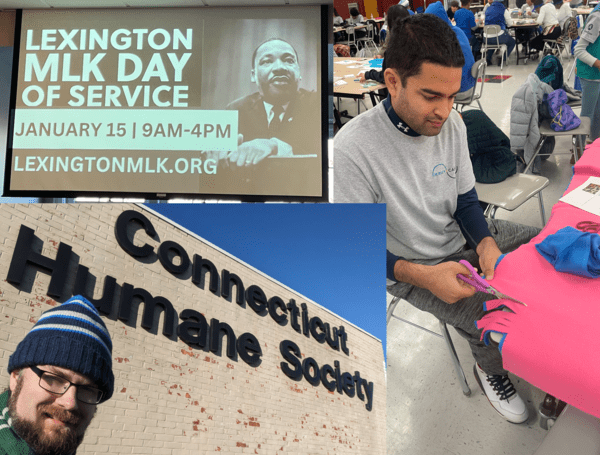
For our part, team members at Kimball Hughes PR had an amazing time volunteering in their local communities on MLK Day. They organized dog and cat food at the Connecticut Humane Society, made cards for veterans with the Lexington Day of Service and packaged emergency relief and disaster kits with Jersey Cares for victims of recent storms and natural disasters. At Kimball Hughes PR, we encourage a culture of giving back by providing paid time off to volunteer for MLK Day as well as during the Insurance Industry Charitable Foundation’s Week of Giving. We seek team input on all company charitable initiatives, whether through our pro bono client work or our annual charitable gift made to a nonprofit cause important to our team on behalf of our clients.

From paid-time-off to volunteer to matching employee charitable donations, organizational leaders should not only be sure to create opportunities to give back, but also to communicate their efforts and those of their employees. While not every charitable effort is newsworthy, a photo on social media of an employee helping to clean a beach or assist in a food kitchen can go a long way in advancing your reputation as a company that cares and one that is worth the investment and support of employees, customers and others.

Kimball Hughes Public Relations 12 Days of Public Relations

Thank you for following along with Kimball Hughes Public Relation’s 12 Days of PR. We hope you have found value from our thinking on how and why public relations can help for- and non-profit organizations. Please enjoy and feel free to use all 12 insights throughout the year. Have a safe and happy holiday season!

On the 1st day of our engagement, my new client gave to me…

A request to raise awareness around their brand. Public relations empowers clients to share compelling stories in ways that build their credibility, while transforming them into go-to resources for their specialties. It starts with a comprehensive media plan. After gaining an understanding of their goals, target audiences and key messages, we craft a thoughtful plan chock-full of tactics – that get results – leveraging media relations, thought leadership, speaking opportunities and more. 

On the 2nd day of our engagement, my new client gave to me…

A one-off press release.  A stand-alone press release will do little to amplify your brand and is usually not worth the investment of time or money. Rather, press releases should be one component of a comprehensive, ongoing media strategy designed to showcase your company’s expertise. A thorough media plan that incorporates newsworthy and thoughtful press release distribution, consistent with your company’s key messages, will help you to propel your brand and position your company for success. 

On the 3rd day of our engagement, my new client gave to me…

A call for more control over their messaging. These days, smart PR incorporates both earned and owned media. In addition to traditional media interviews where a client cannot totally control what ends up on the page, owned media, which leverages blogs, social media, white papers, sponsored content and more, allows clients to share their messages with editorial control. We work with our clients to determine the best approach for them, often incorporating a mix of both mediums for optimal exposure.

On the 4th day of our engagement, my new client gave to me…

A crisis involving negative online reviews. Negative online reviews can quickly escalate dealing a major blow to a business – if not properly addressed. We start with an assessment of the facts. We determine if a response is warranted, and if so what type. We also confirm the review adheres to the host site’s review policies. If appropriate, we’ll quickly draft a tactful response to deter further discord or advise clients how to petition for the review’s removal ­– helping them keep their reputations intact.

On the 5th day of our engagement, my new client gave to me…

A CEO who had never spoken to the media. Getting in front of the camera or interviewing with a reporter can be challenging. Proper preparation is key, incorporating these three rules: Don’t lie, don’t guess and don’t assume. Liars get caught, guessers make mistakes, and those who assume get caught off guard. We work with our clients to provide interactive media training, including live interview scenarios conducted by our team former journalists, to ensure your spokesperson is interview-ready. 

On the 6th day of our engagement, my new client gave to me…

A question on how we measure PR. When investing in PR, a common question is – how do you measure success? First we establish clear, obtainable goals that will drive PR efforts and work to achieve them. We measure for unique monthly visitors to the host site, share of voice, tone, reach and more. One of our favorite ways to measure PR success, however, is through the client’s new business wins after the prospect has read about them in earned media we coordinated.

On the 7th day of our engagement, my new client gave to me…

A request to grab headlines like their competitors. When prospects express frustration with their competitors dominating news headlines, we conduct a competitive media analysis to benchmark coverage and develop a roadmap to success. That success requires a campaign with consistent thoughtful outreach. We tailor our campaigns to best position our clients as reliable, informed and go-to media sources focused on issues, not self-promotion. This approach has yielded remarkable results for our clients, growing share of voice among their competitors by more than 70% in mere months.

On the 8th day of our engagement, my new client gave to me…

A question asking what media outlets are best for them. Choosing the right media target starts with understanding of the client’s audiences, preferences and goals. Are they looking to target C-suite executives, a geographic segment or specific community? Will they be comfortable being interviewed or do they have a wealth of expertise better suited for opinion or thought leadership contributed articles? Once we understand target audiences, the client’s style and how they define PR success, we dive into our deep database to identify the media outlets that will most effectively and efficiently reach their target audiences. 

On the 9th day of our engagement, my new client gave to me…

SMEs with valuable content to share. Thought leadership or contributed content can be invaluable, not only to establish yourself as an industry expert and go-to resource for the media, but to raise the profile of your business. We work with subject matter experts (SMEs) to determine topics in line with industry trends matching their interests and expertise. In partnership with the SME, we develop a nonpromotional article sharing genuine insight relevant to the focus of that audience – with key messaging strategically interspersed. In authoring thought leadership published by a leading industry trade, our clients have seen their SME’s profiles grow exponentially along with their brand recognition. 

On the 10th day of our engagement, my new client gave to me…

A request for coverage in a specific media outlet. Prospective clients often ask if we can get them in the Wall Street Journal. This can be possible with an ongoing, concerted effort along with the right story to tell. A successful PR program requires a sustained strategy to build credibility highlighting the client’s expertise. Media value insights that go beyond products or promotion and speak to bigger industry issues or trends. Media placements can be achieved through regular, relevant outreach, a stream of trade or regional interviews, contributed content and a thoughtful social media presence. 

On the 11th day of our engagement, my new client gave to me…

A question asking how much PR costs. Engaging with a PR firm is like buying a computer. Some are sleek; recognized name brands, others are smaller and tailored to a specific task. Just like the capabilities and pricing of a new computer may vary, so do those of PR firms. A hefty price tag or brand name doesn’t guarantee the best product or service. Look for a firm that understands your industry, specializes in your specific needs and goals and gets high marks from current and former clients alike. As in all things, you usually get what you pay for.

On the 12th day of our engagement, my new client gave to me…

Their plans to attend an upcoming industry conference. Conference attendance can be a major investment. When done right, it yields a strong return that amplifies your brand’s reputation, creates new connections and sometimes new business. We work with our clients to profit from that investment with media attention. We advise our clients on the events most likely to draw media onsite. Then, we secure introductory meetings and interviews with journalists, and work with clients to prepare them for interviews with media training, if necessary, as well as carefully crafted talking points and more. 

Lifting the Veil: Parallels Between Building a PR Strategy and Planning a Wedding

Many say that planning a wedding is akin to having a full-time job. This is a reality I learned planning my own wedding. I got married this past July.

As I was wrapping up work in preparation for the wedding, I was struck by the similarities between planning a wedding and preparing a public relations strategy. While one focuses on florals and outfit coordination and the other on messaging tactics, media placements and KPIs, both are tied to reality by timelines, budgets, audience expectations and the seasoned professionals who know the marketplace.

Defining Your Happily Ever After

When planning any program, strategy or event, it is important to have a vision of what your end outcome will be. For example, most marriers aim to have a beautiful wedding, where all guests enjoy themselves and the couple has a long and harmonious happily ever after.

To position their wedding for success, couples often identify a theme. Some aspire to have a grand, black-tie gala while others want a more laid back, yet festive beach affair. Personally, I planned for a casual, yet sophisticated garden party.

When launching a public relations campaign, the strategy can be similar. Consider what your business ultimately wants to gain from this strategy. Similar to the couple-to-be’s goal of happy guests, your goal may be to have a roster of eager prospects. Or you may be looking to bring more awareness to your company, introduce a new product or line of business or change the way your organization’s reputation is perceived. Each goal requires a different approach, making it important to select and focus on one before the work begins.

Engaging the Right Partners

Once your vision has been clearly defined and you have a better understanding of what is needed to accomplish your goal, look for the tools and resources that will help you succeed.

In the wedding world, little can be accomplished without the support of key specialists. The venue, caterer, photographer, florist and DJ will all come together to create your vision of the perfect day.

Putting together and successfully implementing a public relations strategy does not and should not have to be a one-person job. Consider seeking out a partner with expertise to meet your needs. Just as the wedding vendors can connect you with recommended business partners who they know and trust, PR professionals can connect you with media that will reach your target audience. In the case of my wedding, my vendors all came highly recommended by my venue, meaning they knew exactly what equipment to come prepared with and had worked together before, helping the day go off without a hitch.

There are a multitude of resources to help accomplish your public relations goals. A full-service public relations agency can help you throughout the entire process, from defining your goals and audience to setting tactics, implementing a plan and measuring success.

Additionally, the right partners will be flexible. A good wedding vendor will do what they can to meet your changing needs. For instance, my photographer’s original quote was out of budget, but they worked with us and added in the extra benefit of an engagement shoot for free. Similarly, when my venue told me the ice cream truck I had my heart set on was unavailable, they were able to lean into their relationships to source a different one.

Similarly, a good media team will also know how to pivot to best meet your needs. They will recognize when a change in approach or messaging is needed to adjust to breaking news or current trends.

Catering to Your Audience

While a wedding is ultimately put together to celebrate the couple, it is important to take the rest of the guests into consideration. Certain accommodations are arranged with guests in mind, such as transportation, lodging and the menu. For instance, my guests who were vegetarian or vegan were provided with separate meals.

Similarly, your PR strategy must cater to your audience. Just like a steak dinner won’t work for a mostly vegan guest list, a trendy influencer partnership on TikTok is unlikely to help an insurance organization meet their goal of reaching more brokers and agents. When building a public relations strategy, it is critical to identify your audience and understand what they are reading and viewing.

Taking an audience-first approach will help ensure the vision you are trying to achieve will have the intended effect on the right people whether it’s a ballroom full of happy, stuffed, dancing wedding guests or a list of prospective clients now interested in inquiring about your products and services.

While seemingly worlds apart, wedding and public relations planning share similarities. Building a rock-solid foundation with a clear vision, the right partners and an audience-first approach will make ironing out the details, whether they be dress fittings and menu selections or pitching and coordinating media interviews more successful in the long run.

#WheresZuck and the Issue of Trust

no fb

Five days. That’s how long it took for Mark Zuckerberg to respond publicly after the revelation that Facebook data was used by U.K.-based Cambridge Analytica to aid the Trump campaign. During that time, Facebook stock lost more than $30 billion in value and #deleteFacebook swept other social media platforms.

Did he respond as fast as possible, gathering all the facts and developing a plan? Or did he wait too long? I’m always a fan of a fast response in the face of a crisis, but also of a response that is strategic and made with all the facts. So, look at the Facebook timeline:

On Monday Paul Grewal, deputy general counsel at Facebook, made the first comment, saying in an email that the company is taking action to make sure the data harvested has been deleted: “We are in the process of conducting a comprehensive internal and external review as we work to determine the accuracy of the claims that the Facebook data in question still exists,” he said. “That is where our focus lies as we remain committed to vigorously enforcing our policies to protect people’s information.”

Monday’s news read like this CNBC report: “The future of Facebook as an advertising platform was called into question by marketers, lawmakers and privacy activists on Monday after revelations that its data on 50 million users was harvested and used by Donald Trump’s political ad firm in 2016.” A hashtag also appeared: #WheresZuck, a sign that the world was waiting for the founder to speak.

On Tuesday, Facebook went further in a statement: “Mark, Sheryl and their teams are working around the clock to get all the facts and take the appropriate action moving forward, because they understand the seriousness of this issue. The entire company is outraged we were deceived. We are committed to vigorously enforcing our policies to protect people’s information and will take whatever steps are required to see that this happens.”

Their strategy was clear: to say that they, too, were victims who were violated and they would take strong action. They also promised Mark would speak on Wednesday—by which time #DeleteFacebook was trending, a WhatsApp cofounder had joined the movement and tens of thousands of users had, indeed, deleted Facebook. Plus, governments on both sides of the Atlantic were calling for more regulation.

When Mark finally spoke on Wednesday, putting a long statement on Facebook, he took responsibility and laid out a plan to ensure this doesn’t happen again. But he stopped short of apologizing (which he did later in media interviews).

So, was five days too long to wait for the Facebook response? It seems so. Even if they needed time to gather all the facts and formulate a plan, Zuckerberg could have posted this himself, because it seems his audience only would hear from him, something he should have known. And what was never addressed was why nothing was disclosed about a problem that may have known about since 2015.

Dante Disparte outlines the problem nicely:

The coat of Teflon that usually shields Facebook and its affable leader, Mark Zuckerberg, who has matured into a techno statesman in the public eye, is beginning to wear thin. Facebook now joins a growing number of firms embroiled in a trust deficit with a case of reputation risk whiplash. …Facebook’s eroding market confidence appears to be self-induced by 5 days of silence and lax third-party risk management. Reports of more than 50 million personal records being accessed by Cambridge Analytica… is not only a terrible violation of consumer privacy, it highlights how trust (the new thrift of the modern economy), is hard to earn and easy to lose. (Read more in Disparte’s Wednesday article in Forbes.)

Losing the trust of regulators, business partners and the public—that’s what happens when your response to a crisis is too little, too late.


Insurance, insights, and acrobats: RIMS 2017

The annual RIMS conference is always a worthwhile annual reunion for the insurance industry. It’s an enormous event that gathers carriers, brokers, and tech companies to network and (dare I say) have a good bit of fun! For those who’ve been, they know: the RIMS parties are something else. This year’s event at the Pennsylvania Convention Center here in Philadelphia treated attendees to acrobats in the main atrium, a champagne fairy, a Billy Idol concert and remarks from Michael J. Fox.

But the conference isn’t short on substance, either. There were valuable educational sessions, tasty meals and inspiring speakers. It also gathers the insurance and business media to meet in one place. From a public relations perspective, that is an incredible opportunity. It is the time to connect key reporters and industry thought leaders to engage in constructive conversations about risk and insurance.

We used the opportunity to say “hi” to old friends on the media side and introduce them to clients as future resources. We also facilitated some on-site interviews to make sure our clients got in front of the RIMS audience – a key group for anyone looking to get their message across to broker, carriers, and more.

In the case of one of our attending clients Pennsylvania Lumbermens Mutual Insurance, we also got the opportunity to see things from the exhibitor perspective as we captured social media content for them. Check out this video of a critical loss control tool they are using with their customers demonstrated at their exhibit booth.

Social media was a key component of the conference, down to the #RIMS2017 hashtag displayed boldly in giant letters in the entrance to the convention center. Screens throughout the convention center compiled tweets with the hashtag, and people were quick to pose for photos as the “I” in RIMS (like we did).

Sam_Eileen at RIMS2017_2

The RIMS conference may be primarily an education and networking opportunity for the insurance pros involved, but for us insurance PR pros, these opportunities to connect with reporters and create social media content were just as important. Thanks to the RIMS organization for a valuable conference. See you in San Antonio!

Responding to Golden (State) opportunities

I was recScreen Shot 2016-07-20 at 2.16.36 PMently reminded that publicity is perhaps one of the most important tools for a non-profit organization. Athletes C.A.R.E., a student athlete organization focused on ending homelessness and hunger, received an unexpected shout out from Nick Young of the L.A. Lakers on a recent episode of Cupcake Wars: Celebrities.

This was an unplanned windfall for Athletes C.A.R.E., but absent a plan to respond and capitalize on the event, it would have ended as a one-time happening missed by many.

Fortunately, Athletes C.A.R.E. took advantage of its active social media presence. For non-profits, leveraging social media can mean a huge boost in messaging attention, and even fundraising.

The first step is to post about the event. Take to every platform where you have an active presence and let followers know your organization has been publicly recognized. In those posts, be sure to tag the relevant names and organizations. For Athletes C.A.R.E., this meant tagging Nick Young, the L.A Lakers, The Food Network and Cupcake Wars. By tagging the appropriate parties (and their social media accounts) you widen the reach of your post and expose your organization to broader audiences. Now not only will your followers see the post, but the followers of anyone you tag will see the post as well.

Additionally, you can reach out to your local newspaper and other local media outlets to alert them of events such as having Nick Young reference your non-profit on national television. Something at that level might warrant a local news story.

Finally, you can follow-up two or three more times via social media over the course of the following week, pointing out different aspects of the initial event to extend the message and the reach. However posting more than that will likely be unwelcome. And any additional social posts about the event should be broken up by other content on social media.

With limited budgets and personnel, publicity and social media are two of the strongest tools in a non-profit’s arsenal. The ability to capitalize on and expand your organization through opportunities such as the situation with Athletes C.A.R.E. will strengthen your organization and help spread your message.

This post is courtesy of Cassidy Taylor, Lafayette College class of 2017, Kimball’s summer 2016 intern.

4 things to look for before you post to social media

Social media tools are designed to be easy to use—but they’re not always easy to use well. Between typos, hasty responses and toggling multiple accounts in one dashboard, posting to social media can be perilous. What’s a social media manager to do?

Being careful doesn’t need to take a lot of time. Check out this checklist before the next time you hit “post.”

KPR-Before you post-Infograph