The Secret Sauce: How Video Can Spice Up Your PR Strategy

The dog days of August are here, accompanied by late summer vacations, back to school and, if you’re lucky, quieter workdays. This precious, less-demanding time of year when customers, clients and colleagues enjoy some much-deserved time off could be the ideal opportunity to explore ways to freshen up your public relations strategy for the final stretch of the year.

So, what do we see as the secret sauce to spice up your PR efforts before we close out the year?

Video.

HubSpot laid out the reasons why video is the future for marketing in a recent report. We’ll include PR under that umbrella for these purposes. The HubSpot research found 63% of customers surveyed in 2024 watched video content to learn about a product. They ascertained that 89% of consumers want to see more videos from the companies trying to reach them.

And video is not just valuable because people see it and digest it; brands love it because consumers pass it on. HubSpot found that people surveyed were 52% more likely to share video content than other types of content.

It’s not just brands that are noticing this growing consumer interest in video. Social media platforms recognize this too. Just this summer, LinkedIn beta tested a new video tab to piggyback on the popularity of TikTok and Instagram scrollable reels of video content. After testing out the new feature earlier this summer, digital transformation consultant and social media selling expert Ema Roloff wrote, “I can confidently say it will become the most used part of the LinkedIn mobile app. Just like Reels on Instagram, or Shorts on YouTube, the video tab is the spot to get your dopamine hit.”

She went on to explain the new feature will enhance user engagement and community building as users spend more time watching video, connecting with it and are presented with more opportunities to interact. Further, the easy-to-scroll set up encourages users to stay on the platform scrolling through videos and hopefully, sharing those videos.

Working It In

In the world of PR, video can be used to complement and enliven nearly any PR tactics. Consider the following:

  • Press releases and product announcements embody traditional PR. While a press release may still be needed for convenient text containing the who, what, when, why and where for reporters, why not make the news a bit more exciting for the consumer? Video can do just that and help to make a more memorable connection with your customer related to your announcement.
  • Thought leadership prepared as text can also be recycled into video to further the writer’s point either through animation or a casual short video on the topic. It can help to highlight the main points and draw viewers in to want to take a deeper diver and learn more. As much of what we do in PR is based on telling a compelling story for our clients, video can help achieve this goal as it can help to evoke emotion and more deeply engage the viewer.
  • Issue statements, a tool used by PR pros to get a leader’s expertise out to the media on a certain topic making headlines or breaking news, can also be supported with a video message. A recorded video message by the thought leader could not only be valuable to catch a reporter’s eye, but also for reporters to insert into segments, or to demonstrate the individual is TV-ready.
  • Social media posts can get a bit stale if a company is always posting the same types of content, whether its graphics, photos or even original articles. Short, original video can help to break up this content and keep the viewer engaged.
  • Interactive events like LinkedIn or Facebook Lives seem to be the modern press conference. These platforms allow users to host live webinar-like events that can be more easily found among your connections, shareable, cost-effective and a fantastic way to encourage user interaction and promote engagement.

Dos and Don’ts

So, you’re ready to tackle video for your company. What should you keep in mind?

  • Don’t worry about producing highly polished content. Do produce “relatable and authentic” content. HubSpot found 63% of viewers prefer this.
  • Don’t publish a full-on made-for-TV mini-series. Do create a brief, thoughtful video. HubSpot found 83% of marketers believe video should be no longer than 60 seconds in length.
  • Don’t commit yourself to one channel. Do explore and take advantage of the channels your key audience frequents, whether they include LinkedIn, YouTube, Instagram or Facebook.
  • Don’t assume you can do it all. Do consult a PR professional or agency. While video for these purposes should appear “authentic”, it should not appear sloppy or amateur. Work with PR pros who can help you, at minimum, with talking points, speech prep, with recording and conducting light edits on the video.

Video will play a key role in the future of PR and marketing. Freshen up your approach to PR with the latest channels to share your key messages and connect with your audience to help ensure your brand is meeting your customers where they are.  

Shouting Your Next Big Media Win from The Rooftops

Imagine: Your company name is in the headline of an article on a reputable, national news outlet’s home page. Your colleagues and industry peers send a few emails in congratulations and maybe you even receive some inbound requests inquiring about your business, but the value seemingly ends there. How can you keep the momentum going?

Company leadership who are not taking full advantage of their media hits, or simply do not know how to amplify them are missing out on the exposure a reputable news outlet could offer.

Can I have your attention?

Whether the result of proactive media relations or an unexpected story, a media placement can help bring your business to the forefront of prospective customers’ and partners’ minds. If managed wisely and consistently over time, business leaders can enjoy a continuous flow of media hits that can lead to new business, help with recruitment and pique the interest of investors or other business partners. Consider the following tips to expand on your company’s next media win:

  • Share the good news internally: Your greatest cheerleaders should be your team members. Leadership should share media placements with team members and suggest convenient ways they can use it if they choose. Your communications team can be a great resource in crafting language to share with employees, including guidance on adding links to their email signatures.
  • Get social: As soon as a media hit goes live, business leaders should have a plan to share it broadly, tagging the outlet and – in some cases – the author as well. At minimum, social media posts should be scheduled for the same day the article is posted and a company’s website news page should be updated to include the article. Priority should be placed on interacting with comments on the posts and employees should be made aware of and encouraged to interact with them, if they are comfortable doing so.
  • Market it: Connect with your marketing team to see where else it may make sense to share the article, including newsletters or external email communications. Keep in mind the content is likely owned by the publication, not your company, so be careful not to cut and paste directly from the article or post without attribution. It could be seen as a violation of copyright laws.
  • Be strategic: As you spread the word through social media and marketing materials, be cautious not to spam your audiences with the same content. Find fresh angles where you can change up references to the articles in posts and marketing materials.
  • Don’t rest on your laurels: While a one-off media hit can lead to a nice boost for business and search engine optimization (SEO), without continued effort, it will likely be just that – a one-time thing. Engage your communications team to build a comprehensive plan for continuous, thoughtful proactive media outreach. Additionally, your communications team should be building and maintaining relationships with reporters who cover your business, leaving opportunities for you to contribute to stories in the future. Consider partnering with a public relations agency for an extra set of hands when it comes to media strategy and outreach.

Whether a feature article or a few quotes in a reputable news outlet, make your media win more than a nice-to-have article to frame on a wall. Media wins give a company credibility and a tangible way to demonstrate your leadership’s expertise. Essentially, unlike advertising, a media placement can offer third-party validation that consumers seek before placing their trust in a company. To make sure your company is more than a one-hit-wonder with the media, consider amplifying your coverage and building a long-term plan for consistent proactive outreach.

Communicating during a cyber crisis – What to do when the network fails

Two weeks ago, few people had heard of CrowdStrike outside of information technology providers. All it took was one update to be deployed to a live environment on the morning of Friday, July 19 – released before it could be properly tested – for everyone to suddenly learn how pervasive the company’s technology is throughout the world of business. It has been reported by the BBC that over 8.5 million devices were impacted by the global IT outage, including everything from self-check-in kiosks at airports to the cloud networking systems that businesses use to maintain connection with international team members.

The CrowdStrike outage is only the most recent example demonstrating how interconnected the world has become. Nine times out of 10, this interconnectivity works to our benefit in the form of a diverse global economy connected to the best minds and workforces in the world regardless of location. But that one instance when the system fails can lead to panic, business interruption, a chaotic situation and of course, a costly mess.

A massive network disconnection prompts the question, “What do we do now?”

While global outages like this may be largely unavoidable, there are best practices that businesses and individuals can follow so they are prepared for the next time the network goes down.

  • Ensure everyone knows what to do

When Kimball Hughes Public Relations works with businesses to develop communications and crisis communications plans, we prioritize working with our clients to develop steps to take in the event of a cyber-attack or major outage. When digital productivity platforms like Slack or Teams go down, most team members will fall back on another digital platform like email or text messages. But what if those forms of communication have also been disrupted? Do your team members know how to react when they become disconnected?

This is where regular review of communication policies and clear procedures for an emergency come in. These reviews are critical, and communication policies should be accessible to every office member. In addition to procedures, team leads should know who to contact in an emergency and have multiple ways of contacting them via email and telephone. This information should be stored in multiple secure locations, including in an online cloud server and a physical copy should be kept in a secure but accessible location.

  • Create back up plans for your back up plans

Because emergencies are unpredictable by their very nature, it is nearly impossible to predict which systems will go down next time. With the CrowdStrike outage, it was computers running the Windows operating system – but next time it could be Mac, Linux, or maybe even some obscure system the general public has never heard of that manages a major utility. Businesses should have contingencies for every method of communication they use. For example, if email servers go down, teams should be ready to communicate regularly over the phone. If the power goes out, team members should know where to meet in person to remain in sync and decide on next steps.

  • Trust in teams

When teams are armed with the information they need and prepared with clear goals, a business has a better chance of ensuring resiliency during and after crisis periods.

Consider the actions of the airlines during the most recent outage. While flights were grounded and passengers were left in an information blackout, some airline teams deployed lower tech solutions. For example, some moved to writing gate and flight information on whiteboards to keep information moving and calm travelers. While this was not an ideal situation, the team was able to work with the resources they had on hand and in real time, rather than being paralyzed by the outage. This is why regular communications training can be incredibly important. Team members who know what to do with the minimal amount of guidance during an emergency have the best chance of remaining effective until the crisis passes.

When the network goes down, communication channels are usually the first to collapse. By following the above tips, businesses can be sure their teams know how to remain in contact when technology fails.

Preparing to go OOO: Hari’s Greece Recap

Leaving the office to go on vacation can be difficult if you don’t prepare ahead of time. Last month, I took a two-week trip to Greece and opted not to bring my work along with me. Here are some tips I like to follow to ensure that my vacations don’t disrupt client workflow:

  • Keep your teammates in the loop: Before heading out, I prepared a document highlighting all active projects for my clients and how those projects could progress while I would be traveling. I also scheduled time to review that document with our team so we could figure out how to best to divide that work while I was out. This ensured that projects would keep moving while I was away and that our clients would continue to receive the service they expect from our agency.
  • Leave an email trail: Keep coworkers copied on all client emails and make sure they have call invites to any status calls or upcoming meetings that may occur while you are traveling. Forward over any threads they may not be on and be sure to provide context and details so they can pick up where you left off.
  • Let your clients know ahead of time: A few weeks before my trip, I began informing clients that I would be out for two weeks in June and that they could reach out to other members of our team with any inquiries during that time. This way, my clients were not blindsided when I left and felt comfortable and confident that the work would continue in my absence. They also knew who they would be working with while I was out. Of course, I also set an out of office message directing any inbound inquiries to the right people, in case any pressing emails came my way.
  • Embrace your vacation: It can be hard to actually disconnect on a vacation. Consider archiving your work-related apps or turning off notifications so you do not feel the need to check in as often as you may like. A vacation is a chance to refresh yourself mentally and for the long term, it is better for you and your business to take that time to disconnect and recharge.

And now for the fun part. Please enjoy a few of my favorite photos from my time in Greece where I enjoyed fantastic regional meals, visits to ancient ruins, time at the pool and more.

OOO: The Kimball Hughes PR Team’s Summer Plans

Summer is here and the Kimball Hughes PR team is all about enjoying the warmer weather and some fun in the sun. Here’s a glimpse into some of the summer shenanigans our team members have gotten up to or are planning while OOO.

What do you have planned? Summer concerts? A beach or lake vacation? Backyard barbeque? Quality time with a good book in the AC? 

Eileen: For our family, summer means an annual trip to the Jersey Shore to enjoy time with friends on the beach or on the deck and a good soft-serve cone – or several. I’m also looking forward to hitting my first summer concert in years to see Zach Bryan at Lincoln Financial Field in early August.

Kate: Summer 2024 is going to be hard to beat for me. So far, I’ve gone to my first INDY 500, saw Billy Joel and Stevie Nicks, Jacob Collier, officiated my best friend’s wedding, helped another get engaged and found out I’m going to be an aunt for the first time.

James: The lake calls! After closing on a house earlier this year, my wife and I are heading to the mountains for some much-needed time away. A week of fishing and kayaking will provide a much-needed break from the never-ending list of house projects.

Rod: It will be a busy summer with several weekends with house guests and a weekend trip to North Carolina in July to christen our friend’s new home. We’ll wrap up in August with a week in the Virginia Mountains for Teddy’s first road trip with our nieces and extended family. In between, there will be lots of games of fetch with Teddy, of course.

Liz: Our family will be heading to LBI in a few weeks for fun at the beach and the annual family cook-off – always a great time. My husband and I are looking forward to seeing Jeff Dunham in September for some good laughs.

Cassidy: This summer has already been fast paced and adventure packed with a one-year wedding anniversary trip to Maine, Red Sox games with friends, time by the pool and golf dates galore. The rest of the summer is projected to be just as exciting with a family beach trip, a Noah Kahan concert at Fenway Park and a slew of friends’ weddings on tap.

Hari: This summer kicked off fast with a trip to Greece, traveling through seven different towns and cities exploring the history and food of the country. Up next will be a few weekends down the shore with friends and family, a trip to West Palm Beach and a wedding to wrap up the summer.

Incoming Social Media Mandates: Bracing Your Brand’s Strategy and Uncovering Opportunity

Last week in a New York Times op-ed U.S. Surgeon General Vivek Murthy suggested adding warning labels to social media platforms that would serve as a reminder to parents and teen users to monitor social media use. The Surgeon General’s suggestion is rooted in concerns about the mental health and perceived excessive use of social media by young people. Murthy’s suggestion took the nation by storm because, currently, the only two products in the U.S. with such warnings are alcohol and tobacco products. The immediate result leaves brand leaders to wonder what this could mean for their marketing and communications strategies.

“The mental health crisis among young people is an emergency — and social media has emerged as an important contributor,” Murthy wrote in the op-ed. “Adolescents who spend more than three hours a day on social media face double the risk of anxiety and depression symptoms, and the average daily use in this age group, as of the summer of 2023, was 4.8 hours.”

A year or so ago, Murthy issued an advisory on the topic that included specific recommendations for “policymakers, platforms and the public to make social media safer for kids.” Today, there is pending proposed legislation in 30 states and Puerto Rico with many of them already passed. While it’s difficult to tell just what impact such legislation or regulatory changes could have on social media behavior, brand leaders might want to reevaluate the stake young people hold in their social media strategies and how they target them.

Social media marketing & young people

In recent years, social media has taken over as a marketing powerhouse for brands, particularly for those looking to reach younger audiences.

The Harvard T.H. Chan School of Public Health conducted a 2022 study of Facebook, Instagram, Snapchat, TikTok, X and YouTube found that almost $11 billion in advertising revenue was generated by users under 18. The study goes on to note that “Approximately 30–40% of the advertising revenue generated from three social media platforms (Snapchat, TikTok, YouTube) is attributable to young people.”

Concerns around the mental health impact of social media are becoming increasingly top of mind for parents of children and adolescents as well as lawmakers. Murthy notes in his 2023 advisory there is still much to be studied about the broad and nuanced impacts of social media on children and adolescents. For example, “studies point to a higher relative concern of harm in adolescent girls and those already experiencing poor mental health, as well as for particular health outcomes like cyberbullying-related depression, body image and disordered eating behaviors, and poor sleep quality linked to social media use.”

And while the issue continues to be studied, limiting social media use is reported to help with negative mental health symptoms. “Limits on the use of social media have resulted in mental health benefits for young adults and adults … limiting social media use to 30 minutes daily over three weeks led to significant improvements in depression severity.”

Lawmakers are working to make parents more aware of the impact of social media while urging them to restrict their children’s exposure to social media by introducing bills that would create task forces around the issue, set-up kid-friendly design codes, require age verification to log into social media accounts, establish digital literacy courses in schools and more. New York, for example, signed two bills into law last week to limit data collection on minors and to stop addictive feeds, or those designed to recommend content meant to keep a user scrolling.

Making adjustments

With all this discussion, possible change is afoot. Social media already requires brands to pivot constantly to platform updates, changes in behavior and internet trends. Potential legislative or regulatory changes could require even more adjustments.

In this evolving environment, brands might consider the following tips to stay ahead:

  • Stay updated: With so many looming laws around social media, brand leaders should take time to understand the pending legislation and the potential changes coming their way. Understanding how to stay in compliance and target social media content to younger demographics safely and responsibly will help teams develop a strong strategy that takes into account the principles behind new regulation or legislation.
  • Be creative: Social media offers brands a quick, direct line of communication with young people. As their behaviors on social media shift, communication may no longer be as streamlined, and some young people may opt out of social media altogether. Brand leaders may have to get creative to fill the gap.
  • Broaden your strategy: Consider the breakdown of your marcomm budget. In this new regulatory environment, could it make sense to shift dollars from social media marketing to public relations or digital advertising?
  • Take testing seriously: What works today on social media might not work tomorrow and this is especially true as efforts are made to restrict young people’s access to it. Brand leaders should be constantly testing elements of their social strategies to ensure they are effective in reaching the correct demographics and sparking engagement while remaining compliant with legislation.
  • Choose the right partners: Consider working with a PR agency that understands the landscape and how best to reach your target audience. An integrated PR campaign could supplement dialed-back social media efforts. Not to mention, a good PR agency will have a reliable crisis communications team ready to protect your brand should your company run afoul of any new social media requirements.

New limitations on social media marketing appear to be a growing reality. Brand leaders do not have to look at related legislative measures as a loss in their social media strategies, but an opportunity to find new, meaningful ways to reach young people. Consider taking a moment to research what social media legislative measures are being taken in the state(s) where your business operates and where your social media strategy or overarching public relations strategy might need adjusting.

Envisioning a Clearer Line from PR to Sales

How do you measure the return on investment (ROI) on your public relations (PR) services? It’s a question asked of every public relations professional by clients and prospects frequently.

It’s also a question we wish we could answer with detailed rows of figures, colorful line graphs and a direct line to sales, but even in 2024, it’s not that easy.

Though we can — and do — give clients comprehensive measurement reports listing the circulation, readership, viewership or listenership of media outlets where they’ve been featured, as well as share-of-voice (SOV) reports, Google Analytics, and more, the industry is yet to develop that perfect algorithm or tool that demonstrates a direct line from PR to sales.

By no means does this mean our work is not generating sales and/or leads. In fact, experienced PR pros have clients say, time and time again, “We had a call come in from a prospect who said they were inquiring about our services after reading our contributed article in XYZ publication.”

For those in our profession, a statement like this is the ultimate compliment. We know, and the client knows, we not only positioned them in front of their target audience through a thoughtfully designed PR strategy, we helped bring, through our work, a prospect to their door.

So, how do you know your PR strategy is working?

A good PR partner will start with obtainable goals and consider a variety of factors to measure their progress. Key measures should include:

Comprehensive Metrics: These are critical in measuring PR success, but once again, you likely will not find an accurate direct link to sales. But there are plenty of metrics your PR team can examine to measure the success of a campaign.

For example, they should carefully review and measure unique monthly visitors to the host site, share of voice, tone, sentiment, reach, key word ranking, social media traffic and more. That information should be shared with you on a monthly basis with a media mentions report of articles, podcasts or other media where your company was featured during that month.

At the same time, to boost those metrics, your PR team should be working to secure backlinks in your media coverage where possible. Though some publications will not allow this, when permitted, a backlink can be quite valuable. Backlinks denote authority and raise the search engine optimization (SEO) of your website, as well as the authority of your content. If the publication’s own domain authority or SEO is considerable, that lends greater credibility from Google’s perspective. With backlinks and your website’s Google Analytics, your PR team can benchmark and track progress as to how the PR work is impacting web traffic to your site.

While ad value equivalency and media impressions were once the holy grail of PR measurement, these two metrics have since largely fallen out of favor. They are a “holdover over from print” and no longer accurate, according to PRWeek. Though impressions can tell you how many viewed and an article from a circulation perspective it fails to tell you how many times a physical article was passed around, how an article has been featured and circulated on social media, how long a viewer stays on an article and more.

Share of Voice: Share of voice, which should be included in the comprehensive metrics above, deserves a shout out of its own here as a key measure as it can offer a company critical insight into their own media footprint as it compares to their competitors.

The term share of voice denotes a measurement that encompasses a company’s print, radio, broadcast and podcast presence, as well as its online mentions and website traffic, among other factors. Share of voice is measured with a calculation of a company’s mentions divided by total market measures.

At Kimball Hughes PR, we’ve seen tremendous success for our clients in terms of growing share of voice via a strategic PR campaign. In fact, after one year of a PR engagement with our team, one of our clients saw their share of voice increase from just under 10% to more than 75% compared to their competitors. In addition to posting thoughtful press releases in tandem with the client, we accomplished this by leveraging insight from the client’s leadership team, by telling stories about relatable personal interests, tapping into industry trends and more to get in front of their key audiences in print, online, via broadcast and streaming platforms, via podcasts, blogs and more. Further, once these pieces of content were published, we provided recommendations and suggested messaging to amplify the article’s reach through social media.

New Business Origination and Leads: While these tools are helpful, as mentioned at the top, one of the best ways to measure PR success, is through a client’s new business wins after the prospect has read their insight in earned media coordinated by your PR team. There, you see PR’s direct link to sales.

No doubt, new tools will be introduced in the months and years to come to better measure PR success. In the meantime, be patient and open to considering multiple metrics in evaluating the success of your PR campaign.

Press Release Wire Services: What are They and Why Should You Care?

Press release wire services are frequently seen as an essential tool for organizations looking to disseminate their news quickly and broadly to the media. To the uninitiated, they can seem like a home run. Perform a search for the company name after posting to a wire service and you may find two or three postings of the release on the first page of your search. But is that really news? Do actual humans see your release? Is it worth the expense? The answers are mixed.

How Press Release Wire Services Work

There are numerous press release wire services like PR Newswire, Business Wire, and GlobeNewswire, and others.

To start, a company must draft its press release and upload it to a wire service. Be sure you understand the guidelines of the wire service you are using. Some have character limits for headlines or require brief, word-count-specific summaries of the content of the release that must be distinct from the text of the press release itself.

Once uploaded, the wire service editorial team will review the content to ensure it meets the wire service guidelines. Editors might suggest edits for clarity, conciseness, or to enhance the overall impact. Additionally, some wire services now reserve the right to reject press releases if they are deemed overly promotional and lacking in genuine news value.

Once approved, the press release is scheduled for distribution to a network of media outlets, journalists, news websites, and other stakeholders. This network often includes both traditional and digital platforms. Please note, there can be a delay of several hours – depending on the service – between approval and actual distribution. If your company requires the press release to be distributed on a specific date or time, please check with the wire service well in advance to understand their specific process and timing.

These wire services will provide a report with analytics on the press release’s reach and engagement, offering insights into its performance and audience interaction. In my experience, few if any of these data points are demonstrably valuable. Look specifically for data that reflect direct interactions with your press release. If you have more than 10 direct interactions via a wire service, I call that a win. Other provided metrics are fuzzier and, often, less valuable.

Why Companies Use Press Release Wire Services

Company leadership will often point to press release wire services as benefiting them in the following ways:

  • Broad media coverage
  • Increased SEO for the company or brand
  • Efficient use of resources

Actual media coverage resulting from a press release wire service is increasingly rare. Journalists are deluged with press releases and pitches daily. Further, because wire services supply the same content to hundreds or thousands of news websites, the uniformity of that content tends to make coverage of the information in those press releases less valuable to journalists seeking their own original story.

The reality is most press releases distributed through a wire service become aggregated content gathered by website algorithms and posted to pages on those sites you would be severely challenged to find natively on those websites. In essence, those releases tend to go into a black hole and are rarely seen by actual humans.

While press release wire services can still provide a slight bump to your company’s search engine optimization, that reality diminishes every year. You see, Google and other search engines tend to downgrade or even exclude repetitive content online, which negates the desired effect of using a press release wire service.

Additionally, while a press release wire service can appear less expensive than an ongoing engagement with a public relations agency or paying for a full-time, in-house comms professional, the reality is wire services are often wire services are not targeted communications tools. While you might pay a PR professional more over time than a one-time wire service fee, the fact is your media coverage will be more targeted and, ideally, more beneficial than simply blasting it out to the universe and hoping someone who may be interested in your services sees it.

However, if your goal is greater visibility in front of the widest possible audience, then you can justify a wire service press release distribution.

Finally, sometimes your leadership team, board of directors or investors simply need to see that your messaging has “gotten out there.” Often, this is the number one reason I have seen organizations employ wire service releases.

Setting Leadership Expectations

Whether using a wire service or not, it is crucial for organizations to set realistic expectations about the impact of their press releases. Not every press release will make headlines or go viral. To maximize press release effectiveness:

  • Focus on Newsworthiness: Ensure the content is genuinely newsworthy and well-written.
  • Tailor the Message: Customize the press release to appeal to the target audience.
  • Follow Up: Supplement the press release with personalized outreach to key journalists and media outlets.

Press release wire services remain a useful tool for companies and nonprofits to distribute news. While they offer benefits, it’s essential to use them strategically and maintain realistic expectations. By balancing the use of wire services with direct media engagement, organizations can enhance their visibility. As a former journalist, I appreciate the convenience and speed these services appear to offer, but my peers in the Fourth Estate also value originality and quality in the content they receive.

Tampa: Hustle Capital of the Insurance Industry

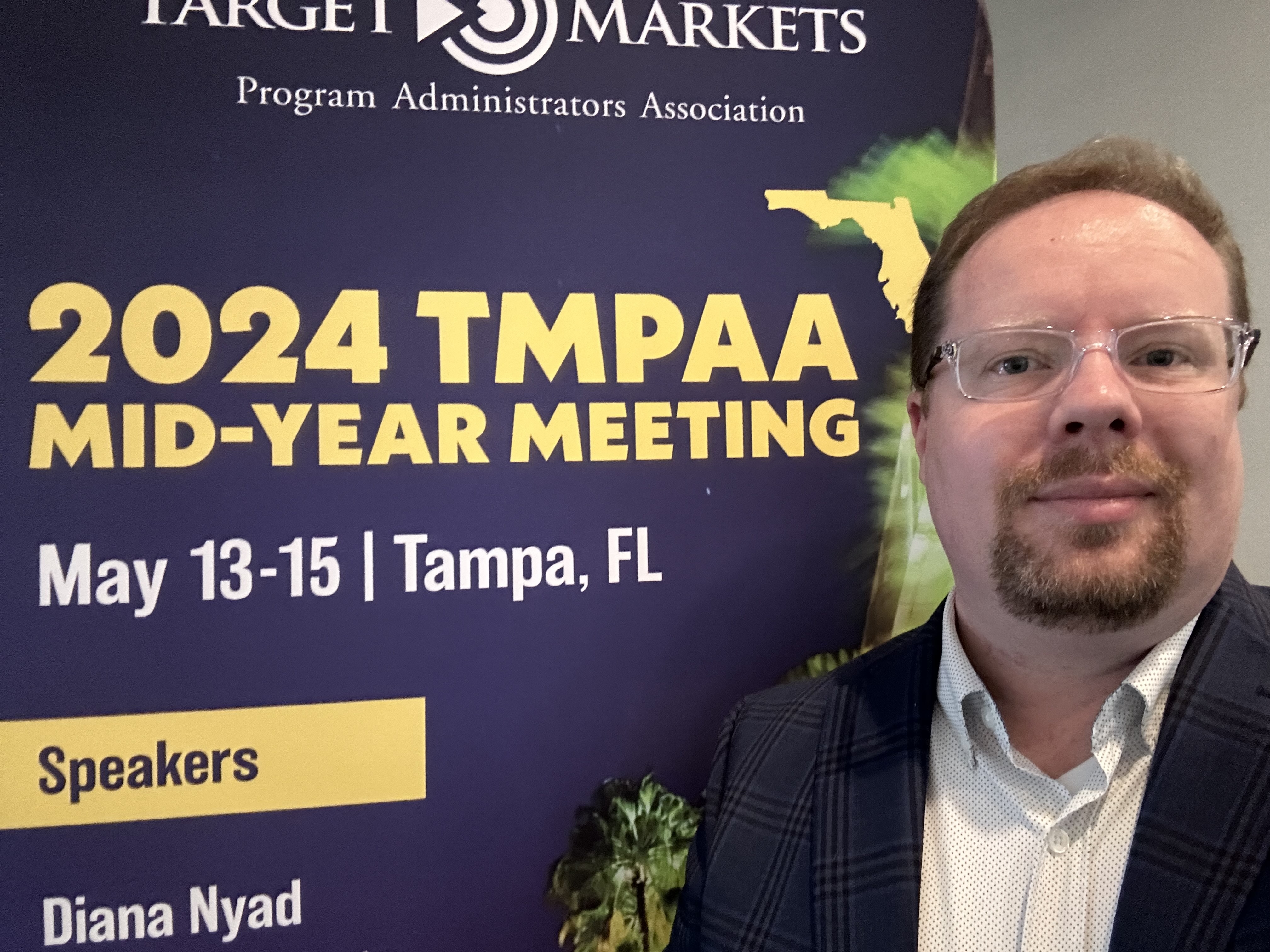
Target Markets 2024 Mid-Year Meeting in Tampa, Florida, made clear insurance is, and continues to be, a relationship business. This year’s mid-year meeting set a record with more than 1,300 attendees – more than double that of prior mid-year meetings for Target Markets. It was also my first time attending a Target Markets mid-year meeting.

I understand the attraction.

The first full day of Target Markets, Monday, May 13, was straight to business. Old friends reconnected while new acquaintances were made. Meetings were held over coffee, at breakfast, in break-out rooms and hallways, in the lobby, at the hotel Starbucks, over lunch, at the bar, across countless restaurant dinner tables and over drinks and at numerous private parties afterward. All this went beyond socializing as companies pitched, partners explored and new business partnerships were formed. The pace was hectic and heady, and it will be interesting to see if Target Markets offers an estimate for the business transacted in Tampa. The number of people who faced daunting schedules with back-to-back meetings, hoping to sign or write business, was impressive as they ran the gauntlet of two large Marriott hotels connected by a single third-floor sky bridge. The spirit of the 2024 meeting could be best summarized in a single word: Hustle.

Day two was a mix of the day before along with a series of programs and events that covered topics including a Lloyd’s Market update, a keynote speaker of remarkable tenacity embodied by Diana Nyad, a women’s leadership lunch, discussions on talent, the Target Markets’ new Program Business Professional designation and, of course, ample opportunities for networking.

The Target Markets’ hustle – on display from start to finish – also demonstrated the power and innovation of an insurance industry in growth mode. Seizing opportunities. Strengthening relationships. Getting business done.

Through all of this, I found myself among old friends I haven’t seen in years while sharing coffee and meals with new friends, potential business partners and – in my world – the all-important insurance industry trade media who were there to get the inside scoop on the issues, trends and insights of those who drive the business of insurance.

I applaud the team at Target Markets for putting together a productive event, and for those who grabbed the opportunity to move their business, and the industry, further into the future.

Lacing Up for Good: Enhancing Team Communication, Collaboration by Giving Back

This Spring, the team at Kimball Hughes Public Relations is lacing up our sneakers and tracking our steps to raise funds for those in need through the Insurance Industry Charitable Foundation’s annual Step Up challenge.

We have found philanthropic activities like this not only support charitable causes, but they also enhance our employee culture, team morale, and bring us closer together. As professional communicators, we’re always striving to find the best channels for our clients to use to reach their target audiences. In a new age of remote work, channels of internal communications are changing and we’ve found one of the best ways to communicate and deepen relationships with colleagues is to work together for social good.

As we’ve all heard, giving back and volunteerism have become core tenets of businesses across industries in recent years. There is a clear business case for philanthropy, as the next generation of workers have a clear interest in working at businesses that back up their values with action. Further, recent studies have shown that customer loyalty may improve at socially responsible businesses.

We believe giving back and volunteering events that emphasize collaboration and bringing communities together find more engagement.

Our client Pennsylvania Lumbermens Mutual Insurance Company (PLM) is also getting fit and having fun while building comradery among team members and raising funds for vulnerable children and communities. Each spring, employees form a team for the Insurance Softball League of Philadelphia, which raises money for local nonprofits while gathering regional insurers for friendly softball competition. Employees have the opportunity to get to know each other outside the office, get a little exercise and breath in fresh air while helping those in need.

With the IICF Step Up challenge, employees, friends and families in and around the insurance industry can form a team and compete with one another in a fitness challenge, measuring their steps, pedal strokes, sit-ups and virtually any other activity against the teams of other companies. Kimball Hughes PR is proud to have been a part of Step Up for the past five years and we have enjoyed learning more about each team member along the way – whether it’s a penchant for morning dog walks, an after-work jog, a Peloton ride or hike through the woods.

Consider reigniting company culture with a collaborative philanthropic initiative this Spring. We’re having a blast. Check out our progress so far here: