You Wrote It, But Do You Own It?

Beware trade media bearing your byline; the work you see may not be your own.

This is a universal caution Kimball Hughes Public Relations provides to all organizational leaders, business executives and subject matter experts who create and submit articles to trade media for publication. While the resulting published article may represent hours of research and thoughtful wordsmithing on behalf of these individuals, in most cases, that intellectual property—at least in part—belongs to the publishing outlet regardless of who is credited as the author. Why? Because of copyright laws.

Let Me Explain

It’s important to note I’m not a lawyer, although I have represented hundreds or more of them as a public relations practitioner. Therefore, nothing here should be considered legal advice. (This is the disclaimer that also keeps the lawyers happy.)

I was, however, a trade magazine editor for several years. And back then, when writers (many of them lawyers, by the way) would contribute articles for publication, whether compensated or not, the magazines I ran would assume First North American Serial Rights. This is just one sector of the more than 700 sections of Title 17 of the U.S. Code encompassing U.S. copyright law. Under First North American Serial Rights, a common right asserted by third-party publishers, our publications maintained the one-time right to publish a work first in the U.S. Our agreements, although this isn’t necessarily standard, also required the author to note in second and subsequent publications of the same content (sometimes on their own website or blog) that the article was first published in our magazines.

This is just one example of the intricacies of U.S. copyright law.

Why Is This Important?

According to the October 2025 findings from McKinsey, 50% of consumers are using AI-powered search already, and numerous sources note AI search will overtake traditional online search by 2028. Those AI searches are driven by third-party content.

This means trade outlet articles, Tier One media content and well-optimized podcasts and streaming platforms will form the basis of how business and non-profit leaders and subject matter experts show up. In many cases, organizations will put an increased emphasis on earned media placements and contributed content going forward. And when organization leaders have contributed articles published that highlight their deep understanding of industry trends or certain sectors of the economy, those same leaders and those who employ them are going to want to share those articles. This is where copyright law becomes important.

Those third-party publishers of contributed content may obtain, purchase or assert exclusive rights, First North American Serial Rights or full copyright transfer—among other options, where a contributed article is concerned. Republishing these works, without understanding the rights involved, can put the organizations that republish them, and/or their authors, in legal jeopardy. At a minimum, it is possible to so deeply damage a relationship with the third-party publisher that the author, as well as their employer, may be banned from ever again contributing to the outlet at issue.

How To Address Copyright with Trade Outlets

With content continuing to remain king, contributed or otherwise, authors who submit contributed articles or opinion pieces for publication should work closely with their public relations representatives to understand what, if any, copyright matters may be at issue. This is a frequent, and typically ongoing conversation editors and PR pros have when content is submitted for publication.

Additionally, most outlets will provide Writers’ Guidelines that can explain what copyright, if any, may be asserted around published, contributed content. Other outlets provide a writer’s agreement for signature prior to publication that details what rights may be assumed or assigned.

Most importantly, when uncertain, consult an attorney to avoid ambiguity, the potential for damaged relationships with important trade media as well as the possibility of costly litigation. That’s not legal advice; just smart advice.

The Value of Podcasts for Brand Awareness

In today’s crowded digital landscape, companies are constantly competing for visibility. From improving SEO via AI platforms like ChatGPT to increasing engagement on LinkedIn, leaders must find ways to boost the reputations of their brands. While traditional earned media placements help build awareness, brands must diversify their public relations efforts to distinguish themselves among their competitors and reach their target audiences.

Enter podcasts.

The number of U.S. podcast listeners is expected to hit 630.9 million by the end of 2025. Growing in popularity for their convenience and conversational nature, these long- and short-form audio sessions provide a direct, sometimes unfiltered conduit to reach their audiences.

The Value of Podcasts

Once known for mainstream genres like comedy and true crime, today you can find a podcast on nearly any topic. Myriad trade publications, for example, now offer podcasts to complement their print, online and other efforts. This allows brands to reach highly targeted and engaged audiences through the media sources they already know and trust.

Additionally, podcasts provide a valuable quality for PR pros and brands alike: listeners actually pay attention to them. In a world of goldfish-like attention spans, lengthy articles are sometimes skimmed (or even skipped) by busy readers, sending your carefully crafted messaging to the bottom of an algorithm’s totem pole. Podcasts, on the other hand, provide a more passive way for audiences to consume information, making your brand’s message more digestible than a long-winded article.

Podcasts also allow for a conversational tone, which helps to demystify and humanize your brand. And like with trade media, podcasts often have loyal followings. This helps position your brand as more credible among your target audience.

How to Leverage Podcasts

Securing a podcast interview is a huge win, but amplifying that coverage once it goes live is vital for a brand’s return on time. Once you have landed a podcast interview, sharing and repurposing the content can help to increase listeners and amp up your brand exposure. Here are some best practices to amplify a podcast interview:

  • Share social media posts leading up to the interview to encourage followers to listen and interact using appropriate links and tagging the podcast and its hosts.
  • Post a public thank you to the host with a link to the interview once it is live. This will help further raise visibility among the podcast’s audiences.
  • Incorporate the podcast into internal marketing materials like your newsletter, blog, website and—if possible—the email signatures of the brand’s team members for at least one week after the podcast is live.
  • You can even turn the podcast interview into a Q&A article or social media content. You should always source and link to the original content but first be sure to check with the podcast host to get permission to stay on the right side of copyright law.

As podcasts continue to grow in popularity, they offer a strong platform for brands to share their messages in an authentic and conversational way. By leveraging this medium, companies can effectively grow their media presence and reach highly targeted and engaged audiences.

Trick-or-Treat: The Kimball Hughes PR Team’s Favorite Halloween Memories

From pumpkin patches to iconic costumes, the Kimball Hughes PR team knows how to do Halloween right and to celebrate the spooky season, we’d like to share some of our team’s favorite memories around the holiday.

Eileen: Several years back, my three boys dressed up as The Three Amigos – Dusty Bottoms, Lucky Day and Ned Nederlander – for Halloween. It remains one of my favorite Halloween memories. The comedy classic is regularly quoted in our house and the sombreros from these costumes will likely clutter my basement for years to come.

Article content

Rod: My childhood Halloween costumes were always homemade by my Mom. The Wizard of Oz held my attention as a young boy, so one of my early Halloween costumes was the beloved Scarecrow. I had some terrific PTSD when I saw Wicked on Broadway in New York many years later.

Article content

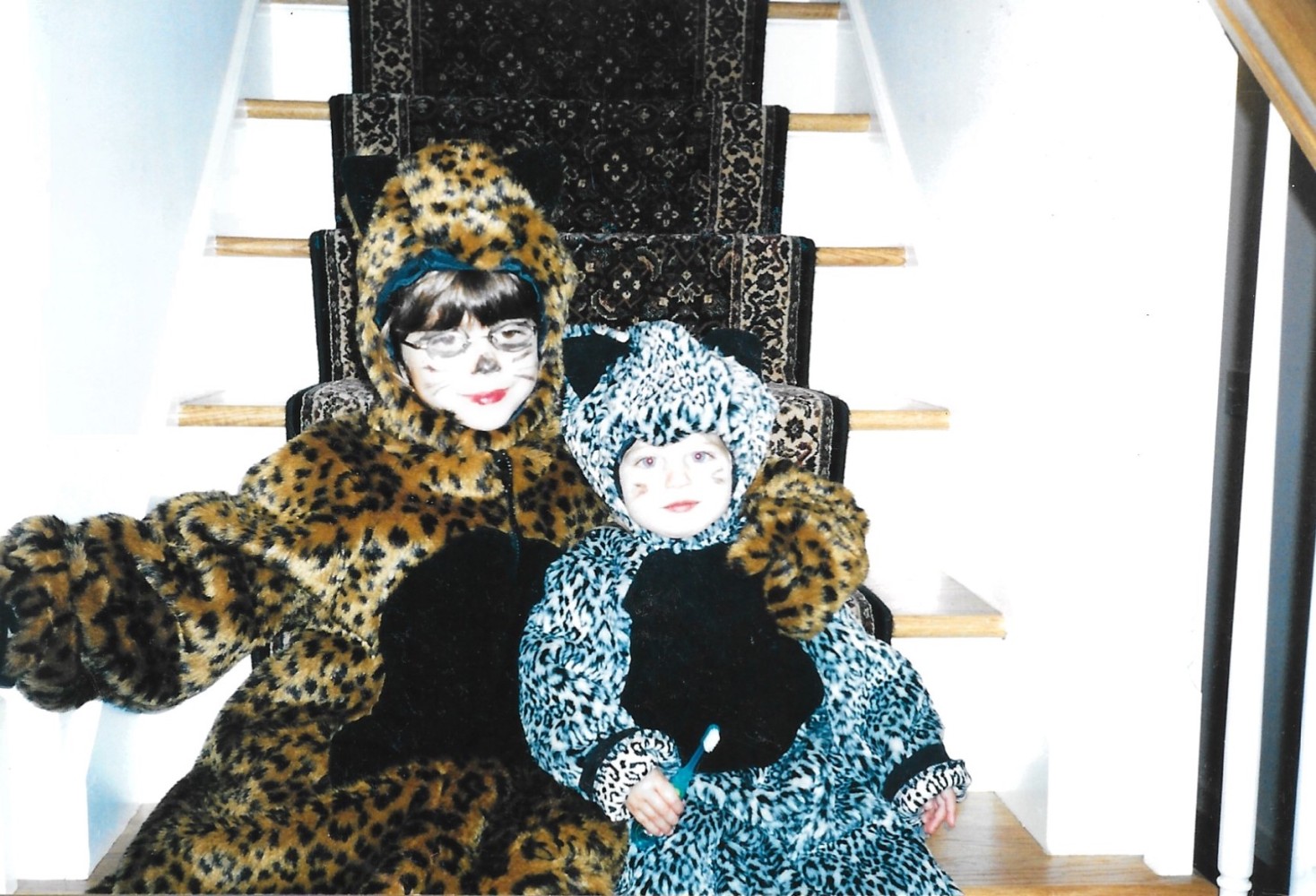
Cassidy: Halloween quickly became a favorite holiday in my household growing up as my mother hand made every costume with a passion. This was the year of the leopard, which became appropriate when I became a Lafayette College Leopard years later.

Article content

Sara: To celebrate the season, I wanted to share a throwback photo of my childhood Halloween days, where I dressed as a clown, complete with red cheeks and a big smile.

Article content

Kate: My best Halloween memory is trick-or-treating with family and friends. Here is a photo of me dressed as a ghost with my brothers and cousins circa 2002!

Article content

Alex: My favorite part of the season is spending time with my family at the pumpkin patch.

Article content

Bianca: One of my favorite Halloween activities as a kid was visiting the pumpkin patch. Ahead of trick-or-treating, I’d go with my siblings and cousins to pick out pumpkins, travel through the corn maze, eat apple cider donuts and ride the haunted hayride.

Article content

Logan: Last year, my sisters and I dressed up as the Power Puff Girls and even got our brother-in-law in on it (he dressed as the professor). This year my fiancé and I are going as Mark S. and Helly R. from Severance, one of our favorite shows.

Article content

John: As a fan of sideshow performers, I loved getting to dress up as Jo-Jo the Dog-Faced Boy. Though be warned, being Jo-Jo for a night wasn’t easy because having real human hair glued to your face is itchy!

Article content

Conference Insights: Discussions & Opportunities from the Insurance Convention Circuit

Recently I was invited to speak at the National Association of Mutual Insurance Companies (NAMIC) Annual Convention in San Diego. It was a robust agenda, with a few standout presentations including my own on crisis communications where I talked about threat awareness and shared best practices to help every comms or marketing professional better protect their organizations.

Increased capacity among reinsurers and much improved balance sheets for mutual insurers were the underlying themes of most conversations at the NAMIC Convention. Another topic that bubbled up among attendees, media interviews and breakout sessions, included the talent challenge faced by insurers. As senior leaders across the industry retire, recruiting new talent—from the high school level upward—as well as succession planning, are becoming clearer priorities for many insurers.

Getting the Most Out of Your Conference Attendance

NAMIC’s Convention is one of several conferences on my calendar this year. While conferences like this one offer a range of benefits to attendees and the companies for which they work, one of the most overlooked benefits I see as a communications professional, is the opportunity for industry leaders to take advantage of a captive and often eager conference audience: journalists. Media attendance at most conferences across a range of industries has expanded significantly since 2021 and for companies who don’t proactively engage with them, I see missed opportunities.

Our team works closely with trade and business media. They are there to interview well-versed subject matter experts (SME), not merely to produce a summary of the conference agenda. These discussions are sometimes on background, often on the record and frequently include interviews that result in print/online stories, podcasts, video streaming interviews and more. They also help build critical relationships with the media, for the SME and their employers.

For companies interested in burnishing their reputations and raising their brand visibility, these on-site media conversations are potentially the best and most productive opportunities to do so. Yet so many organizations fail to prioritize these meetings despite leadership-mandated reputational goals for the business. Those same leaders, however, must insist that their non-sales executives make time for these interviews. Lacking a leadership mandate, these opportunities will continue to be missed as these same organizations otherwise strive to increase their reputational awareness.

I urge all business leaders: As you plan your 2026 conference schedules, require each of your attending non-sales executives to block one to two hours (not much in the grand scheme of a conference) for media opportunities. The return on investment can be significant and propel your new or existing public relations efforts well beyond what you thought possible both during and after these events.

Get to Know PR Manager Sara Ryan

Public relations is all about relationships—the people behind the stories. That’s why periodically offer blog content about our team members who work with and represent our clients. This isn’t about our professional accomplishments but who we are as people. We hope you have as much fun reading along as we do interviewing each other.

What got you interested in public relations?

Growing up I dreamed of becoming an architect. As a young adult and in college, I spent my days sketching, drafting plans and studying the history of architectural design. I loved the strategy, creativity and storytelling architecture demanded. However, I struggled with one key requirement—math. Shortly after, I shifted my focus to communication studies with an emphasis on public relations and never looked back. Ultimately, public relations helped me come out of my shell after being a soft-spoken communicator. While pursuing my degree, I worked in customer service roles across retail and hospitality and quickly fell in love with the power of storytelling. Over the last decade, I have built a career transforming brands, using public relations to drive visibility while also inspiring engagement and long-term loyalty.

Tell us about your favorite movie and what appeals most to you about it?

I personally love both the thriller and horror genres. There is just something about these movies architypes that keep you on your toes and provide delightfully shocking plot twists. The blend of creative storylines, as well as anticipation, excitement and imagination, keeps me coming back for more. If I had to choose just one movie, I’d say that The Shining continues to be one of my all-time favorites. It offers haunting cinematography and an unforgettable performance, as well as a unique use of color and sound that continues to excite time and again.

What was the last, best book you read and what about it spoke to you?

Similar to my favorite types of movies, I love a good mystery. I also enjoy the occasional romance novel. However, the last and best book I read on a professional note that spoke to me was Big Magic by Elizabeth Gilbert. The book spotlighted creativity, curiosity and overcoming fear. It’s important to consider how these traits can contribute to everyday habits. With everything we do, whether personally or professionally, we must embrace creativity with courage. Ideas are where we live—especially as PR professionals—therefore, we must give ourselves permission to create and let go of perfectionism. Don’t wait for inspiration to strike, but rather, understand that it’s okay to live outside of your comfort zone.

Tell us about a meaningful hobby or “outside of work” commitment that is important to you?

Outside of work, I enjoy any opportunity to be outdoors. This includes spending time by the lake, hiking in and around Austin, Texas, and taking in all the beauty of the outdoors through photography. Both fitness and photography have been significant components of my life. These activities allow me to spend quality time with my husband and our Pug-French Bulldog while also reconnecting with nature and most importantly, relax a little.

Share a fun fact about you.

In addition to photography, I love cooking and baking. I rarely dine out and can be found cooking dinner most nights. Having worked at a fine dining restaurant and subsequently serving as the publicist to some of the world’s renowned celebrity chefs early on in my PR career, I’ve had the opportunity to go behind-the-scenes and learn how to make some of my most beloved dishes. While I am not a culinary professional, I enjoy recreating some of my favorite recipes at home, such as meatballs with marinara, wood-fired pizza with fig jam, prosciutto and a balsamic glaze and lemon ricotta cookies, to name a few.

Takeaways from the College Admissions Process: It’s All about Building Your Brand 

It’s finally fall, and for over 8.5 million prospective college students across the country, application deadlines are looming.  

Long gone are the days when you simply needed decent grades to get into a good college. With the number of applicants to four-year colleges steadily on the rise, the process has only become more competitive and upped the pressure to stand out.  

Grades–while still important–can only take a candidate so far today as most undergraduate programs are placing a greater emphasis on finding well-rounded individuals, who can best market themselves through a series of essays and possibly an interview. For most high school students, this submission process is the culmination of a multiyear effort of building their resumes with extracurricular activities like clubs, sports and volunteering over the course of their high school, and sometimes even middle school, careers.  

While most readers here are likely past the days of completing their own undergraduate applications, one aspect of the process should resonate. Successfully applying to college relies heavily on how a student markets themselves—the same holds true for the future success of our own professional careers.  

Just as prospective college students can market themselves in a well-crafted application chocked full of thoughtful essays, a stellar GPA, strong SAT score and robust list of extra-curriculars activities, so too can industry leaders through thought leadership, LinkedIn engagement and speaking opportunities.  

Consider some of the following to build your own brand: 

  • Become a thought leader: Thought leadership helps to build credibility and name recognition. In our digital world, which relies on quick moments to foster connection with audiences, thought leadership can establish professionals as voices worth listening to and lay the groundwork for long-term success for both leaders and their organizations. Great places to bring this thinking to the world include LinkedIn articles and posts, company blogs and contributed articles published in industry trades. If you don’t know where or how to begin, partner with a good content writer or PR agency staffed by former journalists to help you get started.  
  • Get active on LinkedIn: Just as College students are building their own brand for the eyes of admissions leaders through applications and essays, industry professionals can take steps to cultivate a professional brand on LinkedIn. In the business world, LinkedIn is a valuable tool for posting original thought leadership as well as for sharing comments and feedback on the content of others. Find a posting cadence that fits your schedule and make sure to engage on other posts through likes, comments and reposts. Consider developing a LinkedIn newsletter to publish thought leadership and build a trusted audience among your professional network.  
  • Get out there: Just as colleges want to see students engaged in the world, so to do employers. Getting involved should be part of building your professional brand as an industry leader. Consider attending more events to stay in-the-know on the latest industry news and for more effective networking. Seek out and, when possible, take advantage of speaking opportunities where you can draw attention to your expertise. Doing so will help you stand out in a crowded industry landscape, helping to shape both the perception and eventual reality of your role as a thought leader in your space. 

Getting into college is really all about building your own brand. For individuals struggling to establish a strong connection with prospects, clients, peers or employers, a strong brand identity can help cut through the noise and set them apart. Establishing and maintaining a strong professional brand with thought leadership, a consistent LinkedIn strategy and active speaking schedule can pave the way for long-term success.  

The Emmy’s Masterclass: Communication Wins, Missteps and Lessons Learned 

The rise of streaming services has led some pop culture enthusiasts to believe the art of live television is dying. However, over the last several decades, live television has informed significant pop culture moments, offered everyday Americans a view into the lives of the rich and famous and of course, humanized them along the way. Each year, entertainment personalities weigh in on award show attendees going off teleprompter and act as fashion police, opining on who pulled off the latest fashion win and failure. While rating numbers and social media views have shifted the landscape, a good award show always gets the people talking. 

Just a few short weeks ago, the 77th Primetime Emmy Awards delivered another evening to be remembered. The Emmy’s provided a night filled with viral moments and cause-driven messaging, along with a few misfires along the way. As a result, the award show provided communication wins, missteps and lessons learned for both brands and individuals.  

Speaking with Clarity  

This year, comedian Nate Bargatze emceed television’s biggest night. The evening began with a charitable act of giving: a $100,000 pledge to the Boys and Girls Club of America. However, the thoughtful gesture came with a catch. Always an issue for programming length, winners were limited to 45 seconds for acceptance speeches. For each second they went over, $1,000 was deducted from the pledge. This drew criticism for a lack of clarity, and some complained it overshadowed the winners’ celebratory moments. Many winners extended far beyond the time limit, sharing their gratitude and praise with the audience. The final speech left Bargatze in the red, Fortunately, Bargatze and CBS teamed up to donate $250,000 and $100,000 respectively. 

While stunts like this can grab the attention of the audience, they only succeed when a message is delivered with clarity. Professionals must be clear and concise, speaking in a straightforward manner that is free of ambiguity. A strong narrative and positioning can build trust and credibility, as well as ensure each activation lands with the intended audience. In this case, perhaps Bargatze should have considered letting on that he and CBS would ensure the Boys and Girls Club would not be left empty handed at the end of the night. 

Fostering Connection  

Actress Britt Lower took center stage to accept her award for Outstanding Lead Actress in a Drama Series. Lower, known for her role as a Lumon employee in the Apple TV+ series Severance, caught the audience’s attention with an Easter egg displayed on her notecard stating, “Let Me Out.” This viral moment was a nod to Severance fans and its cast members. As Lower accepted her first Emmy, she brought the audience back to the moment where her character begs to be released from Lumon’s severed floor, sparking a sense of audience connection.  

Finding ways to engage with an audience has become critical. Professionals should look to adapt messages for each respective audience. In this case, Lower’s message was subtle yet effective and fostered a strong connection with viewers. Incorporating storytelling elements, such as a hidden message, can drive memorable connections as well as increase brand loyalty. 

Being Relatable  

HBO Max’s The Pitt took home the award for Outstanding Drama Series and actor Noah Wylie dedicated the win to health care workers and first responders. With 13 nominations and five wins, the respective acceptance speeches put frontline healthcare workers in the spotlight. Through these efforts, The Pitt team demonstrated brand consistency tied to its realistic portrayal of an ER, ensuring that the message was meaningful and relatable.  

Articulating a strong brand message that is aligned with a brand’s values can further strengthen its identity. Speaking with relatability creates an emotional connection that can deepen relationships with a target audience. 

As with any public-facing event or opportunity, the spotlight brings both risk and rewards. Professionals who integrate clarity, connection and relatability in their ongoing communications strategy will be set up for success, making a lasting impact for brands and their audiences. 

Speaking with Authenticity: Lessons from the ‘Phillies Karen’ Viral Drama

The rules of crisis communication have changed drastically over the last decade. Crisis communication and reputation management have quickly become must-haves due to the nature of digital devices. Incidents that would once blow over in a day or even hours can snowball, fueling endless media coverage and content. Today, a story can be instantly amplified on social media; however, it can also stoke up misinformation, creating a crisis or viral drama of its own.

As caught on camera during a recent Philadelphia Phillies game, a fan demanded that a father give her a home run ball, causing a stir on social media. The father took the ball back from his young son and handed it to the woman, who proceeded back to her seat, ball in hand. The incident stirred a public manhunt to find the ‘Phillies Karen’ in question. Multiple misidentifications ensued. Interestingly, a recent study from Science reported that misinformation travels “farther, faster, deeper and more broadly than the truth.”

A comprehensive, thoughtful and tested crisis communication plan, as well as a commitment to speak with authenticity to set the record straight, are two key elements to navigate any crisis or national outrage. Here are lessons from the ‘Phillies Karen’ incident worth noting.

Get the Facts Straight to Avoid Premature Conclusions

In the case of the viral Phillies incident, social media rumors led to the false identification of a school administrator and later, a Red Sox fan, causing viral online condemnations. Both the school and the individual quickly took to social media to set the record straight, each releasing timely, clever and light-hearted, prepared statements and responses.

“The woman identified on social media as ‘Phillies Karen’ is not and has never been, an employee of the Hammonton Public Schools … Anyone who works for our school district, attended as a student or lives in our community would obviously have caught the ball bare-handed in the first place, avoiding this entire situation.”

“I’m not the crazy Philly Mom (but I sure would love to be as thin as she is and move as fast)… and I’m a Red Sox fan.”.

The falsely accused school and individual swiftly jumped in to provide clear, concise and witty posts to mitigate risk. The statements and responses provided detailed feedback on their lack of involvement.

Effective crisis communication and reputation management hinge on getting the facts straight. Viewers count on their favorite news sources and social media platforms for the latest headlines, and from there, often make quick assumptions.

During times of crisis, it’s important to align internally on key messaging before releasing any information on behalf of a brand or individual. Once an incident is on the radar, be ready to monitor for media coverage and social media mentions, and stay alert for inbound media requests as they arise.

Have a Plan and Respond Authentically

Crisis communication plans and strategies are essential for managing crisis incidents and allow brands and individuals to get ahead of potentially business damaging premature conclusions.

Incident management requires a strategic yet thoughtful approach. In addition to respecting the gravity of each situation, brands and individuals must look to protect their reputations and share the facts while staying true to their brand voice and values.

Responding with authenticity can defuse a crisis. When a predicament hits, brands and individuals can be adversely affected, even if they’re not at fault. False accusations and other misinformation can quickly diminish trust in a company or personal reputation, causing inconvenience, damage or disruptions if not corrected.

A prompt crisis communication response that is truthful and genuine without bias can be crucial for managing false news and other propaganda, as well as mitigating risk. Brands and individuals must look to set the right tone based on the incident, while also ensuring that their brand messaging and positioning are reflected.

In the case of the Phillies Karen, both parties showed integrity and accountability while also staying true to their brand voice. Their respective statements were factual, with a bit of humor sprinkled in to match the severity of the situation.

So, while memes come and go and headlines fade away, damage to a brand or personal reputation can stick around. Don’t get caught up in the internet’s next big drama—brands and individuals must have a crisis communication plan and strategy ready to mitigate potential crisis or national outrage.

Navigating Verbal Missteps: Warnings from the Reality Show “Big Brother”

George Orwell’s novel “1984” first introduced the concept of “Big Brother,” a totalitarian surveillance state watching your every move, to the lexicon in 1949. And in 2000, CBS launched its own spin on the concept with the reality show “Big Brother.” Equal parts social experiment and competitive event, “Big Brother” follows a select number of contestants, referred to as houseguests, as they compete to win $750,000 while living together in a house isolated from the outside world.  

Many reality shows may tout an up-close-and-personal glimpse at their stars, but little offer as much access to participants in real time as Big Brother. Since the show’s premiere, CBS has provided viewers with a 24/7 live feed of the contestants living in the house. At any point in the day, save for certain competitions or ceremonies restricted for the episodes, someone can hop on Paramount Plus to watch houseguests hang out, strategize and often, say the wrong thing.  

Though houseguests are made aware they are being filmed continuously via live feed, several houseguests have been recorded on camera making racist, homophobic or sexist comments. Consequently, some have been forced to leave the show and navigate long-lasting consequences.   

Houseguest Rylie Jeffries landed in hot water online for his treatment of fellow contestant and “showmance”, Katherine Woodman, in the season currently airing. When host Julie Chen asked him about some of the declarations he’d made in the house after he was voted out, his response was, “I can’t believe y’all heard that.”  

Just like other Big Brother houseguests of seasons past, anyone can turn into a headline overnight. It’s a story becoming increasingly common – an executive or employee makes an insensitive comment and puts themselves and their company in the hotseat. You may think it can’t happen to you, but who knows? Here are a few lessons to take from Big Brother contestant missteps:  

  1. Always assume someone is listening: Big Brother houseguests are required to wear microphones at all times. Every conversation, no matter how benign, is recorded for the audience to hear. While this kind of 24/7 surveillance once seemed unbelievable, social media has opened the floodgates and provided individuals with a platform to expose public slip ups. Social media is riddled with countless comments calling for the employment or other personal details of individuals caught in hot-mic moments or who may have said something controversial publicly. 
  1. Understand how you want to be perceived: Contestants are frequently shown saying one thing in diary confessionals, only to be shown saying and doing something completely the opposite in the house. This sort of flip-flopping may be understandable in the context of a game, but it won’t always fly in the real world. People want to connect with brands and companies that align with their values and when individuals representing the company’s stated mission fail to reflect them, it can breed frustration.  
  1. Utilize your communications team: Big Brother contestants spend their time in the house with no contact or input from the outside world. No one is there to guide messaging or consider public perception. Companies don’t have to be at the same disadvantage. The right communications team will anticipate crisis situations before they happen, working with leadership and serving as a resource for the wider team.  

100-plus cameras may not be following your every move, but the court of public opinion is. It no longer takes signing up for a reality show to launch your public misstep to virality. We can learn from these houseguests’ mistakes and use it for smart and effective communications that strengthen relationships with audiences.  

The Entertainer’s Guide to Storytelling: Lessons from Billy Joel’s Songbook

Since 1971, Billy Joel has created music history with songs like “Piano Man,” “Scenes from an Italian Restaurant” and “You May be Right.” His storytelling has transcended generations, intrigued millions and established a credibility that few have managed to garner from a start in a smoky piano bar. Last month, HBO Max released the documentary “Billy Joel: And So It Goes,” a two-part, five-hour biography that discusses Joel’s life in parallel with his songwriting. Though his stories and songs were an intimate reflection of his own life, millions of people around the world have resonated with them for decades.  

While Joel’s craft is fueled by finesse and artistry, his approach is undoubtedly a masterclass in storytelling of all facets. Narratives are a crucial key to success in public relations. It is how you connect with audiences, place stories and build brand reputations. And while writing a product announcement may be farfetched from writing a hit song, many of the principles in attracting the masses from Joel’s songwriting hold true, even in a corporate setting. Consider the following elements of storytelling we can learn from Billy Joel:  

  • Creating a Memory  

One of Joel’s greatest skills is creating memories. His ability to paint pictures with words and melodies have made people believe they are in the room with characters like Sergeant O’Leary or Bill at the bar. A brand looking to resonate with audiences needs to offer them something relatable, whether it be a thought leadership opportunity talking about a relevant trend or a product announcement solving a problem for a specific audience. Brands should consider how a narrative can help elevate their public presence, entice new audiences and maintain relevance with current audiences.  

  • Authentic Storytelling  

Billy Joel’s authentic experiences bleed through his music and lyrics. Throughout the documentary, Joel shares the true back stories behind tunes like “You’re My Home,” written about his cross-country road trip with his wife and stepson from New York to California. Or “New York State of Mind”, which was written about his experience coming back to New York from the West Coast.  

As Billy would say, it’s “A Matter of Trust.” In business, audiences can see through unauthentic communications, and it can erode trust much faster than it takes to build it. Over the last few years, for example, we have seen several brands get criticized for their approaches to diversity, equity and inclusion (DEI) that audiences deemed unauthentic. Last year, Tractor Supply Co. saw firsthand how unauthentic communications that do not align with a brand’s values and those of their stakeholders could quickly result in boycotts and social media debates. Brands must consider how their communications align with their audiences and brand values. Even the most well-intentioned communications can have an adverse effect if they are perceived as ingenuine.  

  • Knowing When to Pivot  

Throughout Billy Joel’s career, he evolved based on his connection to his art. From his first album, “Cold Spring Harbor,” to his last full length pop album, “River of Dreams,” Joel created a sound that was undoubtedly his. Every album, however, was vastly different. In 1993 when he decided he has said all he had to say in pop music, he pivoted to a classical album that debuted at #1 on the classical music charts.  

Brands that want to maintain relevancy cannot stay stagnant. Joel’s success shows that evolution is more than jumping on to a social fad or swaying with the courts of public opinion. Brands should be constantly evaluating their public presence, how they are being perceived and how that aligns with their offerings, values and goals. The world will continue to shift, but the brands that experience century-long success have known when to adapt, while preserving their core values.  

Effective storytelling is an artform, one that defines a musician’s career and a brand’s legacy. Joel’s songs remind us that the best storytelling can create shared memories, build trust and welcome new fans throughout generations. Whether writing a hit song, launching a new product, building a legacy or navigating a crisis, effective storytelling has the power to connect and inspire audiences that creates a foundation for long-term success.