AI: How to Avoid Becoming a Cautionary Tale

AI will cure what ails you.

That seems to be the mantra of the 2020s. If you have a problem, it appears the solution is to implement artificial intelligence. However, AI is not a cure-all. While AI can be an incredibly powerful tool, it isn’t perfect and there are cautionary tales to consider as countless organizations incorporate AI.

Glitch in the System

Any adult functioning in the digital world knows technology sometimes fails to live up to its promise. AI is not immune to being glitchy, especially when humans fall short in their quality control roles, many of which are still evolving along with the tech. There are countless AI snafu examples that include:

  • Less than two years ago, Reuters reported on a U.S. District Judge who sanctioned two New York attorneys when their ChatGPT-built brief included six fake case citations.
  • Last spring Google was pilloried by users and media alike when its then-new AI capabilities roll-out resulted in a cascade of false information—including telling users to eat glue and rocks.
  • And Fast Company produced a cringe-worthy list of brands last summer whose AI-driven marketing efforts ranged from total failure to deeply offensive, including household names like Toy “R” Us, McDonald’s and Sports Illustrated.

Reliance Risk

The risk of AI is becoming overly reliant on AI. Reliant on its promise. Reliant on its ease of application. Reliant on its accuracy.

Large language models or LLMs—the engines that drive most generative AI tools—train on massive content libraries. As a result, AI is prone to repeating, in whole or part, both the words and style of some of the content on which its LLM trains. These AI tools aren’t designed to violate copyright laws. Rather, they are working with what they know, and what they know is existing, written—and often copyrighted—content. The intent is to mimic human creativity with enhanced, faster output. The risk, of course, is not only plagiarism, but also inaccuracies due to AI hallucinations as well as content that, frankly, often falls short of being truly creative or distinguishing.

Both the quality and legality of AI generated content will be adjudicated in the court of public opinion, as well as courts of laws, for the foreseeable future. Meanwhile, humans are working to catch up. Plagiarism software is continually being stood-up and refined to catch the errant bot-writer. Publishers and others are setting policies for how they will handle contributed AI-generated content. And the legal industry is, most likely, viewing AI as the next asbestos as everyone considers its implications.  

Practical Realities

Learning to live with, and employ, AI is an evolving state. What business and nonprofit leaders must consider now regarding their use or incorporation of AI is this:

  • Brands and business leaders trying to position themselves as thought leaders will fail—possibly in very public ways—if they cede their expertise to the expedience and perceived accuracy of AI where content is concerned.
  • Leveraging AI as a starting point in the creative process can create efficiencies. Relying on AI to drive that process is simply lazy.
  • From courts to publishers as well as clients and consumers, much of the early AI-driven content we are seeing runs the gamut from being declared unacceptable to the merely unpalatable with limited exceptions.
  • Developing policies around how and where to apply AI in your organization is essential to avoid being left behind.
  • Closed AI—essentially a non-publicly accessible AI model—is the only practical approach to AI implementation for many businesses to protect sensitive company and/or client data.
  • A detailed dive into how and if your organization’s errors and omissions liability insurance addresses claims arising from your use of AI is most definitely warranted.
  • AI can be a remarkable improvement to one’s operational efficiency and even client engagement, but only if thoughtful guardrails are in place with humans overseeing the work and conducting frequent quality and accuracy checks.

Without question, AI is and will continue to shape the future of business. Guiding that process with high ethical standards, transparency and rigorous human oversight is required if non- and for-profit organizations are to maintain the trust and confidence of those they serve.

Working on the Road: Sights and Sounds from a Month in India

Remote work has made for a much more flexible workplace and I’m pleased to say Kimball Hughes PR has allowed me the opportunity to take full advantage. In the past few years, our agency has shared insights on the many benefits of remote work and how it fosters work-life balance and encourages employees to explore their interests and enjoy more time with family and friends while continuing to work.

Earlier this month, I traveled to India to work abroad, enjoy some quality family time, sightseeing, and plan a special surprise. Here, I share a look into my experience offering a glimpse into some of the sights and meals I enjoyed during this year’s trip, as well as a special photo capturing my newly announced engagement to my fiancée.

A view of Hawa Mahal, known as the “Palace of Winds” in Jaipur and made of red and pink sandstone.
Tourists take rides on elephants as they scale Amber Fort, a fortress built in the 1500’s in Rajasthan.
An Indian dinner spread with paneer, rice, garlic naan, lentils and much more.
Enjoying a ride on an auto rickshaw, a popular mode of transport in India, alongside some animal friends.
While enjoying a stay at the beach with family and friends in Chennai, I proposed to my girlfriend and we officially became engaged to be married.

Communication Through the Wildfire Crisis – What Should and Should Not Be Said

The wildfires raging just outside of Los Angeles have burned at least 63 square miles, done an estimated $135 billion in property damage and have claimed at least 25 lives. During crises of this magnitude, it is normal for many to express sympathy online and offer support. We have seen countless positive examples recently. Some take the opportunity to call attention to nonprofits and acknowledge first responders. Others keep their message focused on their industry, community or domain of expertise to help their audiences cope.

Kimball Hughes PR has heard from organizations that wanted to comment amid this recent crisis but were also concerned about appearing opportunistic or insensitive. For those who have similar concerns, we offer the following advice:

Keep your audience in mind

While commenting on breaking news is one way to ensure your comments are timely, it has the potential to backfire.

For instance, imagine you run a business that supports the education of children in distressed municipalities. You could share your support for first responders fighting the Los Angeles fires, but your audience likely cares more about children and education. They may express support for your comments, but unless your business is in the Los Angeles area, your post will just be a drop in an ocean of online support. You may fail to distinguish your message or make a meaningful contribution to your audience. Worse, it could look like you are taking advantage of a tragedy.

Instead, consider addressing how the fire will be impacting children in Los Angeles or how the crisis may negatively impact future efforts to support disadvantaged children in the area. Better yet, mobilize your community to do something that supports your cause while also supporting the children impacted by these fires.

Have a call to action

Audiences have moved beyond statements of thoughts and prayers in times of crisis. They want to see action. If you are compelled to comment on major events, ensure there is a call to action that is both socially sensitive and beneficial to those impacted. Post links to non-profits working to end the crisis and encourage your community to donate or offer support.

Beyond being a force for good, there is a communications angle to consider.  There are countless examples of brands and influencers being put on blast for appearing to leverage tragedy for personal gain. Ensure your efforts in such instances contribute rather than distract or merely add to countless other voices. Be sure your comments support a cause or help mobilize support among your audiences.

It’s not about you, unless it is

When keeping your audience in mind, it’s possible to go too far.  We saw this in 2024 after Hurricane Helene decimated Ashville, North Carolina. Political pundits on both sides of the aisle used the storm as a talking point during a hot election season. In some cases, this led to a cycle of cynicism— with each commentor calling out the prior’s biases and accusing them of using the crisis for their own gain. This month, we are seeing more of the same as pundits condemn California’s regulatory environment. Polarizing comments like these only serve to divide communities and distract from helping victims.

But what if you are directly harmed by a crisis? In this instance, it is of course acceptable to talk about yourself and how the crisis is impacting you — within reason. The line between sharing your perspective and getting on a soapbox is thin. It can be easy to forget others affected by a crisis when you are impacted as well.

Crises —especially natural disasters —raise the stakes for all involved or adjacent to the incident, but the fear of backlash should not stop someone from using their platform as a force for good. By keeping your audience in mind, using your voice as a force for good and staying focused on those impacted, you can both add value to the discussion of the crisis as well as be a force helping to end it.

Takeaways from Yellowstone: Getting the Biggest Bang Out of Your Content Buck

Atop his horse, gazing across the horizon of the Yellowstone Dutton family ranch, John Dutton explains to his ranch manager, Rip Wheeler, “The brand isn’t somethin you earn, it’s somethin you live up to.”

Whether you are promoting the Yellowstone brand – be it the ranch or the television series – or your company brand, Dutton’s words ring true: the content you produce for your for- or non-profit organization has to live up to your brand promise to deliver meaningful value.

Whether you like Yellowstone creator Taylor Sheridan’s style or not, there is no question he is a master when it comes to churning out content that leaves viewers wanting more, and those of us responsible for “living up to” the brand through content could take a few lessons from him.

As public relations professionals, we strive to produce non-promotional engaging content on behalf of our clients that drives their audiences to connect with a brand. Cowboy hats and boots aside, good PR practitioners tend to subscribe to some of the same tenets of content creation and promotion as Sheridan. We’ll call these the bunk house rules for good PR:

  • Find what works and stick with it. Sheridan found a successful formula in the Yellowstone brand and he invested further. What was so successful about Yellowstone? A New York Times writer seemed to sum it up with his brothers words, “It romances the Wild West in a modern related way.” Variety said the Yellowstone finale attracted a whopping 16.5 million viewers. A few years back when Yellowstone began gaining in popularity, Sheridan and his producers saw they had content gold. Sheridan went on to produce two prequels banking on the story of the Dutton family. PR pros subscribe to a similar philosophy. When they find messaging or content that connects with a target audience, they continue to build on those concepts. For example, a client came to us struggling to gain media attention. We recognized the client was struggling because they were chasing their audience with their value proposition rather than backing into the value proposition through relatable story-telling and education. We flipped their script and focused on drawing parallels between the eclectic hobbies of their founder to the industry trends, issues and solutions that mattered most to the audiences they needed to reach most. When we saw success and audience engagement, we told the story on different platforms to broaden our reach.
  • Commit to producing a steady stream of original fresh content. In just the past 9 years, Sheridan has written and produced almost a dozen shows, according to Esquire. He understands what his star actor, Kevin Costner, who played John Dutton on Yellowstone, heard from Shoeless Joe Jackson so many years ago in Field of Dreams, “If you build it, they will come.” The same holds true in the world of PR. One piece of static content will not keep audiences engaged or customers coming in the door. Companies need a bank of fresh content that educates and speaks to topics and trends that interest readers. Often in PR it is said, what we do can’t be turned off and on like a spigot. A company needs to have a continued presence in the eyes of the media and its audience. This can be established through steady media outreach and thought leadership, as well as by posting original content on a company’s owned media channels regularly.
  • Don’t be afraid to put yourself out there. Sheridan is not afraid to stir up a little controversy. In the most recent season, Sheridan gave himself a good amount of screentime, cast a model for his on-screen girlfriend, and showed off his brawny physique in a strip poker scene, which USA Today said, viewers saw as “a bit self-indulgent.” And, following Sheridan’s approach, one of the secrets to better engaging with key audiences in 2025 and beyond is for those at the top – CEOs in particular – to step in front of the camera to shape their brand story; on podcasts, company-branded YouTube channels, streaming services and more. Regardless of what viewers thought Sheridan’s time in front of the cameras for the finale season of Yellowstone, he continues to build his brand and make a name for himself. He continues to write new shows, invest in new stories, test his own acting skills and remain visible. It’s a successful formula when you’ve got great ideas to share. A good PR practitioner will help you raise awareness for your brand if you’re not afraid to put yourself out there. They can help you understand what your audience wants to talk about and how the audience wants to be met, as well as how your company can best position its subject matter experts to comment on these matters in a way that puts the brand in a positive light. Again, it’s not always about your company’s value proposition; it’s about what audiences can learn from you to bring them to your brand.

Taylor Sheridan has a lot to say, and viewers are eating it up. Likely, your company does too. Find a good PR partner to help you build original content and make the most of it. After all, brands that fail to keep their audiences engaged could be headed for the train station.

Kimball Hughes Public Relations Takes on Philadelphia

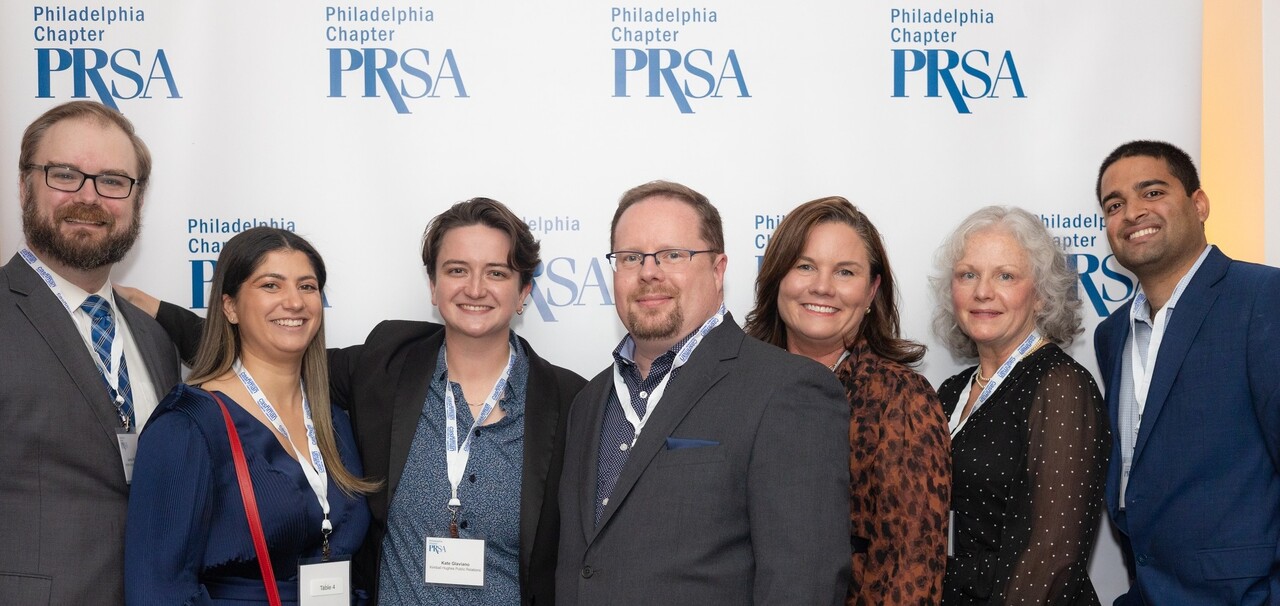
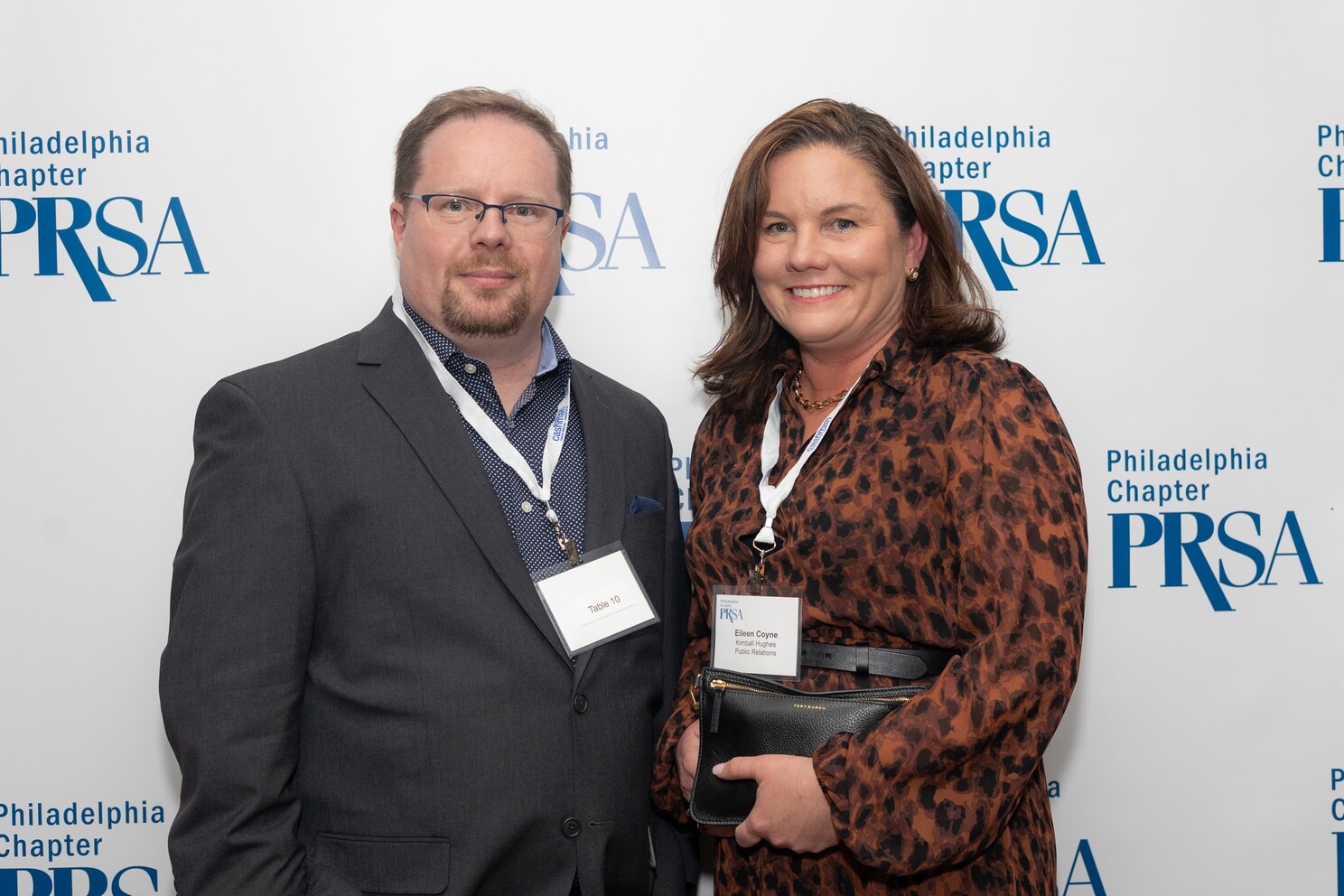
As a fully remote agency, our team is spans the Northeast and Midwest regions. While we’re fortunate to connect in person sporadically throughout the year, the opportunity to come together socially had not yet happened—until last week. Our entire in-house team gathered in the City of Brotherly Love to accept a PRSA Philadelphia Pepperpot Award for Crisis Communications and Issues Management.

Seizing the opportunity, we turned our invitation to the PRSA Philadelphia Pepperpot Awards into a mini-agency retreat. Over the course of a day and a half, we celebrated at the awards ceremony and toured the WHYY NPR and PBS Studios where the likes of radio legends Terry Gross and Marty Moss-Coane record their shows.

Even during the busy holiday season, our team made it a priority to celebrate this agency milestone and catch up on water cooler chats that can be hard to come by in a virtual office. The experience served as a reminder that while our team does a wonderful job maintaining connections with each other digitally, there’s no substitute for gathering under one roof.

Check out a few photos from our 2024 agency retreat below:

Photograph by Morgan Horell

Keys to Boosting Brand Awareness in 2025: Embrace New Media

While you contemplate adding extra protein and strength training to your weight loss plans for 2025, why not consider adding new media and video to your company’s communications strategies?

A turn of the calendar to a new year presents an ideal opportunity to not only consider weight loss and exercise, but to evaluate business strategies as well – both successful and failed strategies. In public relations, as with many other industries, this new year refresh or reinvention beckons us to consider the latest trends and undertake new initiatives to continually boost brand awareness in the year ahead.

This time of year is replete with industry experts offering outlooks on what we can expect in the year ahead. And while traditional PR tactics, like contributed articles to well-respected outlets continue to carry weight, we are increasingly seeing good PR pros encouraging industry pundits to take on new platforms or new features of existing platforms to share their views, including – LinkedIn Live, LinkedIn Newsletters, TikTok, and new X competitor Blue Sky, among others.

Depending on the audience targeted, each platform can yield considerable results for company leaders who offer original, valuable and educational content. Leaders who want to boost their brand’s visibility in 2025 should consider the following new media:

  • LinkedIn Lives – In 2025, we will continue to see savvy thought leaders connect with their audiences through LinkedIn’s event-hosting platform LinkedIn Live. LinkedIn Lives are becoming increasingly popular for the platform’s ability to host live events with a casual feel – with one or multiple speakers, while engaging and interacting with the audience through a live chat function.

The tool markets itself in many ways as the event can easily be promoted among LinkedIn followers of the company page or the individual hosting the event. Followers will receive notifications about the event, as well as when it goes live. Moreover, any form of video in social media tends to generate higher levels of engagement than written content alone.

In the insurance space, digital marketing and transformation guru Ema Roloff has seen tremendous success with this resource, gathering roughly 1,600 registrations for an insurance predictions and trends event in late 2024. She hopes to do the same and more this year ahead of her Insurance Trends to Watch for 2025 event Dec. 17.

  • LinkedIn Newsletters – As LinkedIn continues to flex its authority as the social platform for business professionals, its newsletter function has also become increasingly popular for sharing thought leadership and other educational, nonpromotional content. LinkedIn claims it has seen a 59% increase in people publishing newsletter articles and a 47% rate increase in engagement. The platform claims more than 184,000 newsletters published. Once published, these newsletters invite your connections and followers automatically to subscribe so they are notified each time you publish with an in-app and email notification. Another perk – the success of your content is easily measurable through LinkedIn analytics.
  • Tik Tok – While Tik Tok has primarily been a successful B2C tool, we are now seeing the platform used more frequently for B2B engagement. In fact, Roloff has told us, her B2B Tik Tok videos on digital marketing in insurance have attracted more than one million views. We’ve been hearing for years that video content is essential for business communications, and Tik Tok proves the point and should not be overlooked in 2025.
  • BlueSky – As some look to move away from X, the app Bluesky, which bills itself as “an open foundation for the social internet” has been gaining popularity. In fact, BlueSky just reported crossing the 15 million user mark. As audiences flock to newer platforms like Bluesky and Meta’s Threads, business leaders will want to take note to ensure they are meeting their customers where they are.

To understand new media available to your business and what might be right for you, work with a communications specialist or agency that understands your business objectives, your audiences and the new media that can deliver on those objectives and audiences. Technology and AI are quickly changing how we do business, as well as how we communicate and interact with each other and prospects. Don’t get left behind.

Communicating with Sensitivity in the Holiday Season: A guide for home and office

We’re all worried about it. At this time of year everyone gathers. Linda brings up the election. Todd starts mansplaining. Rarely is there a workplace holiday gathering or end-of-year meeting where sensitive issues don’t come up. Oh, wait. You thought I was talking about holidays with the family?

Whether it’s bringing together far-flung (and far right and far left) relatives or just the company holiday party, some basic rules of the road apply to help you navigate both with grace, wit and diplomacy.

Know Your Audience

Spend enough time with anyone and you know what buttons to push and what reactions to expect. Keeping these in mind can avoid disaster.

  • Holiday Meals: Aunt Linda’s wine-soaked stories can venture into uncomfortable territory, while Cousin Todd is ready to challenge you on everything. Don’t engage. Instead, start light. “Please pass the rolls” is a safe opening that builds rapport and may only offend the gluten-free wing of the family.
  • Work Communications: When your boss is a bottom-line kind of executive or you have colleagues who need a little extra communication fluff to avoid shattered nerves, tailor your tone and content accordingly. When in doubt, lead with data and empathy. “Here’s the situation and my suggestions for how we can handle it.”

Address Conflict Strategically

Conflict is part of the human experience, but it doesn’t have to become a distraction from the mission of your gathering.

  • Holiday Meals: Avoid inflammatory topics like politics, religion, and Tofurkey. Instead, take the middle ground by spreading good cheer. Compliment the chef, celebrate Grandma’s bedazzled holiday sweater and admire your nephew’s alpaca-like hair style.
  • Work Communications: Take a beat before responding to a tense email or comment. Employ diplomacy by acknowledging a colleague’s concern, but stay solutions focused. “I understand your concerns. Let me clarify what I meant so we can find a solution together.”

Manage Expectations

Clarifying both your expectations and what you can offer helps to avoid misinterpretation. Clarifying your position without offending others can be achieved.

  • Holiday Meals: Stating you are stepping outside to “get some air” can be loosely interpreted to mean you’re taking a moment to avoid listening to Uncle Ernie (who no one invited) go on about how things were so much better in his day and how the world is going to hell in a handbasket now.
  • Work Communications: Be explicit about deadlines, deliverables and resources, especially during the holiday season. Doing so early helps avoid miscommunication. And push back when necessary, stating something along the lines of “I’d love to prioritize this, but I need more clarity/resources/time to do so.” Remember, no one appreciates it when someone over promises and under delivers.

Exit Gracefully

When things become untenable or you feel there is little benefit in continuing to be part of the situation, know how to leave without burning bridges.

  • Holiday Meals: Deploy a helpful excuse like promising to help in the kitchen or needing to get home to check on your pet that you’ve never mentioned and may not, in fact, actually have.
  • Work Communications: Politely steer the meeting toward a conclusion with positive words to the effect of “It seems we’ve aligned on the main points. We can regroup on the details in our next update.”

The secret to any family or work gathering at the end of the year is the same: navigate the situation with empathy, a little humor and as much tact as you can muster. To do so:

  • Listen more than you speak
  • Breath before you respond
  • Find humor where you can, but not at someone else’s expense

Applied successfully, you will navigate this season of full-contact family dynamics and stress-inducing end-of-year business, leaving everyone convinced of your manifest diplomatic skills while creating or contributing to as few moments of holiday drama as possible.

Wicked-ly Long: How long-form content can be valuable with the right message and strategy

As the highly anticipated film adaptation of Wicked the Musical hits box offices worldwide this weekend, audiences are eager to see how director Jon M. Chu will bring the story to life. In April 2022, it was revealed that the adaptation would be released as two films, split by the first and second acts of the stage show. And in September 2023, it was announced that the first installment would run a whopping two hours and forty minutes—longer than the total runtime of the original production.

In an age dominated by digital media, we’ve been repeatedly told that attention spans are shrinking. The American Psychological Association reports that the average attention span has dropped from 12 seconds in 2000 to just 8.25 seconds in 2024. Yet, some of the most successful Hollywood blockbusters in recent years have defied this trend with above-average runtimes. While advances in technology and more sophisticated storytelling techniques may be contributing to audience engagement, society’s willingness to embrace long-form content challenges our understanding of how people consume media. Not only are audiences willing to sit through extended films—they anticipate them for months, buy merchandise, participate in online discussions and pack theaters in record numbers.

There are countless reasons why audiences become deeply invested in a story, and it’s undeniable that films like Wicked, Avatar, Oppenheimer and Avengers: Endgame benefit from unfathomable marketing budgets. However, a valuable communications lesson can be mined from the success of these blockbusters: when people perceive something as valuable, they’ll make the time to consume it.

Will anyone read it?

This lesson extends beyond films to written content, such as articles or blogs. Understanding how these mediums have evolved is key. In the 2000s, the average article length ranged from 500 to 800 words. By the 2010s, this figure had grown to roughly 2,000 words. Today, articles are back down to an average of 500–800 words, while blogs often remain closer to 2,000 words. These fluctuations reflect ever-changing factors like algorithm updates and SEO best practices.

Many brands stick rigidly to short-form content, fearing audience fatigue or wasted efforts. However, a strategic mix of short- and long-form content can offer a more comprehensive approach, giving audiences a deeper understanding of a brand’s insights.

What warrants a longer message?

Not every announcement or discussion requires a long-form message. The key is understanding when more depth is necessary and where that depth makes sense. For instance, a general press release announcing a personnel change or new product offering is best kept succinct and easily digestible. Overcomplicating simple announcements risks disengaging readers and the reporters who you hope will cover it as a story.

On the other hand, targeted content—such as a blog or article for an audience with a preliminary understanding of the subject—can benefit from a longer, more detailed explanation. For example, a trade publication or a subscribed site catering to industry professionals may justify a 1,500–2,000-word deep dive that addresses relatable pain points and offers insights on trends.

The critical question to ask is: Who are you talking to? General audiences unfamiliar with industry nuances might struggle with long-form content, while more specialized audiences may appreciate detailed analysis. This is where thought leadership plays a pivotal role. While press releases are typically concise (around 400 words), thought leadership offers companies the opportunity to dive deeper into subject matter and educate, justifying longer formats.

The value of strategic communication

A skilled public relations team can help brands determine the right time, place, and format for their messages. Long-form content can help to humanize a brand’s experts, foster transparency with the public and solidify the brand’s reputation as an industry leader. A well-rounded PR approach that considers various audiences, their preferred methods of information consumption, and the gaps a product or service can address is essential for effective messaging.

Long-form content is not obsolete in today’s digital world, but brands must approach it strategically. And as moviegoers flock to experience the magic of Wicked on the big screen, let it serve as a reminder: audiences will make the time if you make it worth their while.

Public Distrust in the Media is Expanding, But So Are Avenues for Good PR

An integrated approach has long been key to successful public relations campaigns, but as public trust in the media continues to wane, a multi-pronged approach is increasingly important.

An October 2024 survey from Gallup found Americans continue to have record-low trust in the media. According to their findings, just 31% of those surveyed reported “a great deal” or “fair amount” of confidence in the media to report the news “fully and accurately,” compared to 32% last year. Another 36% responded they have no trust in the media. Not surprisingly, these numbers are down dramatically since Gallup began the survey in 1972, when trust in the media hovered around 70%. Since 2018, the percentage of individuals who reported a great deal of confidence in the media has fallen continuously from 45% to 31%.

In this environment, it has become critical to consider PR tools and resources beyond just the media interview. A strategic, multi-faceted approach can be tremendously impactful when it comes to raising awareness for your brand. Introducing additional channels allows you to control your message more than a traditional news story alone.

Thought Leadership

Thought leadership features insights and expertise by industry leaders designed to educate the reader around trends and challenges. This content is not meant to promote or sell.  Thought leadership helps build credibility for organizations and/or the c-suite. Unlike a news article written by a reporter, thought leadership is penned by the executive, or ghost written on their behalf based on the thought leaders thorough interviews with a communications team or PR agency (preferably one staffed by former journalists). This helps ensure the company retains control of the messaging and narrative. Articles are then published by third-parties – typically trade media – or on the owned channels of the organization. Thought leadership is not only attractive to companies looking to build their media profiles, but for editors seeking to fill “pages” as newsrooms continue to shrink.

This education or insight-based content approach is proven to raise awareness. In fact, seven in 10 decisionmakers surveyed by Edelman and LinkedIn for a 2024 report said they are “very likely to think positively” about companies that produce consistent and smart thought leadership. And 67% of decisionmakers and c-suite leaders said thought leadership has led them to “research a product or service they were not previously considering.”

Social Media

Of course, with shrinking newsrooms, have come growing voices on social media. While most companies now have some type of presence on social media, they may not leverage these channels to their full advantage. As distrust in mass media grows, people are turning to social media channels like LinkedIn, X, Facebook, YouTube, TikTok or Instagram.

In its newsletter feature, LinkedIn provides a built-in publishing platform for company leaders – or anyone – to share content that lands faithfully in the inboxes and newsfeeds of their followers and newsletter subscribers each time an article is published. We see increasing value and reach in this particular communications tactic. Again, comms teams must be careful to limit or avoid promotion in this content as readers will likely reject promotional content. However this provides another platform to weigh in on industry trends and consumer issues, as well as educate, while reaching a wide and growing audience.

Social media also allows companies to amplify any published thought leadership on their own social media channels to enhance visibility and further the article’s reach. The publications will often do the same with quality thought leadership published on their platforms.

Owned Media

Finally, other owned media, like blogs continue to be a compelling tool to raise brand awareness and demonstrate expertise as trust in the media declines. A blog, hosted on a company website, that is frequently updated with original content demonstrating your company’s expertise, can also help to raise your profile. White papers, short videos on company-branded YouTube or Vimeo and more can do the same. Again, this content can be circulated across social media to stretch its reach.

Connecting with Today’s News Consumer

While legendary newsman Walter Cronkite may have been known as the “most trusted man in America,” for many American households, today’s news anchors, reporters and editors are not as warmly perceived. Fortunately, as we head into 2025, more options exist for us to see and/or hear the news. People can choose where and how they want to consume their news, and companies will need to continually find new ways to meet them where they want to be met.

A good public relations agency can recommend the best strategies and tactics for your company and that should include a multilayered approach that considers more than media relations.

Kimball Hughes Public Relation’s Fall Favorites

The autumn season is in full swing and people are pulling out their favorite cozy sweaters, watching the leaves change colors and sipping on spiced, warm beverages. The team over at Kimball Hughes Public Relations is enjoying the season change and getting outside as much as possible before the winter cold rolls in. Here’s a little insight into a few of our favorite things about fall:

Rod: Playtime in the yard with Theodore Rex (Teddy). He loves to search for his ball in the leaves, and I think he likes to blend in with the scenery trying to hide from the humans.

Eileen: Pumpkin-flavored coffee. I’m not hooked on the fancy pumpkin-spiced lattes, but a little pumpkin flavor is nice, particularly with a view of the changing leaves.

James: Hoodie season. There is nothing better than going outside, feeling the cool air, and watching my dog Zeus run through the leaves.

Cassidy: The foliage. New England, where I am based, is one of the most beautiful places to be in the fall. The vibrant reds, oranges and yellows make for the perfect backdrop for apple picking, football games and hiking. 

Hari: Taking long walks. I love walking around seeing how beautiful Philadelphia looks in the fall while it’s still warm enough outside to walk comfortably.

Kate: Halloween decorations. My neighborhood goes all out for Halloween. My partner and I like to walk around to see everything lit up and check out the spooky displays. Most of them have themes they switch up each year, and taking the time to appreciate those setups has become an annual tradition that we look forward to.

Liz: The cooler weather and enjoying the outdoors! All the beautiful colors of the leaves changing on the trees and the mums that are everywhere.

What’s your favorite part of this time of year?