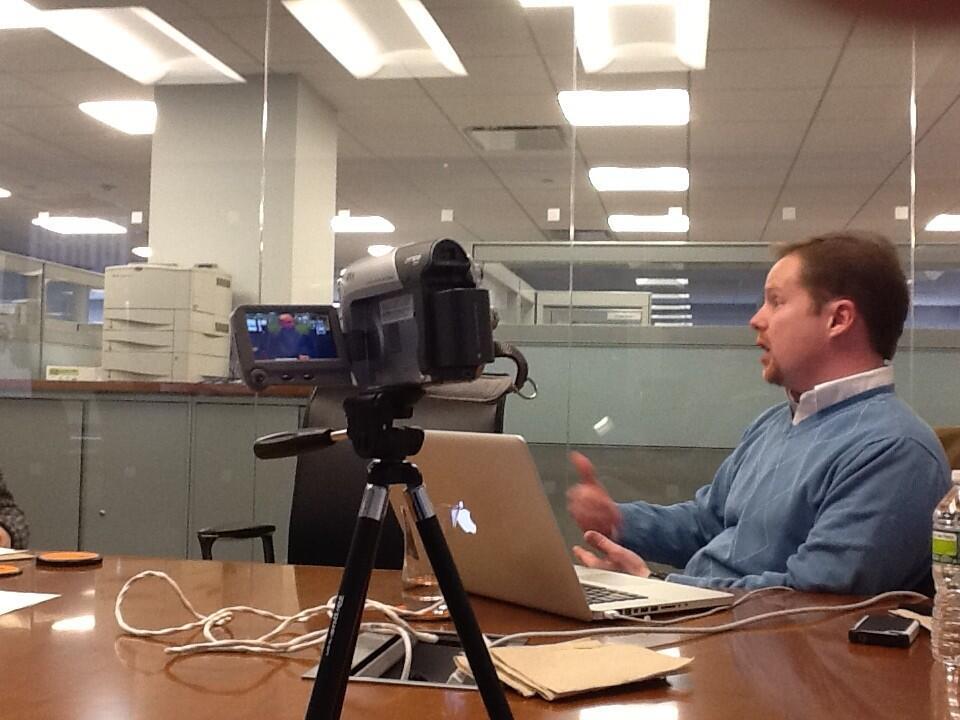
9 Tips To Make Social Media Work For You At Conventions

There is nothing wrong with an awkward selfie when used to promote a brand or to let the world know you just discovered amazing pepper jelly.

There is nothing wrong with an awkward selfie when used to promote a brand or to let the world know you just discovered amazing pepper jelly.

Last week (Sept. 25-28) more than 1,200 vendors attended Natural Products Expo East to attract the attention of retailers and bloggers while also winning some valued name recognition for their brands.

Surprisingly, only a handful of vendors used social media to truly maximize their advantage.

I’ve attended many conferences and conventions and I follow some simple social media steps for events.  I urge many of the brands I met with at Expo East to review the following tips and plan to incorporate them next September in Baltimore or in March 2014 in Anaheim for Expo West. Because of its profound reach, extensive use in business and dexterity of messaging, these tips focus on using Twitter, but could be adapted for Facebook, Instagram, Flickr, Pinterest and others.
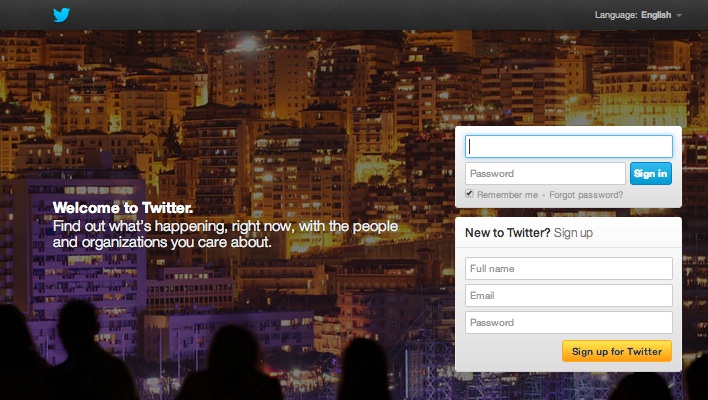
Twitter Screen Shot

1. Tell the World Where You’ll Be

About 45 days before the show, tweet from your company Twitter handle that you will be in attendance. Use the show’s hashtag (usually #ExpoEast or #ExpoWest; other shows will include this info. in registration materials), your booth number and invite people to visit your booth at the show. For example: We’re thrilled to be attending #ExpoWest in Anaheim in March. You can find us at Booth #3100.

2. Make a Social Media Plan for the Show

Conference attendees cling to their smartphones. Task someone to monitor, post and respond to social media during the show in real-time. Either on the floor or back at the home office, participating on social media will help garner attention for you long after the tradeshow floor closes.

3. Give Followers a Behind the Scenes Look

Tweet behind-the-scenes pictures and video of your team preparing for the show, traveling to the show and setting up your booth. People like to get to know the brands they love, and feel included. Be sure to include show hashtags and your booth number.

4. Give Attendees a Reason To Seek You Out

Entice attendees to visit you by offering samples, raffles or exclusive news on upcoming brand news. Make it worth attendees’ time to find your booth in the crowd. And, of course, use the show hashtag and your booth number. For example: If you’re attending #ExpoWest, stop by Booth #3100 for free samples of our new mango and coffee-flavored smoothies.

5. Recruit Attendees to Be Your Ambassadors

People share content in which they are featured. Invite interested attendees to take a photo with you and your booth. Then you can tweet the picture, with the attendee’s Twitter handle and the show’s hashtag with a “Thanks for stopping by” or other conversation-relevant comment. Retailers might not partake, but bloggers and brand enthusiasts will – and they share!

6. Comment on Show Happenings

You’re at the convention. Make sure you are aware of educational and training sessions taking place, who the guest speakers are, and what events attendees are talking about most. Tweet content related to each – with images where possible. For example: Willy Wonka’s talk on the health benefits of sugar at #ExpoWest has fired attendees up. What’s the most interesting seminar you’ve attended today?

7. Respond To Those Who Tweet About/To You

It’s just like a conversation. You wouldn’t ignore someone who said hello to your or complimented you, so don’t do it on social media. If someone tweets at or about you, tweet them back with a tailored thank you (i.e., don’t just say ‘Thanks’).

8. Spelling Counts

Proper spelling is key, especially for people’s names and Twitter handles. It demonstrates professionalism as well as being able to react correctly to real-time events with aplomb.

9. If It Goes Badly, Get It Offline

If someone tweets a complaint or comments negatively about your product, let them know you are sorry they are unhappy, and that you would like to speak with them (by email, cell phone or in person) right away to try to help. Do not engage in a back-and-forth dialogue via social media. Get the conversation off of social media as quickly as possible. For example: We’re sorry you had a bad experience. Email willy@willywonka.com and let us help or stop by booth #3100 & give us a chance to make it right.

There is a lot of good that can come from live social media posts at a conference or convention. Retailers search the related hashtags to see what brands are trending, and what attendees liked and didn’t like. And whether you use social media or not, if you are a vendor at a show like Natural Products Expo, you are being talked about on social media. So make sure you are taking an active role to help shape that conversation.

If you have questions or would like to create a social media plan for Anaheim or Baltimore in 2014, email me at rhughes@kimballpr.com to learn how the team at Kimball Communications can help. Or tweet us at @KimballPR.


Best of Show: Standout Products of Natural Products Expo East 2013

ExpoEast2013Panarama

If you haven’t been to either Natural Products Expo East or West yet, it’s a must attend for good-for-you-foodies as well as those looking for products that take an environmentally friendly approach to consumerism.

With thousands of vendors and products to see and only four days to try to see them all, here are just a few standouts from the food category I came across in Baltimore while there on behalf of Kimball Communications:

B’More Organic When I heard “organic skyr smoothie” my skepticism kicked into high gear. Then I was told it was ideal for those, like my brother, who are lactose intolerant. Sure, I thought. Then I tried their Mango Banana Skyr Smoothie. Stunningly good, loaded with protein and good for you. I took a bottle for the road-trip home.

Conti Gourmet Coffee I can’t say enough good things. Roberto “The Coffee Man” serves a great cup of coffee, keeping me fueled for the entire show. I’m ruined for Starbucks from here on out.

Epic This was the biggest surprise for me at Expo East. Epic’s 100 percent grass-fed, animal-based protein bar caused me some hesitation. However, at the urging of others, I tried the Bison bar and was remarkably surprised at how good it tasted. I’ll be ordering a box this week.

Gelato Fiasco This group from Maine was a lot of fun. We talked a little about social media, and a lot about their awesome gelato. While they are primarily in New England right now, I fully expect to see them on a store shelf here in Pennsylvania area soon. They are definitely worth stopping for the next time you are in Massachusetts or Vermont.

Late July Organic Snacks Celebrating 10 years in the organic, non-Genetically Modified Organisms (GMO) snack space, this established player still has the power to surprise with its new a tangy and impressive new Sub-Lime Multigrain Snack Chip. I’ll be looking for this one in my local grocery store.

NoTatoes This super-young start-up made quite a big buzz at Expo East with delicious Cassava Tortilla Chips. Keep an eye on this company. I have no doubt you’ll be seeing them in a lot more stores soon.

Sibu Sura A micro-batch chocolate producer out of Maryland (using 100 percent organic and fair trade cacao beans from Peru), Sibu Sura not only offers some of the best chocolate from Expo East (I tried just about all of the chocolate available), but their mission of social good and environmental friendly packaging make them a distinctive standout in any crowd, including at Expo East.

Suzanne’s Kitchen Amazing pepper jelly. I’m a connoisseur of sorts where pepper jelly is concerned. I once drove to Virginia because I heard a company there did a good job with pepper jelly and I wanted to verify it.  By far, Suzanne’s is the best I’ve ever tried. I picked up a jar of Pepper Jelly Heaven from my local Whole Foods on Sunday night to snack on while watching the finale of Breaking Bad.

Wild Poppy Juice Company I gave up soda and fruit drinks almost 20 years ago, but this organic craft fruit drink – which offers just a hint of soda-esque texture – made me think I was missing something amazing. The Organic Peppermint Lemonade was a surprising discovery, and one worthy of singling out as a Best of Show from Expo East.

There are so many others worthy of a mention, but only so much you’ll want to read on your tablet or smartphone. Be sure to check out our video round-up (posting shortly) of other impressive stand-outs from Expo East.

Sometimes Bigger PR Agencies Are Just Bigger

At big agencies, you're paying for the overhead ... and all those chairs.  Image courtesy of adamr / FreeDigitalPhotos.net

At big agencies, you’re paying for the overhead … and all those chairs.
Image courtesy of adamr / FreeDigitalPhotos.net

Mark Twain once said, “It’s not the size of the dog in the fight, it’s the size of the fight in the dog.”

Sadly, this lesson is sometimes lost in the process of evaluating public relations agencies. Often the bigger agency is selected because they are seen as “the safe bet.”

However sometimes the safe bet with PR agencies isn’t always the best bet and the little guy is overlooked to the detriment of the company conducting the search. To those companies, I offer six reasons they would do well to consider small agencies like mine.

  1. It’s Personal, Not Just Business. Working with a smaller agency, clients typically have direct access to the agency president and senior staff. So do the agency’s employees. This means ideas aren’t just top-down, and everyone has a stake in the success of the account.
  2. What You See Is What You Get. The better-run small agencies have less staff turnover, especially at the senior level. So the folks you meet at the new business pitch meeting are the folks actually doing the work for your company. That almost never happens at big agencies.
  3. Small Agencies Are Built By Big People. Small PR agencies are populated with PR pros who left big agencies to focus on good work instead of billable hours, or by established journalists who bring a well-honed reporter’s eye to the story-craft of public relations. Big agencies are not the only bastions of talent.
  4. Budgets Don’t Drive Success. Small agencies have less overhead then larger competitors. This means smaller agencies work toward success, not billable hours. At larger agencies, clients with small budgets are often relegated to a few hours of work per month, led by the most junior, least experienced staff members.
  5. Flexibility and Responsiveness Are Watchwords. Small agencies usually don’t have “big” accounts to fall back on, so ensuring every client feels like the only client is the hallmark of a well-run small agency. This means responding promptly to clients, and being able to adapt well to changing priorities.
  6. It’s a Business of Personality and Ideas. Success – with big or small agencies – is predicated on the people on the account and the ideas they generate. In this area, size is not a factor. One smart, industrious solo PR pro with good ideas and a little elbow grease can be as valuable to a client as an army of well-polished and mildly talented PR practitioners. As Twain said, it’s about the fight in the dog.

This isn’t to say all big agencies are bad and all small agencies are good. It’s simply why smaller agencies should not be disregarded as a “best bet.”

I’ve heard too many stories from clients and co-workers alike about companies that chose big PR agencies based purely on the idea they were a perceived safe bet. (As the saying goes, “Nobody ever got fired for hiring IBM.”) These same folks, after prolonged discovery periods and big “start up” fees, came to find bigger isn’t always better.

Sometimes bigger is just bigger.

Marketing on the 9/11 Anniversary? Don’t

“When in doubt, leave it out.”

This was the sage advice of one of my first journalism professors in college. It served me well in everything from sussing out facts for news stories to drawing up guest lists for family parties. It’s also good advice for brands and organizations to consider as part of their social media policies, and their approach to anniversaries of remembrance like Sept. 11.

This week – 12 years from the attacks of Sept. 11 – we saw far too many businesses using social media to remember the fallen while also making sure you remember their products.

On The Crisis Show, which aired on the anniversary of 9/11, I joined Shel Holtz and host Rich Klein to discuss these efforts. We highlighted some of the more thoughtless attempts to newsjack the 9/11 anniversary, as well as the reactions those efforts engendered. It’s a cautionary tale of how even the best intentions on social media can fail without sound strategy, planning and a crisis response plan.

What we saw on social media on this anniversary was how tone deaf some brands can be, and how few plan for all potential outcomes. The list of offending brands – both exploitative in their efforts and those just trying to mark the day as best they could while failing in the attempt – is too long to include here.

The best advice I can share is beautifully summarized in a short online article in The Atlantic. The writer, Derek Thompson, took a page from my journalism professor’s book and offered one simple rule for advertising on 9/11: Don’t. This rule applies equally well to marketers, social media practitioners and PR pros.

The events of that day still haunt us as a nation. So brands should consider honoring the day with a moment of silence, time off for employees to participate in the National Day of Service Congress called for in 2009 or by making a charitable donation. But don’t market such efforts or your products and services. Those who mourn don’t need to hear from brands on this day.

Next year, when we mark the 13th anniversary of our national loss, I encourage brand managers everywhere to follow the prescient advice of my old professor: When in doubt, leave it out.

Public Relations Explained

MediaRelations

Media relations is just one aspect of a well-rounded pubic relations practice. Pictured here, the author is conducting a training session with a client.

“So what exactly do you do?”

I get this question a lot. Seriously. A lot.

It seems, despite the Public Relations Society of America’s best efforts, far too many people still have very little understanding of public relations as a profession. More often than not, folks have grabbed hold of one aspect of the profession and decide that is the full breadth and scope of the field.

“You help your clients get into news stories, right?”

The above statement describes PR about as completely as asking someone at Apple if they just “sell phones.”

Media relations is one important aspect of PR, but it doesn’t cover the profession by half.

Our job is to be a true strategic partner with our clients. We help them communicate with all of their audiences, including stockholders, management, employees, customers, local communities, industry influencers, government officials, and the media. Within each of those groups, there are countless subgroups we must consider, often outside the interest and view of the media.

We help to build networks for our clients, introducing them to community and business leaders, government officials, special interest groups, employee advocates, industry insiders and online communities. We conduct research and write position papers. We offer insights and suggestions during the development of marketing campaigns, and we advise human resource professionals on messaging to employees of the company. We partner with lawyers when client-related legal matters are referenced in the media, and we advise on, and integrate with, social media strategies and messaging. We collaborate on planning that ranges from celebratory events to disaster scenarios, and we interface with multiple departments to drive and/or support ongoing brand reputation management practices.

PR pros play many parts: advocates, diplomats, strategists, trusted advisors, communicators and content managers, with our clients. On any given day, we might play one or all of the above roles with a few extras thrown in just to keep us sharp.

So, with respect to the PRSA and their efforts to define the practice, the answer I’ve developed in the last few years feels a little less jargony and appropriate for the cocktail party set as well. In 25 words, what I do is this:

“I help clients communicate better, with honesty and integrity, to those most important to them. Sometimes I also get them in the Wall Street Journal.”

Filling in the Blanks

If you learn anything in public relations, it’s that when you leave a communication vacuum, people fill it with their own information. And the information they are left to fill in is not often flattering. So, you would think the big airlines could apply that lesson to their customer service. Apparently not.

Edgar Barany / Foter.com / CC BY-NC-SA

I had settled in on my Delta flight back from New Orleans, connecting in Atlanta en route to Newark. Just before take off, the pilot tells us that because there was significant turbulence when the plan arrived at Louis Armstrong Airport, they needed to do a physical inspection. In just a few minutes we’d be on our way.

A few minutes later, he breaks the bad news. A mechanic has to perform the inspection and they do not have anyone in the Big Easy to do the job. They are flying in someone from Atlanta or Minneapolis to do the job, and it will be “a few hours.”

Once we begin to consider the implication of an airline not having a mechanic at an airport to do an inspection, we deplane en masse and head to the Sky Club, bar, ticket counter or wait at the gate to rebook our connections.

Fast forward to “a few hours” later and they announce we will be boarding at 1:55 p.m. At 1:55, a flight attendant strolls out of the gate, so I inquire. He sheepishly tells me they have been told nothing by Delta but their schedule says 4 p.m. I share my new information with my new airport friends and lead a line at the counter to rebook my rebooked connection.

My airport friends and I tried to laugh, but for those sitting and waiting with no information, it was anger, disgust and murmurs of “Delta sucks.” All the $25 food vouchers and apologies by the faultless flight crew could not help.

Delta left their worried, anxious customers in the dark for over an hour. Their crew and airport staff lacked both the information and authority to advise and mitigate the fallout among angry passengers. A few communications basics could have helped:

  • Know your audience is tired, worried and anxious, so communicate frequently.
  • Be forthright (we wouldn’t board at 1:55) and honest as circumstances developed (we might be leaving as late as 4 p.m., but hopefully sooner)
  • Acknowledge what we experienced (inconvenience, frustration) so we knew they cared.

People understand mistakes, but when left in the dark they fill in the blanks – and it’s not an image an airline or anyone else wants.

C’mon Delta, you have the resources to do better.

Photo credit: Edgar Barany / Foter.com / CC BY-NC-SA

Summer Flex Hours in the PR industry

Spring is here, and employees have one thing on their minds: summer schedules. Some companies offer summer flex hours that may include half days on Fridays, longer work days during a 4-day period with a full day off during the week, etc. There are many benefits to a flexible schedule, but there are also a few downfalls to consider.

hjhipster / Beach Photos / CC BY-NC

Benefits of a flex schedule

  • More time to accomplish personal tasks. Flex schedules benefit employees by allowing them to have more time to get things done.
  • Rewards for employees. Flexible schedules can act as a rewards program for employees.
  • Employees may take less time off. Flex hours allow employees to get an early start on the weekend without taking a full day off.
  • More refreshed. Having a few extra hours may help employees feel renewed and ready to dive into the next project or task.
  • An increase in productivity. Read about how one city added a flexible work schedule increasing productivity.

Negative aspects of a flex schedule

  • Clients may not approve. Clients may not have a flexible schedule and may not be open to your company having one.
  • Looming deadlines. Deadlines still need to be met.
  • The PR world never closes. The digital world does not shut down. Emails, phone calls and comments on social media platforms still need to be answered in a timely manner.

Tips for incorporating flex hours

  • Let clients know well in advance.
  • Get clients input on a flexible work schedule.
  • Make yourself available when needed.
  • Set up a schedule for employees so they know exactly when you’ll be in the office.

Does your company offer summer flex hours?

Photo credit: hjhipster / Foter / CC BY-NC

Three Crisis Communications Mistakes Companies Make

morner / Foter / CC BY-NC-SA

In the shadow of the Boston Marathon tragedy, it’s painfully apparent – if it wasn’t before – that crisis scenarios are part of our collective new normal. From threats of terrorism and senseless acts of violence, to economic chaos and world events, crisis events can easy overtake the best-laid plans of any business.

At these times, there is a balance to be struck between business operations and consideration of outside events. Customers don’t want to be marketed to and reporters don’t want your new product press release in times of crisis. In addition, your own employees – even many miles removed from events – might struggle to cope with news from towns like Boston, Aurora, Colo., Sandy Hook, Conn., West, Texas, and others.

What do you say or do as a business owner or manager? Your response in such times must be genuine, sensitive to events and true to the culture of your organization. There is no one-size-fits-all communication solution.

However there are three things you should not do in a crisis. Don’t:

  1. Continue Your Social Media Strategy as Planned. The moment you start receiving breaking news alerts via smartphone apps, email or after watching the news, you need to assess the impact of your planned social messaging. Think about how your messages might be received against the backdrop of what is happening in the news. In most situations, you should pull your planned content immediately and take a wait-and-see approach for at least the first 30 minutes of the news event. This means deleting or rescheduling posts in HootSuite, TweetDeck and other social dashboards.
  2. Assume It’s Not a Big Deal for Your Brand. Gather your public relations and marketing teams to evaluate next steps. Create a plan for what your external messaging (including social media) needs to look like in the first hours and, in some cases, the next several days after a national or global event. Poor planning can lead to significant customer backlashes and damage your brand. You need only look at American Apparel, GAP and others whose early social media efforts during Hurricane Sandy not only failed, but angered customers by appearing insensitive to those in Sandy’s path.
  3. Ignore Your Crisis Communications Plan. If you have a Crisis Communications Plan, use it. This valuable tool will detail a methodical strategy and tactics for handling relevant crisis situations. Don’t try to wing it in the middle of a crisis. You’re more likely to miss something, and the risks can be enormous. If your plan is out of date or, worse, if it doesn’t exist, set a goal for updating or creating one and use the current scenario as a case study (for better or worse) to help guide your Crisis Communications Plan development later.

While you cannot plan for every eventuality, a good Crisis Communications Plan will best ensure your brand is protected while also being sensitive to events outside of your control.

Photo credit: morner / Foter / CC BY-NC-SA

Four spring cleaning tasks for writers

You’ve been writing all day, right? Writing press releases. Writing carefully worded emails. Writing white papers and proposals and to-do lists and text messages and secret prayers to the gods of media coverage (and then apology letters to PETA about the Sacrificial Goat Incident).

Amir Kuckovic / Foter.com / CC BY-NC-SA

When you spend most of your waking moments stringing together words and phrases, not every strand will be unique and stunning. Perhaps Thesaurus.com is the only browser tab that never you never close. Maybe you are leaning on weak link-bait phrases, like my headline (hey, you clicked on it).

In other words, your writing has gotten stale, lackluster and rote.

Recently, I noticed this in my writing. I was editing a white paper I had written, and found one phrase repeated over and over at the beginning of sentences: “that means.” It was an unnecessary, lazy and boring transition, but there it was, again and again.

I had the good sense (for once) to understand this as a wake-up call. I took a closer look at the next few pieces I wrote and took steps to refresh my writing. This is what worked for me. Maybe it’ll work for you, too:

  • Pick out the stale bits. When editing, look for areas of your writing that aren’t terribly effective. Like me, have your transitions gotten lazy? Does it seem like your vocabulary has shrunk? Name the problem(s).
  • Refresh your reading. In many ways, you write what you read. What are you reading for work? If you go back every day to the same two blogs, you are limiting potential growth in your vocabulary and writing style. What are you reading at home? The books and magazines we read for fun inform our writing just as much as the “serious” stuff.
  • Go back to basics. Listen, you don’t actually outgrow outlining and organized note-taking. We all just think we do. You might even want to try drafting with pen and paper, just this once. As I see it, writing by hand slows down your writing process and can help you be more thoughtful about word choice and sentence length.
  • Reacquaint yourself with clients. Going back to basics can also mean going back to the beginning with your clients. If your writing about or for them has become imprecise or not particularly compelling, you may want to look back at strategy documents created when you started working with them. Make sure you understand their mission and goals — these are easy to lose sight of.

I’m curious about what other people do to solve this vague and slippery problem. Do you have any good resources, tips or advice? Share them in the comments or on Twitter (tweet @kimballpr or @sammkimball).

Photo credit: Amir Kuckovic / Foter.com / CC BY-NC-SA