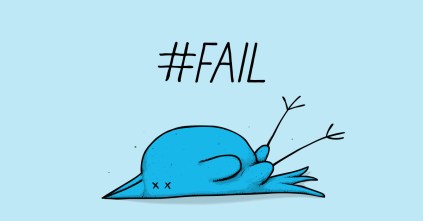
You can run, but you can’t hide #TwitterFails

Twitter Fail!

Photo credit: Transferwise.com

Social media is to branding a successful business as cheese is to mozzarella sticks. We’ve known for quite some time that marketers need to look alive every second of the day (or even just six hours per week), on the Twitterverse. But when opportunity arises or crisis strikes, it’s all about tactical PR. A strong media presence requires time commitment, creativity, and responsiveness; dedicated and experienced PR support is the best way to meet these demands. Without a practiced PR team or agency, your company may fall victim to the #nightmares detailed below.

#Wheresthecheese

Speaking of mozzarella sticks, McDonald’s launched them as a new item on their menu recently. Customers quickly took to social media to vent their frustrations with their cheesy purchase turned “lactose-free.“ McDonald’s came out with their explanation/ apology via The Chicago Tribune, but not before some smart competitors took to social media to boast the cheesy goodness they offer.

PR Takeaways:

1) Keep a close eye on social media callouts, so you can respond to the problem before the hashtag becomes the new problem.

2) Seize the opportunity, or dare we say, “cheese the opportunity.” Use humor and offer incentives to keep the situation friendly. Your audience will get a good laugh and hopefully drop in for a bite to eat. Just be sure to put your money where your mouth is if you’re going to play this card.

Meanwhile, McDonald’s has discontinued this product in response to negative feedback.

“Fire your agency. Then fire everyone who hired them”

Twitter users across the country did not appreciate the response Red Lobster gave to their Super Bowl Sunday shout out from none other than Queen Bey herself in her newly released single, “Formation”. The somewhat controversial lyric referencing Red Lobster turned all eyes on the seafood chain restaurant. While clearly trying to maintain their family-friendly rep, Red Lobster landed themselves in hot water with the masses on Twitter who waited hours for a clever response.

PR Takeaways:

  • Always be ready. You only get one shot to impress a lot of people.
  • You need to impress all of those people while sticking true to your brand, so tread lightly, but not too lightly.

#RIPTwitter

The social media site fell victim to the power of its creation when rumors spread that they may change their news stream from reverse-chronological order to an algorithm based feed, similar to Facebook’s. Even a few celebrities got on board with #RIPTwitter to express their discontent, to which CEO Jack Dorsey had to step in and quell the chaos.

PR Takeaways:

  • It never hurts to have employees at all levels involved with social, even the CEO—his word over all when it comes to shutting down rumors.
  • Don’t stick to just one outlet. With Twitter’s user growth slowing, it’s important to maintain messaging across multiple media outlets, social, news or otherwise.

Whether you work for a fast food giant or an insurance company, it’s important to control your own message. A small business may not generate viral hashtags the way Red Lobster would, but you can never be too sure what will happen in the realm of social media. Stay alert, stay focused, and stay out there.

On A.M. BestTV, AAMGA’s Bernie Heinze discusses recent visit to Lloyd’s

BernieandJohnWeber

Earlier this month, Bernie Heinze, executive director of AAMGA, briefed A.M. BestTV’s John Weber about his recent visit to Lloyd’s to discuss the role of MGAs in transfers, audits and more. Watch the interview here.

About that press release …

This week alone, I have received two press releases from two different organizations that make clear businesses don’t understand press releases.

Both came in the form of emails, the most recent one this morning.

pressrelease

The six-line headline of today’s release proudly announced the organization had earned a certain re-certification that had nothing to do with its products, services or customers. Put simply, it wasn’t newsworthy by any measure and, as such, had the unintended effect of reminding people like me to unsubscribe. I, the intended audience, could find no value or call to action in the message.

Sadly, this is a trend I am seeing more often. Companies large and small are firing off emails labeled as press releases to convey marketing messages that have little or no news value. As media outlets become more stratified, organizations are struggling to keep pace and employing a range of tactics to get their messages out. These ill-conceived press release emails run the risk of alienating all intended audiences: consumers, journalists and even stray PR professionals clearly added in error to email databases.

Anyone can write something and call it a press release. Anyone can send an email and call it news. Seriously… anyone.

Why ‘Anyone’ Handling PR Won’t Do

Businesses employ trained PR professionals for good reason. Most often and importantly these business communications professionals are there to ensure messaging is appropriate and generates value for an organization.

A skilled and experienced PR professional will ensure press releases have genuine news value to the recipient and the intended audience. Knowledgeable PR professionals work diligently to ensure press releases are precise, focused and targeted. Really good PR professionals will have the tact and professionalism to note when news value in a company’s messaging is lacking and must be addressed. In doing so, the experience, skill and thoughtful tactics employed via public relations professionals ensures the reputation of the businesses or brands in question are protected.

By winging it, as the organizations I’m now familiar with have done, they have demonstrated they don’t understand their audience, their messaging isn’t focused and they are employing a “spray-and-pray” tactic that has rarely worked in the past.

They’ve also managed to turn me, and those like me, away from their brands. All it took to do so was one so-called press release.


How can hotels use social media during a crisis response?


Photo credit: Mark Emery Photography via Foter.com / CC BY-NC-ND

The majority of hotels recognize the critical need for crisis response planning. But have they factored in social media? Over at Hotel Executive, Gary explains eight ways hotels can be effectively using social media during a crisis response.


Millennials: saviors of industry?

Millennials, long believed to dwell only in the land of eternal youth and parental basements, are beginning to emerge, as predicted in 2014, as a major force in the real estate market … at least in Des Moines.

Recently portrayed on Saturday Night Live as text-obsessed navel gazers, millennials are beginning to emerge as drivers of the real estate market in several urban markets. - Photo courtesy of SNL

Recently portrayed on Saturday Night Live as text-obsessed navel gazers, millennials are beginning to emerge as drivers of the real estate market in several urban markets. – Photo courtesy of SNL

According to today’s report on NPR, Des Moines’ strong insurance and financial sectors, coupled with affordable housing and an educated workforce are leading these young, first-time homebuyers to the oft-promised American Dream: homeownership.

While this trend conflicts with the nomadic stereotypes foisted on an entire generation, other assumptions remain consistent. These new homebuyers are selecting homes closer to urban hubs than their parents, primarily to avoid that other American Dream: driving.

If this trend continues, millennials might not only be poised to breathe new life into several U.S. industries, including the housing market, insurance and possibly aiding the revival of America’s great cities.

So what’s the secret recipe for industry leaders, and especially real estate pros, looking for a way to capitalize on the millennials as industry saviors? A strong education base, plenty of affordable urban housing and a growing employment sector seem to be critical to this trend.

Looking out my own window into the world, I’ve got to wonder if Philadelphia‘s time to shine has finally arrived. With its solid university options, ample affordable housing and robust insurance industry poised for dramatic expansion in the next five years, the City of Brotherly Love and papal visits might well be poised for a renaissance of its own thanks to this emerging trend.

Trump organization gets it right on data breach communications


Gage Skidmore / Foter / CC BY-SA

Donald Trump has jumped to the top of the Republican primary polls with an acerbic style that runs contrary to established political rhetoric. But when Trump International made the announcement yesterday that it was hacked, the PR effort was by the book.

And effective.

The Donald Trump Hotel chain says its payment data system was breached, potentially exposing customers’ credit and debit card information for more than a year. The chain posted a notice on their website and media coverage like this CBS report shows how to communicate a breach:

  • The facts about the breach: malware may have given hackers access to payment information between May 19, 2014 and June 2, 2015
  • The exposure: they have “not found any conclusive evidence that the information was taken or misused.”
  • Steps taken to correct it: they notified the FBI and financial institutions and hired an outside forensic expert to investigate.
  • Recommendations for customers and what it is doing to help: offering a year of complimentary fraud resolution and identity-protection services.

The Donald is in the crosshairs of many, so the New York Daily News and others took their shots, but coverage was once and done. As of now, they appear to have avoided what the IRS, Target and others have done – underestimate the extent of the damage in their initial reports, leading to multiple news reports and keeping the story alive.

AAMGA calls for action on NARAB in interview with A.M. BestTV

On the left, John Weber of A.M. BestTV. On the right, Bernie Heinze of AAMGA.

Bernie Heinze of AAMGA speaks with John Weber of A.M. BestTV.

Eight months after the National Association of Registered Agents and Brokers Act (NARAB II) was signed into law, the federal government still has not appointed board to oversee its provisions.

In a conversation with A.M. BestTV’s John Weber, AAMGA president Bernie Heinze discusses this issue and the steps the AAMGA is taking to address this problem. Watch the interview here.

Will it all come out in the wash?

I’m on my way back from The Clean Show, where there was tremendous interest in my TRSA-sponsored educational session, “Crisis Communications: A Practical Guide to Protecting Your Reputation.” Whether they were commercial laundry operators or others in the textile industry, attendees recognized the importance of communicating effectively in a crisis.

A massive, cylindrical washing machine

Space ship or tunnel washer? You decide.

Among the highlights of my presentation were:

  • Having a crisis response plan that includes communications protocols for media, customers and other key audiences.
  • Identifying a spokesperson who can represent the company well.
  • Dos and don’ts of media interviews, focusing on honest, open communications.
  • Preparing talking points that drive all answers in media interviews.
  • Incorporating social media in a crisis communications plan
  • The role of leadership in navigating a crisis effectively.

Following the presentation, TRSA hosted a press conference to unveil results of a new survey that reported business and consumer perspectives on service professionals wearing uniforms. The conference also unveiled the new TRSA animated video we developed with videographer Tom Donnelly.

Opening day on the trade show floor was eye opening with the size of the equipment and advanced technology used by the commercial laundry industry TRSA represents. For me, it was a valuable window into an important, far-reaching industry.

A large green banner depicting a women clutching plastic saying "sometimes I feel like I'm drowning in plastic."

The laundry industry has a bright green streak.

Know your audience: a content lesson from the middle of the woods

Don’t appeal to empty seats—know your audience.

Recently, a minor controversy flared up on a Facebook page for an outdoors magazine. In a web feature on getting fit for hiking, the lede read: “Doughy is a lifestyle choice.” Huh?

On certain fitness blogs or emblazoned on across a “fitspo” meme, such a statement wouldn’t be out of place. But to the readers of this magazine it seemed an odd crack aimed at heavy hikers. Most of the comments below the related Facebook post were some variation of this, from a commenter named Todd: “LoL I am doughy and I out hike lean athletes any day of the week. It’s not all about the cover. Over weight people can have very good fitness.”

If commenters were not taking the magazine to task for shaming bigger hikers, they were confused by the very nature of the article. That is, they didn’t understand why a hiker would need these fitness tips. As commenter Katherine quipped, “I got in shape for hiking by… hiking.”

So what’s going on here (aside from insensitivity)? If we examine this from a writing and public relations angle, it becomes clear the magazine made a basic, yet extremely common mistake: they misjudged their audience.

Under ever-increasing pressure to produce more and more content, companies sometimes forget for whom they are writing. They seek out new formats and approaches to writing quick blog posts and features, often mimicking what works elsewhere on the web. Though this can lead to content that is more interesting to readers, writers and brands have to keep those readers in mind. You can adapt a form or approach to mesh with the information and tone your audience seeks from you.

So let this little hiker dustup serve as a reminder: next time you sit down to write a new blog post, article, white paper or other piece of content, ask, “who is this for and what do the want from me?”

Hotel reputation management in the age of the instant review

Yelp, TripAdvisor, Hotels.com… The web has given travelers have so many ways to evaluate, select, book and review hotels. How do hotels manage their reputations proactively and honestly?


Hotels must actively manage their online reputations.
Unique Hotels Group / Foter / CC BY-SA 2.0

Our president Gary Kimball has some advice, which he shares with Hotel Business Review:

Hotels should look at how they are allocating their precious marketing and public relations dollars. This means comparing the value of social media buzz to advertising and print and broadcast media coverage. A review in a popular blog or traditional media like The New York Times or Travel + Leisure can do wonders in building awareness. But those readers may still seek online reviews before making decisions.

Read more at HotelExecutive.com.