5 Steps to Navigating a Crisis Situation

Planning your escape while your house is engulfed in flames is, arguably, the worst time to try to develop an escape plan. Surprisingly, countless business leaders take this approach to crisis communications management; trying to make a plan to save the business as metaphorical flames lick at their hands and feet.

The smart move is to have a comprehensive crisis communications plan in place long before you need to use it. However, given the relative lack of thoughtful crisis communications planning among many organizations, the next best strategy is to try to navigate the crisis as best as possible without getting too badly burned.

If your business or non-profit lacks a crisis communications plan, but you find yourself trying to manage a crisis situation, here are five steps you can take to try to minimize the damage:

Gather the Facts

The worst thing an organization can do early in a crisis is make assumptions or speculate. The outcome of your crisis will be shaped largely by your initial response. What can you verify? Start with what happened, when, who was involved and how you expect this event to impact your organization’s stakeholders and the public. Keep emotion out of it, recognizing emotions will run high in a crisis. Remember, we all have different perspectives and opinions when we’re asked to recount a situation. This is where you must insist on only dealing with verifiable facts.

Assemble Your Team

Typically, this includes one or more people in leadership, your organization’s attorney and one or more crisis communications professionals; either your in-house communications person or an experienced public relations agency specializing in crisis work. Empower the team to examine the situation and guide the course of how you will message to internal and external audiences.

Take Control of All Communications

From answering phones and the receptionist greeting guests to the intern handling your social media and the company daily email newsletter, your crisis communications team has to have complete control over all your communication channels. It’s best to deactivate comments on your Facebook page, pause your company newsletter and instruct everyone answering phones or greeting the public to direct all questions to a member of the crisis communications team. Everyone must be in sync in managing how your organization communicates in the middle of a crisis situation.

Be Consistent in Your Messaging

While it is important to adapt your messaging as facts present themselves, the messaging strategy and tone you and your crisis communications team agree to should remain consistent. Shifting the premise of your messaging will only create chaos, creating further confusion and eroding trust in your organization’s ability to manage the situation. There is also a tendency by some to question the strategy if an immediate resolution does not manifest. Recognize that once in a crisis, there are no quick fixes but often rather only a series of unpleasant realities. Managing a crisis in progress is about being patient and, frequently, picking the least damaging option available among several less-than-ideal options.

Do Not Lie

A final point on messaging: don’t lie. Don’t guess and don’t try to obfuscate. As noted in step one, your messaging must be fact-based. You should never try to spin your way out of a crisis as doing so almost always leads to making matters worse. Be honest, even when painful. And while legally you may be advised to not admit guilt, there are ways your legal and communications team can work together to provide fact-based and forthright messaging that will ultimately move you toward a more positive outcome in crisis situations.

Applying the above steps can help your team better manage a crisis and help ensure you aren’t completely overwhelmed by circumstances, some of which may not be of your organization’s making or in its control. But when in doubt, contact a professional crisis communications team. Your reputation and bottom line are worth the investment.

The Untold Story of InsurTech Insights USA 2023

When I first made the transition from being a journalist to working in the world of public relations, a mentor gave me the following tip: When you get a reporter on the phone, you only have about 10 seconds to prove you have a story worth their interest. If you can’t wow them in the first 10 seconds, you’ve lost them.

I was reminded of this lesson at the 2023 InsurTech Insights USA conference in New York City in June. There I participated in the conference’s speed-dating-style networking structure. It afforded me the chance to meet with nearly 30 different companies in less than two days.

What became apparent in those rapid-fire meet-and-greet meetings – and was noted by several of those with whom I met – was that many of them struggled with their elevator pitch.

These were brilliant minds: data scientists, computer programmers, academics, serial entrepreneurs and financial geniuses. Their struggle was in capturing the attention of their listeners in the first moments of meeting. This wasn’t just my observation; several told me this was the biggest challenge they faced as they took their start-up or early-stage companies to market. Given the highly technical nature of many of their insurtech models, clearly and succinctly connecting what they did with a business case for their prospect proved challenging. In fact, it was one of the major reasons some wanted to talk to me. They wanted assistance in getting their message out to stakeholders.

What I shared was another lesson I learned long ago as a young reporter: people care about stories they can relate to or in which they see something that reminds them of themselves. Yes, business professionals want to know how a particular product or service improves their bottom line. But before you can get to the features and benefits, you must be able to tell a story that will capture their attention. That’s the secret to a great elevator pitch, winning over the prospect in a sales meeting or capturing the imagination and interest of a reporter.

If you can develop a great story that has a dynamic and recognizable opening, based on use or case studies or even your business’s origin story, and give it a strong opening that will grab the listener, you’ve won their attention. And with that attention, you can present your product or service to a more receptive and engaged audience. That is how you effectively communicate value.

Many businesses, well established or otherwise, share this same struggle. Engineers, financiers, technologists and entrepreneurs rarely study communications in school or launch their professional careers focused on telling great stories. They focused on their expertise and problems to be solved. Having a talented communications team behind them can improve an organization’s ability to better connect the problem to be solved with a helpful product or service. That is the X-factor in countless success stories waiting to be told.

Maximize Your Conference ROI

You’ve registered for the conference and booked your hotel. Your flight is booked. Maybe you reviewed the attendee lists and identified your prospects. Perhaps you even reached out and scheduled some business development meetings before departing for the conference. Bully for you. That is a successful return on your organization’s investment. Or is it?

You see, most people fail to take full advantage of their conference attendance. Sure, the above looks great. But if those business development meetings fail you will end up with an expensive boondoggle on your hands.

Conferences are about more than landing a single business meeting or networking at the event. Conferences are about seeing and being seen — at and beyond the event.

Below are three considerations you should factor into gauging the return on your conference attendance investment:

  1. Live Social Media Posts. Social media posting at conferences helps to get you noticed — by attending journalists, by business prospects and sometimes even potential employers. If you want to be seen as someone with their finger on the pulse of industry trends and developments — as someone who can solve problems and leverage opportunities — posting to social media during conferences helps. This includes using the dreaded-but-necessary selfie and use of appropriate industry and conference hashtags.
    1. Ideas for posts include: a picture of and quote from a speaker on the stage, a 15-second video of you talking about a highlight of the conference, promoting an upcoming presentation with a sentence about why you think it’s important, a photo of yourself with one of the speakers afterward noting something of import they focused on or said, etc.
  2. Blogs & LinkedIn Articles. A thoughtful and succinct article for your company blog or LinkedIn page about the conference allows you to highlight event content while also shining a light on your expertise, perspective and sometimes even leadership on a topic. With correct tagging and backlinks, you can also use the marketing power of the conference’s coattails to drive your message. Next day is preferable; within a week is the limit for posting content after the conference.
  3. Media Interviews. Bigger conferences typically have media in attendance. This can be one of the most productive uses of your time. If you have a perspective or opinion that fits within the theme or topic of the conference, get yourself interviewed. At a minimum, set up a 15-minute meet-and-greet with attending journalists to tell them a little about your organization (3 minutes or less) and what you can offer in terms of insights and opinions as a potential source. Work with your in-house communications team or external public relations agency to do what they do best: putting you together with media and get you prepped for those interviews or background conversations.

While the above may seem extra, the results of leveraging them appropriately can be extraordinary in marketing yourself and your organization. All have post-event marketing uses and can be used several times over, post-conference, to demonstrate your industry leadership … as well as maximizing your organization’s conference budget investments.

When Conferences Go Wrong: Have a Plan

Some conferences go smoothly. Others end in the wake of an active shooter event. There is a lot of grey between those two extremes, and organizations sending personnel to conferences ought to have a communications plan in place for the unexpected.

Last month, my colleague Eileen Coyne and I were attending RISKWorld in Atlanta (April 30 to May 3). On the final day of the conference, ahead of the closing keynote, an active shooter event took place a few miles from the conference location.

Our first notification of trouble came in the form of an ABC News alert. Text alerts from our hotel and the convention followed. Digital signage at the conference turned green with white text, alerting everyone to shelter in place and that the conference center was not part of the active shooter scene.

We immediately reached out to our families as well as colleagues to advise them that we were fine, that the conference was shutting down and the event in question was not nearby. As it turned out, the shooting took place two blocks from our hotel. It would be hours before the hotel would come out of lockdown and allow guests to come and go.

In speaking with other attendees, it became clear that if their companies had formal crisis communications plans at all (and about half of most US organizations do not), they did not have protocols for staff attending off-site events during an emergency.

Given the current social climate, all organizations need to develop crisis protocols for off-site events. Contacting the staff attending the event, confirming they are safe and cascading that message across the organization – and potentially to the family of those staffers involved — should be part of any crisis communications strategy. This applies whether it’s your CEO speaking at the conference as well as employee attendees or sales team members staffing the company’s vendor booth.

Whether the crisis originates from the actions of a person or persons, Mother Nature or something else, having a plan for out-of-town staffers in case of emergency is key. And, importantly, those traveling should be trained in the details of the plan — including phone contacts and protocols if cell or other communication services are disrupted.

According to the FBI, active shooter deaths and injuries are at a 5-year high this year. Companies with traveling personnel who spend any significant time on the road should receive active shooter training. This includes the basic principles of run, hide and fight, as well as what to do when and if authorities arrive on scene if you are present during an active shooter event.

This may all appear extreme. And it may be, until your organization is receiving urgent calls from worried families, coworkers or clients in the middle of a crisis event. Being able to respond quickly, with a protocol to follow and facts in hand can help keep your team safe during a chaotic and worrying situation and allow you to communicate factually with all parties concerned.

Speaking From the Show Floor – tips for interviewing at events 

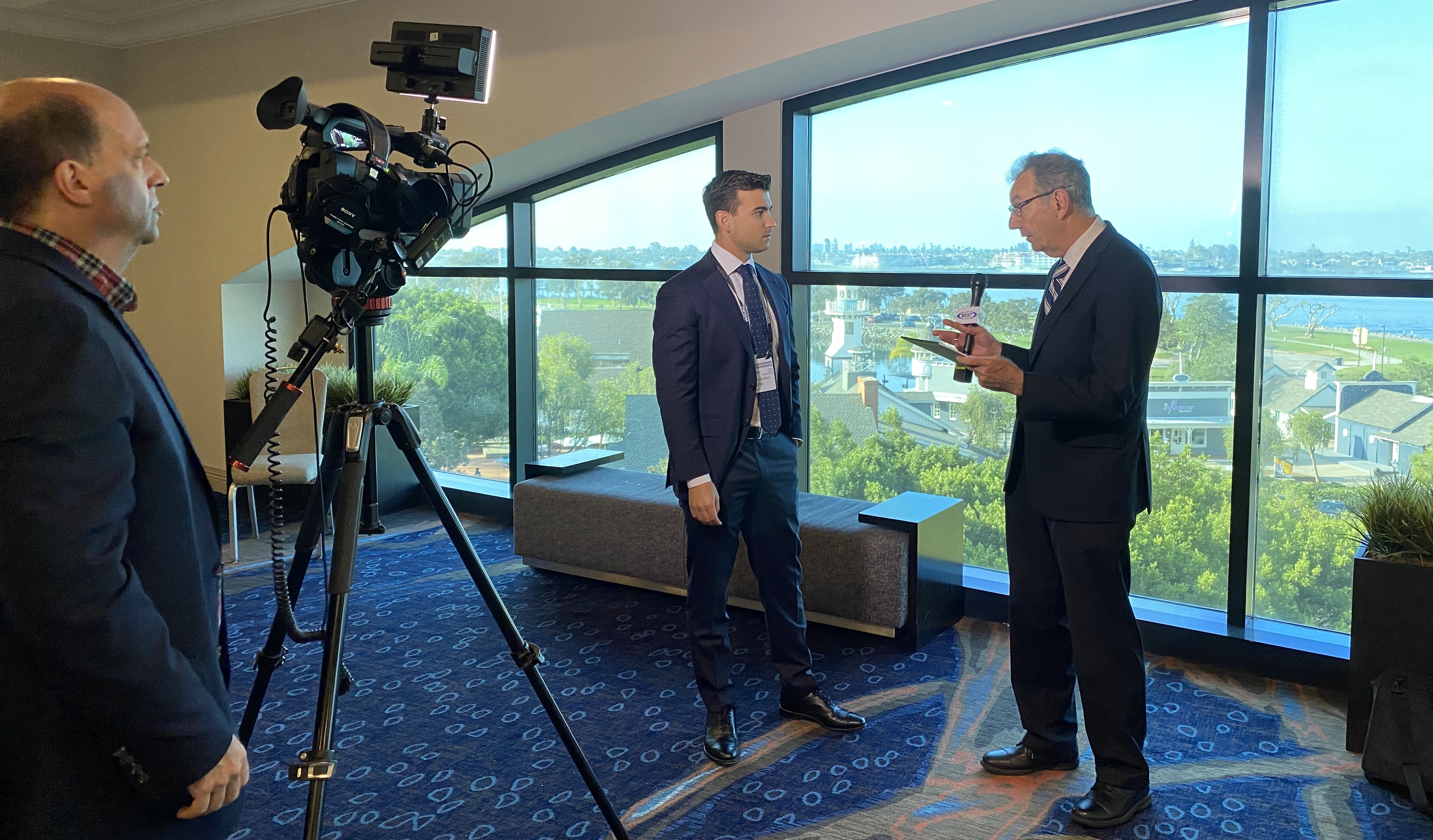
Events are finally back. After years of virtual events and remote gatherings, the opportunities for in-person networking and media interviews at major conferences are on the rise. While this is great news, especially for those tired of being interviewed by journalists from behind a computer screen, interviewing at live events can pose challenges. Here are three tips for making sure you are interviewing at your best while at events: 

  1. Preparation remains key 

The most valuable tip is likely the most predictable – but no less important – is preparation. More unknowns surround in-person interviews at industry events than with virtual interviews popularized during the pandemic. Interview locations and times may change, big news could break, and even the reporter with whom you are to speak could change at the last minute. While it is impossible to be prepared for every outcome, a solid set of talking points and a few practice runs with a colleague before the cameras are on will help you interview your best. 

  • Appearances matter 

The return to in-person interviews means extra attention needs to be paid to not only looking presentable, but to looking good for an interview. This means keeping the medium in mind. If you are going to be on camera, avoid large flashy or distracting jewelry, green clothing that could confuse green screen editing and tight plaid patterns. If you are being recorded for a podcast, then clothing that clicks or jingles should also be avoided, as the audio editors will already be working to reduce the background noise of the event. 

  • Remain flexible 

All interviews should be scheduled in advance of the conference if possible, and most of the time, this will be enough to ensure a smooth interview process. However, plans change, flights are missed, locations move and any of a dozen other things can happen to disrupt an otherwise well-planned interview. With more logistical issues involved, changes like these are more likely at an in-person event. As a result, it is important to stay in contact with the journalists involved before and immediately preceding the interview. Also, consider carrying a portable battery and charging cable, just in case you need to quickly coordinate a change of plans on a low phone battery. 

Of course, in addition to the tips above, what many interviewees find invaluable in coordinating and conducting interviews at conferences is a good public relations agency as a partner. A good PR team can coordinate everything ahead of time, assist in navigating the process, prepare talking points, provide media training, assist with the in-person logistics and any last-minute chances and, of course, quickly step in if anything should go wrong.

The return to in-person events means a return to event interviews. These can often be some of the most impactful pieces of media produced each year for your organization. By remaining prepared, flexible and knowledgeable of the challenges of in-person interviews, you will put yourself in the best possible position for successful, positive coverage. 

Stepping Up for Charity

Throughout the year, Kimball Hughes Public Relations participates in a number of philanthropic endeavors alongside our partners and clients in an effort to give back to local communities and those in need. We enjoy supporting all the good our clients do in whatever ways we can, but when we can also get them comprehensive, quality news coverage on their charitable endeavors – that is a sincere thrill.

We did just that earlier this month when Pennsylvania Lumbermens Mutual Insurance Company (PLM) held a head-shaving event fundraiser during their National Meeting benefiting the St. Baldrick’s Foundation, a nonprofit organization supporting childhood cancer research. We secured the attendance of three Philadelphia network-affiliate television news crews to show their audience 17 members of PLM’s team, including CEO John Smith and Assistant Vice President of Marketing Lindsey DiGangi, shaving their heads after raising more than $150,000 for the important cause. Agency Vice President Eileen Coyne and PR Manager Hari Rajagopalan were in attendance at the event, enjoying live string band music from the famous Philadelphia Mummers. Kimball Hughes PR was honored to make a monetary contribution to PLM’s fundraiser as well. Well done, PLM. We’re proud to work with you. To learn more about the St Baldrick’s Foundation and their mission, please visit https://www.stbaldricks.org/

Our team at Kimball Hughes PR is also getting our collective steps in for charity by participating in the fourth annual Insurance Industry Charitable Foundation (IICF) Step Up Challenge. From April 24 to May 21, 2023, the team at Kimball Hughes PR, alongside thousands of insurance professionals, their friends and families will participate in a four-week exercise competition to raise funds for children and communities in need across the US and UK. This will be our team’s third year participating and we’re looking forward to some friendly competition benefiting local nonprofits. Last year, agency President Rod Hughes took home the gold among our team with a whopping 331,329 steps. This year, it’s anyone’s game.

Both teams and individuals are welcome to participate in the challenge. A total of four IICF winners, the top two from the team and individual categories, will be able to allocate a grant to a nonprofit of their choice. To learn more about and sign up for the fourth annual IICF International Step Up Challenge, visit their website, https://stepup.iicf.org/

Earth Month: Communicating on Your Brand’s Social and Environmental Positions

To mark the 53rd annual Earth Day, we are looking at and sharing trends and best practices in communications related to corporate environmental, social and governance (ESG) initiatives or stances. As we all know, ESG has become a buzzword with investors, customers and employees all taking a new interest in the environmental and social impacts of the brands with which they invest, shop or work.

Although leadership may recognize the environmental, social and business value of such initiatives, they might not understand the value of sharing relevant and timely messaging related to their progress. However, how a company communicates or doesn’t share its ESG initiatives or strategies plays a key role in the success of those initiatives, as well as in enhancing or diminishing the reputation of the company.

Starting with the basics, ESG initiatives are those that address corporate responsibility goals including those that impact:

  • The Environment: Initiatives aim to improve climate, reduce waste and carbon footprint.
  • Social issues: Initiatives strive to secure or improve human rights, enhance health and safety, diversity, equity and inclusion.
  • Governance: Initiatives aim to ensure ethical action, transparent reporting and board diversity, as well as fair compensation.

The Value in Communicating

Today, investors, customers, employees, regulators and others want to know how company leadership are managing the company’s resources, how they are working to reduce the company’s carbon footprint, how the company contributes to keeping the global supply chain intact, as well as how company initiatives support employee culture, mental health, wellness and professional growth. They want to know that leadership has examined the company’s environmental and social impacts and are moving forward with initiatives to lessen the company’s negative impact and enhance its positive impact.

Research demonstrates that if leadership can commit to ESG efforts, their teams will be happier, more productive and well-positioned to fuel innovation and the company’s future success. In fact, in a recent survey from the Society for Human Resource Management, 75% of respondents said ESG initiatives have a positive impact on employee engagement. Further, for companies with ESG strategies in place, 60% of respondents said the initiatives had a positive impact on retention and 64% saw a positive impact on recruitment. Finally, 86% of those working for companies with ESG strategies said those goals give them a sense of pride in working for their employer and translate to a more meaningful work experience.  

We know ESG has value and that many in leadership view it as a business imperative. However, ensuring the success of ESG initiatives requires a communications plan to accompany any ESG endeavor. A well-considered communication plan to help raise awareness around a company’s ESG goals, initiatives and progress will help the company convey its values.

Tips for Communicating ESG Initiatives and Progress

A public relations campaign will raise awareness around actions of your company toward social responsibility. But what is the best way to communicate ESG initiatives, particularly when society is taking a critical eye to ESG messaging, looking for evidence of greenwashing or corporate claims that can’t be substantiated?

Consider these best practices:

  • Establish a Quantifiable ESG Strategy: Understand what your company can do to make a positive impact on society or the environment in a quantifiable way. Set quantifiable goals, track results, demonstrate commitment from the top and report progress. Provide data to verify your results and avoid the appearance of greenwashing.
  • Find the Human Side: Where possible, pair this information with human impact stories. Demonstrate how the actions of your company made a difference.
  • Include Many Voices: Management cannot dictate ESG. Incorporating the voices and perspectives of a broad cross-section of the business who are committed to and aligned with the organization’s ESG goals and progress is key. This not only maintains accountability but also provides a range of voices and platforms to tell the organization’s ESG stories.
  • Shout it from the Rooftops – Artfully and Strategically: Explore and use a variety of public relations tactics from press releases to thought leadership and social media to find the best way to connect what your company is doing with your audience. Connect with PR experts who know the space and can demonstrate a record of proven results.
  • Be Consistent: Once you commit to an ESG strategy, it must remain as sacrosanct as the organization’s mission. This includes how you communicate around ESG. That consistency reassures a sometimes-skeptical audience that your organization is serious, committed and transparent in all its ESG undertakings.

Leaders who want to get ahead are employing or exploring ESG initiatives. That’s smart, but investors, customers, employees and more will lose confidence in their abilities to hold true to their commitments absent news on their progress. A good communication plan must be part of the process to ensure momentum that will allow the company to make a real impact, inspire others and change the future for the better.

And the Award Goes to: A Kimball Hughes PR Play on the Oscars for Top PR Fails

The Academy Awards took place just a few short weeks ago, honoring the biggest movies and artists in cinema. What better time to hand out a few of our own “awards” to the biggest stories in PR of 2023 so far. 

Without further ado, the “awards” go to:

The Hotseat Award: Adidas Yeezy Overstock

In October 2022, Adidas was in the hotseat for taking too long to cut ties with their spokesperson Ye (formally Kanye West) when he made public antisemitic comments on social media. Today, Adidas is left with over a billion dollars in Yeezy merchandise, the brand on which they collaborated with Ye that generated around 10% of Adidas’ annual revenue. In 2023, the company expects to take a significant loss as a result of pulling the merchandise.

Aside from the financial aspects of the ordeal, Adidas is still facing issues as many social media users, activists and more wait to hear what Adidas plans to do with the $1.3 billion of Yeezy overstock. From a crisis communications standpoint, Adidas continues to have a problem. Because their original response received considerable backlash, the brand must tread lightly as they balance their public reputation and their bottom line. Disposing of the merchandise could come off as wasteful, selling the merchandise would still financially benefit Ye due to contractual obligation and donating the merchandise could result in it surfacing in the resale market.

As Adidas executives mull over their options and offers roll in to take the Yeezy merchandise off their hands, the company’s future moves will impact its overall business and investors, collectors, activists and social media users. Communications pros are certainly curious to see what happens next.

There are a few things to learn from Adidas’s missteps. First, act quickly. A crisis communications plan is key to ensure businesses can confidently respond and are prepared with talking points, media training and more. Silence can sometimes be as bad – or worse – than saying the wrong thing and the ongoing speculation regarding what Adidas should do with the overstock merely keeps the crisis top of mind for many. Regardless of their final decision, the brand would do well to remain transparent through the process. When a decision is made, they should be prepared for people to ask tough questions.

The It’s About Time Award: The Academy Finally Gets a Crisis Communications Team

In an exclusive Time interview at the end of February, Bill Kramer, CEO of the Academy of Motion Picture Arts and Sciences, revealed the organization hired a crisis communications team for the first time in its history. The development came after the infamous events of last year’s Oscar Awards Ceremony. As most will easily recall, actor Will Smith slapped comedian and MC Chris Rock on stage. If that wasn’t enough, a separate controversy erupted simultaneously around a campaign that led to Andrea Riseborough winning the Best Actress Academy Award for her role in a small indie film To Leslie. Some argued the promotional campaign to bring the little-known-at-the-time movie to the forefront violated Academy rules related to lobbying members for nominations. The organization had no crisis communications team on hand at the time and the headlines began to mount.

The events demonstrate that even an organization with 70 years of experience broadcasting an award show may not be prepared for everything. Today, a crisis communications plan and designated team is critical for almost any business or organization given how quickly narratives can take on lives of their own and social media can skew perception and sometimes results. Kramer recognizes in his interview with Time that while they cannot prepare for every scenario, having a crisis team and modifiable frameworks in place better positions the Academy to handle whatever comes next.

The Biggest Let Down Award: Google’s Bard Announcement

Modern technology is moving at record pace, especially since OpenAI’s artificial intelligence breakthrough in November 2022 with their large language model product ChatGPT. During the past few months, some of the largest technology companies in the world have quickly developed their own AI tools to compete in the race, including Google. However, in the first demo of their product Google posted to Twitter, viewers were quick to notice and call out the obvious flaws in the tool. Shortly thereafter, Google’s parent company’s shares dropped 7.7%, costing an estimated $100 billion and drawing national media attention in the likes of TIME Magazine, CNN and NPR.  

While it may be tempting for brands to rush to tout their own products when a competitor breaks the internet, it’s important to recognize what is at stake. Consumers are keen for near perfect technology and there are enough players in the AI race for investors to explore other options. A proper launch takes meticulous planning and preparation, which requires time well spent.

Before a launch, a good PR team can help give business leaders a perspective of how their product, service or announcement may be perceived by media and the public. For example, in Google’s case, a more carefully crafted launch plan might address limitations of AI chatbot technology such as potential product accuracy issues. When things do go wrong, a PR team can help limit any additional damage by assisting with media requests, crafting statements to address the issue and help brands effectively connect with their audience, even when the audience may be losing trust.

And that’s a wrap on this round of awards highlighting some of the biggest stories in public relations so far this year.

Sharing a Little Inspiration this Women’s Empowerment Month  

Last week I spent International Women’s Day with 200 remarkable women in Philadelphia from the legal, marketing, communications, nonprofit and other fields at the inaugural Follow Friday conference aimed at women’s empowerment. Hosted by my friend and chief marketing officer for Legal Internet Solutions, Inc., Robyn Addis, the conference addressed how to rethink gaining entry, focusing on career advancement, managing work-life issues, overcoming fears and challenges, and most importantly, the value in helping each other succeed.  

Although the occasion was Women’s History Month, now often now referred to as Women’s Empowerment Month, the speakers demonstrated that these are practical, everyday career and work-life integration issues for women in the workplace that go well beyond any one calendar date. These women inspired the audience with their stories — both professional and personal — of perseverance, resilience and hope.  

Kelly Breslin Enache, CMO for Saul Ewing LLP, kicked off the presentations by explaining that while many of us recognize some aspect of imposter syndrome within ourselves, we have to tap into our professional courage to move forward and succeed. She referenced Tracy Brower, PhD, who recognized that while self-doubt is common in successful women, it is not standing in the way of their success. Women with professional courage choose to move forward despite feelings of self-doubt, fear or readiness. “Courage is when conscience, fear and action come together. It is grit, optimism, perseverance and determination,” Brower said.  

I believe we have to say good-bye to the plague of imposter syndrome and usher in a new era of success for women grounded in professional courage.  

Many women are fighting personal “gremlins,” Elise Holztman, president and founder of The Lawyer’s Edge, told attendees. Not just the gremlins that make us feel we don’t belong at the table or deserving of the professional title we hold, but those that put a wrench into our plans like health crises, family struggles and other personal issues. Some women suggested we give these gremlins a name — and shared the names they put to their gremlins. You would never guess looking at these accomplished women, the multitude of external pressures taking aim to derail their best laid plans of professional progress. But they shared how tapping into the power of each other can help to tackle the challenges before them. They reminded us to create our own personal board of directors to call on for advice, insight and support. 

Speaker Beth Mirzai, a professional opera soprano, addressed the power of using your voice with confidence. She noted how critical it is for women in the workplace to remember that no one is actively rooting against us. We all have advocates cheering for our success. One woman in the room reminded us, to some laughter from crowd, that this is not always the case in the legal profession. That may be true, but overall, I agree we generally want one another to succeed. Particularly, as women, we have to be a force of support for each other.  

During a break-out “fishbowl” session, one woman after another joined the table to share their professional experiences, accomplishments and struggles. Their words made me consider my own occasional feelings of self-doubt as well as family health issues I’ve struggled with that can tighten their grasp when we least expect it with no regard for our professional aspirations.  

I’m fortunate to say I’ve experienced tremendous support from Kimball Hughes Public Relations. Company leaders and colleagues have supported my professional growth and career development as a female leader whether it’s a client win or crisis, a call from the school office, health issues or  the little things in life that challenge us all. In fact, when my son was hospitalized a few years ago I was fearful of missing too much work and asking others to carry my workload. I tried to step down but I was told that was out of the question. Whatever time I needed I could have; I was assured my job would be waiting for me when I was ready because family comes first. A few months later, the agency took on the small nonprofit championing my son’s rare disease – The MOG Project – as a pro-bono client. We supported them with a public relations campaign to bring attention to this orphan disease I had come to know too well.  

Yes, our jobs are important. We all strive to do our best, but family is critical because if you can’t do the important work at home, the professional work becomes exponentially harder. The women at this conference reminded me of this fact. We are all working to succeed in our roles as female professionals, as parents, as spouses, as valued members of our communities and more. By inspiring and supporting one another, we can build each other up and enjoy our successes and those of others while managing what life throws our way. We can be better leaders, better mothers, better members of our community, mentors and role models for future generations by showing professional courage, using our voice, boosting each other up and remembering we are all rooting for each other.  

Get to know Mattison Brooks, Public Relations Manager

Public relations is all about relationships—the people behind the stories. That’s why we’re offering this blog series all about our team members. This isn’t about our professional accomplishments but who we are as people. We hope you have as much fun reading along as we do interviewing each other.

1. What got you interested in public relations?

My love of public relations spun off from a combination of my early journalism career, a deep love for American history, and my love of good storytelling. After a short but intense stint covering politics on Capitol Hill at CNN and working local news in a few regional Virginia markets and my hometown in Western Canada, I realized I wanted to do communications differently than I had previously. I learned that I was really excited by taking on the challenges of shaping messaging, crafting narratives, and helping organizations navigate the media world, crisis communications, and engaging the public in mission-focused communications. Working in the non-profit world was an easy jump after graduate school. And that road ultimately led me to here – a new and exciting way to keep telling great stories and engaging clients in new and innovative ways.

2. Tell us about your favorite movie and what appeals most to you about it?

Anyone that knows me knows that this is a multi-hour discussion. However, because I’ve got a word limit, I’ll grudgingly choose one; and that is The Lord of the Rings: The Fellowship of The Ring. This movie never fails to give me chills to this day – and as a young kid, this movie blew my mind. The movie score, the cinematography, the acting, the scale and scope of what was built and created gave life to Tolkien’s masterpiece. I truly believe there’s never been a movie like it… and short of the new Dune movies, there may never be again.

3. What was the last, best book you read and what about it spoke to you?

The last book I read was a guilty pleasure: World War Z by Max Brooks. Totally just an entertaining and thrilling book, written in the form of a pseudo-documentary about a global war against zombies. The movie wasn’t great, but the book is fantastic. The last book that I read that inspired me and spoke to me was probably Washington: A Life by Ron Chernow. The life of George Washington is truly something that people need to read to believe. There’s something very inspiring about a person whose singular commitment to honor and duty shaped the way that we view civic virtue and our system of government to this day. Not without his flaws, the book also does a wonderful job exploring how deeply complicated and conflicted Washington was with his own family, his career, and his view of the revolution he helped fight. How that book and the story of George Washington hasn’t been given a proper treatment or at least translated into an HBO mini-series a-la John Adams or Chernobyl, is beyond me.

4. Tell us about a meaningful hobby or outside of work commitment that is important to you.

I am really into winter sports, which makes living in Florida an interesting place for someone who grew up playing ice hockey and snowboarding. But any time I can manage to get to the mountains I feel completely refreshed. There’s nothing quite like the total peace and quiet at the top of a mountain. It is a great place to clear your head and decompress.

5. Share a fun fact about you.

I am an avid cook and am constantly trying out new recipes for my wife and me. Not all of them are winners, but we’ve stumbled across some absolutely great ones that have become staples in our house. To quote the great classic, Ratatouille: “You must try things that may not work. Anyone can cook; but only the fearless can be great.”