AI: How to Avoid Becoming a Cautionary Tale

AI will cure what ails you.

That seems to be the mantra of the 2020s. If you have a problem, it appears the solution is to implement artificial intelligence. However, AI is not a cure-all. While AI can be an incredibly powerful tool, it isn’t perfect and there are cautionary tales to consider as countless organizations incorporate AI.

Glitch in the System

Any adult functioning in the digital world knows technology sometimes fails to live up to its promise. AI is not immune to being glitchy, especially when humans fall short in their quality control roles, many of which are still evolving along with the tech. There are countless AI snafu examples that include:

  • Less than two years ago, Reuters reported on a U.S. District Judge who sanctioned two New York attorneys when their ChatGPT-built brief included six fake case citations.
  • Last spring Google was pilloried by users and media alike when its then-new AI capabilities roll-out resulted in a cascade of false information—including telling users to eat glue and rocks.
  • And Fast Company produced a cringe-worthy list of brands last summer whose AI-driven marketing efforts ranged from total failure to deeply offensive, including household names like Toy “R” Us, McDonald’s and Sports Illustrated.

Reliance Risk

The risk of AI is becoming overly reliant on AI. Reliant on its promise. Reliant on its ease of application. Reliant on its accuracy.

Large language models or LLMs—the engines that drive most generative AI tools—train on massive content libraries. As a result, AI is prone to repeating, in whole or part, both the words and style of some of the content on which its LLM trains. These AI tools aren’t designed to violate copyright laws. Rather, they are working with what they know, and what they know is existing, written—and often copyrighted—content. The intent is to mimic human creativity with enhanced, faster output. The risk, of course, is not only plagiarism, but also inaccuracies due to AI hallucinations as well as content that, frankly, often falls short of being truly creative or distinguishing.

Both the quality and legality of AI generated content will be adjudicated in the court of public opinion, as well as courts of laws, for the foreseeable future. Meanwhile, humans are working to catch up. Plagiarism software is continually being stood-up and refined to catch the errant bot-writer. Publishers and others are setting policies for how they will handle contributed AI-generated content. And the legal industry is, most likely, viewing AI as the next asbestos as everyone considers its implications.  

Practical Realities

Learning to live with, and employ, AI is an evolving state. What business and nonprofit leaders must consider now regarding their use or incorporation of AI is this:

  • Brands and business leaders trying to position themselves as thought leaders will fail—possibly in very public ways—if they cede their expertise to the expedience and perceived accuracy of AI where content is concerned.
  • Leveraging AI as a starting point in the creative process can create efficiencies. Relying on AI to drive that process is simply lazy.
  • From courts to publishers as well as clients and consumers, much of the early AI-driven content we are seeing runs the gamut from being declared unacceptable to the merely unpalatable with limited exceptions.
  • Developing policies around how and where to apply AI in your organization is essential to avoid being left behind.
  • Closed AI—essentially a non-publicly accessible AI model—is the only practical approach to AI implementation for many businesses to protect sensitive company and/or client data.
  • A detailed dive into how and if your organization’s errors and omissions liability insurance addresses claims arising from your use of AI is most definitely warranted.
  • AI can be a remarkable improvement to one’s operational efficiency and even client engagement, but only if thoughtful guardrails are in place with humans overseeing the work and conducting frequent quality and accuracy checks.

Without question, AI is and will continue to shape the future of business. Guiding that process with high ethical standards, transparency and rigorous human oversight is required if non- and for-profit organizations are to maintain the trust and confidence of those they serve.

Working on the Road: Sights and Sounds from a Month in India

Remote work has made for a much more flexible workplace and I’m pleased to say Kimball Hughes PR has allowed me the opportunity to take full advantage. In the past few years, our agency has shared insights on the many benefits of remote work and how it fosters work-life balance and encourages employees to explore their interests and enjoy more time with family and friends while continuing to work.

Earlier this month, I traveled to India to work abroad, enjoy some quality family time, sightseeing, and plan a special surprise. Here, I share a look into my experience offering a glimpse into some of the sights and meals I enjoyed during this year’s trip, as well as a special photo capturing my newly announced engagement to my fiancée.

A view of Hawa Mahal, known as the “Palace of Winds” in Jaipur and made of red and pink sandstone.
Tourists take rides on elephants as they scale Amber Fort, a fortress built in the 1500’s in Rajasthan.
An Indian dinner spread with paneer, rice, garlic naan, lentils and much more.
Enjoying a ride on an auto rickshaw, a popular mode of transport in India, alongside some animal friends.
While enjoying a stay at the beach with family and friends in Chennai, I proposed to my girlfriend and we officially became engaged to be married.

Communication Through the Wildfire Crisis – What Should and Should Not Be Said

The wildfires raging just outside of Los Angeles have burned at least 63 square miles, done an estimated $135 billion in property damage and have claimed at least 25 lives. During crises of this magnitude, it is normal for many to express sympathy online and offer support. We have seen countless positive examples recently. Some take the opportunity to call attention to nonprofits and acknowledge first responders. Others keep their message focused on their industry, community or domain of expertise to help their audiences cope.

Kimball Hughes PR has heard from organizations that wanted to comment amid this recent crisis but were also concerned about appearing opportunistic or insensitive. For those who have similar concerns, we offer the following advice:

Keep your audience in mind

While commenting on breaking news is one way to ensure your comments are timely, it has the potential to backfire.

For instance, imagine you run a business that supports the education of children in distressed municipalities. You could share your support for first responders fighting the Los Angeles fires, but your audience likely cares more about children and education. They may express support for your comments, but unless your business is in the Los Angeles area, your post will just be a drop in an ocean of online support. You may fail to distinguish your message or make a meaningful contribution to your audience. Worse, it could look like you are taking advantage of a tragedy.

Instead, consider addressing how the fire will be impacting children in Los Angeles or how the crisis may negatively impact future efforts to support disadvantaged children in the area. Better yet, mobilize your community to do something that supports your cause while also supporting the children impacted by these fires.

Have a call to action

Audiences have moved beyond statements of thoughts and prayers in times of crisis. They want to see action. If you are compelled to comment on major events, ensure there is a call to action that is both socially sensitive and beneficial to those impacted. Post links to non-profits working to end the crisis and encourage your community to donate or offer support.

Beyond being a force for good, there is a communications angle to consider.  There are countless examples of brands and influencers being put on blast for appearing to leverage tragedy for personal gain. Ensure your efforts in such instances contribute rather than distract or merely add to countless other voices. Be sure your comments support a cause or help mobilize support among your audiences.

It’s not about you, unless it is

When keeping your audience in mind, it’s possible to go too far.  We saw this in 2024 after Hurricane Helene decimated Ashville, North Carolina. Political pundits on both sides of the aisle used the storm as a talking point during a hot election season. In some cases, this led to a cycle of cynicism— with each commentor calling out the prior’s biases and accusing them of using the crisis for their own gain. This month, we are seeing more of the same as pundits condemn California’s regulatory environment. Polarizing comments like these only serve to divide communities and distract from helping victims.

But what if you are directly harmed by a crisis? In this instance, it is of course acceptable to talk about yourself and how the crisis is impacting you — within reason. The line between sharing your perspective and getting on a soapbox is thin. It can be easy to forget others affected by a crisis when you are impacted as well.

Crises —especially natural disasters —raise the stakes for all involved or adjacent to the incident, but the fear of backlash should not stop someone from using their platform as a force for good. By keeping your audience in mind, using your voice as a force for good and staying focused on those impacted, you can both add value to the discussion of the crisis as well as be a force helping to end it.

Takeaways from Yellowstone: Getting the Biggest Bang Out of Your Content Buck

Atop his horse, gazing across the horizon of the Yellowstone Dutton family ranch, John Dutton explains to his ranch manager, Rip Wheeler, “The brand isn’t somethin you earn, it’s somethin you live up to.”

Whether you are promoting the Yellowstone brand – be it the ranch or the television series – or your company brand, Dutton’s words ring true: the content you produce for your for- or non-profit organization has to live up to your brand promise to deliver meaningful value.

Whether you like Yellowstone creator Taylor Sheridan’s style or not, there is no question he is a master when it comes to churning out content that leaves viewers wanting more, and those of us responsible for “living up to” the brand through content could take a few lessons from him.

As public relations professionals, we strive to produce non-promotional engaging content on behalf of our clients that drives their audiences to connect with a brand. Cowboy hats and boots aside, good PR practitioners tend to subscribe to some of the same tenets of content creation and promotion as Sheridan. We’ll call these the bunk house rules for good PR:

  • Find what works and stick with it. Sheridan found a successful formula in the Yellowstone brand and he invested further. What was so successful about Yellowstone? A New York Times writer seemed to sum it up with his brothers words, “It romances the Wild West in a modern related way.” Variety said the Yellowstone finale attracted a whopping 16.5 million viewers. A few years back when Yellowstone began gaining in popularity, Sheridan and his producers saw they had content gold. Sheridan went on to produce two prequels banking on the story of the Dutton family. PR pros subscribe to a similar philosophy. When they find messaging or content that connects with a target audience, they continue to build on those concepts. For example, a client came to us struggling to gain media attention. We recognized the client was struggling because they were chasing their audience with their value proposition rather than backing into the value proposition through relatable story-telling and education. We flipped their script and focused on drawing parallels between the eclectic hobbies of their founder to the industry trends, issues and solutions that mattered most to the audiences they needed to reach most. When we saw success and audience engagement, we told the story on different platforms to broaden our reach.
  • Commit to producing a steady stream of original fresh content. In just the past 9 years, Sheridan has written and produced almost a dozen shows, according to Esquire. He understands what his star actor, Kevin Costner, who played John Dutton on Yellowstone, heard from Shoeless Joe Jackson so many years ago in Field of Dreams, “If you build it, they will come.” The same holds true in the world of PR. One piece of static content will not keep audiences engaged or customers coming in the door. Companies need a bank of fresh content that educates and speaks to topics and trends that interest readers. Often in PR it is said, what we do can’t be turned off and on like a spigot. A company needs to have a continued presence in the eyes of the media and its audience. This can be established through steady media outreach and thought leadership, as well as by posting original content on a company’s owned media channels regularly.
  • Don’t be afraid to put yourself out there. Sheridan is not afraid to stir up a little controversy. In the most recent season, Sheridan gave himself a good amount of screentime, cast a model for his on-screen girlfriend, and showed off his brawny physique in a strip poker scene, which USA Today said, viewers saw as “a bit self-indulgent.” And, following Sheridan’s approach, one of the secrets to better engaging with key audiences in 2025 and beyond is for those at the top – CEOs in particular – to step in front of the camera to shape their brand story; on podcasts, company-branded YouTube channels, streaming services and more. Regardless of what viewers thought Sheridan’s time in front of the cameras for the finale season of Yellowstone, he continues to build his brand and make a name for himself. He continues to write new shows, invest in new stories, test his own acting skills and remain visible. It’s a successful formula when you’ve got great ideas to share. A good PR practitioner will help you raise awareness for your brand if you’re not afraid to put yourself out there. They can help you understand what your audience wants to talk about and how the audience wants to be met, as well as how your company can best position its subject matter experts to comment on these matters in a way that puts the brand in a positive light. Again, it’s not always about your company’s value proposition; it’s about what audiences can learn from you to bring them to your brand.

Taylor Sheridan has a lot to say, and viewers are eating it up. Likely, your company does too. Find a good PR partner to help you build original content and make the most of it. After all, brands that fail to keep their audiences engaged could be headed for the train station.

Kimball Hughes Public Relations Takes on Philadelphia

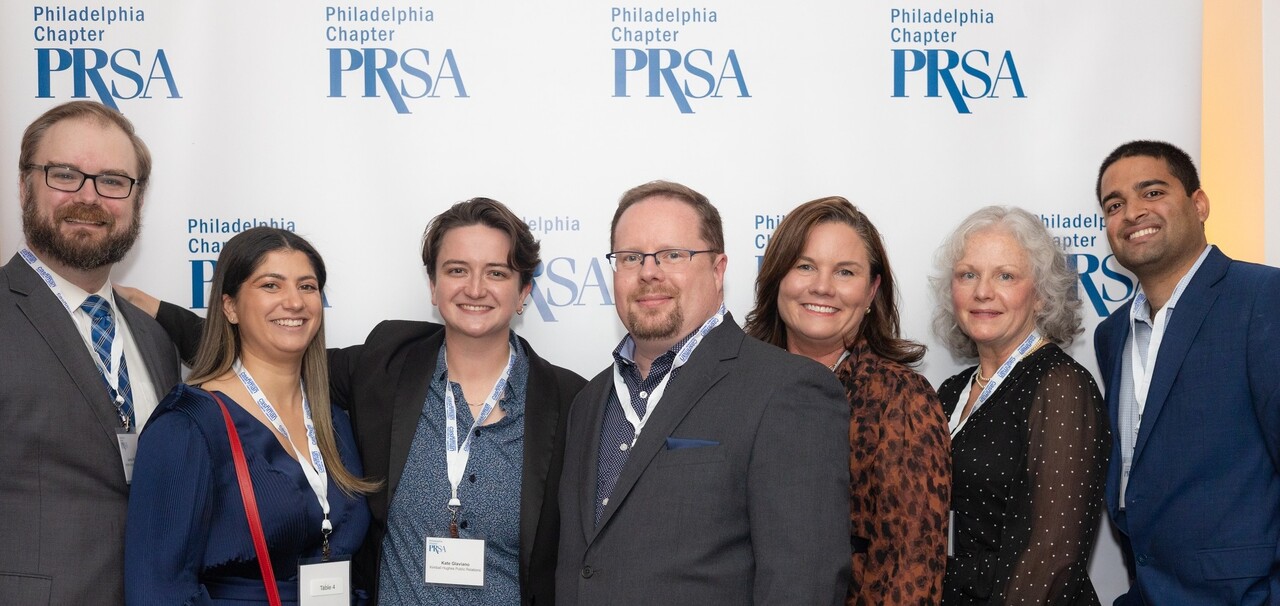
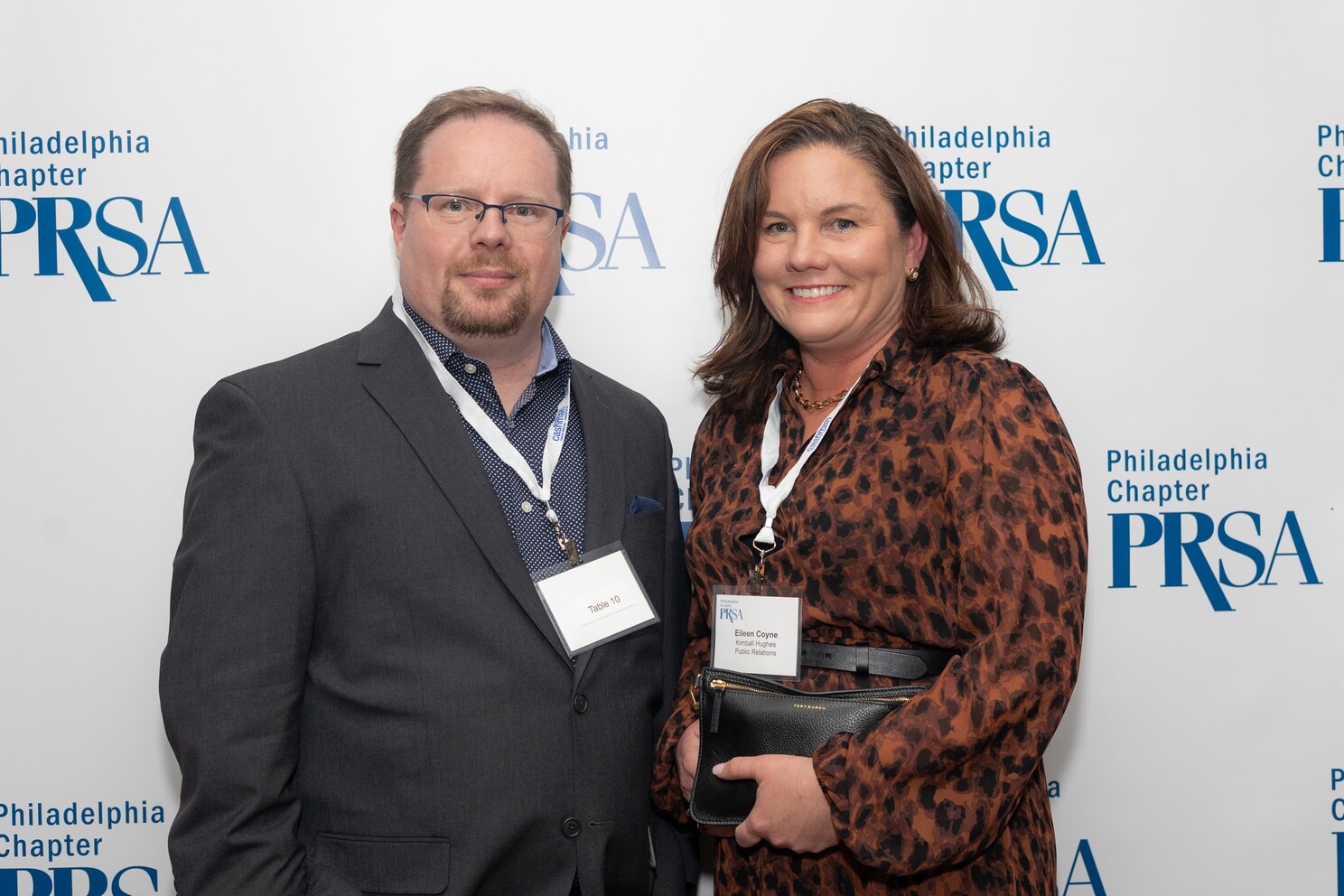
As a fully remote agency, our team is spans the Northeast and Midwest regions. While we’re fortunate to connect in person sporadically throughout the year, the opportunity to come together socially had not yet happened—until last week. Our entire in-house team gathered in the City of Brotherly Love to accept a PRSA Philadelphia Pepperpot Award for Crisis Communications and Issues Management.

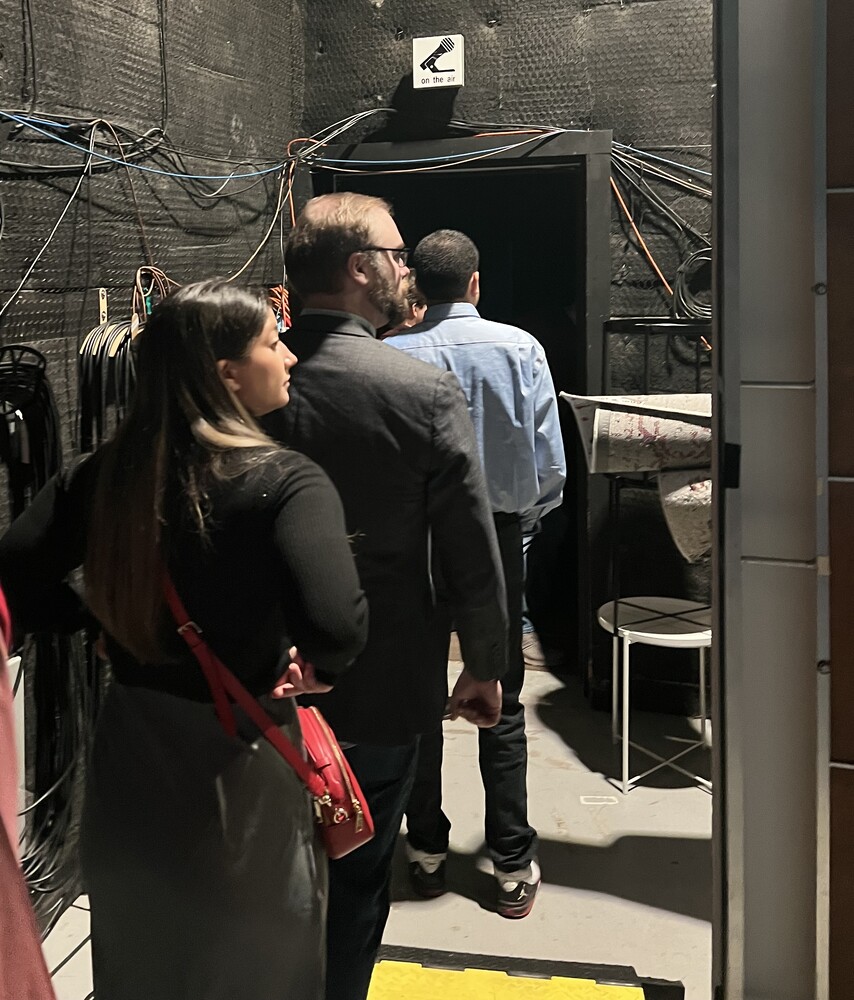
Seizing the opportunity, we turned our invitation to the PRSA Philadelphia Pepperpot Awards into a mini-agency retreat. Over the course of a day and a half, we celebrated at the awards ceremony and toured the WHYY NPR and PBS Studios where the likes of radio legends Terry Gross and Marty Moss-Coane record their shows.

Even during the busy holiday season, our team made it a priority to celebrate this agency milestone and catch up on water cooler chats that can be hard to come by in a virtual office. The experience served as a reminder that while our team does a wonderful job maintaining connections with each other digitally, there’s no substitute for gathering under one roof.

Check out a few photos from our 2024 agency retreat below:

Photograph by Morgan Horell