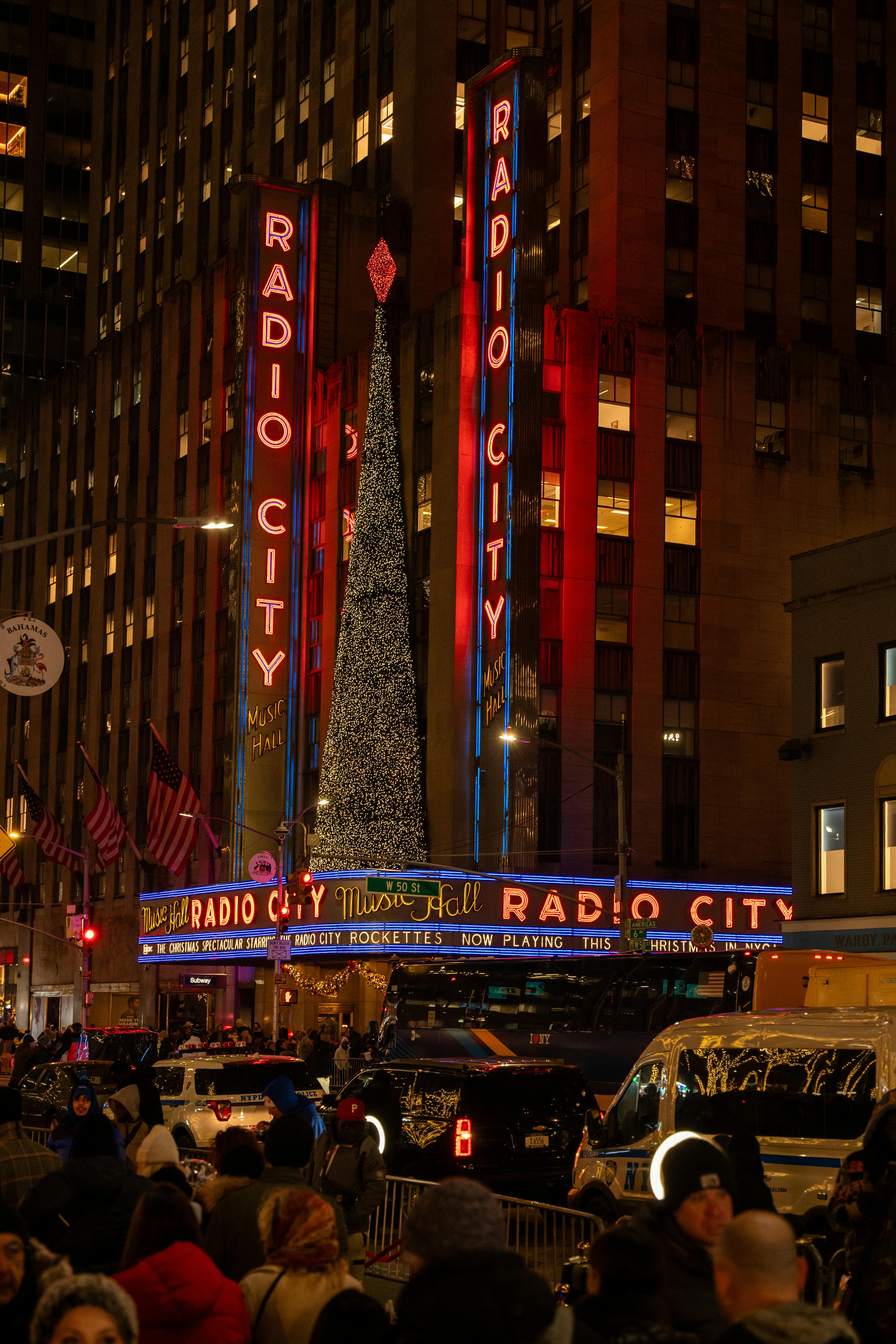
100 Years of High Kicks & Toy Soldiers: The Staying Power of The Radio City Rockettes  

The Radio City Rockettes are celebrating their 100th birthday this year, with their annual Christmas Spectacular show well underway in New York City. What began as a humble dance troupe in Missouri known as the Rockets, The Rockettes have grown into an American holiday staple that continues to withstand the test of time. But what is it about the Radio City dance troupe’s 100-year brand that draws the attention of millions of people per year?  

From the eye-high kicks to iconic formations, The Rockettes are the pinnacle of holiday nostalgia. Every year, over a million people attend their Christmas Spectacular.  Millions more watch them on the Macy’s Thanksgiving Day Parade. But a brand that has been around for 100 years doesn’t go unscathed by time’s heavy hand. The Rockette’s are certainly no exception. We’ve noted just a few times of the many times below where the storied dancing team neared extinction:  

  • 1967: Just before the holiday season in 1967, the Radio City Rockettes went on strike, demanding a 40% increase in wages and payment for rehearsals. For nearly a month, the dancers picketed outside Radio City until representatives of the music hall gave in, agreeing to a pay increase from $99 to $126.50 per week.  
  • 1978: In 1978, it was announced that Radio City Music Hall would close with talk of a complete demolition after it was revealed that the venue had been operating at a loss of approximately $2 million. With just days to make a plan and rally supporters together, Dance Captain Rosemary Novellino and Captain of the Singers Bill Mearns alongside fellow performers and theater staff collected signatures to make Radio City Music Hall a National Historic Landmark. The theater was officially saved in March of 1978.   
  • 2020: Due to the COVID-19 Pandemic in 2020, Radio City was forced to cancel their entire Christmas Spectacular and part of the 2021 season. With the Christmas Spectacular grossing roughly $90 million alone, this hit hard for the dance company. Fortunately, The Rockettes were able to salvage part of their 2021 season and come back strong in 2022.  

Additionally, The Rockettes have not been without criticism. The troupe was borne with height requirements that welcomed only dancers between 5-foot-2 and 5-foot-6.5. Since then, height requirements have been expanded, and the dance group has welcomed more diversity. The group brought on their first non-white dancer in 1985, but according to USA Today Network New York, the 2022 Christmas Spectacular had just 13% representation of Black, Latino and Asian-American Pacific Islanders, which make up 36% of America’s population, so there is still a way to go. Keeping the brand relevant, The Rockettes have taken steps to respond to this criticism by hosting workshops at historically black colleges and universities, by partnering with dance troupes in underrepresented areas, and by working to reduce financial hardships for those aspiring dancers attending their summer programs.  

History has shown labor disputes, impending demolitions, a worldwide pandemic and cancel culture as more than enough to shut down any brand, especially in the performing arts industry.  

Still, The Rockettes maintain their status as an American institution. They prove there is immense staying power in tradition and nostalgia, while at the same time taking some steps to adapt to modern times. For millions of people around the world every year, a trip to see the Rockettes marks the beginning of a magical holiday season. Each year, the show is reimagined with a few consistent numbers to tug on the audience’s sentimental heart strings like the iconic wooden soldiers and the troupe’s signature kick lines. Audiences appreciate the familiarity, especially when the world around them can feel uncertain.  

While The Rockettes have maintained their traditional roots, they have also innovated throughout the years to reach and engage wider audiences. These small, creative refinements that The Rockettes have made to their set design, lighting, choreography and more throughout the years honor their roots, while still giving audiences something unexpected. In an effort to modernize and claim the hearts of those outside New York City, The Rockettes also expanded into television, film and event appearances, even cementing an annual spot on the Macy’s Thanksgiving Day Parade since 1957. This widespread reach reinforces the prestigious role of being a Rockette and maintains recognition beyond Radio City Music Hall.  

A brand 100 years in the making, The Rockettes remain a timeless constant in American culture from the depression era to the COVID-19 pandemic and every event in between. Happy 100th Birthday to the iconic Radio City Rockettes, and cheers to 100 more years of holiday magic.   

The Entertainer’s Guide to Storytelling: Lessons from Billy Joel’s Songbook

Since 1971, Billy Joel has created music history with songs like “Piano Man,” “Scenes from an Italian Restaurant” and “You May be Right.” His storytelling has transcended generations, intrigued millions and established a credibility that few have managed to garner from a start in a smoky piano bar. Last month, HBO Max released the documentary “Billy Joel: And So It Goes,” a two-part, five-hour biography that discusses Joel’s life in parallel with his songwriting. Though his stories and songs were an intimate reflection of his own life, millions of people around the world have resonated with them for decades.  

While Joel’s craft is fueled by finesse and artistry, his approach is undoubtedly a masterclass in storytelling of all facets. Narratives are a crucial key to success in public relations. It is how you connect with audiences, place stories and build brand reputations. And while writing a product announcement may be farfetched from writing a hit song, many of the principles in attracting the masses from Joel’s songwriting hold true, even in a corporate setting. Consider the following elements of storytelling we can learn from Billy Joel:  

  • Creating a Memory  

One of Joel’s greatest skills is creating memories. His ability to paint pictures with words and melodies have made people believe they are in the room with characters like Sergeant O’Leary or Bill at the bar. A brand looking to resonate with audiences needs to offer them something relatable, whether it be a thought leadership opportunity talking about a relevant trend or a product announcement solving a problem for a specific audience. Brands should consider how a narrative can help elevate their public presence, entice new audiences and maintain relevance with current audiences.  

  • Authentic Storytelling  

Billy Joel’s authentic experiences bleed through his music and lyrics. Throughout the documentary, Joel shares the true back stories behind tunes like “You’re My Home,” written about his cross-country road trip with his wife and stepson from New York to California. Or “New York State of Mind”, which was written about his experience coming back to New York from the West Coast.  

As Billy would say, it’s “A Matter of Trust.” In business, audiences can see through unauthentic communications, and it can erode trust much faster than it takes to build it. Over the last few years, for example, we have seen several brands get criticized for their approaches to diversity, equity and inclusion (DEI) that audiences deemed unauthentic. Last year, Tractor Supply Co. saw firsthand how unauthentic communications that do not align with a brand’s values and those of their stakeholders could quickly result in boycotts and social media debates. Brands must consider how their communications align with their audiences and brand values. Even the most well-intentioned communications can have an adverse effect if they are perceived as ingenuine.  

  • Knowing When to Pivot  

Throughout Billy Joel’s career, he evolved based on his connection to his art. From his first album, “Cold Spring Harbor,” to his last full length pop album, “River of Dreams,” Joel created a sound that was undoubtedly his. Every album, however, was vastly different. In 1993 when he decided he has said all he had to say in pop music, he pivoted to a classical album that debuted at #1 on the classical music charts.  

Brands that want to maintain relevancy cannot stay stagnant. Joel’s success shows that evolution is more than jumping on to a social fad or swaying with the courts of public opinion. Brands should be constantly evaluating their public presence, how they are being perceived and how that aligns with their offerings, values and goals. The world will continue to shift, but the brands that experience century-long success have known when to adapt, while preserving their core values.  

Effective storytelling is an artform, one that defines a musician’s career and a brand’s legacy. Joel’s songs remind us that the best storytelling can create shared memories, build trust and welcome new fans throughout generations. Whether writing a hit song, launching a new product, building a legacy or navigating a crisis, effective storytelling has the power to connect and inspire audiences that creates a foundation for long-term success.  

Reputation is What Others Think You are

An important factor influencing an organization’s reputation is how it is represented in the media. With this in mind, Kimball Hughes PR recently ran an independent survey of business professionals to get their perspective on how media coverage of their organization reflected on their reputation and, ultimately, their brand.

What we found was broad dissatisfaction among respondents with how their brands are perceived and represented through the media.

Among two significant reputational goals — having a regular presence in news media and being clearly differentiated from their competition in those media — a clear majority of those surveyed (more than 60 percent) did not believe these goals were met.

If these findings are any indication, brands hoping to benefit from any post-COVID economic boom have significant work to do in working with the media.

Survey results:

My organization’s reputation, as it is communicated in the media, social media and other public venues, represents our stated mission, vision and values.

  • 9% Strongly agree
  • 45% Agree
  • 18% Neutral
  • 27% Disagree
  • 0% Strongly disagree

Senior leadership is regularly quoted in news and trend stories about our industry.

  • 0% Strongly agree
  • 18% Agree
  • 18% Neutral
  • 27% Disagree
  • 36% Strongly disagree

If I conducted a Google News search today of topics most important to my industry, I would find my organization quoted or written about in recent news from legitimate, third-party business or trade media outlets or sites.

  • 9% Strongly agree
  • 9% Agree
  • 18% Neutral
  • 9% Disagree
  • 54% Strongly disagree

Our brand reputation, as communicated by the media, adequately differentiates our organization from competitors in the markets we serve.

  • 0% Strongly agree
  • 18% Agree
  • 9% Neutral
  • 36% Disagree
  • 36% Strongly disagree

Worried about your brand’s reputation? Contact Kimball Hughes PR for a free, no obligation SWOT Analysis of your brand’s reputation within the media that provides top line, practical and actionable advice on what you can do to make improvements.

Hotel reputation management in the age of the instant review

Yelp, TripAdvisor, Hotels.com… The web has given travelers have so many ways to evaluate, select, book and review hotels. How do hotels manage their reputations proactively and honestly?


Hotels must actively manage their online reputations.
Unique Hotels Group / Foter / CC BY-SA 2.0

Our president Gary Kimball has some advice, which he shares with Hotel Business Review:

Hotels should look at how they are allocating their precious marketing and public relations dollars. This means comparing the value of social media buzz to advertising and print and broadcast media coverage. A review in a popular blog or traditional media like The New York Times or Travel + Leisure can do wonders in building awareness. But those readers may still seek online reviews before making decisions.

Read more at HotelExecutive.com.

Ignorance Is Not a Brand Attribute

Media outlets everywhere have covered Groupon's Presidents' Day marketing stunt. The question is if this hurts or helps the brand in the long term.

Many media outlets, like the Chicago Tribune, have covered Groupon’s President’s Day marketing stunt. The question is if this stunt hurts or helps the brand in the long term.

As marketing tools, sometimes stunts work. They get the media’s attention. They take your brand “viral.” They get people talking about you. They create “buzz.”

When activists delivered a 13-foot tall gluten-free cake to Capital Hill in May 2011 to advocate that the Food and Drug Administration enforce gluten-free labeling standards, the stunt worked. There was plenty of media coverage. It supported the mission to which the activists were committed. It alerted consumers to issues surrounding the food they eat.

However, Groupon’s latest stunt – calling Alexander Hamilton “undeniably one of our greatest presidents” to promote a Presidents’ Day special – will not serve the brand well.

Sure, Groupon is quirky. Some might say it’s quirky to the point of being ridiculous. I’ll also grant you the Groupon stunt is getting buzz. There’s plenty of media coverage (heck, it prompted me to write this spiffy blog post).

But this stunt also gives the impression Groupon doesn’t know the facts (e.g., Hamilton was U.S. Secretary of the Treasury, not President). In trying to look too cool for school, Groupon instead comes across as out of touch with details – something that might make consumers wary. Thoughtful consumers might at first be amused. But on reflection, will they trust leaving their credit card information with a company that portrays ignorance as an attribute?

Hamilton’s briefly mistaken moment in U.S. presidential history won’t sink Groupon – assuming people are still using it. In fact, in the short run, it will have everyone talking about Groupon. That is what stunts do; they create buzz.

It’s the long run that is a problem. How does Hamilton fit the brand? More importantly, how does portraying a fundamental misunderstanding of history convince consumers to spend their Hamiltons, and Washingtons and Lincolns with Groupon?

Any good public relations professional will tell you buzz doesn’t always last and stunts like this don’t help the long term reputation of Groupon with consumers.

Mr. Hamilton would not be amused or impressed by Groupon’s stunt. Those using his likeness shouldn’t be either.