Get to Know Senior Advisor John Forberger

Public relations is all about relationships—the people behind the stories. That’s why we’re offering this blog series all about our team members. This isn’t about our professional accomplishments but who we are as people. We hope you have as much fun reading along as we do interviewing each other.

What got you interested in public relations?

    In the early 2000s, I led marketing teams for multiple Miami real estate developers. One role involved maintaining a steady media presence in targeted local and national outlets, highlighting our projects and CEO to attract buyers and landowners. I recognized that getting media attention on topics I was passionate about, for equally passionate people, never felt like work. Throughout my career, my favorite part of public relations has been identifying and shaping the messaging that brings companies, product lines or projects to life.

    Tell us about your favorite movie and what appeals most to you about it?

    During film school, in a galaxy far, far away, I saw Citizen Kane. Every frame and angle mesmerized me, maybe because they were still so atypical. It doesn’t look like anything else. I wonder if the care for filmmaking at that level of detail can still be possible? I like to think there is someone out there who can and is trying to do better right now. The determination to make a strong statement in cinematic history really moves me.

    Tell us about a meaningful hobby or “outside of work” commitment that is important to you?

    Maintaining the plants on the property my wife and I share is a healthy, busy hobby I look forward to. I see myself as being loyal to the plants and animals around us. In total silence, I learn something each time I go outside whether on my own or through Google Lens. The simple experience of watching pineapples change colors from green to blue to purple to gold to brown, for example, is incredible. Feeling useful to our mini ecosystem by doing things like removing invasive vines and plants is rewarding, and the bonus of all the positive health benefits that come with gardening is great!

    Share a fun fact about you.

    My wife and I have driven across nearly every Canadian province with our 17.5-year-old “super senior” beagle mix Abby. She even joined us on the ferry to Vancouver Island when we lived in downtown Victoria for a month.

    April Fools: Messaging Blunders That Should Be a Joke But Aren’t

    I wish I was joking. What follows really ought to be an exercise in April Fool’s frivolity and humor. Unfortunately, the only thing foolish about what follows is these brand communications efforts were undertaken with some level of intent or ineptitude that resulted in public embarrassment for some or all involved.

    With that, I offer the top five most April Fool’s-worthy communications that really should have been overseen by a competent public relations professional:

    1. Mixed Signals: On March 24, some of the Trump Administration’s most senior leadership commiserated over an imminent, and then later completed, attack on Houthi rebels in Yemen who are accused of carrying out missile and drone attacks on shipping lanes in the Red Sea. They did so via an app called Signal, a free open-source and encrypted messaging app, the use of which by government employees has, to date, been discouraged by the federal government. That group chat included a well-known U.S. journalist, leading to an embarrassment of sometimes competing explanations, excuses and denials that anything sensitive was shared. They tried to chalk it up to something like a fat-thumbs-texting-moment where you didn’t mean to text your ex, but you did and now you very deeply regret it.
    2. Oh Boya, a Press Release from Goya: In a what-medication-was-he-on-moment, Goya Foods CEO Bob Unanue issued an ill-considered, rambling and seemingly pointless self-published press release in February announcing his new, but extremely unclear chapter after the Goya board allegedly voted him out. The release included a stream-of-consciousness quote from Unanue about child trafficking. File this one under friends don’t let CEOs self-publish press releases.
    3. Dude, Where’s My Car?: Jaguar went full SNL/Calvin Klein commercial crazy late last year when it rolled out its new branding in a techno-beat, multiracial, gender-bending, psychedelic-color driven ad campaign that seemed to offer a little bit of everything … except its iconic automobiles. While trying to defend the company’s rebrand as “bold” and “imaginative,” the public seemed to respond with a collective eye-roll and complete dismissal of one of the most confusing rebrands/commercials of the modern era.
    4. Finger-licking Eh: In 2024, McDonald’s—the bastion of Big Macs and Dollar Menus—took a bold step in introducing its first beauty product line. In partnership with beauty brand Nails.INC, Mickey D’s created a line of nail products that mirrored its brand colors in polishes, along with stickers and a French-fry-inspired French manicure. Ironically, the fast-food giant has a standing policy that does not allow employees to wear nail polish. The campaign ended almost as quickly as it was announced as the public did not seem to be lovin’ it.
    5. Ain’t Mis-Bee-haven: Spring was in the air, but a 2024 campaign proved to be a buzzkill for dating app Bumble after it introduced a series of advertisements advocating against celibacy. It was an ill-considered attempt to humorously address dating frustrations related to dating apps. Backlash was swift, with women’s organizations and others noting women choose celibacy for a range of reasons, including safety, reproductive rights and more. With its wings clipped, Bumble quickly reversed course and ended the campaign with a commitment to help support domestic violence organizations.

    If there is a takeaway or lesson across all these situations it is this: Avoid becoming a fool, in April or any other month, by ensuring your internal or external comms teams have a say in all brand communications. Public relations pros know how to manage the message as well as alert senior leaders of potential, unforced errors that can place a dunce cap high-atop the brand’s reputation.

    Brand Authenticity Requires Communicators to Play Lead Roles

    While brands have a voice in shaping their narratives, it is their publics who play an outsized role in holding organizations to their brand promise and reputation.

    One of the best time-tested methods of ensuring adherence to brand authenticity is having a public relations or communications professional at the decision-making table from the start. Failing to do so runs the risk of self-inflicted reputational harm that is extremely difficult, and often expensive to dial back later.

    In brands we trust

    B2C as well as B2B consumers have vast resources to evaluate brands and a wealth of options from which to choose. Brands that consistently speak to the values and priorities of their consumers engender trust and an emotional connection. According to April 2024 data released from Shopify, 86% of American consumers say authenticity is a key reason they buy or engage with a brand.

    Whether it is Red Bull, GE or Salesforce, these companies and others are great examples of organizations that use engaging storytelling, emotionally targeted messaging and brand authenticity to reach and connect with their audiences. We know Red Bull gives you wings. We know GE is focused on imagination at work, and that Salesforce positions you to manage success, not software. Their messaging goes beyond taglines, and their stories resonate with their publics because they meet a need.

    What Ben Franklin said

    Ben Franklin famously quipped, “It takes many good deeds to build a good reputation, and only one bad one to lose it.” There are countless brands that illustrate Franklin’s point.

    The example set by Target regarding its shifting DEI policies has put … well, a target on the Target brand with calls for boycotts and declining sales. Such inconsistent messaging causes brand audiences to reconsider the authenticity and trustworthiness of the organizations at issue. Consumers aren’t sure what, if anything, the brand stands for and repairing that damage will be a long and expensive undertaking.

    On the B2B side, there is no more powerful example of reputational damage due to a lack of authenticity—as well as transparency—as WeWork. The company promoted a utopia-style revolution in how workspaces would evolve while leveling the playing field for entrepreneurs to work collaboratively. In reality, the company infamously misled everyone regarding its spending, profitability and stability, leading to a loss of trust among investors and business clients that ultimately led to the founder being ousted and a Chapter 11 filing in 2023.

    The power of communications strategy

    A chief communications officer with a seat at the leadership table can help organizations adhere to brand authenticity. These professionals are trained to assess the communications risks of any given action by an organization that plays out in front of its publics—internal or external. They help brands avoid unforced errors and plan for a range of responses from their target audiences.

    Having that comms professional in the room from the start of major brand decisions can lead to important conversations and questions filtered through a public perception lens, such as:

    • How does this align with the public’s understanding of who we are and what we do?
    • What risks are we taking with this change, and what can we do to mitigate them?
    • Does this change align with our core values?
    • How should we communicate this change clearly to our audiences, and what are the best channels to do so?
    • What is the plan to measure the impact of this change on our brand reputation and perception?
    • What is the backup plan if this change is not well received, and what is the trigger to institute that plan?

    Brand leaders are best served when their PR teams challenge group think and work to consider the reaction to organizational change among various audiences. This approach can strengthen and even improve the proposed changes, better aligning them with the brand’s reputation and perception and lead to a smoother introduction to its publics. However, making change better and more sustainable only happens if the communicators are in the room where decisions are made from the beginning. That is how you maintain brand authenticity, and it matters.

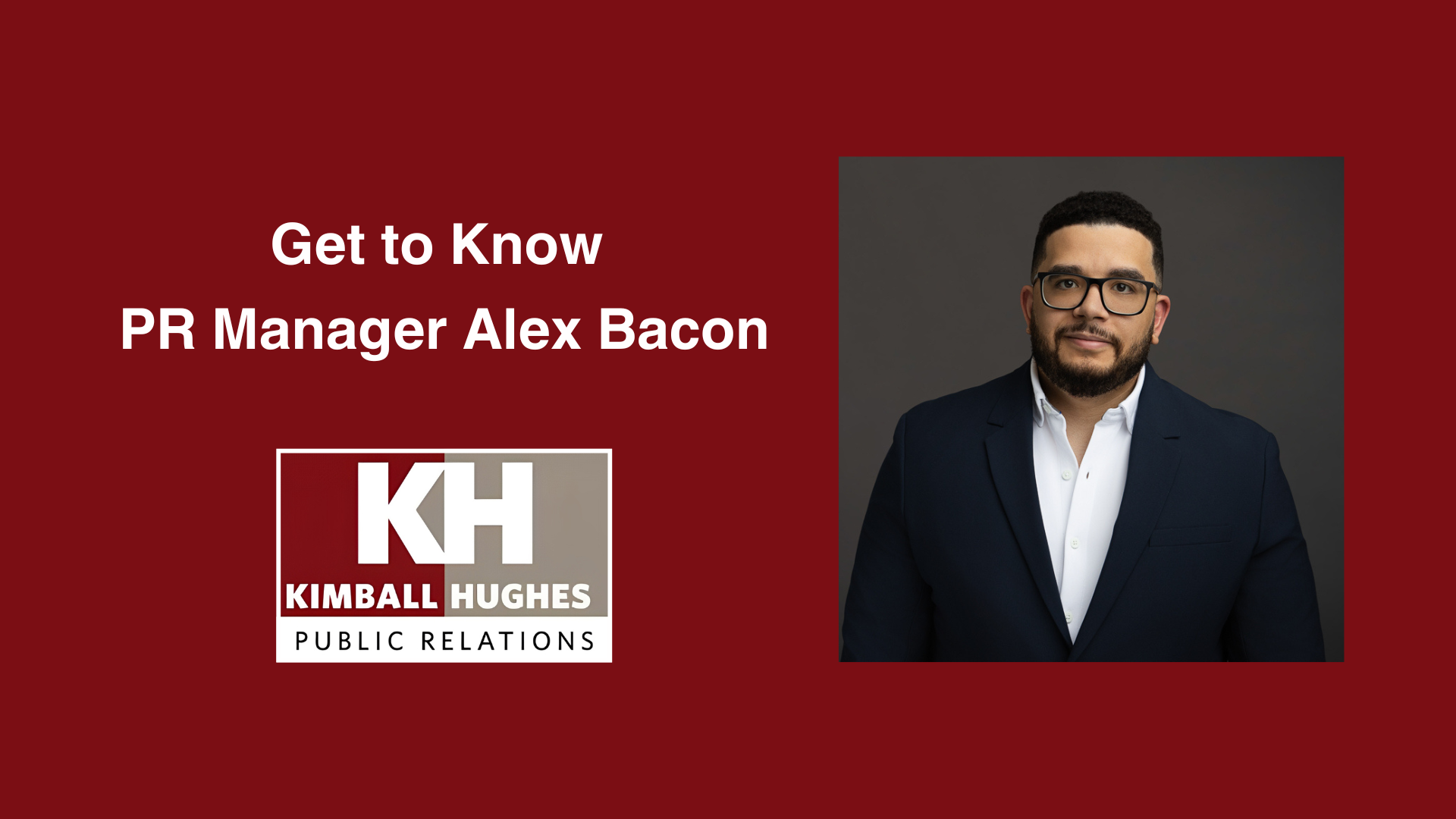
    Get to Know PR Manager Alex Bacon

    Public relations is all about relationships—the people behind the stories. That’s why we’re offering this blog series all about our team members. This isn’t about our professional accomplishments but who we are as people. We hope you have as much fun reading along as we do interviewing each other.

    What got you interested in public relations?

    I have always had a strong interest in writing and storytelling. I remember taking paper from my parents’ printer so I could write my own books. But it wasn’t until college when someone told me I should try pursuing a career in communications. I did, and didn’t look back. The idea of helping people and businesses tell their stories or showcase their expertise to the right audiences is one that appealed to me immediately. This career choice was the right one.

    Tell us about your favorite movie and what appeals most to you about it?

    I’m a big fan of space and sci-fi movies, and there are a lot of good ones, but Interstellar stands out as my favorite. It’s a masterpiece – from the stunning visuals to the narrative and storytelling about family and sacrifice. I also appreciate how the movie is grounded in scientific reality, exploring things like time dilation (i.e. Miller’s Planet) and black holes in a way that few movies do.

    It’s rare to watch a movie that captures the vast emptiness of space and the emotional weight of the choices we make, and Interstellar does it well.

    What was the last, best book you read and what about it spoke to you?

    The Girl Dad Code by William Harding. Being a first-time parent is tough, being a parent to a daughter is nerve-wracking – especially in today’s world. Harding’s book really stuck with me because it offers practical and heartfelt advice on raising a strong, confident daughter. He also focuses on leading by example – being present, building trust and showing up every day.

    I find myself referring back to it every now and again as my daughter grows up, gathering new insights along the way. It’s becoming a great reminder that I don’t need all the answers; I just need to be there, listen and support her as she becomes the person she wants to be.

    Tell us about a meaningful hobby or “outside of work” commitment that is important to you?

    Weightlifting and fitness have been a huge part of my life. Both have taught me about resilience and discipline. The process of setting goals and staying consistent to meet them has had a meaningful impact on how I approach my professional work and everyday problem-solving. My commitment to my physical health gives me more energy and mental clarity, which helps me stay focused and think more creatively.

    5. Share a fun fact about you.

    I love to cook. I taught myself after I finished undergraduate school as a way to stay healthy and save a bit of money while looking for full-time work. To this day, I cook almost every meal – breakfast, lunch and dinner – and I have no intention of stopping anytime soon.

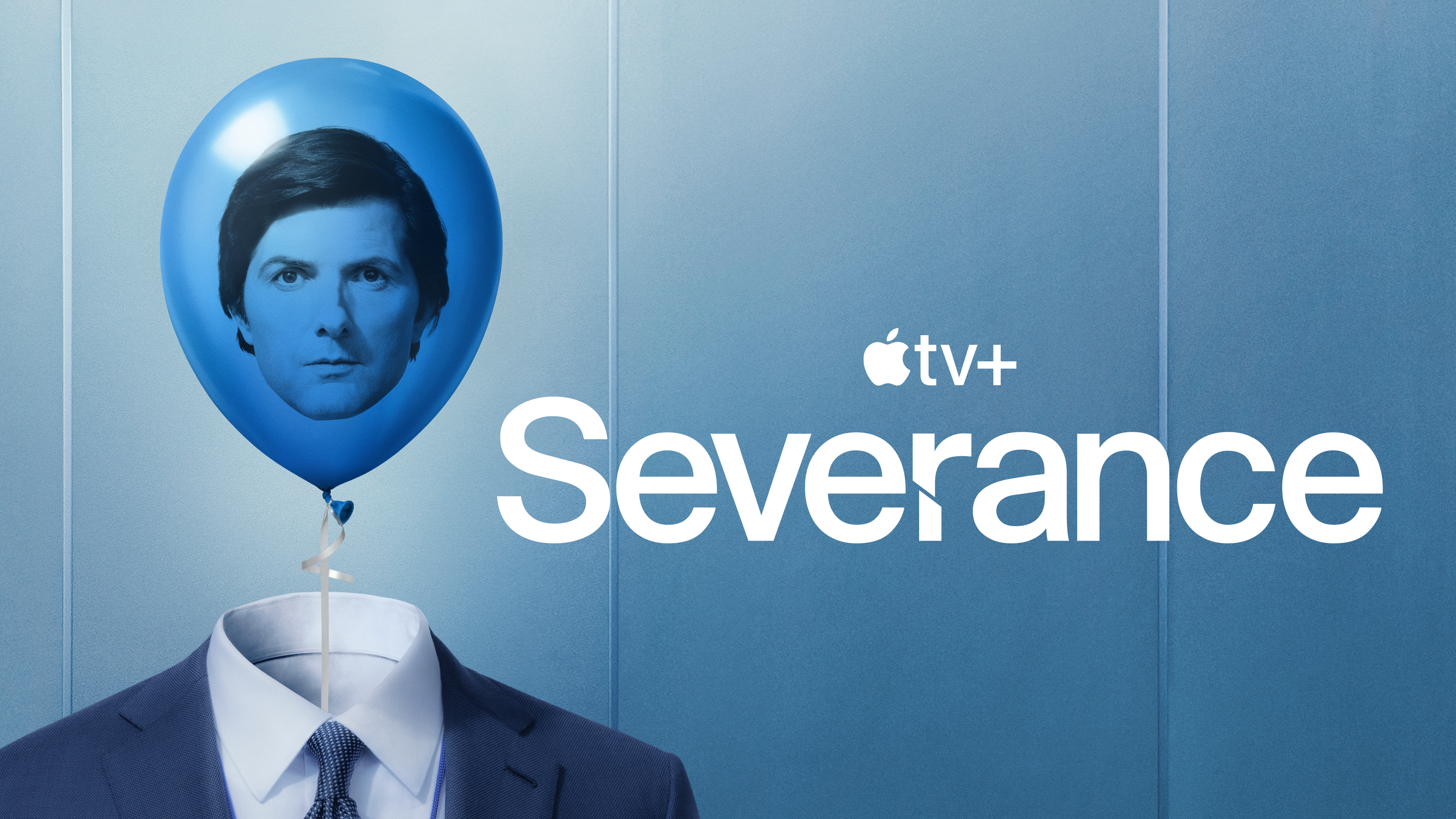
    An Outie’s Perspective: If I worked in Comms at Severance’s Lumon Industries

    Photo by AppleTV

    The wildly popular Apple TV+ series Severance has many of us considering ourselves in the shoes of a so-called “severed” employee. For example, I wonder – what would my “innie” do during her workday at the fictional Lumon Industries?

    Spoiler alert – if you have not yet seen the show, the premise centers on an elective surgical procedure to the employee’s brain that separates work and personal life. The severed main characters’ “innies,” or in-office versions of themselves, spend their days behind desks in the Macro Data Refinement Department of a bio-tech company called Lumon Industries.

    For me, a public relations professional for Kimball Hughes PR in real life, I would think my “innie” might have some communications expertise to share with Lumon leadership, particularly on the so-called Severed Floor, designed exclusively for innies.

    Communication Breakdown

    At Lumon, when innies ask why they do the work they do, they are told, “The work is very important and mysterious.” The lack of transparency provided by leadership fuels the innies’ curiosity to learn more about what is really going on and results in a growing distrust of management.

    As professional communicators, we always advise our clients to be transparent in both internal and external communications. In internal communications, conveniently leaving out key details or worse, lying about events or covering up incidents, can build distrust, chip away at employee morale and lead to quiet or actual quitting. Communication from the top can be a critical aspect of strengthening the company’s reputation and the trust of employees as well. At Lumon, the board communicates mysteriously through a retro public announcement-like system in a way that no one but the board’s translator can hear or understand.

    Leadership should set the bar in a corporate structure and they should lead by their own actions to inspire others. Management should make it a priority to be present, relatable and accessible. For example, if a company is encouraging teams to volunteer and engage in charitable giving, leadership should step up to the plate to motivate others. If leadership is implementing a return-to-office mandate, leadership should be onsite as well and ensure they are relaying clear reasons for how the mandate will benefit the company, as well as its employees – beyond perks, like new coffee flavors or the occasional Music Dance Experience (IYKYK).

    A Lesson in Crisis Management

    While every Severance episode seems to present a slew of crises, the Lumon Industries PR team (assuming the fictitious company has one) was likely engaged for crisis communications services when (another spoiler alert) the innies escaped to see how their outies live at the end of Season 1.

    When the main character Mark S. returns to the Severed Floor at the start of Season 2, his manager, Mr. Milchick parrots a company narrative about the innies’ escape. He explained the incident led the innies to be named heroes, inspired a review of the treatment of severed employees and resulted in a series of reforms – complete with a newspaper article and an animated internal comms video.

    The Lumon PR team may deserve credit for seemingly responding to the situation proactively by engaging the media and creating messaging, but, from a professional communications perspective, it was certainly lacking. The Lumon team manufactured untruthful messaging in an elaborate effort to spin their way out of the predicament. Likely, they did not have a comprehensive crisis communications plan in place – a best practice for any business owner.

    Instead, the Lumon team should have followed crisis communications best practices that center on collecting facts related to the situation and following a pre-designed plan for leadership that can help deter people from acting rashly on emotion in a crisis. Lumon leadership should not have created messaging and collateral around a lie, but instead around fact-based messaging.

    Anyone who has seen the show, sees countless parallels between the fictional Lumon world and the traditional corporate workplace. Aside from the more obvious light the show shines on work-life-balance and corporate culture, it also presents a case study on corporate communications, mostly on what to avoid.

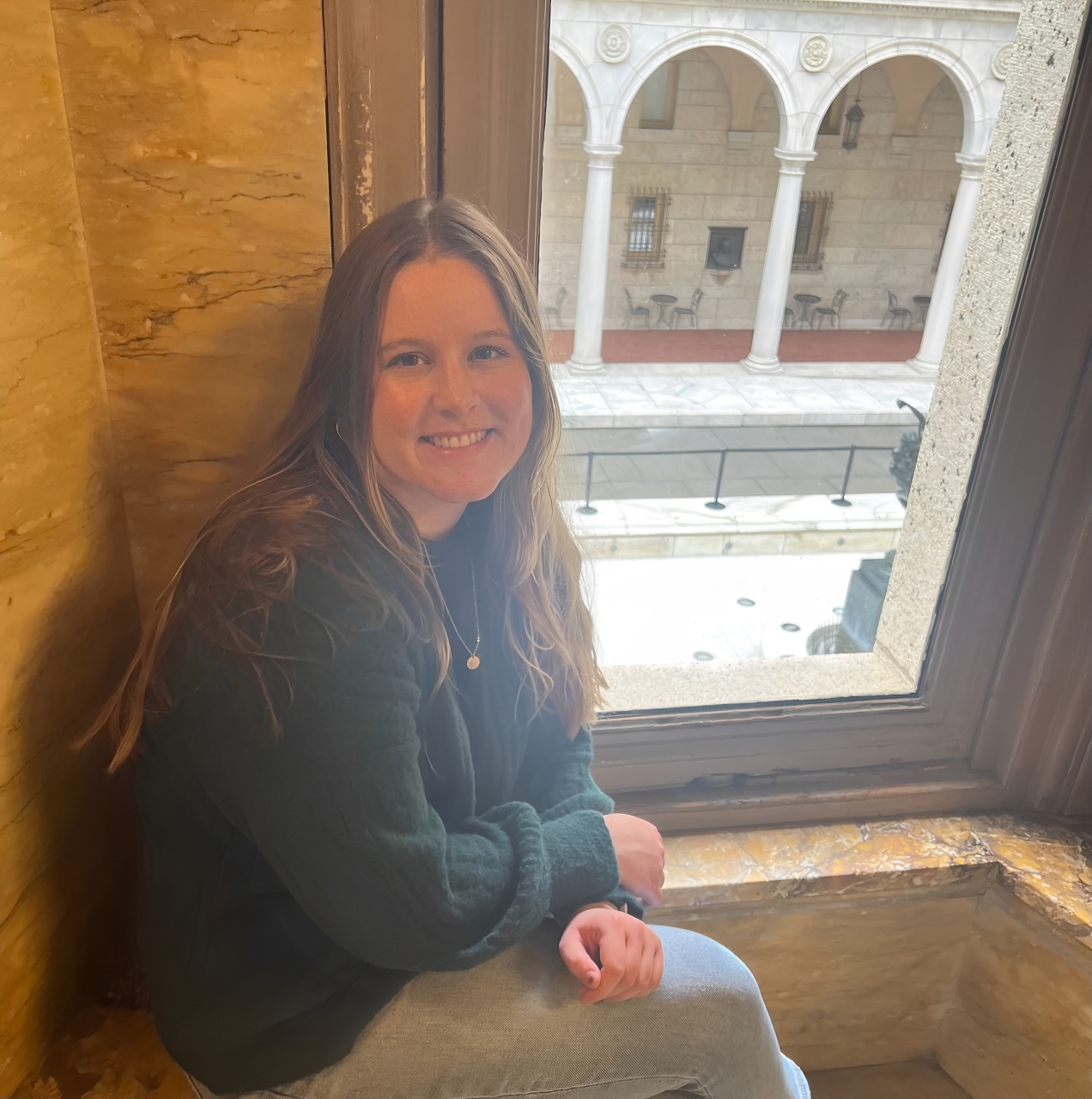
    Get to Know PR Assistant Bianca Pell

    Public relations is all about relationships—the people behind the stories. That’s why we’re offering this blog series all about our team members. This isn’t about our professional accomplishments but who we are as people. We hope you have as much fun reading along as we do interviewing each other.

    What got you interested in public relations?

    My first exposure to the power of PR is connected to my family’s restaurant. After a local reporter reached out for a series he was doing on restaurants in the area, we filmed a segment showcasing menu items, upcoming holiday specials and, most importantly, our family’s story. The reruns of the segment as well as its popularity online produced incredible results. I saw the impact of a well-timed media placement firsthand while I worked the holiday weekend after it aired, with customers directly attributing their visit to seeing the segment. As a PR professional, I’m constantly seeking to replicate that excitement I felt that day. I learned that PR is where I could use my love for storytelling to amplify a client’s message and connect to their audience.

    Tell us about your favorite movie and what appeals most to you about it?

    The movie “Everything Everywhere All at Once” is one of my all-time favorites. I come from a big family myself, so I always enjoy stories that dive into complicated familial relationships. Like any good sci-fi story, this film is vibrant and unafraid to be weird. It strikes this great balance tonally, with the humorous moments only heightening the moments that made me cry.

    What was the last, best book you read and what about it spoke to you?

    The last book I read was “James” by Percival Everett, a reimagining of “Adventures of Huckleberry Finn” from the point of view of Jim, an escaped slave. I read Tom Sawyer and Huckleberry Finn in school growing up, so I loved getting to read Everett’s portrayal of the character. He reexamines and deepens the original themes through James’ expanded characterization.

    Tell us about a meaningful hobby or “outside of work” commitment that is important to you?

    Outside of work, knitting and crocheting are the hobbies I have recently come to love. Knitting and crocheting force me to slow down and focus on the moment. Both activities allow me to keep my hands busy and stave off the urge to reach for my phone while watching TV. As an avid reader, I often listen to audiobooks while I work on a project, bringing two of my favorite pastimes together. I also love that I’m making something tangible. Whether it’s a blanket or sweater, it is a physical piece I can be proud of.

    Share a fun fact about you.

    I grew up in the restaurant industry. My Grandpa opened a seafood restaurant in Virginia that is still owned and operated by my family to this day.

    AI: How to Avoid Becoming a Cautionary Tale

    AI will cure what ails you.

    That seems to be the mantra of the 2020s. If you have a problem, it appears the solution is to implement artificial intelligence. However, AI is not a cure-all. While AI can be an incredibly powerful tool, it isn’t perfect and there are cautionary tales to consider as countless organizations incorporate AI.

    Glitch in the System

    Any adult functioning in the digital world knows technology sometimes fails to live up to its promise. AI is not immune to being glitchy, especially when humans fall short in their quality control roles, many of which are still evolving along with the tech. There are countless AI snafu examples that include:

    • Less than two years ago, Reuters reported on a U.S. District Judge who sanctioned two New York attorneys when their ChatGPT-built brief included six fake case citations.
    • Last spring Google was pilloried by users and media alike when its then-new AI capabilities roll-out resulted in a cascade of false information—including telling users to eat glue and rocks.
    • And Fast Company produced a cringe-worthy list of brands last summer whose AI-driven marketing efforts ranged from total failure to deeply offensive, including household names like Toy “R” Us, McDonald’s and Sports Illustrated.

    Reliance Risk

    The risk of AI is becoming overly reliant on AI. Reliant on its promise. Reliant on its ease of application. Reliant on its accuracy.

    Large language models or LLMs—the engines that drive most generative AI tools—train on massive content libraries. As a result, AI is prone to repeating, in whole or part, both the words and style of some of the content on which its LLM trains. These AI tools aren’t designed to violate copyright laws. Rather, they are working with what they know, and what they know is existing, written—and often copyrighted—content. The intent is to mimic human creativity with enhanced, faster output. The risk, of course, is not only plagiarism, but also inaccuracies due to AI hallucinations as well as content that, frankly, often falls short of being truly creative or distinguishing.

    Both the quality and legality of AI generated content will be adjudicated in the court of public opinion, as well as courts of laws, for the foreseeable future. Meanwhile, humans are working to catch up. Plagiarism software is continually being stood-up and refined to catch the errant bot-writer. Publishers and others are setting policies for how they will handle contributed AI-generated content. And the legal industry is, most likely, viewing AI as the next asbestos as everyone considers its implications.  

    Practical Realities

    Learning to live with, and employ, AI is an evolving state. What business and nonprofit leaders must consider now regarding their use or incorporation of AI is this:

    • Brands and business leaders trying to position themselves as thought leaders will fail—possibly in very public ways—if they cede their expertise to the expedience and perceived accuracy of AI where content is concerned.
    • Leveraging AI as a starting point in the creative process can create efficiencies. Relying on AI to drive that process is simply lazy.
    • From courts to publishers as well as clients and consumers, much of the early AI-driven content we are seeing runs the gamut from being declared unacceptable to the merely unpalatable with limited exceptions.
    • Developing policies around how and where to apply AI in your organization is essential to avoid being left behind.
    • Closed AI—essentially a non-publicly accessible AI model—is the only practical approach to AI implementation for many businesses to protect sensitive company and/or client data.
    • A detailed dive into how and if your organization’s errors and omissions liability insurance addresses claims arising from your use of AI is most definitely warranted.
    • AI can be a remarkable improvement to one’s operational efficiency and even client engagement, but only if thoughtful guardrails are in place with humans overseeing the work and conducting frequent quality and accuracy checks.

    Without question, AI is and will continue to shape the future of business. Guiding that process with high ethical standards, transparency and rigorous human oversight is required if non- and for-profit organizations are to maintain the trust and confidence of those they serve.

    Working on the Road: Sights and Sounds from a Month in India

    Remote work has made for a much more flexible workplace and I’m pleased to say Kimball Hughes PR has allowed me the opportunity to take full advantage. In the past few years, our agency has shared insights on the many benefits of remote work and how it fosters work-life balance and encourages employees to explore their interests and enjoy more time with family and friends while continuing to work.

    Earlier this month, I traveled to India to work abroad, enjoy some quality family time, sightseeing, and plan a special surprise. Here, I share a look into my experience offering a glimpse into some of the sights and meals I enjoyed during this year’s trip, as well as a special photo capturing my newly announced engagement to my fiancée.

    A view of Hawa Mahal, known as the “Palace of Winds” in Jaipur and made of red and pink sandstone.
    Tourists take rides on elephants as they scale Amber Fort, a fortress built in the 1500’s in Rajasthan.
    An Indian dinner spread with paneer, rice, garlic naan, lentils and much more.
    Enjoying a ride on an auto rickshaw, a popular mode of transport in India, alongside some animal friends.
    While enjoying a stay at the beach with family and friends in Chennai, I proposed to my girlfriend and we officially became engaged to be married.

    Communication Through the Wildfire Crisis – What Should and Should Not Be Said

    The wildfires raging just outside of Los Angeles have burned at least 63 square miles, done an estimated $135 billion in property damage and have claimed at least 25 lives. During crises of this magnitude, it is normal for many to express sympathy online and offer support. We have seen countless positive examples recently. Some take the opportunity to call attention to nonprofits and acknowledge first responders. Others keep their message focused on their industry, community or domain of expertise to help their audiences cope.

    Kimball Hughes PR has heard from organizations that wanted to comment amid this recent crisis but were also concerned about appearing opportunistic or insensitive. For those who have similar concerns, we offer the following advice:

    Keep your audience in mind

    While commenting on breaking news is one way to ensure your comments are timely, it has the potential to backfire.

    For instance, imagine you run a business that supports the education of children in distressed municipalities. You could share your support for first responders fighting the Los Angeles fires, but your audience likely cares more about children and education. They may express support for your comments, but unless your business is in the Los Angeles area, your post will just be a drop in an ocean of online support. You may fail to distinguish your message or make a meaningful contribution to your audience. Worse, it could look like you are taking advantage of a tragedy.

    Instead, consider addressing how the fire will be impacting children in Los Angeles or how the crisis may negatively impact future efforts to support disadvantaged children in the area. Better yet, mobilize your community to do something that supports your cause while also supporting the children impacted by these fires.

    Have a call to action

    Audiences have moved beyond statements of thoughts and prayers in times of crisis. They want to see action. If you are compelled to comment on major events, ensure there is a call to action that is both socially sensitive and beneficial to those impacted. Post links to non-profits working to end the crisis and encourage your community to donate or offer support.

    Beyond being a force for good, there is a communications angle to consider.  There are countless examples of brands and influencers being put on blast for appearing to leverage tragedy for personal gain. Ensure your efforts in such instances contribute rather than distract or merely add to countless other voices. Be sure your comments support a cause or help mobilize support among your audiences.

    It’s not about you, unless it is

    When keeping your audience in mind, it’s possible to go too far.  We saw this in 2024 after Hurricane Helene decimated Ashville, North Carolina. Political pundits on both sides of the aisle used the storm as a talking point during a hot election season. In some cases, this led to a cycle of cynicism— with each commentor calling out the prior’s biases and accusing them of using the crisis for their own gain. This month, we are seeing more of the same as pundits condemn California’s regulatory environment. Polarizing comments like these only serve to divide communities and distract from helping victims.

    But what if you are directly harmed by a crisis? In this instance, it is of course acceptable to talk about yourself and how the crisis is impacting you — within reason. The line between sharing your perspective and getting on a soapbox is thin. It can be easy to forget others affected by a crisis when you are impacted as well.

    Crises —especially natural disasters —raise the stakes for all involved or adjacent to the incident, but the fear of backlash should not stop someone from using their platform as a force for good. By keeping your audience in mind, using your voice as a force for good and staying focused on those impacted, you can both add value to the discussion of the crisis as well as be a force helping to end it.

    Takeaways from Yellowstone: Getting the Biggest Bang Out of Your Content Buck

    Atop his horse, gazing across the horizon of the Yellowstone Dutton family ranch, John Dutton explains to his ranch manager, Rip Wheeler, “The brand isn’t somethin you earn, it’s somethin you live up to.”

    Whether you are promoting the Yellowstone brand – be it the ranch or the television series – or your company brand, Dutton’s words ring true: the content you produce for your for- or non-profit organization has to live up to your brand promise to deliver meaningful value.

    Whether you like Yellowstone creator Taylor Sheridan’s style or not, there is no question he is a master when it comes to churning out content that leaves viewers wanting more, and those of us responsible for “living up to” the brand through content could take a few lessons from him.

    As public relations professionals, we strive to produce non-promotional engaging content on behalf of our clients that drives their audiences to connect with a brand. Cowboy hats and boots aside, good PR practitioners tend to subscribe to some of the same tenets of content creation and promotion as Sheridan. We’ll call these the bunk house rules for good PR:

    • Find what works and stick with it. Sheridan found a successful formula in the Yellowstone brand and he invested further. What was so successful about Yellowstone? A New York Times writer seemed to sum it up with his brothers words, “It romances the Wild West in a modern related way.” Variety said the Yellowstone finale attracted a whopping 16.5 million viewers. A few years back when Yellowstone began gaining in popularity, Sheridan and his producers saw they had content gold. Sheridan went on to produce two prequels banking on the story of the Dutton family. PR pros subscribe to a similar philosophy. When they find messaging or content that connects with a target audience, they continue to build on those concepts. For example, a client came to us struggling to gain media attention. We recognized the client was struggling because they were chasing their audience with their value proposition rather than backing into the value proposition through relatable story-telling and education. We flipped their script and focused on drawing parallels between the eclectic hobbies of their founder to the industry trends, issues and solutions that mattered most to the audiences they needed to reach most. When we saw success and audience engagement, we told the story on different platforms to broaden our reach.
    • Commit to producing a steady stream of original fresh content. In just the past 9 years, Sheridan has written and produced almost a dozen shows, according to Esquire. He understands what his star actor, Kevin Costner, who played John Dutton on Yellowstone, heard from Shoeless Joe Jackson so many years ago in Field of Dreams, “If you build it, they will come.” The same holds true in the world of PR. One piece of static content will not keep audiences engaged or customers coming in the door. Companies need a bank of fresh content that educates and speaks to topics and trends that interest readers. Often in PR it is said, what we do can’t be turned off and on like a spigot. A company needs to have a continued presence in the eyes of the media and its audience. This can be established through steady media outreach and thought leadership, as well as by posting original content on a company’s owned media channels regularly.
    • Don’t be afraid to put yourself out there. Sheridan is not afraid to stir up a little controversy. In the most recent season, Sheridan gave himself a good amount of screentime, cast a model for his on-screen girlfriend, and showed off his brawny physique in a strip poker scene, which USA Today said, viewers saw as “a bit self-indulgent.” And, following Sheridan’s approach, one of the secrets to better engaging with key audiences in 2025 and beyond is for those at the top – CEOs in particular – to step in front of the camera to shape their brand story; on podcasts, company-branded YouTube channels, streaming services and more. Regardless of what viewers thought Sheridan’s time in front of the cameras for the finale season of Yellowstone, he continues to build his brand and make a name for himself. He continues to write new shows, invest in new stories, test his own acting skills and remain visible. It’s a successful formula when you’ve got great ideas to share. A good PR practitioner will help you raise awareness for your brand if you’re not afraid to put yourself out there. They can help you understand what your audience wants to talk about and how the audience wants to be met, as well as how your company can best position its subject matter experts to comment on these matters in a way that puts the brand in a positive light. Again, it’s not always about your company’s value proposition; it’s about what audiences can learn from you to bring them to your brand.

    Taylor Sheridan has a lot to say, and viewers are eating it up. Likely, your company does too. Find a good PR partner to help you build original content and make the most of it. After all, brands that fail to keep their audiences engaged could be headed for the train station.