
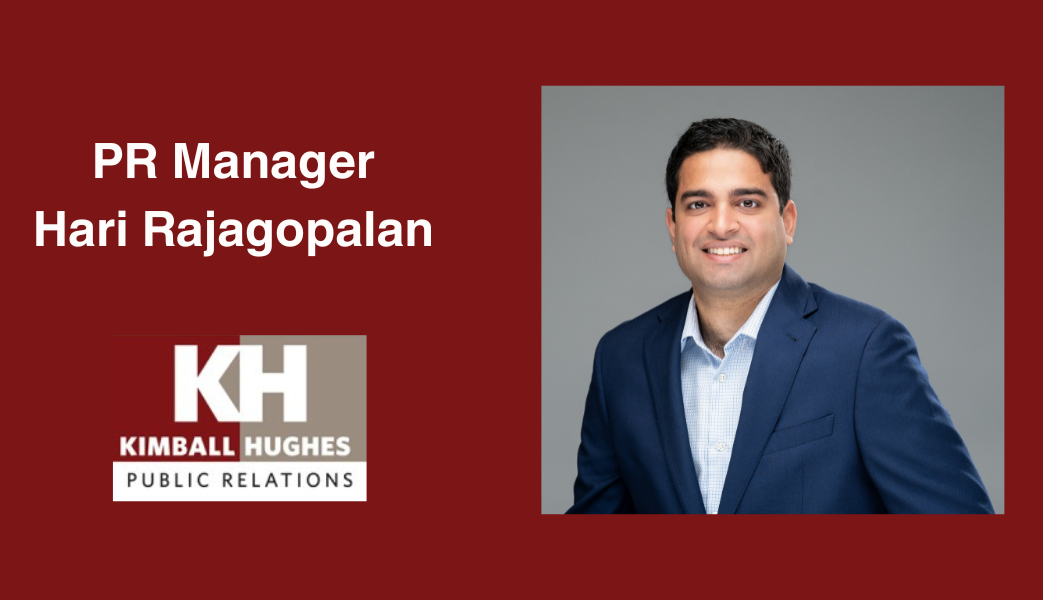
Public relations is all about relationships–the people behind the stories. That’s why we’d like to highlight Account Manager Hari Rajagopalan as he prepares to start a master’s program in the fall. We hope you enjoy learning more about one of our team members as we wish him well in his next chapter.
- Where are you going to school?
In August, I’ll be starting school at the University of Michigan’s Ross School of Business to earn an MBA.
- What are you most looking forward to for your move? How will you adjust to the colder weather?
I’m looking forward to exploring a new town. I’ve never lived in the Midwest and have only visited Ann Arbor once. I can’t wait to meet new people from a wide variety of backgrounds through my MBA program, try new restaurants and see new sights.
The colder weather and snow will be an adjustment, and I’ll start that adjustment by buying a real winter coat and some hand warmers. I think it’ll be fun getting used to a new climate and working around the snow and other weather challenges I’ll experience while there.
- What prompted your decision to pursue an MBA?
I felt ready to try something new. I’m incredibly grateful for the time I’ve spent working in PR, but I believe that skill development and continuing education are vital to becoming a more well-rounded person. I think an MBA will help develop my analytical skillset, whether that ends up being back in the PR space or in another field entirely.
- How do you plan to marry your MBA with your PR experience?
My PR experience is a great starting point for business school. Navigating fast moving media opportunities, balancing client needs and media expectations, and learning how to advise clients to best support their reputation and brand have taught me the importance of effective, concise communications, empathy and adaptability. These skills will prove critical as I’m asked to evaluate other businesses and develop tactics and strategies for growth.
- What was your favorite PR career memory?
My favorite memory in PR was working with one of our clients on a campaign for the St. Baldrick’s Foundation. Seeing our work directly impact and support a nonprofit making a real difference in our community and beyond was extremely rewarding and exciting. And getting to see the Mummers at their head-shaving fundraiser was an added benefit to supporting the campaign.
- As you make the transition from full-time work to full-time student, what changes do you think will have the biggest impact on your day-to-day and how do you plan to adjust to the change?
The transition will be difficult. Attending classes will require an entirely different mindset and it has been years since I last was in a formal class setting. To adjust, I’ll be taking some online courses in my spare time this summer and trying to get ahead of some of the work I have lined up for the fall. I think starting classes early, even in an online setting, will help adjust my brain to be ready for these new challenges.
- Any other big life updates you would like to share?
Next year will be a busy year! In the winter, I’ll be traveling to India to marry my fiancée in a traditional Indian ceremony. Then, in the Spring, we’ll be married again in New Jersey. I’m looking forward to it all, even if it will be chaotic to navigate.








 PR Matters