Unknown's avatar

About Rod Hughes

I'm a writer, bibliophile, witty wordsmith and generally a commentator on the world around me. Professionally, I am a partner and vice president of a Greater Philadelphia-based public relations agency that helps businesses get their messages out into the world in a positive, effective way. Kimball Hughes Public Relations also specializes in helping organizations manage crisis communications situations. Contact me at rhughes@kimballpr.com.

Recurring Role: Insurance Agent Stars in Web Series

American Modern Insurance Group: The Build

Listen to the Friday, Jan. 24, 2014, radio interview of Adam Boca with Kentucky’s 93 WKCT News Talk radio about his fourth episode on the popular web series, The BUILD. Adam, a licensed insurance agent with the National Corvette Museum in Bowling Green, KY, filmed a series of episodes in June 2013 that began airing in January.

The series, with thousands of viewers tuning in via YouTube and Facebook, follows the step-by-step rebuild and restoration of a classic 1965 Chevelle Malibu SS.

The BUILD is sponsored by American Modern Insurance Group, a Kimball Communications’ client, and is filmed just outside Cincinnati, Ohio.

3 Business Success Trends for 2014

take the plungeWelcome to 2014. This year will be more competitive. This year, the marketing din is going to get a lot louder. This year is also going to be the year you get savvy about marketing your small or medium size business. To help you do so, here are three trends that will affect the business landscape, and your own bottom lines.

Social Media Is Not Optional. The days of just dipping your toe in the social media waters are long gone (circa 2011). You’re either engaged in social media marketing or you’re not, and – trust me on this one – you have to be engaged. No modern, effective marketing plan is complete without a social media component. Get expert advice on how to start. Pick your platforms with care. Develop a content strategy that is authentic to your brand and develop protocols and best practices for conversing with your followers. When all of that is done, then you can jump into the social media pool. (Remember, no toe dipping. This year calls for a full on, no hesitation cannon ball into the deep end – but you have to plan it out first.)

The Value of Public Relations Is Growing. While publishers may be consolidating media outlets, the ironic twist is the demand for quality content is disproportionately expanding. What this means for your brand is opportunity; opportunity to develop meaningful content and, more importantly, content people want to share. One caveat – that content must rarely be brand-centric. While the content should be relevant to your space, it cannot put your brand front-and-center if you want it to be seen as authoritative, authentic and of innate value to the public. PR is increasingly going to require a mix of earned and owned media, but that owned media – if executed well – can pay significant dividends. This content marketing (or brand journalism) trend is growing rapidly, and your public relations advisor or team needs to be leading the charge.

Smartphones Are Windows to the World. As mobile access continues to become part of everyone’s new normal, brands need to consider how to engage their consumer audiences via this medium. A responsive designed website is just the start of ensuring your brand and/or products are accessible on any mobile device. You’ll also want to track your website’s analytics to monitor your level of mobile web traffic and adjust your marketing efforts accordingly. Additionally, opt-in SMS text messaging campaigns and branded Apps are two mobile marketing tools we’ll be seeing more of in the year ahead.

These and other tactics are the new business as usual tools. More and more, companies will need to adapt to the latest technologies if they want to engage with their audiences. Meanwhile, the New Year offers new challenges and ample opportunity. On behalf of everyone at Kimball Communications, may your businesses find success in overcoming the former and excel at leveraging the latter.

Apology Chips Away at the Lululemon Brand

The merits or lack thereof regarding Chip Wilson’s comments during a recent Bloomberg TV interview not withstanding, when the public takes umbrage with statements made on behalf of a brand there are ways to apologize and ways not to apologize.

The Lululemon athletica founder’s Nov. 8 YouTube apology posted to the Lululemon Facebook page is a lesson in the latter.  Even the company he founded was careful, in response to media inquiries about Wilson’s video apology, to distance itself saying the posting was, “Chip’s reaction and statement – Lululemon did not issue one.”

The YouTube mea culpa – of sorts – starts with Wilson declaring he is “sad.” With his very first words, he failed in his attempt. Any media advisers working with him never should have let him say it. The public doesn’t care if he is sad. They do care if he takes ownership of what he said. They do care if he regrets having said it. They do care if he declares his comments as being wrong, hurtful or even ill-considered. And they do care if he apologies to those whom he might have offended. Simple and direct apologies in circumstances such as these are important. When the public is angry, don’t quibble. Apologize succinctly and with sincerity.

Second, his message seems targeted at those who work for Lululemon, and not the customers and general public he was perceived as having insulted in the Nov. 5 Bloomberg interview.

Third, aside from the distracting background gong you hear at the 10 second mark, Wilson is clearly reading from cue cards. If you want to look disinterested, disengaged and scripted during a public apology, the best way to accomplish this trifecta is to read off of cue cards into a camera.

Wilson was ill-advised in the making of this video. His lack of media training (often disregarded by businesses until – and even after – a crisis erupts) is evident in both the Bloomberg interview and in his video. Imagine how beneficial media training now seems to executives at Lululemon in retrospect. The initial damage might never have occurred.

Taking a step back from the specifics, the message is entirely wrong – as perhaps was the venue (Facebook). When messaging to employees or other internal stakeholders, keep that message out of the public eye. If you are apologizing to your loyal customers, do exactly that as plainly and sincerely as possible.

The public will generally forgive a brand and its spokespeople if they react quickly, with great care and sincerity, and if they clearly apologize and take responsibility for their words or actions. Anything less usually only compounds the problem, as Wilson has aptly demonstrated.

Effective apologies come in many forms. Unfortunately for Wilson and the brand he created, his YouTube effort is not among these forms.

Managing Your Small Business’ Online Reputation

Congratulations! You've taken your business online. So how do you leverage this into new customers or clients while also protecting your reputation?

Congratulations! You’ve taken your business online. So how do you leverage this into new customers or clients while also protecting your reputation?

Congratulations intrepid entrepreneur! If you’ve taken the plunge and launched your small business into the social media space, you’ve taken a bold step that offers many risks and rewards.

More than 72 percent of U.S. adults who go online use social networking sites, according to the Pew Internet & American Life Project. By choosing to put your brand out there, a bevy of potential rewards (i.e., Likes, followers, sharing blog posts, positive reviews and online recommendations) await your brand. With a little effort applied to communication your messages, attention to superior online customer service that reflects your brand and by trying to genuinely connect with your customers, you can turn your social media presence into a noteworthy repository of goodwill for your business that reward you handsomely over time.

The effort is also not without risk.

In the days before social media, one bad customer experience typically translated to the customer telling 10 friends of their displeasure. With the advent of social media, however, your brand runs the risk of being shamed before 100 or 1,000 social media followers. For some power networkers, those numbers are substantially higher.

It’s imperative small businesses understand, on average, about 46 percent of web users turn to social media before making a purchase to decide if the business or product is “trustworthy” or reputable. This means, to paraphrase a legendary phrase from actress Zsa Zsa Gabor, you are what the online community says you are.

On Oct. 18 at Parx Casino in Bensalem, Pa., small business owners that include restaurants, outdoor and adventure destinations, bed & breakfasts and others will gather for Visit Bucks County’s Annual Membership Meeting. Attendees will have an opportunity to attend a morning seminar on establishing and maintaining online presences to help their businesses grow.

As one of the featured speakers, I’ll be sharing insights and tips on how these businesses can protect and defend their online reputations. I’ll offer examples of good, and not so good, online customer service. In addition I’ll provide insider tips for managing these online presences under a variety of circumstances.

Check back on this blog next week for some top line thoughts on the subject as well as insights and anecdotes offered by some of the small businesses I meet with at the VBC Annual Meeting.

photo credit: <a href=”http://www.flickr.com/photos/infusionsoft/4820986909/”>Infusionsoft</a&gt; via <a href=”http://photopin.com”>photopin</a&gt; <a href=”http://creativecommons.org/licenses/by-nd/2.0/”>cc</a&gt;

9 Tips To Make Social Media Work For You At Conventions

There is nothing wrong with an awkward selfie when used to promote a brand or to let the world know you just discovered amazing pepper jelly.

There is nothing wrong with an awkward selfie when used to promote a brand or to let the world know you just discovered amazing pepper jelly.

Last week (Sept. 25-28) more than 1,200 vendors attended Natural Products Expo East to attract the attention of retailers and bloggers while also winning some valued name recognition for their brands.

Surprisingly, only a handful of vendors used social media to truly maximize their advantage.

I’ve attended many conferences and conventions and I follow some simple social media steps for events.  I urge many of the brands I met with at Expo East to review the following tips and plan to incorporate them next September in Baltimore or in March 2014 in Anaheim for Expo West. Because of its profound reach, extensive use in business and dexterity of messaging, these tips focus on using Twitter, but could be adapted for Facebook, Instagram, Flickr, Pinterest and others.

Twitter Screen Shot

1. Tell the World Where You’ll Be

About 45 days before the show, tweet from your company Twitter handle that you will be in attendance. Use the show’s hashtag (usually #ExpoEast or #ExpoWest; other shows will include this info. in registration materials), your booth number and invite people to visit your booth at the show. For example: We’re thrilled to be attending #ExpoWest in Anaheim in March. You can find us at Booth #3100.

2. Make a Social Media Plan for the Show

Conference attendees cling to their smartphones. Task someone to monitor, post and respond to social media during the show in real-time. Either on the floor or back at the home office, participating on social media will help garner attention for you long after the tradeshow floor closes.

3. Give Followers a Behind the Scenes Look

Tweet behind-the-scenes pictures and video of your team preparing for the show, traveling to the show and setting up your booth. People like to get to know the brands they love, and feel included. Be sure to include show hashtags and your booth number.

4. Give Attendees a Reason To Seek You Out

Entice attendees to visit you by offering samples, raffles or exclusive news on upcoming brand news. Make it worth attendees’ time to find your booth in the crowd. And, of course, use the show hashtag and your booth number. For example: If you’re attending #ExpoWest, stop by Booth #3100 for free samples of our new mango and coffee-flavored smoothies.

5. Recruit Attendees to Be Your Ambassadors

People share content in which they are featured. Invite interested attendees to take a photo with you and your booth. Then you can tweet the picture, with the attendee’s Twitter handle and the show’s hashtag with a “Thanks for stopping by” or other conversation-relevant comment. Retailers might not partake, but bloggers and brand enthusiasts will – and they share!

6. Comment on Show Happenings

You’re at the convention. Make sure you are aware of educational and training sessions taking place, who the guest speakers are, and what events attendees are talking about most. Tweet content related to each – with images where possible. For example: Willy Wonka’s talk on the health benefits of sugar at #ExpoWest has fired attendees up. What’s the most interesting seminar you’ve attended today?

7. Respond To Those Who Tweet About/To You

It’s just like a conversation. You wouldn’t ignore someone who said hello to your or complimented you, so don’t do it on social media. If someone tweets at or about you, tweet them back with a tailored thank you (i.e., don’t just say ‘Thanks’).

8. Spelling Counts

Proper spelling is key, especially for people’s names and Twitter handles. It demonstrates professionalism as well as being able to react correctly to real-time events with aplomb.

9. If It Goes Badly, Get It Offline

If someone tweets a complaint or comments negatively about your product, let them know you are sorry they are unhappy, and that you would like to speak with them (by email, cell phone or in person) right away to try to help. Do not engage in a back-and-forth dialogue via social media. Get the conversation off of social media as quickly as possible. For example: We’re sorry you had a bad experience. Email willy@willywonka.com and let us help or stop by booth #3100 & give us a chance to make it right.

There is a lot of good that can come from live social media posts at a conference or convention. Retailers search the related hashtags to see what brands are trending, and what attendees liked and didn’t like. And whether you use social media or not, if you are a vendor at a show like Natural Products Expo, you are being talked about on social media. So make sure you are taking an active role to help shape that conversation.

If you have questions or would like to create a social media plan for Anaheim or Baltimore in 2014, email me at rhughes@kimballpr.com to learn how the team at Kimball Communications can help. Or tweet us at @KimballPR.

Best of Show: Standout Products of Natural Products Expo East 2013

ExpoEast2013Panarama

If you haven’t been to either Natural Products Expo East or West yet, it’s a must attend for good-for-you-foodies as well as those looking for products that take an environmentally friendly approach to consumerism.

With thousands of vendors and products to see and only four days to try to see them all, here are just a few standouts from the food category I came across in Baltimore while there on behalf of Kimball Communications:

B’More Organic When I heard “organic skyr smoothie” my skepticism kicked into high gear. Then I was told it was ideal for those, like my brother, who are lactose intolerant. Sure, I thought. Then I tried their Mango Banana Skyr Smoothie. Stunningly good, loaded with protein and good for you. I took a bottle for the road-trip home.

Conti Gourmet Coffee I can’t say enough good things. Roberto “The Coffee Man” serves a great cup of coffee, keeping me fueled for the entire show. I’m ruined for Starbucks from here on out.

Epic This was the biggest surprise for me at Expo East. Epic’s 100 percent grass-fed, animal-based protein bar caused me some hesitation. However, at the urging of others, I tried the Bison bar and was remarkably surprised at how good it tasted. I’ll be ordering a box this week.

Gelato Fiasco This group from Maine was a lot of fun. We talked a little about social media, and a lot about their awesome gelato. While they are primarily in New England right now, I fully expect to see them on a store shelf here in Pennsylvania area soon. They are definitely worth stopping for the next time you are in Massachusetts or Vermont.

Late July Organic Snacks Celebrating 10 years in the organic, non-Genetically Modified Organisms (GMO) snack space, this established player still has the power to surprise with its new a tangy and impressive new Sub-Lime Multigrain Snack Chip. I’ll be looking for this one in my local grocery store.

NoTatoes This super-young start-up made quite a big buzz at Expo East with delicious Cassava Tortilla Chips. Keep an eye on this company. I have no doubt you’ll be seeing them in a lot more stores soon.

Sibu Sura A micro-batch chocolate producer out of Maryland (using 100 percent organic and fair trade cacao beans from Peru), Sibu Sura not only offers some of the best chocolate from Expo East (I tried just about all of the chocolate available), but their mission of social good and environmental friendly packaging make them a distinctive standout in any crowd, including at Expo East.

Suzanne’s Kitchen Amazing pepper jelly. I’m a connoisseur of sorts where pepper jelly is concerned. I once drove to Virginia because I heard a company there did a good job with pepper jelly and I wanted to verify it.  By far, Suzanne’s is the best I’ve ever tried. I picked up a jar of Pepper Jelly Heaven from my local Whole Foods on Sunday night to snack on while watching the finale of Breaking Bad.

Wild Poppy Juice Company I gave up soda and fruit drinks almost 20 years ago, but this organic craft fruit drink – which offers just a hint of soda-esque texture – made me think I was missing something amazing. The Organic Peppermint Lemonade was a surprising discovery, and one worthy of singling out as a Best of Show from Expo East.

There are so many others worthy of a mention, but only so much you’ll want to read on your tablet or smartphone. Be sure to check out our video round-up (posting shortly) of other impressive stand-outs from Expo East.

Sometimes Bigger PR Agencies Are Just Bigger

At big agencies, you're paying for the overhead ... and all those chairs.  Image courtesy of adamr / FreeDigitalPhotos.net

At big agencies, you’re paying for the overhead … and all those chairs.
Image courtesy of adamr / FreeDigitalPhotos.net

Mark Twain once said, “It’s not the size of the dog in the fight, it’s the size of the fight in the dog.”

Sadly, this lesson is sometimes lost in the process of evaluating public relations agencies. Often the bigger agency is selected because they are seen as “the safe bet.”

However sometimes the safe bet with PR agencies isn’t always the best bet and the little guy is overlooked to the detriment of the company conducting the search. To those companies, I offer six reasons they would do well to consider small agencies like mine.

  1. It’s Personal, Not Just Business. Working with a smaller agency, clients typically have direct access to the agency president and senior staff. So do the agency’s employees. This means ideas aren’t just top-down, and everyone has a stake in the success of the account.
  2. What You See Is What You Get. The better-run small agencies have less staff turnover, especially at the senior level. So the folks you meet at the new business pitch meeting are the folks actually doing the work for your company. That almost never happens at big agencies.
  3. Small Agencies Are Built By Big People. Small PR agencies are populated with PR pros who left big agencies to focus on good work instead of billable hours, or by established journalists who bring a well-honed reporter’s eye to the story-craft of public relations. Big agencies are not the only bastions of talent.
  4. Budgets Don’t Drive Success. Small agencies have less overhead then larger competitors. This means smaller agencies work toward success, not billable hours. At larger agencies, clients with small budgets are often relegated to a few hours of work per month, led by the most junior, least experienced staff members.
  5. Flexibility and Responsiveness Are Watchwords. Small agencies usually don’t have “big” accounts to fall back on, so ensuring every client feels like the only client is the hallmark of a well-run small agency. This means responding promptly to clients, and being able to adapt well to changing priorities.
  6. It’s a Business of Personality and Ideas. Success – with big or small agencies – is predicated on the people on the account and the ideas they generate. In this area, size is not a factor. One smart, industrious solo PR pro with good ideas and a little elbow grease can be as valuable to a client as an army of well-polished and mildly talented PR practitioners. As Twain said, it’s about the fight in the dog.

This isn’t to say all big agencies are bad and all small agencies are good. It’s simply why smaller agencies should not be disregarded as a “best bet.”

I’ve heard too many stories from clients and co-workers alike about companies that chose big PR agencies based purely on the idea they were a perceived safe bet. (As the saying goes, “Nobody ever got fired for hiring IBM.”) These same folks, after prolonged discovery periods and big “start up” fees, came to find bigger isn’t always better.

Sometimes bigger is just bigger.

Marketing on the 9/11 Anniversary? Don’t

“When in doubt, leave it out.”

This was the sage advice of one of my first journalism professors in college. It served me well in everything from sussing out facts for news stories to drawing up guest lists for family parties. It’s also good advice for brands and organizations to consider as part of their social media policies, and their approach to anniversaries of remembrance like Sept. 11.

This week – 12 years from the attacks of Sept. 11 – we saw far too many businesses using social media to remember the fallen while also making sure you remember their products.

On The Crisis Show, which aired on the anniversary of 9/11, I joined Shel Holtz and host Rich Klein to discuss these efforts. We highlighted some of the more thoughtless attempts to newsjack the 9/11 anniversary, as well as the reactions those efforts engendered. It’s a cautionary tale of how even the best intentions on social media can fail without sound strategy, planning and a crisis response plan.

What we saw on social media on this anniversary was how tone deaf some brands can be, and how few plan for all potential outcomes. The list of offending brands – both exploitative in their efforts and those just trying to mark the day as best they could while failing in the attempt – is too long to include here.

The best advice I can share is beautifully summarized in a short online article in The Atlantic. The writer, Derek Thompson, took a page from my journalism professor’s book and offered one simple rule for advertising on 9/11: Don’t. This rule applies equally well to marketers, social media practitioners and PR pros.

The events of that day still haunt us as a nation. So brands should consider honoring the day with a moment of silence, time off for employees to participate in the National Day of Service Congress called for in 2009 or by making a charitable donation. But don’t market such efforts or your products and services. Those who mourn don’t need to hear from brands on this day.

Next year, when we mark the 13th anniversary of our national loss, I encourage brand managers everywhere to follow the prescient advice of my old professor: When in doubt, leave it out.

Public Relations Explained

MediaRelations

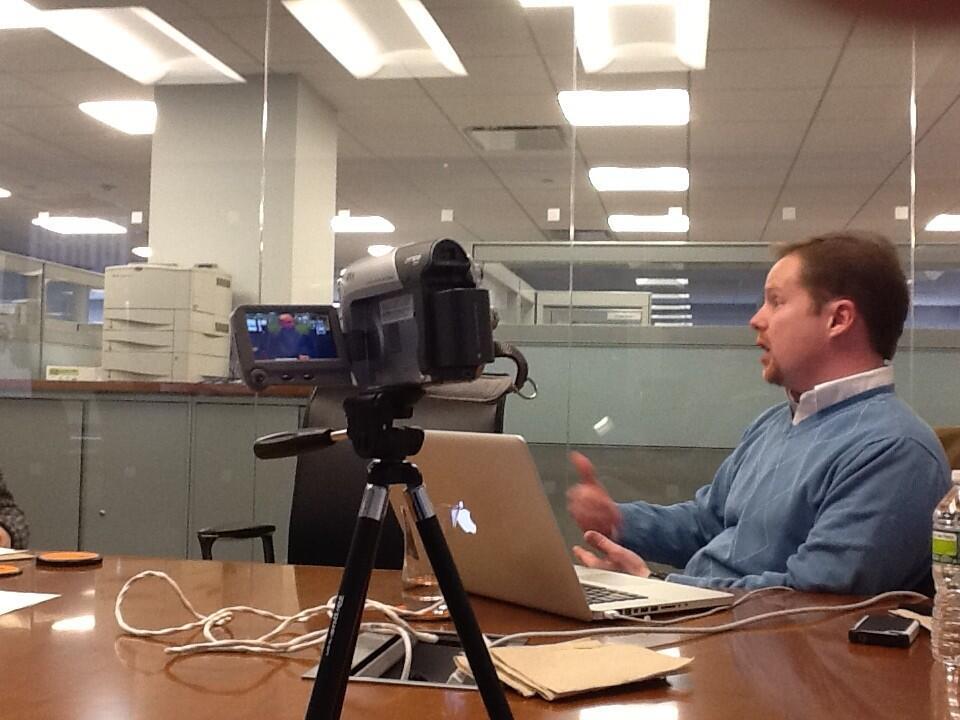
Media relations is just one aspect of a well-rounded pubic relations practice. Pictured here, the author is conducting a training session with a client.

“So what exactly do you do?”

I get this question a lot. Seriously. A lot.

It seems, despite the Public Relations Society of America’s best efforts, far too many people still have very little understanding of public relations as a profession. More often than not, folks have grabbed hold of one aspect of the profession and decide that is the full breadth and scope of the field.

“You help your clients get into news stories, right?”

The above statement describes PR about as completely as asking someone at Apple if they just “sell phones.”

Media relations is one important aspect of PR, but it doesn’t cover the profession by half.

Our job is to be a true strategic partner with our clients. We help them communicate with all of their audiences, including stockholders, management, employees, customers, local communities, industry influencers, government officials, and the media. Within each of those groups, there are countless subgroups we must consider, often outside the interest and view of the media.

We help to build networks for our clients, introducing them to community and business leaders, government officials, special interest groups, employee advocates, industry insiders and online communities. We conduct research and write position papers. We offer insights and suggestions during the development of marketing campaigns, and we advise human resource professionals on messaging to employees of the company. We partner with lawyers when client-related legal matters are referenced in the media, and we advise on, and integrate with, social media strategies and messaging. We collaborate on planning that ranges from celebratory events to disaster scenarios, and we interface with multiple departments to drive and/or support ongoing brand reputation management practices.

PR pros play many parts: advocates, diplomats, strategists, trusted advisors, communicators and content managers, with our clients. On any given day, we might play one or all of the above roles with a few extras thrown in just to keep us sharp.

So, with respect to the PRSA and their efforts to define the practice, the answer I’ve developed in the last few years feels a little less jargony and appropriate for the cocktail party set as well. In 25 words, what I do is this:

“I help clients communicate better, with honesty and integrity, to those most important to them. Sometimes I also get them in the Wall Street Journal.”

Three Crisis Communications Mistakes Companies Make

morner / Foter / CC BY-NC-SA

In the shadow of the Boston Marathon tragedy, it’s painfully apparent – if it wasn’t before – that crisis scenarios are part of our collective new normal. From threats of terrorism and senseless acts of violence, to economic chaos and world events, crisis events can easy overtake the best-laid plans of any business.

At these times, there is a balance to be struck between business operations and consideration of outside events. Customers don’t want to be marketed to and reporters don’t want your new product press release in times of crisis. In addition, your own employees – even many miles removed from events – might struggle to cope with news from towns like Boston, Aurora, Colo., Sandy Hook, Conn., West, Texas, and others.

What do you say or do as a business owner or manager? Your response in such times must be genuine, sensitive to events and true to the culture of your organization. There is no one-size-fits-all communication solution.

However there are three things you should not do in a crisis. Don’t:

  1. Continue Your Social Media Strategy as Planned. The moment you start receiving breaking news alerts via smartphone apps, email or after watching the news, you need to assess the impact of your planned social messaging. Think about how your messages might be received against the backdrop of what is happening in the news. In most situations, you should pull your planned content immediately and take a wait-and-see approach for at least the first 30 minutes of the news event. This means deleting or rescheduling posts in HootSuite, TweetDeck and other social dashboards.
  2. Assume It’s Not a Big Deal for Your Brand. Gather your public relations and marketing teams to evaluate next steps. Create a plan for what your external messaging (including social media) needs to look like in the first hours and, in some cases, the next several days after a national or global event. Poor planning can lead to significant customer backlashes and damage your brand. You need only look at American Apparel, GAP and others whose early social media efforts during Hurricane Sandy not only failed, but angered customers by appearing insensitive to those in Sandy’s path.
  3. Ignore Your Crisis Communications Plan. If you have a Crisis Communications Plan, use it. This valuable tool will detail a methodical strategy and tactics for handling relevant crisis situations. Don’t try to wing it in the middle of a crisis. You’re more likely to miss something, and the risks can be enormous. If your plan is out of date or, worse, if it doesn’t exist, set a goal for updating or creating one and use the current scenario as a case study (for better or worse) to help guide your Crisis Communications Plan development later.

While you cannot plan for every eventuality, a good Crisis Communications Plan will best ensure your brand is protected while also being sensitive to events outside of your control.

Photo credit: morner / Foter / CC BY-NC-SA