Unknown's avatar

About Rod Hughes

I'm a writer, bibliophile, witty wordsmith and generally a commentator on the world around me. Professionally, I am a partner and vice president of a Greater Philadelphia-based public relations agency that helps businesses get their messages out into the world in a positive, effective way. Kimball Hughes Public Relations also specializes in helping organizations manage crisis communications situations. Contact me at rhughes@kimballpr.com.

AI: How to Avoid Becoming a Cautionary Tale

AI will cure what ails you.

That seems to be the mantra of the 2020s. If you have a problem, it appears the solution is to implement artificial intelligence. However, AI is not a cure-all. While AI can be an incredibly powerful tool, it isn’t perfect and there are cautionary tales to consider as countless organizations incorporate AI.

Glitch in the System

Any adult functioning in the digital world knows technology sometimes fails to live up to its promise. AI is not immune to being glitchy, especially when humans fall short in their quality control roles, many of which are still evolving along with the tech. There are countless AI snafu examples that include:

  • Less than two years ago, Reuters reported on a U.S. District Judge who sanctioned two New York attorneys when their ChatGPT-built brief included six fake case citations.
  • Last spring Google was pilloried by users and media alike when its then-new AI capabilities roll-out resulted in a cascade of false information—including telling users to eat glue and rocks.
  • And Fast Company produced a cringe-worthy list of brands last summer whose AI-driven marketing efforts ranged from total failure to deeply offensive, including household names like Toy “R” Us, McDonald’s and Sports Illustrated.

Reliance Risk

The risk of AI is becoming overly reliant on AI. Reliant on its promise. Reliant on its ease of application. Reliant on its accuracy.

Large language models or LLMs—the engines that drive most generative AI tools—train on massive content libraries. As a result, AI is prone to repeating, in whole or part, both the words and style of some of the content on which its LLM trains. These AI tools aren’t designed to violate copyright laws. Rather, they are working with what they know, and what they know is existing, written—and often copyrighted—content. The intent is to mimic human creativity with enhanced, faster output. The risk, of course, is not only plagiarism, but also inaccuracies due to AI hallucinations as well as content that, frankly, often falls short of being truly creative or distinguishing.

Both the quality and legality of AI generated content will be adjudicated in the court of public opinion, as well as courts of laws, for the foreseeable future. Meanwhile, humans are working to catch up. Plagiarism software is continually being stood-up and refined to catch the errant bot-writer. Publishers and others are setting policies for how they will handle contributed AI-generated content. And the legal industry is, most likely, viewing AI as the next asbestos as everyone considers its implications.  

Practical Realities

Learning to live with, and employ, AI is an evolving state. What business and nonprofit leaders must consider now regarding their use or incorporation of AI is this:

  • Brands and business leaders trying to position themselves as thought leaders will fail—possibly in very public ways—if they cede their expertise to the expedience and perceived accuracy of AI where content is concerned.
  • Leveraging AI as a starting point in the creative process can create efficiencies. Relying on AI to drive that process is simply lazy.
  • From courts to publishers as well as clients and consumers, much of the early AI-driven content we are seeing runs the gamut from being declared unacceptable to the merely unpalatable with limited exceptions.
  • Developing policies around how and where to apply AI in your organization is essential to avoid being left behind.
  • Closed AI—essentially a non-publicly accessible AI model—is the only practical approach to AI implementation for many businesses to protect sensitive company and/or client data.
  • A detailed dive into how and if your organization’s errors and omissions liability insurance addresses claims arising from your use of AI is most definitely warranted.
  • AI can be a remarkable improvement to one’s operational efficiency and even client engagement, but only if thoughtful guardrails are in place with humans overseeing the work and conducting frequent quality and accuracy checks.

Without question, AI is and will continue to shape the future of business. Guiding that process with high ethical standards, transparency and rigorous human oversight is required if non- and for-profit organizations are to maintain the trust and confidence of those they serve.

2025: Do You Have a Communication Strategy? You Should

As many businesses and non-profits begin to turn their attention to 2025 planning, one component that should not be overlooked as part of a success strategy for the new year is communication or comms planning. An effective public relations campaign can prove to be both an affordable investment in growing your organization as well as in deepening important reputational relationships that can help sustain for- and non-profit organizations in troubled times.

Here are five critical tactics for B2B organizations to consider when developing 2025 comms strategies.

  1. Highlight Industry Expertise. In the world of B2B marketing and communications, clients and partners look for actionable, tested expertise. By positioning your subject matter experts as thought leaders through authoritative content, you position your brand as a potential resource for your target audiences while demonstrating your deep understanding of, and vision for, the industry you’re in. That content can include contributed articles to respected trade outlets, white papers, industry reports, owned video content and feature-length broadcast interviews on hot topics or industry trends.
  2. Develop Authentic Messaging. Whether your audience is business or consumer, the public at large is tired of being sold to or fed boilerplate marketing messaging. Don’t sell. Instead, tell stories to highlight the purpose and values of your brand that address the concerns of your audience. No one looks for a sales pitch; they look for anecdotes, reviews and stories in which they recognize themselves or their priorities. Your audiences are more likely to turn to the sources of those stories or analogies when seeking solutions and opportunities.
  3. Focus on Data-driven Solutions. B2B audiences look for track records of success supported by hard data. Highlighting successful partnerships or projects supported by numbers and real-world outcomes creates a point of distinction and gives trade journalists something to work with when telling stories that can shine a light on your brand. This can also include information on lessons-learned and client testimonials.
  4. Be Prepared for Crisis Scenarios. From online review sites to social media platforms, the public-at-large can rapidly shape public perception of your brand in minutes or hours. By preparing for likely crisis scenarios and developing actionable protocols to deploy your response messaging, your organization stands a better chance in weathering whatever storms may come. Paramount to protecting your brand in a crisis scenario is developing messaging that is honest, authentic, empathetic and deployed with thoughtful speed.
  5. Pursue a Broadening Media Landscape. While rumors regarding the demise of journalism have been abundant in the past decade or more, the reality is the media landscape has broadened considerably. Where there once existed only print, broadcast and online, there are now podcasts, streaming platforms, vlogs, subscription-based email newsletters, audio-based social channels and even industry-specific Slack communities. The options are seemingly endless. Start by understanding the audiences you hope to reach and how they consume media. Then, plan accordingly.

If your 2025 marketing or business development plan lacks a clearly defined comms strategy, you are missing countless opportunities to convert the work you’re already doing into compelling storytelling that can move the needle for your brand. What’s worse, you may also be completely unprepared to defend your reputation if you find yourself facing a communications crisis. Make sure you have a 2025 comms strategy ready to go before January 1, 2025. And if you need help, Kimball Hughes Public Relations has nearly 30 years of expertise to help you make the most of the year ahead.

Fallen Arches: McDonald’s AI Failure Is a Caution for Business Leaders

Not lovin’ it. That’s the takeaway from McDonald’s recent abandonment of AI for its drive-thru ordering. The fast-food chain’s decision to end its AI experiment speaks to the larger trend of AI not yet being quite ready to solve a host of problems for business.

Artificial intelligence offers the promise of a new and more efficient business environment … just not quite yet.

McDonald’s hoped its AI-driven drive-thru ordering would create more accurate and efficient ordering. However, the tech proved no match for humans in the wild. Background noise, the nuances of human communication and, I imagine, some of the hallucinations AI technology is famous for combined to generate customer-frustrating errors, including one infamous order for more than $250 worth of Chicken McNuggets. While the fast-food chain says it learned from and has plans for future AI implementations, the reality is the Golden Arches sees AI as a future state tool rather than a current operational solution.

Other industries are finding the same.

In an interview with Insurance Journal last November, Insurtech CEO Tim Hardcastle of INSTANDA discussed the challenges of AI transparency, saying the full transformational impact of AI in insurance remained a few years away.

What frustrates consumers — and many business leaders — about AI is really a perception problem. While companies boast about the promise of AI, the truth is we are in a state of ongoing beta testing. Even Google, the defacto leader in online search, is feeling its way through as end-users find significant inaccuracies and false answers to certain queries of its AI search tool.

Where does this leave businesses and the race to AI implementation?

We have been here before. In the late 2000s, businesses raced to adopt social media. “We have to be there” was the mantra, while the reasons for being on these platforms were somewhat opaque. We saw a similar approach during the rise of voice search and voice recognition. And I believe we are in a similar place today with AI.

Absent a new AI tool to promote, some business leaders perceive they are running behind. However, aside from some common and long-standing applications, AI is currently a solution in search of problems.

Don’t misunderstand me. I think AI will eventually change how business is done, radically in fact. Just not yet. We haven’t worked out the bugs. The guardrails aren’t in place. And we haven’t fully mapped the real, day-to-day challenges AI might address, although that has begun.

The perception problem extends to consumers. AI is seen as our flying car, and by God, it’s here and we want it to work.

Neither the technology industry nor others with have messaged appropriately on AI. They haven’t told us this is one big beta test. They haven’t cautioned us to expect errors. Sure, the media calls out egregious examples, but the businesses incorporating AI could also be more transparent. We haven’t set expectations appropriately; we talk about the transformative power of AI and consumers assume we mean now, not in the future.

When the problem is perception, you have to change people’s perceptions.

Business leaders — from fast-food chains and insurance providers to the financial services sector and big box retailers — would benefit tremendously from better AI messaging. Consider talking about what AI can mean for their companies as well as customers, but caution that this is a learning process. Survey your consumers. Offer research. Invite consumers to help you test your new AI tools.

I’m confident a majority of consumers would get it and many would be willing to be part of this great, new digital industrial revolution experiment. But we must call it what it is: an experiment. We must move consumer perceptions of AI as a current silver bullet to a potential, future game-changer.

There’s precedent for this: The Human Genome Project. The public conversation around this 10+ year effort was about possibility, potential and promise. Not a current-state solution to contemporary problems. The messaging, from the researchers, the media and governments, was clear, which set the expectations — and the perceptions — of the public.

We don’t have an AI problem. We have a perception problem, and we have the tools to address it. What we need is for better messaging to meet the moment.

InsurTech Insights USA 2024: Lessons Learned, Advice Offered

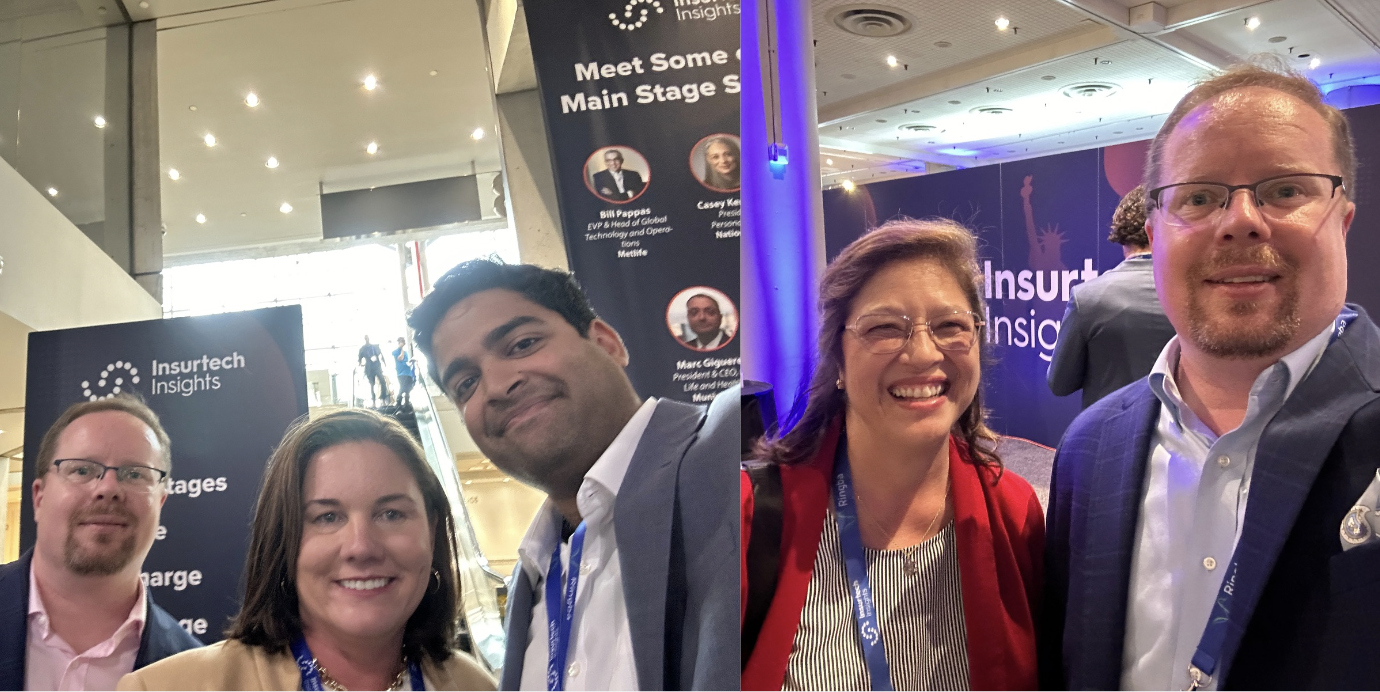
Last week, two of my colleagues and I attended InsurTech Insights USA in New York to do a little networking. Having attended for the first time in 2023, what I’ve come to appreciate about ITI is the speed networking.

Like two unassembled IKEA furniture pieces, both parties to ITI’s speed networking meet-up have a purpose. But how do you make the meeting feel natural and unforced? This can be tricky without planning. It can feel a bit like trying to assemble said IKEA furniture while following a vague and sometimes interpretive set of directions.

At ITI, you can use the event app to make connections with other attendees and schedule a series of 15-minute speed networking meetings. The app does all the hard work in terms of schedules and logistics. It’s the human element that is both fascinating and frustrating.

Who speaks first? How do you start? Should a slide deck be involved? What about business cards (so many opt not to carry them anymore or lose them along with their checked luggage)? What are the takeaways or next steps? Should there be takeaways or next steps? What if you’re late for the next meet-up that starts the moment your current meet-up ends?

What I’ve Learned

For those who participate in these meetups, and some do not, the intentions of both parties are clear. Someone is selling. Someone might be buying. Sometimes both parties are selling. And, sometimes, someone took the meeting simply to be polite.

The good news is it’s a level playing field for insurtechs, insurers, vendors and others who choose to participate.

What I have found to work best is to keep it simple and be direct: Asking the other party to tell you what they do, who is important to them to grow their business and what problems they are trying to solve or what opportunities they are seeking. Always give the other party, when possible, most of the time. And – importantly – listen to what they say. Don’t simply wait to speak. If what you do, provide or sell matches up with their needs, then connect the dots for them. Otherwise, ask them what they would like to know about your business and allow them to guide the conversation. And leave the PowerPoint at home. When you’ve got about a minute left, ask if it makes sense to keep the conversation going. If agreed, exchange contact information.

The number of people I met in 2023 and again this year who said, “I’m not sure how this meeting is supposed to work” was surprising, but also honest and refreshing. They saw the value of the speed-networking meet-up. They simply didn’t have a plan. Maybe the above approach will help in 2025?

What I Suggest

Frankly, I’d like to see a bit more of this type of speed-networking at other insurance industry conferences. Just maybe not at the same volume or pace as ITI (you really do need comfortable shoes and the occasional bathroom break).

Insurance is a business built on relationships. With daily new entrants to the industry and younger generations working to build and nurture their own networks, maximizing in-person opportunities and building relationships are more important than ever. Additionally, as experienced executives begin to retire, some of their industry relationships run the risk of being retired with them. Insurers simply cannot afford for this to happen.

ITI’s speed-networking format can be adapted to serve nearly any organization. For carriers, re-insurers and others, this would be a potentially great addition to all-company staff meetings. For the industry’s many professional associations, speed networking could be a great icebreaker for new as well as existing members. It could also serve the organization to better understand their members and their needs in a direct way. The same is true for recruitment events, fundraisers and alike.

For insurance to innovate and grow into the future, relationships must be brought along as part of the compact. While ITI certainly did not create the speed-networking concept, its application of the concept – in my view – offers a road map to creating and carrying all-important industry relationships into a bright, energetic and exciting future.

Press Release Wire Services: What are They and Why Should You Care?

Press release wire services are frequently seen as an essential tool for organizations looking to disseminate their news quickly and broadly to the media. To the uninitiated, they can seem like a home run. Perform a search for the company name after posting to a wire service and you may find two or three postings of the release on the first page of your search. But is that really news? Do actual humans see your release? Is it worth the expense? The answers are mixed.

How Press Release Wire Services Work

There are numerous press release wire services like PR Newswire, Business Wire, and GlobeNewswire, and others.

To start, a company must draft its press release and upload it to a wire service. Be sure you understand the guidelines of the wire service you are using. Some have character limits for headlines or require brief, word-count-specific summaries of the content of the release that must be distinct from the text of the press release itself.

Once uploaded, the wire service editorial team will review the content to ensure it meets the wire service guidelines. Editors might suggest edits for clarity, conciseness, or to enhance the overall impact. Additionally, some wire services now reserve the right to reject press releases if they are deemed overly promotional and lacking in genuine news value.

Once approved, the press release is scheduled for distribution to a network of media outlets, journalists, news websites, and other stakeholders. This network often includes both traditional and digital platforms. Please note, there can be a delay of several hours – depending on the service – between approval and actual distribution. If your company requires the press release to be distributed on a specific date or time, please check with the wire service well in advance to understand their specific process and timing.

These wire services will provide a report with analytics on the press release’s reach and engagement, offering insights into its performance and audience interaction. In my experience, few if any of these data points are demonstrably valuable. Look specifically for data that reflect direct interactions with your press release. If you have more than 10 direct interactions via a wire service, I call that a win. Other provided metrics are fuzzier and, often, less valuable.

Why Companies Use Press Release Wire Services

Company leadership will often point to press release wire services as benefiting them in the following ways:

  • Broad media coverage
  • Increased SEO for the company or brand
  • Efficient use of resources

Actual media coverage resulting from a press release wire service is increasingly rare. Journalists are deluged with press releases and pitches daily. Further, because wire services supply the same content to hundreds or thousands of news websites, the uniformity of that content tends to make coverage of the information in those press releases less valuable to journalists seeking their own original story.

The reality is most press releases distributed through a wire service become aggregated content gathered by website algorithms and posted to pages on those sites you would be severely challenged to find natively on those websites. In essence, those releases tend to go into a black hole and are rarely seen by actual humans.

While press release wire services can still provide a slight bump to your company’s search engine optimization, that reality diminishes every year. You see, Google and other search engines tend to downgrade or even exclude repetitive content online, which negates the desired effect of using a press release wire service.

Additionally, while a press release wire service can appear less expensive than an ongoing engagement with a public relations agency or paying for a full-time, in-house comms professional, the reality is wire services are often wire services are not targeted communications tools. While you might pay a PR professional more over time than a one-time wire service fee, the fact is your media coverage will be more targeted and, ideally, more beneficial than simply blasting it out to the universe and hoping someone who may be interested in your services sees it.

However, if your goal is greater visibility in front of the widest possible audience, then you can justify a wire service press release distribution.

Finally, sometimes your leadership team, board of directors or investors simply need to see that your messaging has “gotten out there.” Often, this is the number one reason I have seen organizations employ wire service releases.

Setting Leadership Expectations

Whether using a wire service or not, it is crucial for organizations to set realistic expectations about the impact of their press releases. Not every press release will make headlines or go viral. To maximize press release effectiveness:

  • Focus on Newsworthiness: Ensure the content is genuinely newsworthy and well-written.
  • Tailor the Message: Customize the press release to appeal to the target audience.
  • Follow Up: Supplement the press release with personalized outreach to key journalists and media outlets.

Press release wire services remain a useful tool for companies and nonprofits to distribute news. While they offer benefits, it’s essential to use them strategically and maintain realistic expectations. By balancing the use of wire services with direct media engagement, organizations can enhance their visibility. As a former journalist, I appreciate the convenience and speed these services appear to offer, but my peers in the Fourth Estate also value originality and quality in the content they receive.

Tampa: Hustle Capital of the Insurance Industry

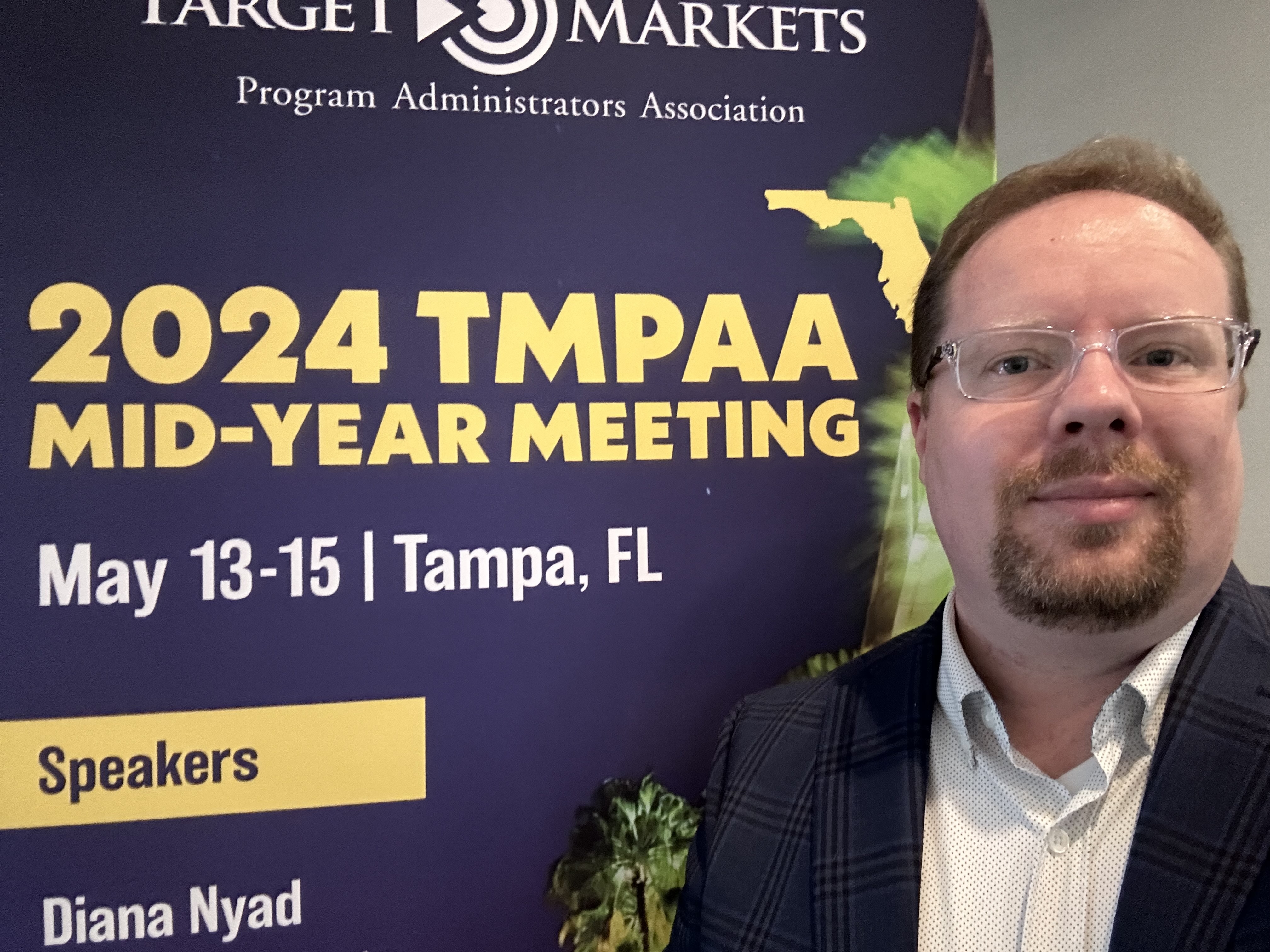
Target Markets 2024 Mid-Year Meeting in Tampa, Florida, made clear insurance is, and continues to be, a relationship business. This year’s mid-year meeting set a record with more than 1,300 attendees – more than double that of prior mid-year meetings for Target Markets. It was also my first time attending a Target Markets mid-year meeting.

I understand the attraction.

The first full day of Target Markets, Monday, May 13, was straight to business. Old friends reconnected while new acquaintances were made. Meetings were held over coffee, at breakfast, in break-out rooms and hallways, in the lobby, at the hotel Starbucks, over lunch, at the bar, across countless restaurant dinner tables and over drinks and at numerous private parties afterward. All this went beyond socializing as companies pitched, partners explored and new business partnerships were formed. The pace was hectic and heady, and it will be interesting to see if Target Markets offers an estimate for the business transacted in Tampa. The number of people who faced daunting schedules with back-to-back meetings, hoping to sign or write business, was impressive as they ran the gauntlet of two large Marriott hotels connected by a single third-floor sky bridge. The spirit of the 2024 meeting could be best summarized in a single word: Hustle.

Day two was a mix of the day before along with a series of programs and events that covered topics including a Lloyd’s Market update, a keynote speaker of remarkable tenacity embodied by Diana Nyad, a women’s leadership lunch, discussions on talent, the Target Markets’ new Program Business Professional designation and, of course, ample opportunities for networking.

The Target Markets’ hustle – on display from start to finish – also demonstrated the power and innovation of an insurance industry in growth mode. Seizing opportunities. Strengthening relationships. Getting business done.

Through all of this, I found myself among old friends I haven’t seen in years while sharing coffee and meals with new friends, potential business partners and – in my world – the all-important insurance industry trade media who were there to get the inside scoop on the issues, trends and insights of those who drive the business of insurance.

I applaud the team at Target Markets for putting together a productive event, and for those who grabbed the opportunity to move their business, and the industry, further into the future.

7 Spring Cleaning Tips for Your PR Strategy

For many of us springtime is a call to begin spring cleaning. But it’s not just our homes that could use a good scrubbing and organizing — it’s also the perfect time for brands to give their public relations strategy a thorough refresh. Revamping your PR tactics can breathe new life into your brand’s image, boost your overall visibility in the market and provide a clean slate to begin again better.

To do so, consider these seven essential PR spring cleaning tips:

  1. Dust off your messaging: Clearing away dust bunnies from neglected corners in the home is as important as sweeping away outdated or inconsistent messaging from your PR materials. Review your press releases, boilerplates, website content and social media profiles to ensure they reflect your current brand identity and messaging. Consistency is key. Make sure your messaging is clear, cohesive and aligned with your brand values.
  2. Declutter your media lists: Like sorting through cluttered closets, take the time to clean up your media lists. Remove outdated contacts that no longer fit and categorize your list by relevant beats or interests. This ensures you’re targeting the right journalists and publications with your pitches, which increases the likelihood of securing valuable media coverage.
  3. Polish your relationships: It’s important to cultivate strong connections with journalists and influencers in your industry to keep the shine on your brand for others to see. Reach out to key media contacts to ask what they are looking for, offer valuable insights or simply update them on industry topics and trends your subject matter experts can speak to. Doing so keeps you and your organization on the radar of important journalists while also letting them know they have potential sources for topics of interest to them. Polishing these relationships means more opportunities down the line.
  4. Freshen your content: It’s amazing what a fresh coat of paint can do to change the look and feel of any room in your home. Similarly, spring is the perfect time to consider how to give your PR content a makeover to breathe new life into its value and impact. Consider creating visually appealing infographics, engaging but brief videos or interactive webinars to capture the attention of your target audience. Diversifying your strategy can help you stand out in a crowded digital landscape.
  5. Organize your editorial calendar: A well-organized editorial calendar, like an organized pantry or closet, means you will not only be able to put your hands on what you need and plan for what you don’t yet have, it ensures you can remove items that lack priority in your PR efforts. Map out upcoming events for the next three to six months as well as product launches and any industry milestones to ensure timely and relevant opportunities for news coverage. Having a structured plan in place can help you stay focused and maximize your PR efforts throughout the year.
  6. Scrub your online presence: Spring cleaning is largely about removing dirt, grime and unnecessary clutter in the home. For organizations, this is an opportunity to clean up your brand’s online presence. Audit your social media profiles, review your website and any online directories that describe your organization to ensure they accurately reflect your current brand image. Respond promptly to online reviews and address any negative feedback with professionalism and transparency.
  7. Plant seeds for growth: Finally, like planting seeds in your garden, invest in long term growth opportunities for your brand’s PR strategy. Look for ways to position your organization as a thought leader in your industry through speaking engagements, guest blogging, meet-and-greets with reporters at conferences or participation in industry events and panel discussions. Planting these seeds of expertise can help you cultivate a strong reputation and attract new opportunities for media coverage and broader brand exposure.

Incorporating these spring cleaning-inspired tips into your PR strategy will help ensure your brand remains fresh, relevant and impactful in the eyes of your target audiences and the media. Just as a clean and organized your home brings a sense of renewal, a well-maintained and refreshed PR strategy can provide renewed energy and purpose to that strategy, creating further opportunities for success.

Sorry Seems to Be the Hardest Word

Giving your public relations team a seat at the table early in a situation can mean the difference between successfully navigating a potential reputational crisis and falling victim to embarrassing, costly and ruinous public backlash against your brand via social media and the press. One just needs to look at the now nearly infamous Kyte Baby incident, where CEO Ying Liu delivered a cringe-worthy and awkward TikTok apology in January, to see how harmful it truly can be to fail to consider strategic counsel from a seasoned PR advisor. This was in response to the company’s termination of an employee’s request to work remotely while her adopted newborn was in a neonatal intensive care unit.

While the underlying issue at Kyte Baby seemed connected to parental leave policies, the decision was viewed by consumers as antithetical to the company’s mission and values. Under the title of Kyte Cares, the company’s website reads in part: “At Kyte Baby, we have dedicated our company to helping babies and families find comfort for more than a decade … we understand the importance of family and recognize parents’ vital role in nurturing and supporting their families.”

The controversary swirled as enthusiastic fans of Kyte Baby’s products learned of the employee’s termination and complained to the company and online. Ironically, it was Liu’s awkward and stilted apology that brought the company out of the shadows of social media and made headlines around the world.

A Failure of Consideration

It would be a mistake to discount Liu or her decision as ill-considered. She is a working mother and entrepreneur who also happens to hold a doctorate in economics. Also, the tone of her original video apology, where she asked the employee in question to forgive “how her parental leave policy was communicated and handled,” would imply she was advised on how to respond.

What happened was a failure of consideration. A failure to consider what the decision to terminate would say about the company, and a failure to consider how Liu’s response to public backlash would be presented and received by that public.

If there was a PR professional advising her to act as she did, that person should be fired. If there was no PR professional advising Liu alongside of the company’s attorneys, then the fault lies squarely with Liu and the company’s fundamental inability to live its mission in a way its loyal customers might expect.

My guess, and it is only a guess, is this matter was seen as a legal issue and addressed accordingly. What it lacked was someone in the room, steeped in the brand’s mission and reputation, who would have played devil’s advocate both on the decision to dismiss the employee as well as gaming out any potential blowback from the apology. Had a skilled PR professional been in the room from the start, Liu would have been advised on the optics of dismissing a new mom with a sick child from a company founded to help moms navigating health issues (skin conditions related to fabrics) among their young children. Further, had a skilled PR pro spoken to Liu when her original apology was scripted and planned for wide distribution on TikTok, Liu would have been strongly advised to take a different approach.

Instead, Liu made a decision that matched the company’s (then) policy on parental leave. Liu made a legally appropriate CEO decision to follow company policy but failed to be the empathetic mom who founded the company 10 years earlier to help other moms.

Why PR Needs a Seat at the Executive Table

Liu is only the latest example of organizational leaders – C-suite and others – who failed to look beyond policy or legalese. In the same month Kyte Baby made headlines, a former account executive for Cloudflare, an IT company, recorded and posted to social media a video of her termination over Zoom by two human resource professionals she had never met and who didn’t know her. That company’s CEO also went on a social media apology tour, calling the video “painful” to watch and noting the way the matter was handled was inappropriate.

Organizations large and small make mistakes. Having trusted counsel – both legal and others – consider and review decisions that can impact the brand is vital. Moreover, the rules governing the workplace have changed and continue to evolve. Not only are people making space for their work in their homes and having to integrate that work into their lives beyond 9-to-5, but we are also in an era where the aggrieved can turn to social media and expose former employers who act in bad faith – real or perceived – to a firestorm of negative publicity. And, frankly, a lot of organizational leaders are getting it wrong.

Having a communications professional as part of the decision matrix can help. Whether in-house or an outside consultant or agency, these are trained professionals whose jobs are to consider every decision, message, social media post and internal memo through the lens of the organization’s reputation. It’s an invaluable service when you consider the alternative: Kyte Baby is navigating an ongoing boycott while trying to share positive news about their new parental leave policies. Cloudflare blew up on social media for the wrong reasons and may struggle with recruitment of vital talent as a result.

Lawyers are excellent advisors. They protect their clients in the court of law. Public relations professionals focus on reputational threats and protect clients in the court of public opinion, which is where consumers tend to decide where and how to spend their money. Both must be in the room where decisions are made.

What’s In (and Out) in Public Relations for 2024

Many of us appreciate starting the new calendar year with a clean slate and some helpful insights to make us more successful. Knowing what has changed and how to better navigate the world in our personal and professional lives certainly helps. And as is the trend at the start of each year in fashion, business and elsewhere, I wanted to share my perspective on what is in, and what is out, in terms of approaches to communication strategies in 2024:

Artificial Intelligence (AI)

IN: Greater scrutiny of artificial intelligence (AI) and Generative AI.

If 2022 showed us what was possible with the birth of ChatGPT, 2023 showed us what was practical as litigation surrounding AI flourished, as noted in a Dec. 14, 2023 blog post by the law firm of Perkins Coie. Going forward, AI in strategic communications will be a resource, not a revolution, leading those who fail to recognize this shift into a world of trouble.

OUT: The idea of replacing communications professionals with AI at least for now. Experimentation has shown us AI has yet to mature to the point where anything but mundane copy automation is possible. Even there, the risks of error, inaccuracy and legal jeopardy abound with AI in a lead content role.

Social Media

IN: LinkedIn as a force multiplier for your communications strategy.

For both for- and nonprofit organizations, LinkedIn has demonstrated that tailored, personal and insightful content is exactly what professionals are seeking. We are all looking to grow professionally, and LinkedIn has become the gold standard in social media for real-world advice, tips and lessons learned. The platform has also rolled out many tools with low entry barriers for organizations to use to support their communications goals.

OUT: X, formerly known as Twitter, for anything of practical use by businesses or nonprofits.

The platform has been on a downward slide in terms of relevance for years. With a fast-shrinking number of quality controls, advertisers and actual users, it will continue a steady slide into irrelevance barring a major turnaround which seems unlikely at the dawn of 2024.

Media Relations

IN: Continued consolidation and evolution in the media space.

The very definition of media outlet remains in flux as news publishers explore new platforms and models, while journalists themselves go entrepreneurial with newsletters, podcasts and streaming services.

OUT: Asking the question, “Who do you know at [media outlet name]?”

While media relations was once a field that relied on relationships to get a foot in the door, today’s journalists are driven by what stories grab eyeballs, regardless of who is pitching it. It is no longer (and, frankly, it has not been for a long while) who you know, but rather the quality of the story to be told and the PR professionals who best understand how to share that story with key journalists and/or outlets.

Messaging

IN: The continued march of pithy messaging to best engage and inform B2B and B2C consumers.

With millennials and Gen Z now in the majority of consumers and increasingly moving into management and entrepreneurial roles, organizations will need to appeal to these audiences by conveying brand personalities that showcase authenticity. Taking an infotainment approach — the combination of information and entertainment, even humor — has proved popular and impactful with these cohorts. However, great care must be taken to avoid unforced errors like the failed 2023 Snoop Dogg/Solo Stove marketing campaign.

OUT: Messaging that even hints at self-promotion.

From the journalists themselves to the feedback of their readers, the jury has come in and stakeholders are tired of being forced to endure a brand’s value proposition or product/service pitches disguised as news. Brands will need to find something relevant to say about the issues, trends and news impacting their audiences that does not center on what they can do or sell. This approach will be critical if they want to continue to maintain relevance with those audiences and the journalists who help them reach those audiences.

Content

IN: Succinct video messaging.

Consumers, as well as the media, are time starved. While video has helped drive increased engagement, the trend continues to move toward ever more brief videos whether it is explaining a concept, pitching a reporter or persuading audiences. Brands should be creating their own video library of short-form content on key topics and issues of greatest importance to their target audiences.

OUT: Long form owned content.

The 60-second video is dead; long live the 30-second video. Smart brands will continue to move away from long-form content on their owned channels (i.e., websites, social media, newsletters, etc.) and take advantage of low- and no-cost video and editing tools, as well as developing strategies to create and provide aggressively brief content that speaks to important trends and topics.

The pace of technology and information continues to gain speed. Smart brand and organizational leaders will recognize the importance of adapting to the preferences and needs of their target audiences while creating plans that leverage new ways of engaging audiences to ensure they maintain awareness and relevance among those who matter most to them.

The Lesson of 2023: Messaging Matters More Than Ever

From the explosive exploration and application of generative AI across society, to bank failures and financial upheaval, inflation and more, 2023 was the year that surprised no one and everyone at the same time while keeping us all wondering what might follow.

This was also a year where proper messaging, or the failure to provide proper messaging, played into the headlines at a level we hadn’t seen since the height of the pandemic.

Introducing:  AI

Across the calendar, 2023 was the year where everyone wanted to talk about technology, specifically artificial intelligence. From an ill-considered public discussion about using AI to advance diversity at Levi’s to the very public spectacle that was the firing and rehiring of Sam Altman at OpenAI — and all manner of speculation of how AI would improve nearly every business — poor messaging drove headlines and cost their brands.

In March, Levi’s announced plans to use AI-generated clothing models to allow customers to see clothes on models who looked more like them. The initiative was met with backlash for failing to include in their messaging the platforms to find the AI models or information on how to customize the models, as well as what the change would mean for human models. The company was forced to issue a follow-up statement clarifying the initiatives and explaining, among other things, that it was not meant to substitute real action on diversity, equity and inclusion at the company.

Of course, the messaging around Sam Altman’s firing and rehiring at OpenAI made our list of messaging gone wrong in 2023. First, the board of directors of OpenAI fired Altman with a public announcement claiming he was “not consistently candid in his communications with the board,” and that the board “had no confidence in his ability to exercise his responsibilities.” After Microsoft swooped in to try to pick up Altman and his colleagues, pressure from employees and investors mounted, prompting OpenAI to post on X that Altman would be returning as CEO.

It seemed not a day passed this year when the public square did not feature a discussion about the digital world. And, regardless of your technological interest or acumen, few can honestly say they were not aware of or participating in the buzz around AI.

Failing Fabulously

Meanwhile, the financial sector was rocked when a few banks formerly ranked as among the 30 largest in the US imploded despite reassurances from business and government officials. In fact, one of the failed banks committed financial suicide due largely to poor messaging. Silicon Valley Bank, in the wake of rising inflation and interest rates, issued a statement in March that made no mention of its financial strength and instead focused exclusively on losses, manifesting an old-fashioned bank run that effectively killed the institution.

Additionally, theories and speculation on inflation and a potential recession offered real-world consequences for the global economy. Notes from a March meeting of the US Federal Reserve didn’t mince the words of Fed economists, noting bank failures were likely to cause “… a mild recession later this year.” This set off a chain of events that saw Silicon Valley leaders like Google, Meta and others publicly trim headcounts while other industries took a long, wait-and-see approach to spending in 2023.

The Value of Words

In short, buzz and speculation that included the active participation of brands and businesses through their messaging not only influenced public perception, but that messaging also drove consumer decision-making.

In a world increasingly attuned and sensitive to business and industry messaging, 2023 offered a bevy of examples too numerous to mention here that reinforce the adage, words matter. One of the key takeaways from this as we look to 2024 and beyond is that minds, as well as markets, can move more dramatically than ever based on how messaging is conceived and delivered. Brands and nonprofits will do well to apply this lesson to their new year planning. And, of course, Kimball Hughes PR is always here to help craft as well as pressure-test the words and content that shape the perceptions of those audience(s) most important to your organization.