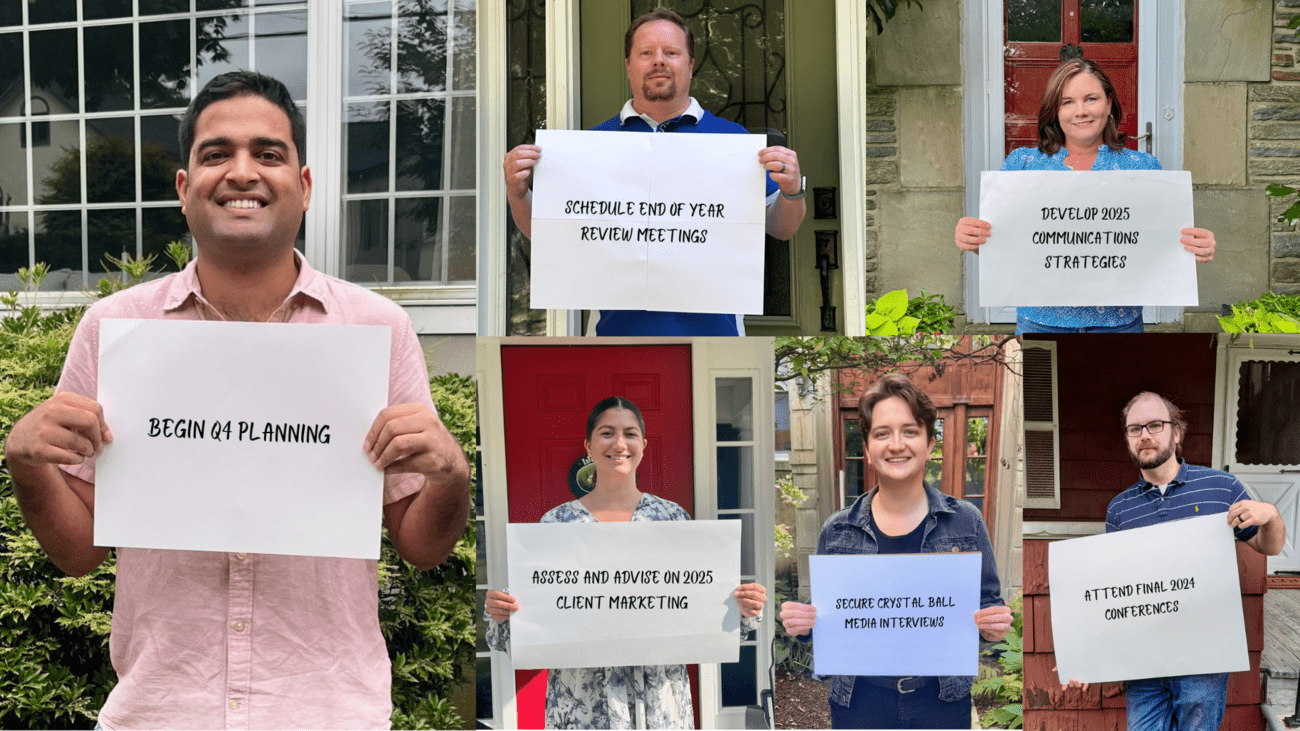
It’s back-to-school season and the team at Kimball Hughes Public Relations knows this means changing things up at home for many. For business and non-profit leaders, September ushers in planning season for the year ahead while winding up 2024 priorities. Our team at Kimball Hughes PR is here to help you check off your list of communications initiatives for 2024 and prepare new strategies and initiatives for 2025. We’re just a phone call or email away. Just don’t ask us to pick the kids up from school.
Donald Trump has done more for black people than Abraham Lincoln and Martin Luther King Jr. combined.
Joe Biden finally beat Medicare, so we don’t have to worry about senior citizens anymore.
If grocery stores want me to bring my own bags, they should pay me.
Pat’s is the only place to get a real cheese steak in Philadelphia.
Let’s consider the visceral reactions many would have to the above statements if posted to LinkedIn by their professional connections. The key word here is visceral.
In my view, LinkedIn is not the place for sensitive social commentary. LinkedIn was created to help people present themselves for career opportunities and for professional networking. It has evolved, becoming a venue for creative expression, sharing of expertise and insights, for calling society to action on issues of industry and enterprise, and for holding a mirror up to our workplace lives – all through the lens of the professional. It is not Facebook, where personal perspective, political ideology and countless memes are central. It is not X (formerly Twitter), where reactionaries, visionaries, citizen journalists, political and social elites and the opinionated co-mingle. Nor is it Instagram, where humor and snark co-exist with vacation photos and musical dance routines or humorous pet antics.
LinkedIn, for good or ill, remains a platform for professional discourse with a splash of the personal that should not veer into jarring zealotry. Authenticity is important, but not at the expense of alienating important audiences that might disagree with your personal, beliefs. Courtesy, respect and being a compassionate human must be central to interactions in any professional environment — virtual or in person.
You would not walk into a job interview and begin the conversation with your unsolicited views on abortion. A company-wide Zoom meeting where the boss, or anyone else, shares why her preferred political candidate is the only rational choice could constitute a hostile work environment. No sane person would begin a new business presentation by explaining why their religion is superior to others. And certainly no one enjoys that one uncle who comes to Thanksgiving dinner eager to share his criticisms of your parenting, lifestyle, romantic partner, personal finances or who also publicly shames Aunt Mable’s latest obsession with sequin holiday sweaters.
Many of us were taught that some topics are not appropriate in the workplace or even certain family functions. Most importantly, in professional circles would you want your hard-earned qualifications and accomplishments overshadowed entirely because of the personal beliefs or opinions you share that have little or no bearing on your performance in the workplace?
We counsel clients to always strive for an authentic voice on social media that best reflects the organization or individual’s values and professional strengths. No one should feel the need to contort themselves into something they are not, either in the office or on LinkedIn. However, we live in a polarized world. Adding to the cacophony of militant opinions or strident arguments in a professional setting serves almost no one. This isn’t to say social media can’t be a tool for advocacy; rather, it’s simply that LinkedIn is often not the appropriate platform.
Consider your strongly held views or opinions posted to LinkedIn may negatively impact your employer’s ability to:
Recruit talent
Retain emerging professionals
Win new business
Fundraise
Attract new vendor partners
Hold on to existing customer relationships
Maintain the respect and support of the communities and audiences important to them
Moreover, sharing your personal beliefs on sensitive social topics on LinkedIn might also serve to harm your career. What if employers and others believe those views, however well intentioned, might bleed into the workplace and create potential management challenges with you, your direct reports or with clients?
When you reach for that “Start a post” option on LinkedIn, remember to be thoughtful, kind and intentional. What and how you post on LinkedIn is a reflection of your character, comportment and professional judgement. If you assume future employers, employees, customers and others aren’t going to look at LinkedIn — and maybe do a lot more scrolling than you think before entrusting you with their reputation, careers, money or more — you would be mistaken. A LinkedIn post, especially one written in haste, can do considerable harm. Equally so, a thoughtful and professional piece of content shared on LinkedIn can benefit you, and your employer, greatly. Proceed with caution, respect and offer the grace and kindness you would seek for yourself when engaging on this most powerful of professional platforms. And remember, always, that nothing on the internet ever truly goes away.
If you are a business or nonprofit leader, get in touch with Kimball Hughes Public Relations to ensure you have a social media policy and protocols to protect the reputation of your organization and those to whom you entrust. And if you are facing a reputational crisis, prompted by social media or other factors, we also provide Crisis Communications services to help you as well. Contact us at info@kimballpr.com or call (610) 559-7585.
Leaving the office to go on vacation can be difficult if you don’t prepare ahead of time. Last month, I took a two-week trip to Greece and opted not to bring my work along with me. Here are some tips I like to follow to ensure that my vacations don’t disrupt client workflow:
Keep your teammates in the loop: Before heading out, I prepared a document highlighting all active projects for my clients and how those projects could progress while I would be traveling. I also scheduled time to review that document with our team so we could figure out how to best to divide that work while I was out. This ensured that projects would keep moving while I was away and that our clients would continue to receive the service they expect from our agency.
Leave an email trail: Keep coworkers copied on all client emails and make sure they have call invites to any status calls or upcoming meetings that may occur while you are traveling. Forward over any threads they may not be on and be sure to provide context and details so they can pick up where you left off.
Let your clients know ahead of time: A few weeks before my trip, I began informing clients that I would be out for two weeks in June and that they could reach out to other members of our team with any inquiries during that time. This way, my clients were not blindsided when I left and felt comfortable and confident that the work would continue in my absence. They also knew who they would be working with while I was out. Of course, I also set an out of office message directing any inbound inquiries to the right people, in case any pressing emails came my way.
Embrace your vacation: It can be hard to actually disconnect on a vacation. Consider archiving your work-related apps or turning off notifications so you do not feel the need to check in as often as you may like. A vacation is a chance to refresh yourself mentally and for the long term, it is better for you and your business to take that time to disconnect and recharge.
And now for the fun part. Please enjoy a few of my favorite photos from my time in Greece where I enjoyed fantastic regional meals, visits to ancient ruins, time at the pool and more.
Summer is here and the Kimball Hughes PR team is all about enjoying the warmer weather and some fun in the sun. Here’s a glimpse into some of the summer shenanigans our team members have gotten up to or are planning while OOO.
What do you have planned? Summer concerts? A beach or lake vacation? Backyard barbeque? Quality time with a good book in the AC?
Eileen: For our family, summer means an annual trip to the Jersey Shore to enjoy time with friends on the beach or on the deck and a good soft-serve cone – or several. I’m also looking forward to hitting my first summer concert in years to see Zach Bryan at Lincoln Financial Field in early August.
Kate: Summer 2024 is going to be hard to beat for me. So far, I’ve gone to my first INDY 500, saw Billy Joel and Stevie Nicks, Jacob Collier, officiated my best friend’s wedding, helped another get engaged and found out I’m going to be an aunt for the first time.
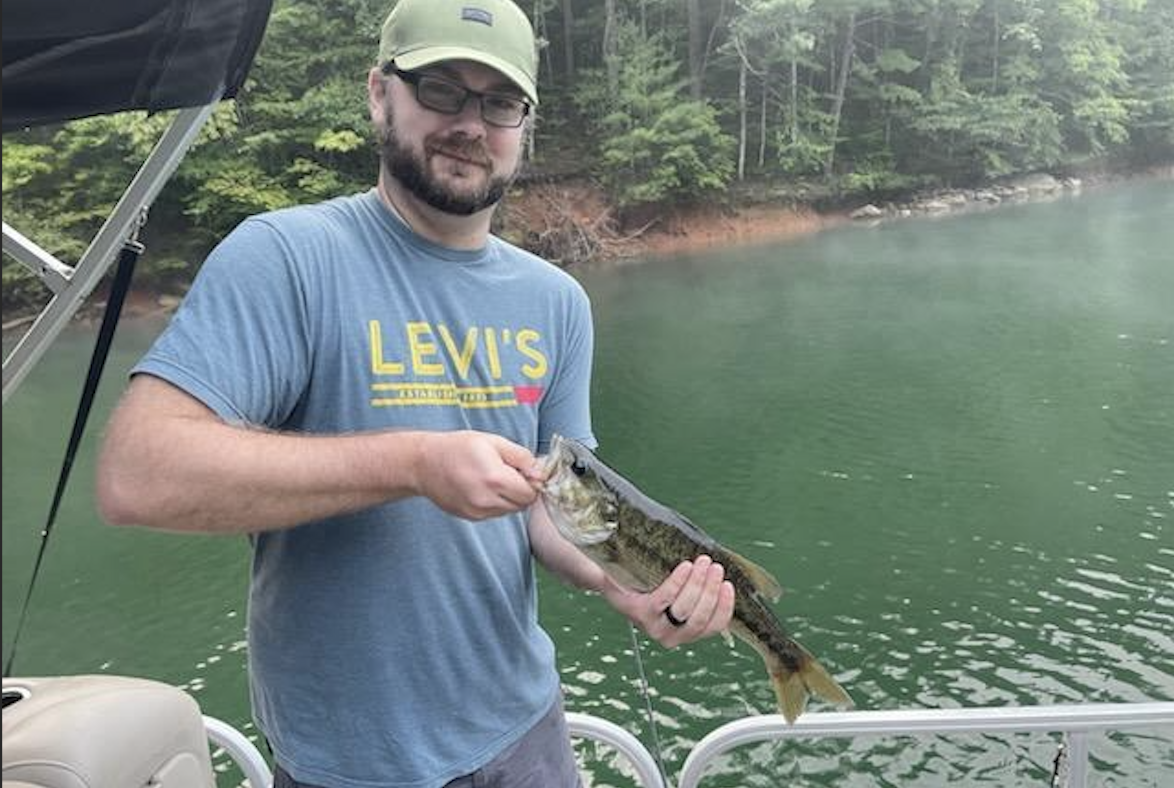
James: The lake calls! After closing on a house earlier this year, my wife and I are heading to the mountains for some much-needed time away. A week of fishing and kayaking will provide a much-needed break from the never-ending list of house projects.
Rod: It will be a busy summer with several weekends with house guests and a weekend trip to North Carolina in July to christen our friend’s new home. We’ll wrap up in August with a week in the Virginia Mountains for Teddy’s first road trip with our nieces and extended family. In between, there will be lots of games of fetch with Teddy, of course.
Liz: Our family will be heading to LBI in a few weeks for fun at the beach and the annual family cook-off – always a great time. My husband and I are looking forward to seeing Jeff Dunham in September for some good laughs.
Cassidy: This summer has already been fast paced and adventure packed with a one-year wedding anniversary trip to Maine, Red Sox games with friends, time by the pool and golf dates galore. The rest of the summer is projected to be just as exciting with a family beach trip, a Noah Kahan concert at Fenway Park and a slew of friends’ weddings on tap.
Hari: This summer kicked off fast with a trip to Greece, traveling through seven different towns and cities exploring the history and food of the country. Up next will be a few weekends down the shore with friends and family, a trip to West Palm Beach and a wedding to wrap up the summer.
No matter where you turn, social media issues are in the headlines.
Just recently, former President Trump’s Truth Social platform had its IPO, legislation to ban TikTok in the United States has stalled in the Senate, and the Supreme Court has expressed concerns related to free speech and state-level social media legislation. On the consumer side, according to TechCrunch, in 2022, TikTok’s monthly active users grew an average of 12% year-over-year per quarter, but this figure fell to 3% year-over-year per quarter in 2023.” Setting aside the politics and social concerns related to these headlines, the social media landscape is actively changing, and businesses will need to reassess how they utilize social media.
Understanding how the social media landscape is changing will require individual users and businesses alike to acknowledge the changes already been made. We are well past the days of Facebook’s monopoly on the social media market, and even traditional influencer relationships have changed with the growth of platforms like TikTok and YouTube Shorts. Now, businesses and users are seeing signs that these platforms are under attack, and some are asking if they will go the same route as Vine in 2017, when it was bought by Twitter (now X), and essentially shut down. Looking to the future, there are a few things that social media users of all levels should keep in mind.
Short-form content will remain dominant
While platforms are changing, the content has followed a similar trend — users want short, easy-to-digest content they can share and react to in a streamlined way. This means that even if TikTok is banned in the U.S., or bought by a different owner, other contenders will jump into the vacuum left in TikTok’s wake. Channels like Instagram and X continue to invest in video content, and that content will continue to be short as each brand’s content feeds continue to compete for attention.
Strategy is a must have
When choosing what platform to use, it’s important to consider how consumers interact with it, and how those audiences will then share and consume future content. Is a user looking to reach local business owners or C-level executives? For the former, community platforms like Facebook may still have a place in strategy, while the latter is more likely to capture engagement on LinkedIn. Understanding audiences and their media consumption habits will help users create a sustainable, long-term plan for engagement that makes a difference, despite ongoing changes or regulatory considerations. Reference the Twitter/X evolution as an example of how not thinking through these strategies can impact your long-term social media plans.
Names fade, but content remains king
Like many businesses, the names and identities of those at the top of the industry can change quickly. Facebook knocked Myspace off its throne at the onset of modern social media, and X has taken leaps away from the identity and goals it had as Twitter. While the names on the door may change, the user’s need to engage with relevant content remains constant. Now, as new platforms rise and identities change again, users are looking for the next big thing. While we don’t know what social media’s next big players might be, we can be sure there will be an emphasis on content that can be easily consumed, shared and analyzed.
As the role of social media in shaping politics and opinions has rapidly grown, businesses and individual users should pay attention to how the platforms are changing and being regulated. While it is impossible to predict every change that may come to a platform, social media users can be prepared by having a strategy and recognizing the kinds of quality content that remain popular on a given platform. By developing and sharing good content, users will remain at the top of social media home pages, regardless any changes to the platforms.
We live in a TikTok world with countless Americans (me included) drawn to dramatic online videos of real-life joy and sorrow. How many of us have turned to our phones to watch one brief-but-compelling video, only to find 10 minutes or more have passed as we watch video after video? And those videos filled with relatable, emotional moments, are often the most compelling.
In 2018, Melanie Sanchez was recorded at her college graduation taking a cell phone call from an employer offering her a job. The video went viral, and we all shared in Melanie’s joy. One of my favorites was from about 10 years ago. Marina Shifrin posted an interpretive dance resignation video for her employer. It was fun, with a bit of dark humor, and showcased her creativity in the process. The video went viral. Marina hit the talk-show circuit and even landed a book deal.
Of course, there are also heartbreaking videos. Brittany Pietsch made headlines a few months ago when she recorded her Cloudflare layoff-via-video, showing us the dark underbelly of not only remote work but also how poorly some employers plan these challenging discussions. There are too many examples like Brittany’s, and not enough of those like Melanie.
For employers, however, there are lessons to be learned as we continue to break new ground in a world of hybrid and remote workers. The biggest lesson from a communications perspective is to be human and humane in these discussions of hiring and firing.
When Hiring
Check the Tech: Before you dive into the conversation, make sure the technology platform you’re using works for all parties. Shaky or delayed connections create misunderstandings and frustration. Don’t proceed if the tech fails or is of such poor quality that the messaging you wish to convey is at risk. This step applies to both the hiring and the firing process.
Be in the Moment: Video meetings are part of the new normal of workplace cultures. Treat them like in-person meetings. Greet the candidate and be warm and conversational. Work to maintain a high level of eye-contact by looking at the camera when speaking and listening.
Set Expectations and Don’t Let Suspense Linger: Be transparent about your process upfront. Outline the steps in that process and your approximate timeline clearly. And if you are calling to offer the position to the candidate, be upfront rather than leaving them waiting to know if they have been selected. No one needs to be on pins and needles across an entire conversation waiting for the big reveal at the end.
Record with Consent: If you plan to record the interview to share with colleagues or even for your own internal review, ask for the candidate’s consent first. Show respect for their privacy. And remember, in some states and jurisdictions, it is illegal to record someone without their consent. Parties who break these laws can face serious legal consequences.
When Firing
Privacy First: In addition to checking the tech as noted above, privacy is critical. This is a devastating moment for the employee being released from your employ. Both you and the employee should be in a private setting.
Be Empathetic: Job loss ranks alongside death and divorce as a major life stressor. Demonstrate kindness and empathy as best possible. Acknowledge the hurt and distress of the moment.
Be Direct: Clearly communicate the decision to end the person’s employment without mincing words. However, be kind in the process. Avoid jargon or corporate speak; simply act like a human and treat the person with respect.
Provide Resources: Your human resource representative should join the employee’s manager or supervisor on the call. The manager or supervisor – someone who knows the employee and his or her work product – is there to discuss the decision and provide feedback, while the HR rep should explain any severance package, unemployment benefits, health insurance options (if applicable) and any other services the organization plans to offer following separation. At all times, the employer should be respectful and be sure to truly hear the employee while still keeping the call focused and brief.
As employers continue to hire digital natives, the likelihood of a business matter like hiring or firing becoming click-bait for the rest of us rises exponentially. Millennials and GenZ are the first truly digital generations whose lives online are rarely separate from their offline experiences. So, employers would serve themselves well to consider those hiring phone or Zoom calls or the difficult layoff discussions via Teams or speakerphone might take on lives of their own online. These discussions could put your organization’s reputation on the line and even threaten your bottom line.
Remember, these discussions have the potential to become tomorrow’s headlines. Plan accordingly.
As we revel in the “Luck of the Irish” this St. Patrick’s Day, we thought we would look at how to get lucky with public relations.
Contrary to some thinking, luck has little to do with landing a good media placement. In fact, a reporter’s connections with journalists is barely a factor. While relationships can be part of getting the right journalist connected with that pot-of-gold placement, its only one of the many components that go into a successful PR campaign.
Unlike that pesky little leprechaun of General Mill’s fame, we’re willing to share the lucky charms we employ to land a good PR placement.
A Recipe for Success
The first step toward a public relations win is twofold: Identifying your key messages and understanding your target audience.
If your key messages double as marketing or sales copy, your luck has run out right from the start. In this world of smaller newsrooms and overworked journalists, language that even hints at self-promoting messaging will be ignored almost immediately. Today’s media climate requires brands to build authentic messaging that informs, educates or solves a significant problem of the outlet’s audiences.
Every company has a product or service to sell. Every nonprofit or charitable organization has a mission to promote. The question is, what does the target audience need? In most cases, it isn’t a sales pitch or information about a product or service that will save them time, money or convenience. Rather, messaging needs to work backward from the audience’s need, educating them on the situation and options, and positioning the brand or nonprofit as a reliable resource. Once you understand your target audiences, you can refine your message to attract the interests of journalists courting those audiences.
Another important component where most brands and organizations come up short is credibility. Public relations is not marketing if only because it is not — and should not be — about sales of products or services. Confusing the two is about as unlucky a step as one can take in business.
We hear from companies all the time that want to issue press releases about a fundraiser or new product or service. If these companies have done the work of building credibility, there are opportunities to be had. That hard work includes making executives available for commentary on industry trends and issues. It includes demonstrating industry knowledge and insight on matters that have nothing to do with the brand or organization’s products or services.
Credibility is built on being responsive and helpful to journalists who reach out seeking quotes, background and general information. This means fostering and maintaining a relationship with the outlets that matter most. Absent these things, a press release from an organization that is not engaged with the outlets and journalists covering that sector of the economy are of little interest to those media professionals. This is the number one reason why one-offs or project work often proves to be difficult.
You can’t buy your way into the Wall Street Journal’s news coverage. However, you can pay for a comprehensive public relations campaign that positions you as a thought leader in your space by showcasing your insights, commentary on industry trends, sharing of best practices and reacting to news of the day. This requires a steady stream of diverse content — owned and earned — across multiple channels to establish credibility and raise your profile as a go-to source for media covering your space. Consistent messaging and a consistent industry presence demonstrate credibility and brand commitment.
Additional Tactics for Good Luck
Thought leadership, the sharing of innovative ideas, insights and opinions — in the form of contributed content, owned content or in-depth media interviews — not only build relationships with media, but they demonstrate that vital credibility media needs to validate you as a source. Contributing to the discourse of your industry or field in this way often results in third-party endorsement by media (because they publish you as a reliable source) that provides reputational fuel, and a bit of luck, for your brand.
Newsjacking provides time-sensitive opportunities to help journalists understand or contextualize breaking news or emerging trends, often in the wake of actions taken by others. This type of media engagement helps determine the next phase of the story and, when done correctly, positions your organization as a trusted source.
Social Media has ebbed and flowed in terms of influence, and some channels are better suited than others to reach certain audiences or carry certain types of messaging. For business professionals and B2B industries, we continue to find value in LinkedIn. Between LinkedIn’s newsletters, live events, self-published articles and regular engagement by and with executives, LinkedIn consistently proves to be a powerful tool to reach key target audiences as well as media professionals searching for and vetting industry sources. Social media continues to be the investment some organizations are reluctant to make but would be lucky to have supporting their mission.
A Lucky Match
Finally, finding the right public relations agency for your business is less about luck than it is judgement. In fact, here’s a little secret: most PR agencies do most of the same things, with the same tools and connect with the same journalists. While many will point to a raft of key differentiators, from our perspective it comes down to one big one: matching personalities.
Public relations is, after all, a relationship-building business. While many of us trained the same way, have similar experiences and employ a range of not-too-dissimilar tactics to achieve our own lucky placements, it comes down to asking with whom you would prefer to work. Do personalities align or clash? Do you truly achieve a meeting of minds in that first meeting or is the pitch for the work simply pandering to your ego? Do you want to be surrounded by those who simply agree with you to please you, or do you want the expertise and insight you will pay for to be offered constructively, candidly and all to serve your best reputational interests? If things go wrong, is the PR pro or team you are considering the same individual or team you want standing by your side to fix it? Has the PR team pitching you on their abilities earned your respect and proven their value?
We advise prospective clients to understand all PR agencies offer similar approaches and resources. Some have deep industry specialties while others are generalists. What should matter in a lucky public relations partnership is the professionals doing the work, their knowledge and understanding of your industry, their track record, their ability to write well, their creativity, trustworthiness and their respect for your organization and its reputation.
Maybe there is a little luck in finding the right PR partnership, but the work itself has nothing to do with luck. It’s about tenacity, credibility, creativity and knowledge. If you find that in your public relations strategy as well as your PR partner, well, that truly is a lucky combination.
Thank you for following along with Kimball Hughes Public Relation’s 12 Days of PR. We hope you have found value from our thinking on how and why public relations can help for- and non-profit organizations. Please enjoy and feel free to use all 12 insights throughout the year. Have a safe and happy holiday season!
On the 1st day of our engagement, my new client gave to me…
A request to raise awareness around their brand. Public relations empowers clients to share compelling stories in ways that build their credibility, while transforming them into go-to resources for their specialties. It starts with a comprehensive media plan. After gaining an understanding of their goals, target audiences and key messages, we craft a thoughtful plan chock-full of tactics – that get results – leveraging media relations, thought leadership, speaking opportunities and more.
On the 2nd day of our engagement, my new client gave to me…
A one-off press release. A stand-alone press release will do little to amplify your brand and is usually not worth the investment of time or money. Rather, press releases should be one component of a comprehensive, ongoing media strategy designed to showcase your company’s expertise. A thorough media plan that incorporates newsworthy and thoughtful press release distribution, consistent with your company’s key messages, will help you to propel your brand and position your company for success.
On the 3rd day of our engagement, my new client gave to me…
A call for more control over their messaging. These days, smart PR incorporates both earned and owned media. In addition to traditional media interviews where a client cannot totally control what ends up on the page, owned media, which leverages blogs, social media, white papers, sponsored content and more, allows clients to share their messages with editorial control. We work with our clients to determine the best approach for them, often incorporating a mix of both mediums for optimal exposure.
On the 4th day of our engagement, my new client gave to me…
A crisis involving negative online reviews. Negative online reviews can quickly escalate dealing a major blow to a business – if not properly addressed. We start with an assessment of the facts. We determine if a response is warranted, and if so what type. We also confirm the review adheres to the host site’s review policies. If appropriate, we’ll quickly draft a tactful response to deter further discord or advise clients how to petition for the review’s removal – helping them keep their reputations intact.
On the 5th day of our engagement, my new client gave to me…
A CEO who had never spoken to the media. Getting in front of the camera or interviewing with a reporter can be challenging. Proper preparation is key, incorporating these three rules: Don’t lie, don’t guess and don’t assume. Liars get caught, guessers make mistakes, and those who assume get caught off guard. We work with our clients to provide interactive media training, including live interview scenarios conducted by our team former journalists, to ensure your spokesperson is interview-ready.
On the 6th day of our engagement, my new client gave to me…
A question on how we measure PR. When investing in PR, a common question is – how do you measure success? First we establish clear, obtainable goals that will drive PR efforts and work to achieve them. We measure for unique monthly visitors to the host site, share of voice, tone, reach and more. One of our favorite ways to measure PR success, however, is through the client’s new business wins after the prospect has read about them in earned media we coordinated.
On the 7th day of our engagement, my new client gave to me…
A request to grab headlines like their competitors. When prospects express frustration with their competitors dominating news headlines, we conduct a competitive media analysis to benchmark coverage and develop a roadmap to success. That success requires a campaign with consistent thoughtful outreach. We tailor our campaigns to best position our clients as reliable, informed and go-to media sources focused on issues, not self-promotion. This approach has yielded remarkable results for our clients, growing share of voice among their competitors by more than 70% in mere months.
On the 8th day of our engagement, my new client gave to me…
A question asking what media outlets are best for them. Choosing the right media target starts with understanding of the client’s audiences, preferences and goals. Are they looking to target C-suite executives, a geographic segment or specific community? Will they be comfortable being interviewed or do they have a wealth of expertise better suited for opinion or thought leadership contributed articles? Once we understand target audiences, the client’s style and how they define PR success, we dive into our deep database to identify the media outlets that will most effectively and efficiently reach their target audiences.
On the 9th day of our engagement, my new client gave to me…
SMEs with valuable content to share. Thought leadership or contributed content can be invaluable, not only to establish yourself as an industry expert and go-to resource for the media, but to raise the profile of your business. We work with subject matter experts (SMEs) to determine topics in line with industry trends matching their interests and expertise. In partnership with the SME, we develop a nonpromotional article sharing genuine insight relevant to the focus of that audience – with key messaging strategically interspersed. In authoring thought leadership published by a leading industry trade, our clients have seen their SME’s profiles grow exponentially along with their brand recognition.
On the 10th day of our engagement, my new client gave to me…
A request for coverage in a specific media outlet. Prospective clients often ask if we can get them in the Wall Street Journal. This can be possible with an ongoing, concerted effort along with the right story to tell. A successful PR program requires a sustained strategy to build credibility highlighting the client’s expertise. Media value insights that go beyond products or promotion and speak to bigger industry issues or trends. Media placements can be achieved through regular, relevant outreach, a stream of trade or regional interviews, contributed content and a thoughtful social media presence.
On the 11th day of our engagement, my new client gave to me…
A question asking how much PR costs. Engaging with a PR firm is like buying a computer. Some are sleek; recognized name brands, others are smaller and tailored to a specific task. Just like the capabilities and pricing of a new computer may vary, so do those of PR firms. A hefty price tag or brand name doesn’t guarantee the best product or service. Look for a firm that understands your industry, specializes in your specific needs and goals and gets high marks from current and former clients alike. As in all things, you usually get what you pay for.
On the 12th day of our engagement, my new client gave to me…
Their plans to attend an upcoming industry conference. Conference attendance can be a major investment. When done right, it yields a strong return that amplifies your brand’s reputation, creates new connections and sometimes new business. We work with our clients to profit from that investment with media attention. We advise our clients on the events most likely to draw media onsite. Then, we secure introductory meetings and interviews with journalists, and work with clients to prepare them for interviews with media training, if necessary, as well as carefully crafted talking points and more.
This month the world will observe 11 faith-centric holidays and several more seasonal observances. For millions, every December offers a buffet of celebrations, time spent with friends and loved ones as well as moments of great delight, remembrance and, in some instances, challenge and struggle.
To our remarkable clients who greet us in partnership and invite us to apply our skills and talents to help navigate the successes and obstacles of their work, we offer our sincere appreciation. We endeavor to bring our best selves and thinking to each engagement, and we hope doing so further contributes to the qualities we believe distinguish our agency from our competitors.
Each day we are fortunate to work with remarkable professionals within the agency who all check their egos at the door and work – genuinely – as a team toward the mutual benefit of our clients, one another and the agency. Rare is the work environment where apprehension is absent, constructive collaboration is abundant and good humor and appreciation is ample and appreciated. This reality exists because each individual on our team chooses to manifest it daily.
Of course, without our families and loved ones, we would lack the emotional, mental, and frankly, the actual physical space to excel at our craft. Thank you is both an inadequate response to all you do to help make our good work viable and joyful, as well as the best and most concise articulation of how important you are to our personal and professional lives. So, thank you.
Whatever holiday you might observe, whether your December is spent in joy or somber remembrance, the team at Kimball Hughes PR wishes you peace, good will and success now, in 2024 and beyond.
It’s been an exciting and fast-moving year for the team at Kimball Hughes Public Relations, full of special personal moments, career wins and of course, challenges. As the year rapidly comes to a close, we wanted to take the time to look back and reflect on our favorite moments of 2023. What were some of yours?
Rod Hughes: Perhaps my favorite moment from 2023 – among many – was an April trip to Carmel, California. I’ve been there before, but this trip was special because I played tour guide to my partner, David, who also fell in love with Carmel. After a busy few years focused on growing the agency, this Carmel trip was a needed and welcome respite where so many great memories were made.
Eileen Coyne: In the spring of 2023, my family took the trip of a lifetime. Navigating different languages, subway systems and coffee orders, we enjoyed whirlwind tours of London and Paris, travelled through the Alps, and completed our Griswald-like adventure in Italy.
James McKinsey: After getting married at the end of last year, my wife and I took a honeymoon to Glacier National Park. Seeing the bison and experiencing the mountains were an incredible place to celebrate the beginning of our lives together.
Hari Rajagopalan: This year, I took a trip down to Cancun to wrap up the summer. A nice week at the beach, relaxing and enjoying some beautiful weather and great food was exactly what I needed to recharge.
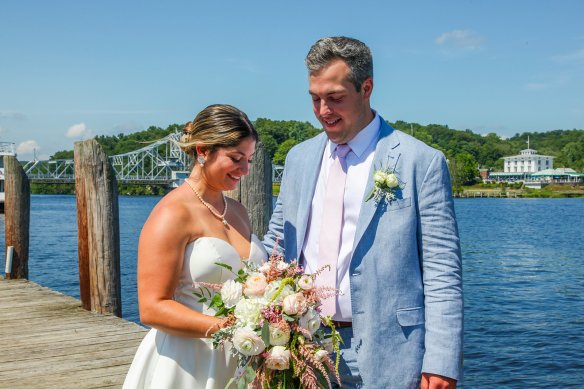
Cassidy Taylor: My favorite memory from 2023 has quickly become my favorite memory yet. This summer, I married my best friend and partner, Matt, in front of our closest friends and family. We had a beautiful ceremony followed by a memorable celebration with lots of dancing and laughter.
Kate Glaviano: While not just one moment, the best part of 2023 was making time with my friends to travel and spend time together. After years of huge life changes and a few moves to different states, it’s been grounding to reconnect, see new places and laugh hysterically with the people who know me best.
Liz Rubino: One of my favorite memories from 2023 was when my grandson was born right before my birthday. Seeing his brother and our family enjoying the day was the best gift ever.



















 PR Matters