Unknown's avatar

About kimballpr

Gary is president of Kimball Hughes PR and a recognized expert in crisis communications and insurance public relations.

Beyond the Fridge Magnet: Leveraging Media Placements in 2026

When I was in grade school, it was cool to see your name in the local newspaper—whether you were mentioned for good grades, sports, a musical achievement or the like. If my name made it into print, we would head straight to the 7-Eleven to pick up the latest issue. I would page through the newsprint scanning for my name, then proudly show it to my mom. She would grab the scissors, clip the article and pin it to the fridge, where it would live out its days, seen only by whomever happened to pass through the kitchen.

Many of us have similar stories. In those days, unless the article was physically mailed to grandma, posting it on the fridge was the extent of our abilities to leverage our “coverage.”

Things have changed.

Today, media placements are destined for much more than life under a fridge magnet. With the right amplification, one placement can be shared, repurposed and extended across multiple channels to reach far beyond its original audience and continue to deliver value.

At Kimball Hughes Public Relations, we are securing meaningful media placements in key B2B trade and Tier One media outlets targeting our clients’ core audiences. Once these articles or broadcast interviews featuring our clients’ quotes, commentary or contributed content are published, we don’t stop there. We work to leverage those placements to ensure they create lasting impact.  

A good public relations partner knows individual opportunities should never be one-and-done opportunities. Those partners will consider amplifying the article through the following:

  • Social media: LinkedIn and other relevant social channels can serve as excellent platforms to gain extra attention on a media placement. Consider posting a brief teaser or summary of the article with relevant tags and hashtags along with a link to the article on the company’s LinkedIn page as well as on executive profiles. This practice not only puts original content from your company in front of followers, clients and prospects showcasing third-party validation, it also encourages engagement and drives additional interest in your company.
  • Email signatures: Encouraging executives and other employees to reference and link to the article in their email signatures can also serve as a credible endorsement or proof point for clients and prospects.
  • Website press rooms: A press room on a company website serves as a home for media placements and press releases. Housing materials here will help draw people to the company website where they can learn more about your company and the services it offers, while supporting discoverability.
  • A blog post: A blog post housed on your website can serve to draw more attention to your article and its third-party validation, as well as allow the SMEs to take a deeper dive on the topic or even provide additional information on how the company can provide solutions related to what was discussed in the article.
  • A LinkedIn newsletter article: Similar to a blog, the LinkedIn newsletter article could be something written to tease out the media placement and offer additional insight. LinkedIn articles are delivered directly to LinkedIn newsletter subscribers and encourage engagement and sharing broadening the article’s reach considerably.
  • Employee communications: Media placements can also be leveraged to generate company pride and excitement. Internal comms teams can distribute media placements with commentary to staff members to build company loyalty, foster company culture and encourage more to participate in media opportunities.
  • E-newsletters or direct mail: Weaving mentions of the placements and links into e-newsletters and direct mail to clients and prospects can serve as another touchpoint to highlight that objective validation provided by a media placement, helping to instill reader confidence in the brand.
  • Sales materials: Sales teams can take great advantage of the independent validation media placements provide when making a pitch or in a prospect conversation. It can be valuable to include publication mastheads, article summaries and links in sales decks, proposals and the like. Again, doing so showcases third-party validation supporting claims made by the sales team, reinforcing trust in the brand.

With these suggestions for amplification, it is critical to keep copyright in mind. Even if a company SME authored the piece, the company likely no longer owns the collateral. Often, once an article is published it becomes the property of the publication. Any posting of the article in its entirety could violate copyright laws. Media placements should always be properly attributed and should never be copied and pasted in part or in their entirety without permission from the original publishing outlet.

A strategic multi-channel approach leveraging a media placement can result in lasting meaningful impact for sales, the brand and company morale. So don’t just frame that article on your office wall, leverage it.

What to Expect From a PR Partner: Debunking Common PR Myths

Public relations’ (PR) function in business can often be misunderstood. The frequent conflation of PR with marketing and advertising, which both contribute to a brand’s visibility and growth in different ways, can complicate its understanding further. Like many communications efforts, PR’s direct impact on sales isn’t easily measured, making it difficult for those who don’t understand its value to commit to consistent PR in order to take full advantage of the long-term audience-building and reputational benefits. 

Below, we’ve listed and debunked some of the most common misconceptions we see related to public relations: 

  • “PR is just putting out press releases” 

The role of PR in building a business’ reputation goes well beyond press releases. While press release writing and distribution does remain an important tactic for sharing relevant and timely business updates, press releases are not and should not be the sole method PR professionals leverage; they should be one tactic of a more strategic approach likely involving proactive pitching of thought leadership and more. Press releases should be used tactfully and strategically. An effective PR partner will avoid the “spray and pray” approach, in which press releases are distributed broadly across a myriad of publications to prioritize the quantity of placements over quality ones that reach relevant audiences and perpetuate an organization’s communications goals. Before a press release is distributed, media lists should be curated carefully to ensure only media contacts with related beats and relevant audiences are on the receiving end.

  • “All publicity is good publicity”

In today’s digital world, where an ill-timed social media post or public faux pas can catapult an everyday individual into public infamy overnight, bad press can tank careers and upend businesses. In the current news cycle, there is never a guarantee those individuals will get a chance to share their side of the story. Any good crisis PR expert will tell you negative publicity requires immediate, careful consideration for the short and long-term reputation of the individual at issue and/or the health of a related organization. 

  • “There is no ROI on PR”

As mentioned above, PR success can be difficult to measure as verified numbers regarding accurate article views are rarely shared or can be unclear. Earned media is earned not bought, which means there is no absolute guarantee of coverage as there would be with advertising or sponsored content, especially in a crowded and fickle news cycle. Our agency has had success measuring share of voice (SOV) with clients, which measures the percentage of a brand’s presence in market conversations relative to competitors. Media relations results are dictated by the given coverage and even if a PR pro sends a well-crafted, relevant pitch to the perfect contact, one breaking news story could completely disrupt their efforts. An effective PR agency will work with clients to identify what metrics are most important to an organization’s goals and report these measurements at a regular cadence. 

From media relations to crisis communications, PR can be misunderstood. At the end of the day, it’s a key component in ensuring your organization remains not only in good standing but reflects the company’s mission and draws in its audience. A good PR partner will be well-versed in how best to identify storytelling opportunities, navigate relationships with the media and position organizations in front of their target audiences. Don’t let these PR myths deter your business from committing to a PR team who will implement a consistent approach that will set your company up for media success. 

Brand Beckham: When Muddy Messaging Leads to a Brand Breakdown

Family is complicated. We have all faced our fair share of uncomfortable familial conflicts, but for most of us, those conflicts don’t end up as front-page news. The same can’t be said for the Beckham family, whose years-long family drama has consistently made headlines. 

Since Brooklyn Beckham’s wedding in 2022, gossip around the former Spice Girl-turned-fashion mogul and international soccer phenom’s dislike of their new daughter-in-law, Nicola Peltz, has circulated online. The feud came to a head in a recent Instagram post from Brooklyn, where he detailed the many ways his parents had allegedly undermined and embarrassed him and his bride on their wedding day. In the post, he also claimed Brand Beckham always came first, with the behind-the-scenes feuding clashing with the close-knit public-facing image Victoria and David had spent years cultivating. 

This isn’t the first time family feuds have turned public. Of course, the former Prince Harry and his wife Megan Markle’s separation from the Royal Family also continues to drive headlines. Such is the price of building a public image so closely entwined with your personal life, but it also reflects a larger issue that arises when brands fail to ensure internal alignment on strategy and purpose. 

Even for those whose businesses aren’t centered around family, there is valuable insight to gain from these famous family fallouts. If you’re building a brand, buy-in across your team is critical. Otherwise, if there is a public rupture, it can color your brand, stain your reputation and generate costly financial losses. Just one ill-planned comment or social media post could be enough to send the house of cards tumbling. 

Building Internal Alignment

As communication professionals, we often work with corporate partners to incorporate internal teams into long-term branding strategy. Consider the following best practices for making sure your team is on the same page with your organization’s brand narrative: 

  • Align company culture with brand identity: Team members shouldn’t only be hearing about your organization’s values amid a crisis. Those values should be visible in every aspect of the organization. If you build a company culture that reflects your external messaging, your team members have a greater likelihood of buying into it. Building and communicating a supportive, collaborative culture will incentivize team members to contribute positively to the brand’s narrative. A communications team can help drive this cultural push to build a team that genuinely has a positive view of the brand.  
  • Be direct and concise: Make the strategy and purpose behind your brand narrative and accompanying communications clear. If internal teams are working off muddied messaging, it can clog execution and increase the likelihood of communications that contradict an organization’s mission. Consider pulling together a brand book to consolidate messaging and ease your team’s access to important communication tools.  
  • Plan ahead for crises: Accidents—often in the form of poorly worded social media posts—happen. Even with the proper mitigation, there are still outside sources that could put an organization’s reputation at risk. A crisis communications partner can help formulate a plan of action, consulting on messaging and potential next steps to keep public-facing channels transparent without making you vulnerable to further speculation. 

Whether the Beckham family’s public dispute will be enough to hurt their brand’s bottom line in the long run remains to be seen. In the meantime, business leaders should learn from their mistakes and invest in culture to evaluate their team’s alignment on messaging. With the right communications partner, you can build clear and consistent messaging to reinforce your values and culture, help build your team’s confidence in the organization, empower them to handle any obstacles your brand encounters and pave the way for future growth. 

Making Headlines: How to Land a Tier 1 Placement

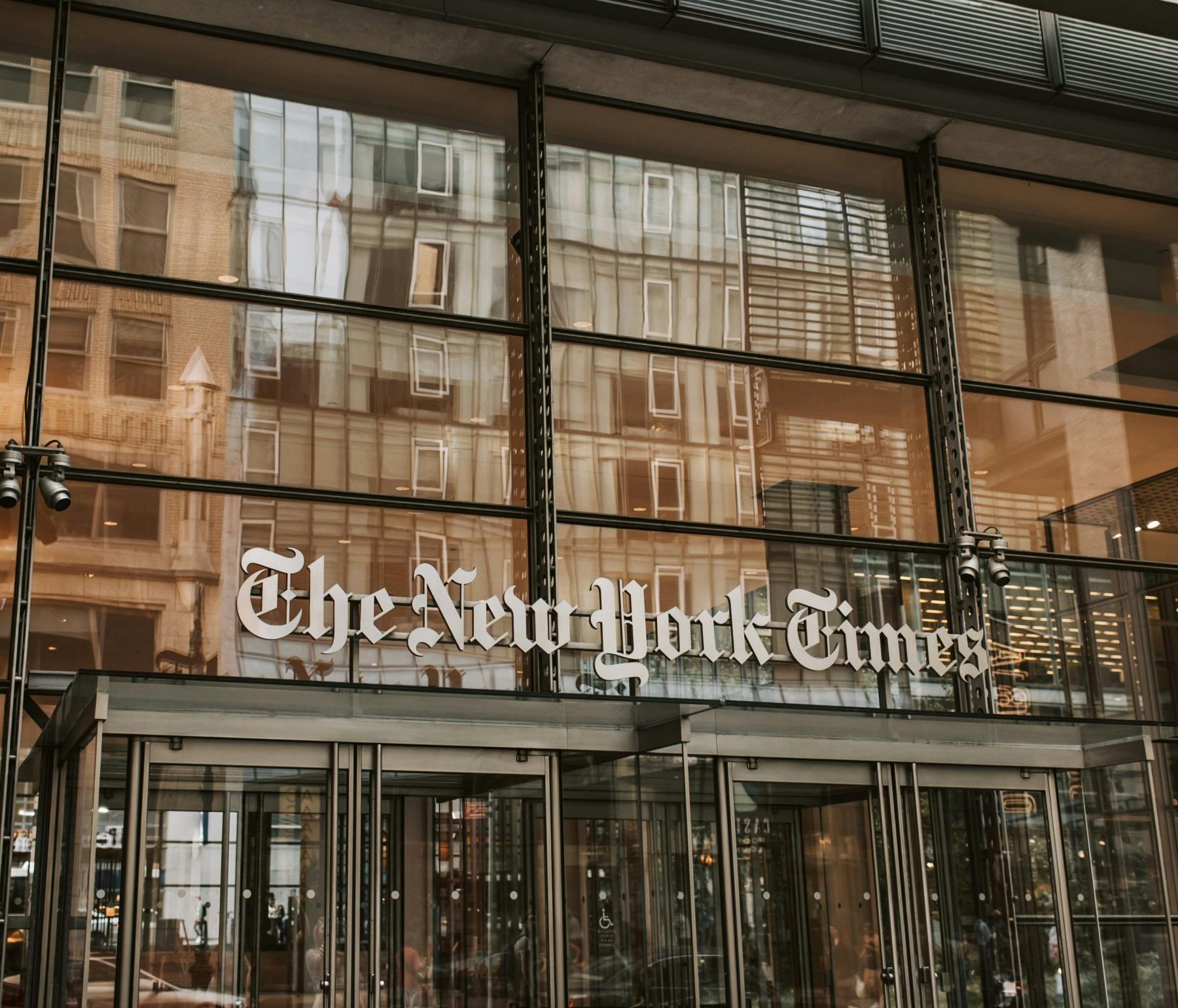
The ultimate thrill is to land the cover of The Rolling Stone or so went the famous 1970s classic rock song. While most B2B clients are not looking for a mention or feature in Rolling Stone magazine, many do aspire to the pages of Tier 1 media.

In fact, as public relations professionals, we are asked by prospects and clients frequently, and often early in the relationship, “How can we get our company in The Wall Street Journal?” We like to answer that question with a “Yes and” approach. Yes, we can likely find a way to present you to Tier 1 media and we’ll do it through it a comprehensive media credibility-building campaign.

What Is Tier 1?

PR best practices consider traditional Tier 1 publications as the largest-circulation, generally consumer-facing, national and international publications and broadcast programs. Typically, the list includes the likes of The Wall Street Journal, The New York Times, USA Today, The Associated Press, Reuters, Bloomberg, CNN and similar. 

Although these outlets may be household names, it’s important to remember a Tier 1 mention of your company may not hold as much value as a mention in a key trade publication read consistently by your target customer or decision maker. All the same, a positive mention in a Tier 1 publication is a goal for many and is typically seen as a business win.

Trust the Process

Editorial coverage is referred to as earned media for a reason. Sources have to work their way through the process to gain a journalist’s attention and confidence. If the reporter is not familiar with a source, they will most certainly Google the subject matter expert (SME). 

Good PR practitioners win coveted, positive Tier 1 media placements for their clients by taking the time to build credibility through proactive media outreach and a steady stream of content.

In considering a PR partner, it’s important to understand no guarantees exist when working with the media. If a PR agency guarantees coverage, particularly in Tier 1 media, they are either lying or masking the truth. Press coverage is never guaranteed—unless that coverage is purchased as sponsored content, in which case it is not earned and typically carries significantly less weight with readers as well as search engines. 

Tips to Climb to Tier 1

  • Build credibility. A Tier 1 placement requires a healthy online presence. SMEs can work with their communications teams to strengthen their digital footprint by writing blogs, posting LinkedIn newsletters and offering original commentary on LinkedIn and other forums. Additionally, they should be working with their media teams to proactively seek out trade and local media opportunities, as well as podcasts and newsletters, to offer their expertise. 
  • Understand the journalists covering your space. Your communications team should know who is writing about the topic on which your SME can speak and what they’ve been saying.  
  • Tie into trends and avoid promotion. The slightest hint of promotion will turn any good journalist away. They are interested in news that impacts their audience. PR professionals should aim to tie the SME’s insight to an issue in the news or trend. 
  • Back up your pitch with data. Good PR professionals will back up insights and claims made in pitches with data or statistics to validate statements where possible.
  • Explain why it matters to audiences. Communications professionals should know the audiences of the publication for whom the reporter is writing and ensure the pitch connects with them. 

Sealing the Deal

Outreach to Tier 1 media requires an all-in approach. Reporters work on deadlines and often have multiple sources eager to comment on the same topic. Sources should be ready for their call or email and communications teams should aim to beat their deadline to strengthen their source’s chances of being included in the article.

The cover of the Rolling Stone may be a thrill, but for many business owners and executives, a national consumer publication article bearing their name is a bucket-list achievement. Engaging with a good PR team and committing to the process can get your company and your executives there, while earning valuable other earned media along the way. 

New Year, New PR Habits

Gyms across the country are cashing in on countless new memberships as New Year’s Resolutions have begun in earnest as many of us aim to make 2026 a year of personal and professional growth. Like all resolutions, it’s the follow-through that counts.

For business leaders as well, the new year provides an opportunity to start the year off with resolve to address pain points and produce better business outcomes. This includes addressing all aspects of the business from technology to operations to communication and marketing initiatives.

As PR pros focused on building brands, protecting reputations and raising awareness for our clients, we offer a few best practices here to help your business succeed in 2026 from a public relations perspective.

Building Sustainable Goals for Better Strategy

According to Forbes, more than 80% of resolutions end up failing by February. Why? We don’t build in the resources necessary to make them sustainable.

Just as someone who hasn’t stepped foot in the gym in years is unlikely to immediately run a marathon, businesses that have not invested consistently in communications will find it difficult to secure a high-profile media win with their target audiences right out of the gate. With that in mind, here are some good communications habits to incorporate in 2026 to set your business up for success in the eyes of your employees, stakeholders, clients/consumers and the public:

  • Invest in Communications: As mentioned above, building brand awareness through PR can take time as the company needs to build credibility before it can be seen as a trusted source by the media. Ensure your company is putting budget aside and support from the top either to make sure your in-house comms team has the resources they need or to engage a PR agency team who knows your specialty.
  • Commit to Transparency: Whether it’s a communications partner or an internal team, transparency about company goals and setbacks is imperative. Prioritizing candor about the organization not only builds trust among your team members but can also lead to more effective strategic planning by allowing your communications team a greater opportunity to get ahead of potential roadblocks. Transparency should also extend to your audiences, maintaining a consistent and open level of communication to ensure they don’t feel isolated or unheard.
  • Be Proactive Storytellers: Don’t wait for stories to come to you. To further build out thought leadership, identify accessible subject matter experts who can serve as effective spokespeople and provide an informed, unique perspective on topics in your industry. A good communications team will be able to work with your thought leaders to refine their ideas and get them ready for media interviews or on-camera appearances.
  • Understand your audiences: Take steps to stay better connected with your audiences’ needs, whether through improved social media engagement or more consistent brand messaging. This clarity can provide greater guidance for both internal and external communications efforts. A communications team can also be an excellent sounding board for new business decisions, ensuring they are aligned with your target audiences and reflect your branding.
  • And new for 2026, Keep AI Search in Mind: In 2025, we saw online search begin to evolve rapidly with more users relying on artificial intelligence (AI) for search and this will continue to be the case in 2026. Good communication strategies in 2026 will consider AI search in content they produce, as AI search scours the internet to produce summaries from multiple pieces of content with trusted third-party media content high on the list. Savvy comms teams will encourage content that avoids jargon and focuses on clarity.

The phrase “New Year, New Me” is commonly thrown around at the start of the new year. But it’s important to remember building better habits is no easy feat. It requires setting up resources to help you find success. To ensure your company is capturing the share of voice among your competitors you want to see and owning the conversation in your space, work with your communications team or engage a public relations agency specializing in your industry to learn their plan to build stronger audience connections in 2026.

‘Tis the Season: Kimball Hughes PR Helps Families in Need 

Historically, during the holiday season the Kimball Hughes Public Relations team gets together (virtually) for an agency gift exchange. This year, amid global unrest and an onslaught of increasingly stressful news events, we chose to do something a little different.  

The team decided to give back by supporting the Salvation Army’s Angel Tree program, which helps provide gifts to families across the country each year.  

Thanks to more than $500 in donations from among our team along with matching funds from Kimball Hughes PR, we cleared nearly 30 items from the Pawtucket Rhode Island Salvation Army’s Angel Tree Registry. The donations included toys for a wide range of ages, from alphabet books to fidget spinners and even a bike. Importantly, we were also able to provide essential items for families in need, including winter gloves and towels.  

Agency leadership extends its sincere appreciation to our entire team for their generosity and holiday spirit in helping those in need experience a better, hopefully more joyous, holiday season.  

As we close out 2025, we also want to remind everyone that our agency will be closed from Dec. 24, 2025 through Jan. 1, 2026. We’ll be back at our desks on Friday, Jan. 2 and PR Managers will be available and accessible for any urgent needs. Clients and journalists are encouraged to reach out to PR Managers by cell phone to ensure a timely response if needed. Meanwhile, we wish everyone a happy holiday season and look forward to connecting in the new year! 

The Most Wonderful Time of the Year: Our Team’s Favorite Holiday Movies

The holiday season is a time for family, food and Christmas movie marathons. From the classic Rankin Bass films to cliché-filled Hallmark romps, everyone has their preferences, and as the year comes to an end, our team wanted to celebrate by sharing some of our favorite Christmas movies.

Rod: My favorite holiday movie is “It’s a Wonderful Life.” My youngest brother, Ryan, and I have watched this movie together every December since 2003. We both appreciate the story and its message about the value of family and dear friends, as well as the importance of helping others where and when you can. Other family members have jumped on the bandwagon in the years since, and it’s become a larger family tradition we all enjoy together. 

Eileen: My favorite holiday movie is “Elf.” “Buddy the Elf, what’s your favorite color?” may just become the team’s go-to phrase when picking up the phone. After watching this for years, the same jokes still crack us up! I look forward to watching it with my family year after year.

Kate: As soon as the holiday season starts to set in (which is admittedly very early in my house), my partner goes to pick up our annual Christmas PJ’s and we turn on my favorite Christmas movie, “The Santa Clause.” It was one of the few movies I never get sick of and brings me back to the years of quoting it all year long with my brothers as kids.

Bianca: “Elf” is always the first movie my siblings and I watched during the Christmas season, though our quoting along in the back of the car wasn’t as appreciated by our parents. I love Will Ferrell’s over-the-top, goofy humor alongside a very earnest story about family and belonging. Plus, it has an incredible soundtrack.

Logan: My family and I watch “How the Grinch Stole Christmas” (the Jim Carrey version) every year. Although there’s lots of debate on this remake (you either love it or hate it), the jokes are undeniably funny, and the costumes and sets are extremely well done!

Alex: There are a lot of Christmas movies that try their hand at relatable, adult humor, but few do it as well as “Elf” with Will Ferrell. I am a Will Ferrell fan, so they may or may not have played a role in my choice. Regardless, Elf is one of those feel-good movies that reminds you that joy, kindness and family are the pillars of Christmas. I try to watch it every year, but the last few years have been difficult with a toddler, but I’m optimistic we will watch it this year.

Cassidy: My favorite holiday is “National Lampoon’s Christmas Vacation.” My husband and I watch it every Black Friday as a tradition to kick off the holiday season and can quote practically every line. We like it because it takes a comical view of portraying how chaotic the holiday season can get. 

Liz: “It’s A Wonderful Life”. I enjoy old movies and this is one of my favorites to watch each Christmas. There are so many great lines in the movie and an assortment of characters to watch. It is a classic!

Paul: Tie between “It’s a Wonderful Life,” a gorgeous tale of gratitude and precious friendships, and “Die Hard,” a brilliant underdog action movie set on Christmas Eve.

John: My favorite is “Batman Returns.” Christmas, Christopher Walken and animatronic and real penguins—the early 90s were a good time. Hearing the operatic score by Danny Elfman in Batman Returns in theaters blew my mind. Clowns on motorbikes doesn’t sound like Christmastime, but Tim Burton made it so.

The Court of Public Opinion: Public Relations Wins & Fails in 2025

Public relations can be a fickle industry. A crisis can strike at any moment, the most comprehensive plans require adjustments along the way as the rapid, unpredictable news cycle dictates available opportunities. In most best-case scenarios, the wider public is unaware of the time and care that goes into building a successful public profile. They absorb PR campaigns almost subconsciously, allowing a brand to be part of their everyday lives. But when things go wrong and a brand is thrust into a negative spotlight that same public will both anticipate and scrutinize the brand’s next move.

Throughout 2025, there was no shortage of both PR wins and questionable scenarios across national news. From Molson Coors’ typo strategy to the Astronomer CEO’s obvious passion for Coldplay, below are a few examples of what we saw as the biggest public relations wins and fails in 2025:

2025 Public Relations Wins

  • Jet2 Redirects the Jingle Mishap:If you’ve been on the internetin 2025, you have probably heard the phrase “Nothing beats a Jet2 holiday.”  What started as a cute jingle advertising a low-cost British airline, Jet2, turned into a social media trend in which users used the upbeat sound bite to contrast a disastrous travel moment playing out on video. While this was probably an issue at first, Jet2 jumped on the bandwagon using the soundbite in their own social media videos, engaging with user-generated content and driving organic traffic to their brand social media pages. This goes to show brands cannot control how the public perceives or takes hold of a particular communication, but they can control how they respond and even use it to their advantage.
  • Molson Coors’ Case of the Mondays:Just before the 2025 Superbowl, Molson Coors released a series of advertisements for Coors Light that misspelled the word refreshment. The ad ran in major U.S. newspapers, on billboards and even in New York City’s Time Square. The public was outraged, reaching out to Molson Coors to flag the typo and criticizing the company’s proof-reading abilities. Shortly after, the company released a short press release that started with “We had a case of the Mondays,” recognizing the mishap and maintaining their “Made to Chill” brand identity. During Superbowl season, beverage companies are all fighting for the country’s attention, forcing them to get creative with their efforts, and even ruffle some feathers (within reason).

2025 Public Relations Fails

  • United Airlines Communication:In August of 2025, United Airlines experienced an issue with the system responsible for essential flight operations such as tracking flight times, calculating balance and weight and other necessary data for flight safety. As a result, 35% of United Airlines flights were delayed and 6% were cancelled according to FlightAware. Passengers were outraged after the airline failed to promptly communicate the issue with airline staff and the public, leaving many confused, overwhelmed and frustrated. The company lost control over the narrative, failing to reassure their staff and passengers, and prompting safety concerns. Technical difficulties are inevitable, but it is crucial that brands are prepared to quickly deploy messaging that clarifies a problem, the steps a company is taking to fix them and provides support for frontline staff to reassure customers and answer questions.
  • The Kiss Cam Heard Around the World: Earlier this year at a Coldplay concert during the band’s kiss cam portion of the show, Astronomer CEO Andy Byron and Chief People Officer Kristin Cabot were spotted mid-cuddle. A cute moment, until the pair realized they were on screen and quickly ducked away, leading Coldplay frontman Chris Martin to jokingly speculate into his mic whether the two were having an affair. As concert goers uploaded the now famous video, the speculation began immediately on who the pair was, their backstory and of course, their workplaces. As it turns out, the two were having an affair and internet sleuths made it their mission to figure out the full story. Astronomer took a couple days to respond initially with a short statement and by the time they did, the public had already developed their own narrative that painted Byron, Cabot and the company in an unfavorable light. Then, a few weeks later, Astronomer tapped celebrity Gwenyth Paltrow, famously Martin’s ex-wife, as a temporary spokesperson in a humorous marketing effort. The only problem? The public didn’t get the joke. Many felt the video was tone-deaf, lacked responsibility and was viewed as a celebrity stunt amid the company’s already slow response. While you can’t always control if and when a scandal occurs, brands must work quickly and thoughtfully to address situations that can threaten the integrity of their brand and values.

Each year brings numerous public relations stories from which communications professionals and brand representatives can learn. Communications at its core is about preparation, understanding a brand’s potential risks and addressing them before the public takes hold of a narrative and draws harmful conclusions. 2026 is almost here and there is no better time to evaluate your brand’s communications strategy to ensure your company navigates the new year with more wins than fails.

100 Years of High Kicks & Toy Soldiers: The Staying Power of The Radio City Rockettes  

The Radio City Rockettes are celebrating their 100th birthday this year, with their annual Christmas Spectacular show well underway in New York City. What began as a humble dance troupe in Missouri known as the Rockets, The Rockettes have grown into an American holiday staple that continues to withstand the test of time. But what is it about the Radio City dance troupe’s 100-year brand that draws the attention of millions of people per year?  

From the eye-high kicks to iconic formations, The Rockettes are the pinnacle of holiday nostalgia. Every year, over a million people attend their Christmas Spectacular.  Millions more watch them on the Macy’s Thanksgiving Day Parade. But a brand that has been around for 100 years doesn’t go unscathed by time’s heavy hand. The Rockette’s are certainly no exception. We’ve noted just a few times of the many times below where the storied dancing team neared extinction:  

  • 1967: Just before the holiday season in 1967, the Radio City Rockettes went on strike, demanding a 40% increase in wages and payment for rehearsals. For nearly a month, the dancers picketed outside Radio City until representatives of the music hall gave in, agreeing to a pay increase from $99 to $126.50 per week.  
  • 1978: In 1978, it was announced that Radio City Music Hall would close with talk of a complete demolition after it was revealed that the venue had been operating at a loss of approximately $2 million. With just days to make a plan and rally supporters together, Dance Captain Rosemary Novellino and Captain of the Singers Bill Mearns alongside fellow performers and theater staff collected signatures to make Radio City Music Hall a National Historic Landmark. The theater was officially saved in March of 1978.   
  • 2020: Due to the COVID-19 Pandemic in 2020, Radio City was forced to cancel their entire Christmas Spectacular and part of the 2021 season. With the Christmas Spectacular grossing roughly $90 million alone, this hit hard for the dance company. Fortunately, The Rockettes were able to salvage part of their 2021 season and come back strong in 2022.  

Additionally, The Rockettes have not been without criticism. The troupe was borne with height requirements that welcomed only dancers between 5-foot-2 and 5-foot-6.5. Since then, height requirements have been expanded, and the dance group has welcomed more diversity. The group brought on their first non-white dancer in 1985, but according to USA Today Network New York, the 2022 Christmas Spectacular had just 13% representation of Black, Latino and Asian-American Pacific Islanders, which make up 36% of America’s population, so there is still a way to go. Keeping the brand relevant, The Rockettes have taken steps to respond to this criticism by hosting workshops at historically black colleges and universities, by partnering with dance troupes in underrepresented areas, and by working to reduce financial hardships for those aspiring dancers attending their summer programs.  

History has shown labor disputes, impending demolitions, a worldwide pandemic and cancel culture as more than enough to shut down any brand, especially in the performing arts industry.  

Still, The Rockettes maintain their status as an American institution. They prove there is immense staying power in tradition and nostalgia, while at the same time taking some steps to adapt to modern times. For millions of people around the world every year, a trip to see the Rockettes marks the beginning of a magical holiday season. Each year, the show is reimagined with a few consistent numbers to tug on the audience’s sentimental heart strings like the iconic wooden soldiers and the troupe’s signature kick lines. Audiences appreciate the familiarity, especially when the world around them can feel uncertain.  

While The Rockettes have maintained their traditional roots, they have also innovated throughout the years to reach and engage wider audiences. These small, creative refinements that The Rockettes have made to their set design, lighting, choreography and more throughout the years honor their roots, while still giving audiences something unexpected. In an effort to modernize and claim the hearts of those outside New York City, The Rockettes also expanded into television, film and event appearances, even cementing an annual spot on the Macy’s Thanksgiving Day Parade since 1957. This widespread reach reinforces the prestigious role of being a Rockette and maintains recognition beyond Radio City Music Hall.  

A brand 100 years in the making, The Rockettes remain a timeless constant in American culture from the depression era to the COVID-19 pandemic and every event in between. Happy 100th Birthday to the iconic Radio City Rockettes, and cheers to 100 more years of holiday magic.   

Confessions of a Former Chef: Mastering Your Thanksgiving Turkey 

Thanksgiving is just about here, and as people spruce up their homes for guests and brave last minute grocery trips, there is an annual wave of dread and anticipation among hosts and guests alike. No, it’s not the once-a-year conversation with your distant uncle, or your grandmother’s intrusive questions. It’s the age-old tell of a successful Thanksgiving: The turkey.  

From Hollywood’s depiction of an overcooked bird puffing into smoke upon carving, to news stories of fried turkeys gone wrong, the art of cooking a turkey can place immense pressure on home chefs. Turkeys are fickle birds, with meat on multiple parts that cook at different temperatures. That paired with the mere size of most hens makes the task feel like an annual moving target.  

Now, you may be wondering why a public relations agency is publishing an article about cooking turkeys. Prior to starting my career in public relations, I was fairly deep into a culinary journey when I hung up my apron as a chef de cuisine in Chicago. If there’s one commonality I’ve noticed across these two careers, it is that there are a myriad of ways to reach a goal. There is no one way to build a brand’s public relations profile, and there is certainly no one way to cook the perfect turkey. But, with a strong understanding of the factors at play and technique that allows you to pivot when things don’t go to plan, you too can inch closer to achieving the dream of satisfied table guests and the words you’ve always longed to hear: That turkey was incredible. 

There are three factors to keep in mind when cooking a showstopper of a turkey:  

  • Preparation: Cooking a frozen turkey can be the quickest way to a dry end-product. While there are techniques that suggest it can help lock in moisture, it’s a gamble as to whether it will cook evenly and the odds are not on chef’s side. Ensure the turkey is fully thawed and brought to room temperature prior to cooking.  
  • Moisture: Before cooking, consider the tactic you would like to use to aid with moisture. There are several options to help with this such as wet or dry brines, rubbing butter under the skin or spatchcocking the turkey in which you remove the backbone allowing it to lay flat while cooking. You can practice some of these techniques with a roast chicken ahead of the holiday and test options before the main event. While it won’t be exactly the same, given a turkey’s size, it will get you familiar with the process.  
  • Rest: Arguably one of the most important steps to cooking any meat is allowing time for the cooked bird to rest. Often, people will assume this step is “just a formality” when it’s extremely important to ensure juices do not drain and dry out the turkey. Even if it’s cooked to perfection.  

With these important factors in mind, you can determine how you want to cook a turkey. Let’s look at a couple of options to really bring it home:  

  • Roasted: Tried and true, roasting is the most common way to cook a turkey. With your oven at 325-350 degrees, you will cook it for about 15 minutes per pound. The biggest risk with this approach is the potential dryness. Consider brining the bird prior to cooking as well as basting it, in which you cover it with its own juices throughout cooking.  
  • Backyard fried: The riskiest of options, frying your turkey can lead to a juicy center with crispy skin. Unfortunately, mis-steps in the deep-frying process are all too common and the risks of fire or injury are certainly something to consider. Given the risks, I usually do not recommend this approach. However, if you choose to deep fry your bird, make sure the turkey is at room temperature and patted completely dry. Water or ice entering into a fryer could cause your bird to combust.  
  • Smoked: The least common of the three methods, some people opt for a smoked turkey. This method requires you to cook at a much lower temperature, about 225 degrees, for about double the time. While this method is more time intensive, it can yield moist meat that falls-off-the bone bound to be a crowd pleaser.  

As you prepare for this holiday, don’t let the stress of preparing the turkey stop you from appreciating the day alongside your loved ones or from acknowledging all for which you are grateful. This could be the year you dazzle the crowd with an award-worthy turkey and if it doesn’t quite go to plan, there’s always next year.  

From all of us at Kimball Hughes Public Relations, we wish you a safe, happy and turkey-filled Thanksgiving.