
We have all heard charitable giving and volunteerism are good for the community and good for business. Although our central purpose in giving back is hopefully to produce better outcomes for others, wildlife, the environment or countless worthy causes, that business benefit should not be overlooked.
After taking part in this year’s Martin Luther King Jr. Day of Service, we thought we would explore the benefits – beyond the self-satisfaction found in helping others – available to companies that give back through kindness.
These are benefits that can inspire and encourage others to get involved and feel a part of something, while also enhancing the company’s reputation and, potentially, its bottom line.
More specifically, spreading the word, in the right way, of a company’s philanthropic initiatives can:
- Enhance company culture. Today’s employees want to know they are working for companies that care and take action toward social responsibility. They want to see the company’s principles and support for employees, the community and the environment communicated. It can engender them a sense of pride toward their employer. Further, providing employees with time to volunteer with their team can promote comradery and build a corporate culture where employees feel more fulfilled, challenged and want to stay and grow.
- Assist in recruiting top talent. Millennials and Gen Z want to give back in meaningful ways and they are increasingly looking to employers to not only support, but enable, these social good contributions. They are looking to join companies that provide opportunities to volunteer, to take part in fundraising initiatives and to support the causes that matter to them.
- Raise awareness of your company among your target audience. It is not only employees who are interested in socially minded employers; customers want to patronize companies that support causes important to them.
By sharing news and updates of charitable donations and volunteering efforts via articles, photos and videos shared via eblasts, social media channels and newsletters, leadership can ensure prospective and existing customers, job candidates, and current employees see their commitment to giving back and realize this is an organization worthy of their time, attention and money. To help ensure this, consider these best practices for communicating charitable endeavors on social media:
- Craft your post with care for clarity, tone and importantly, brevity, as well as spelling and grammar.
- Include photos and short video clips where possible.
- Tag the nonprofits you supported. They may repost to their networks.
- Call out employees where appropriate for their volunteer efforts and tag them on posts.
- Encourage employees to like and share on their social media channels as well.
Finally, a good public relations partner can define a clear strategy communicating the social good works of the company and its employees. Having a strategy is important, not only for promotional purposes, but also to ensure you and your employees communicate thoughtfully, consistently and respectfully while focusing on the best channels and language to best support the efforts of the company and its employees. Not every fundraising initiative is worthy of a press release. Again, a PR professional can help you determine the best communications channel for sharing messaging.
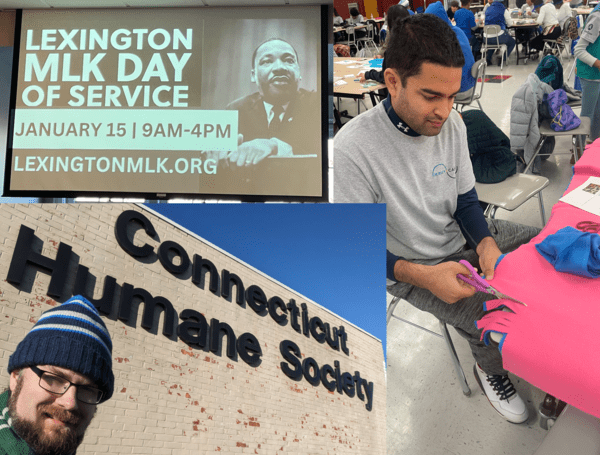
For our part, team members at Kimball Hughes PR had an amazing time volunteering in their local communities on MLK Day. They organized dog and cat food at the Connecticut Humane Society, made cards for veterans with the Lexington Day of Service and packaged emergency relief and disaster kits with Jersey Cares for victims of recent storms and natural disasters. At Kimball Hughes PR, we encourage a culture of giving back by providing paid time off to volunteer for MLK Day as well as during the Insurance Industry Charitable Foundation’s Week of Giving. We seek team input on all company charitable initiatives, whether through our pro bono client work or our annual charitable gift made to a nonprofit cause important to our team on behalf of our clients.
From paid-time-off to volunteer to matching employee charitable donations, organizational leaders should not only be sure to create opportunities to give back, but also to communicate their efforts and those of their employees. While not every charitable effort is newsworthy, a photo on social media of an employee helping to clean a beach or assist in a food kitchen can go a long way in advancing your reputation as a company that cares and one that is worth the investment and support of employees, customers and others.
 PR Matters